
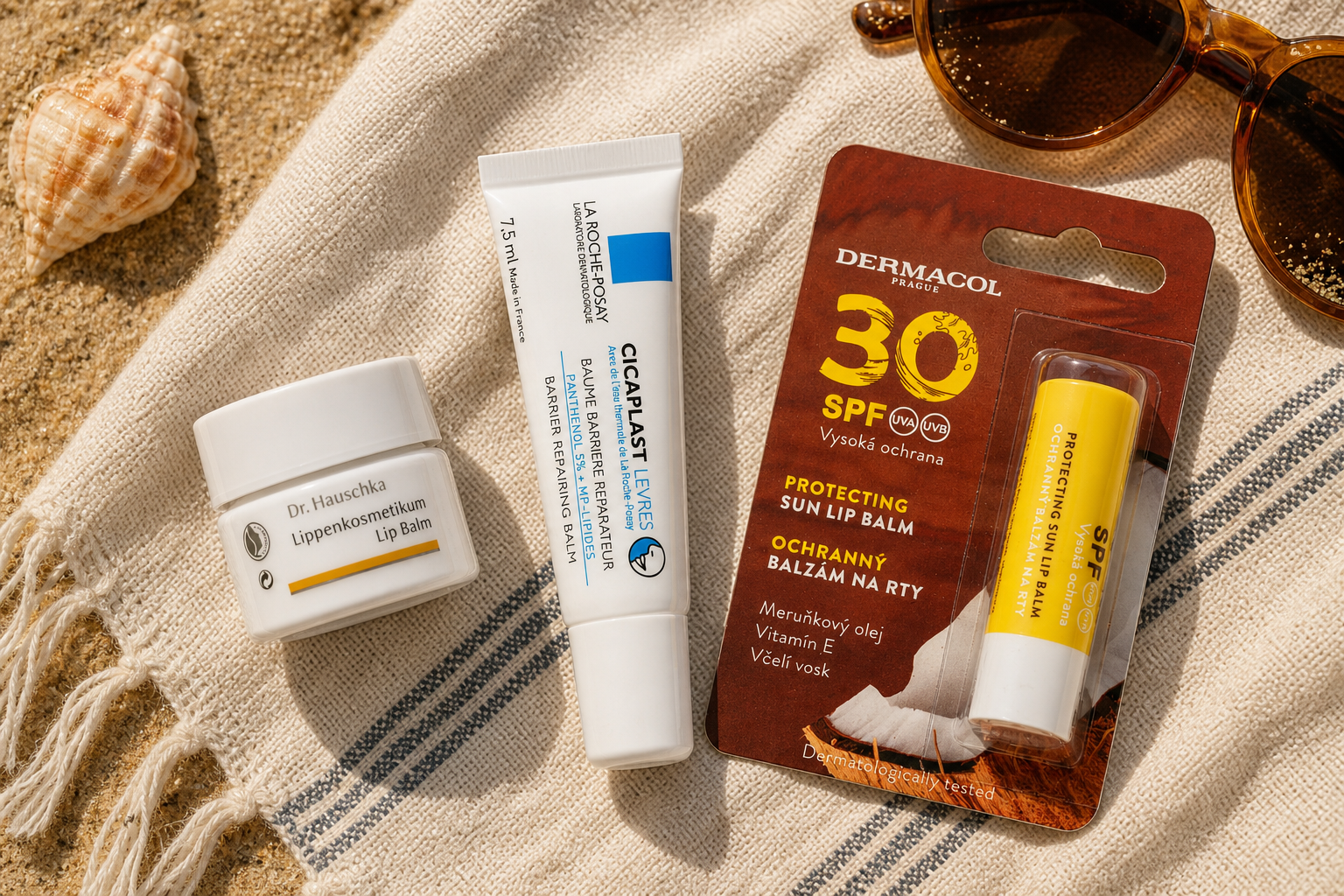

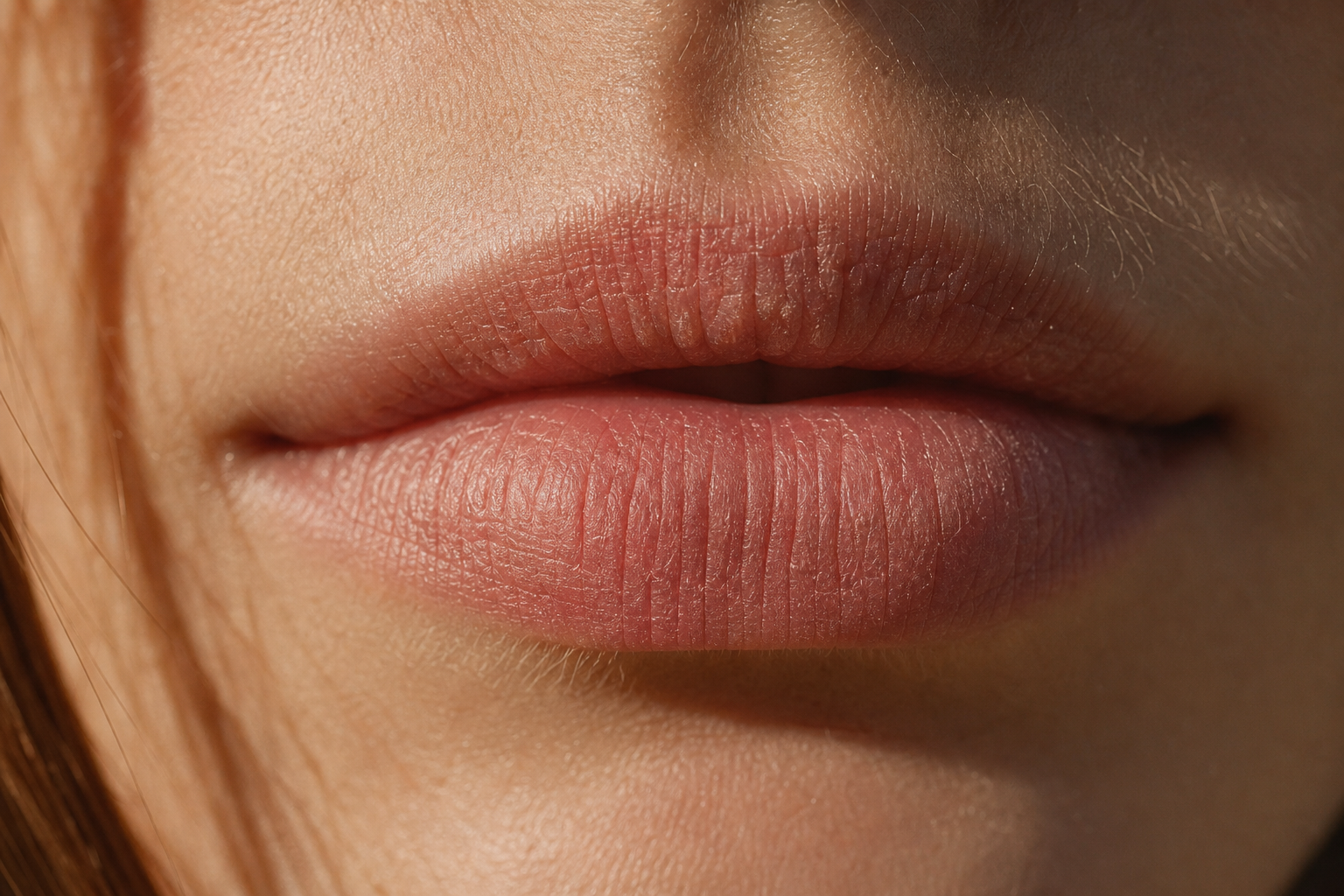
After weeks in the sun, salty water, and air-conditioned spaces, lips tend to be the driest at the end of summer. We show you how to restore hydration before the heating season begins and which dermatological cosmetic brands are suitable for this care.
Why Lips Become Dry at the End of Summer
The end of summer often first shows on your lips rather than the rest of your face. While the skin on your cheeks may just have a slightly uneven tone after weeks by the water, by the end of August, lips tend to feel tight, look dull, and may peel slightly with every smile. It's not just about not drinking enough water, as is often said—it's a combination of several factors affecting the lips throughout the summer months, with the consequences only becoming apparent in the fall.
The skin on the lips is structurally different from the skin on your cheeks. It's significantly thinner, has fewer cell layers, and crucially, lacks sebaceous glands. This means it doesn't have its own natural oil film, which elsewhere on the body helps slow down the evaporation of water from the surface. As a result, lips dry out much faster under the same conditions and can't retain moisture as long as the surrounding skin. The lower amount of melanin adds to their increased sensitivity to ultraviolet radiation—and lips are often the part of the face most frequently forgotten when applying sunscreen.
During the summer months, lips are exposed to several stressors simultaneously:
- Sun and heat – Ultraviolet radiation stresses the thin skin of the lips, and high temperatures increase water evaporation.
- Salt and chlorinated water – After swimming, a thin film of salt or chlorine remains on the lips, attracting moisture and drawing it away from the surface.
- Wind and dry air – At the seaside or in the mountains, flowing air removes moisture faster than the skin can replenish it.
- Air conditioning – In cars, planes, and offices, the relative humidity of the air drops, further intensifying dryness.
- Licking lips – Provides short-term relief, but evaporating saliva takes away the remaining moisture and speeds up the cycle.
The key point is that the damage may not show immediately while on vacation. In warm and humid air, even weakened lips can manage for a while, so you might not associate the problem with its true cause. However, as temperatures drop in September and October and heating systems are turned on, the relative humidity indoors significantly decreases. Lips that have lost part of their protective layer during the summer weeks have no reserve for this change—and that's when they start to crack, peel, and feel uncomfortable. Therefore, targeted lip care is most needed at the transition from summer to autumn, not during the vacation itself.
The good news is that lip skin regenerates relatively quickly, so even significantly dried lips usually calm down with regular care within a few weeks. The renewal process has three steps, and following them in this order makes the most sense:
- Replenish missing lipids so the lips can retain moisture.
- Gently remove dead skin that clings to the surface and prevents care from being absorbed.
- Establish a daily routine including sun protection to prevent the condition from returning.
Before reaching for the first lip balm you have on hand, it's worth knowing what your lips specifically lack. Otherwise, you'll provide a pleasant feeling for half an hour but not longer-lasting relief. Each of these steps is covered separately in this article, and for each, we'll discuss what to expect from the care and the limits of what cosmetics can achieve.

How the Lipid Barrier of Lips Works
In the world of cosmetics, lips are a unique area. The skin on them is several times thinner than on the cheeks, has a weaker stratum corneum, and almost no sebaceous glands to continuously replenish the protective film. Moreover, they are constantly in motion – when talking, eating, and drinking. The result is simple: moisture evaporates from the surface of the lips faster than elsewhere, and the lips cannot replenish it as effectively as the surrounding skin.
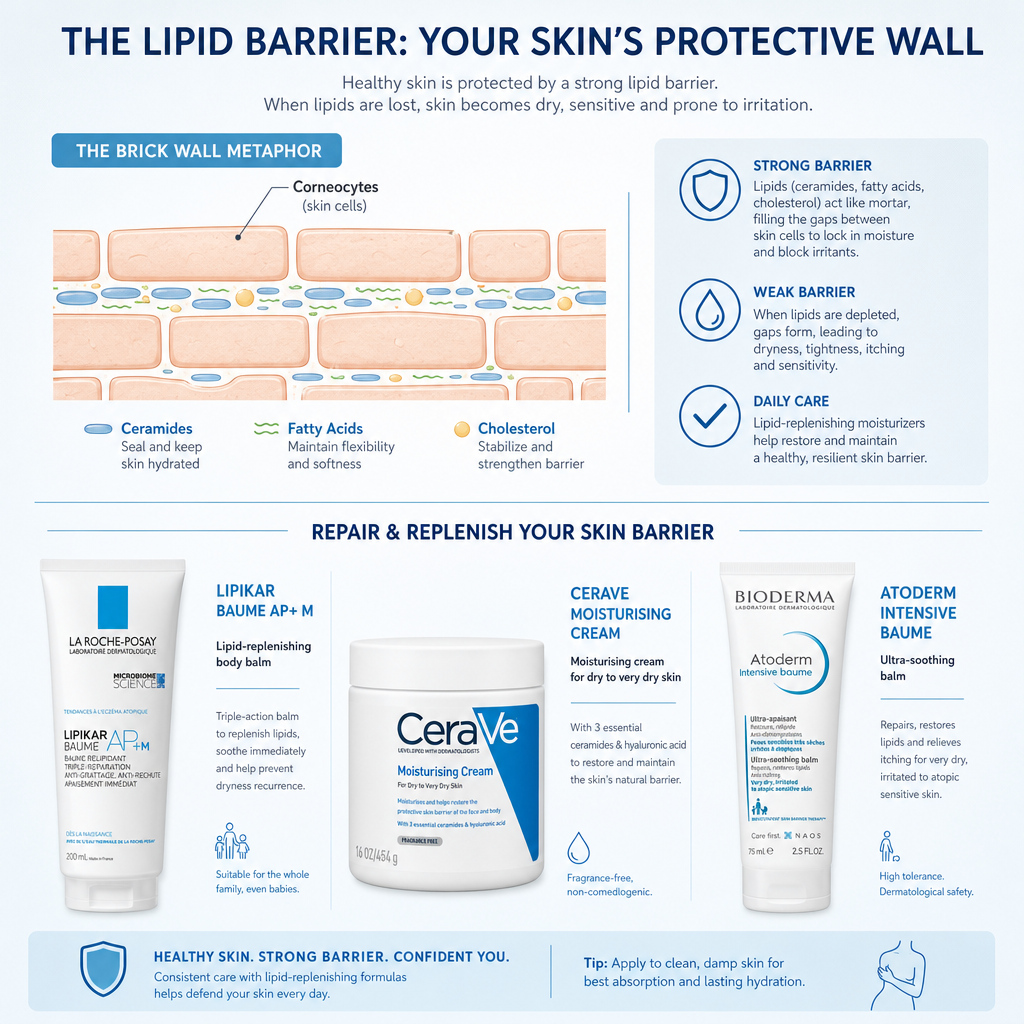
What helps them in this is called the lipid barrier – a thin layer of fat in the outermost part of the skin. Dermatologists usually describe it as a wall: the cells of the stratum corneum are bricks, and the lipids between them function as mortar. As long as the mortar holds, water stays inside, and external stimuli do not penetrate. Once it washes away, the wall allows passage in both directions: water escapes from the inside, and external elements penetrate that should not.
This mortar is primarily composed of three groups of substances:
- Ceramides – the main building block of intercellular lipids. They create a layered structure that retains water in the skin.
- Fatty Acids – provide flexibility to the barrier and help maintain a slightly acidic environment on the skin's surface.
- Cholesterol – connects ceramides with fatty acids into a cohesive whole; without it, the layer is fragile.
The essential point is that these components work as a team. It's not just about how much fat is in the barrier, but also about their mutual ratio – if one component significantly decreases, the barrier functions less effectively, even if the others remain in place.
And that's exactly what summer can do. Salty and chlorinated water gradually washes away surface lipids, hot dry air and air conditioning increase water evaporation, and ultraviolet radiation further stresses the thin skin of the lips. Licking your lips, which you instinctively do to alleviate the feeling of dryness, also plays a role: saliva evaporates and takes the remaining moisture with it. Each of these influences alone is not dramatic, but together they deplete more lipids over several weeks than the skin can replenish.
By the end of August, a thinned barrier meets a stratum corneum renewal that can't keep up. Lips start to peel, small flakes easily detach, and in the corners – areas that are constantly mechanically stressed and where moisture accumulates – cracks form. This is not damage that appears overnight; it's the result of a slow depletion that you might not have noticed over the summer.
This suggests a connection with dermatological lines for dry and atopic skin. Whether you know La Roche-Posay Lipikar, CeraVe, or Bioderma Atoderm, all three work on the same principle: replenish missing lipids, add ingredients that retain water in the skin, and omit anything that would irritate the weakened barrier – such as unnecessary fragrances and aggressive surfactants. This type of formulation is also suitable for lips, which need calm and nourishment rather than active ingredients after summer.
However, it's good to know where the limit is. Cosmetics support the barrier and create conditions for its renewal, but they do not replace treatment. If the corners crack repeatedly, hurt, ooze, or the condition does not improve within two to three weeks, it may be inflammation or a symptom of another cause, and the solution belongs to a doctor, not a care basket.


Gentle Exfoliation of Dead Skin Without Irritation
As summer ends, your lips may be covered with tiny flakes that peel unevenly, tempting you to pick or scrape them off. This is the moment to decide whether your lips will settle down in a few days or if you'll prolong the process for weeks. Dead skin is just a symptom – the real issue lies beneath, in the skin's reduced ability to retain moisture. If you remove the flakes forcefully, you'll also strip away a layer that still serves a protective function, causing your lips to dry out again, this time more quickly.
Mechanical Exfoliation Isn't Always a Good Idea
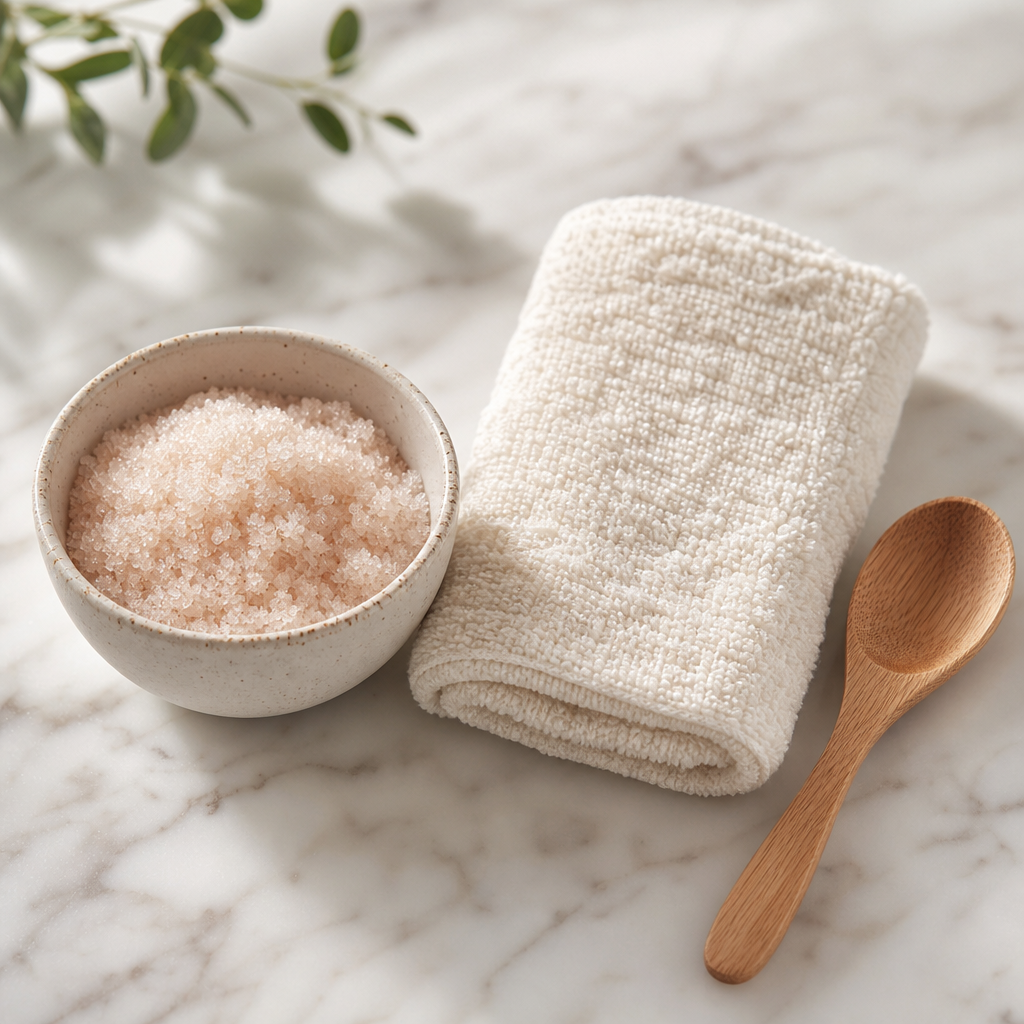
Sugar and salt lip scrubs work on a simple principle: coarse particles mechanically remove loose cells. For healthy lips that are only slightly uneven, this usually doesn't matter. However, if your lips are burning, cracked, red, or have sores in the corners, mechanical scrubbing will worsen the problem. Damaged skin doesn't have a strong enough surface to withstand abrasion, and the scrub becomes another stressor.
If you decide to use a scrub, stick to three rules: apply very gentle pressure with your fingertip, limit it to half a minute, and do it no more than once a week. A toothbrush or terry cloth is not suitable for lips – their abrasiveness is disproportionate for such thin skin.
Overnight Softening as a Gentler Approach
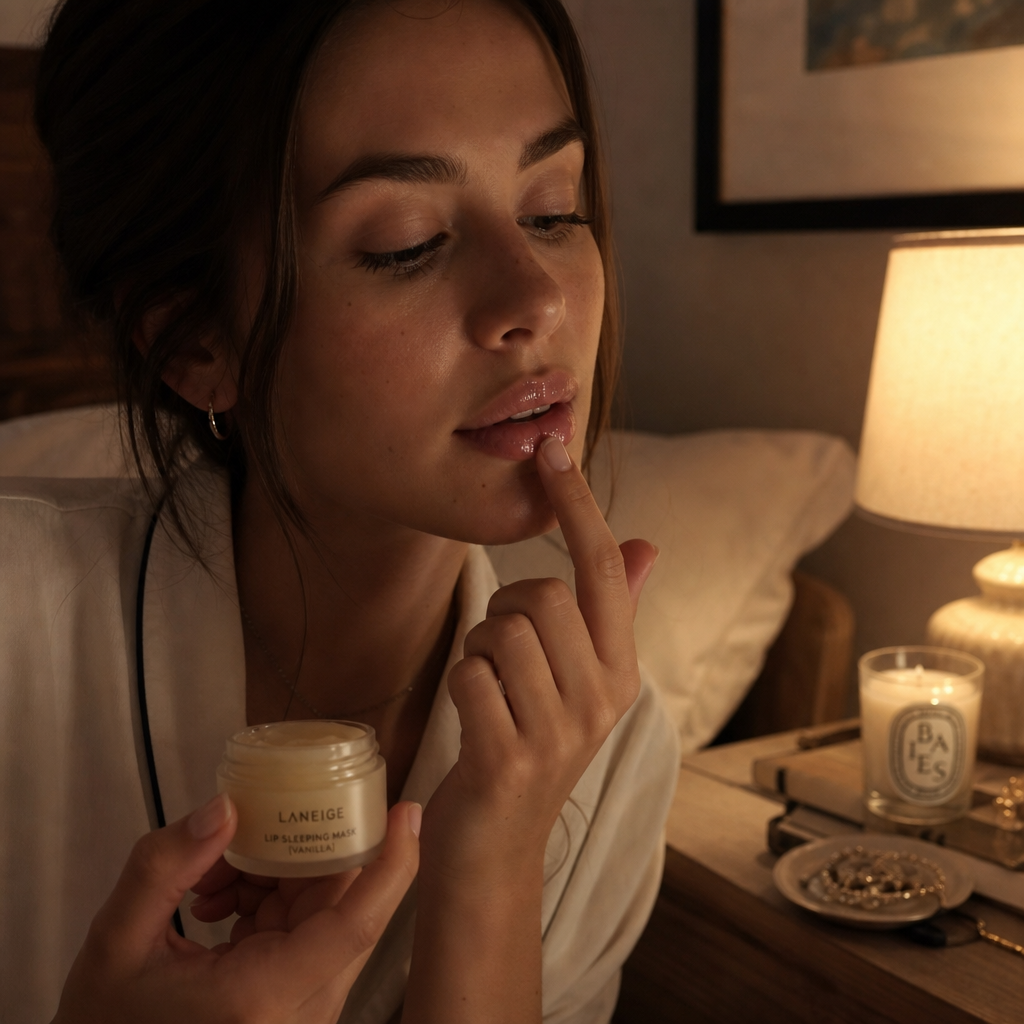
A gentler and usually more pleasant method for dry lips is to let the flakes fall off on their own. In the evening, apply a thick layer of a greasy balm or occlusive lip mask and leave it on overnight. The moisture retained under the occlusion softens the dead cells and loosens their connection to the underlying skin. In the morning, simply wipe your lips with a damp soft cloth or rinse with water, and the flakes will come off without pulling.
You know the same principle from body care. Smoothing creams like CeraVe SA Smoothing Cream or rich balms from the Bioderma Atoderm range don't tackle rough skin on elbows and feet by scrubbing, but by patient moisturizing, which allows the surface to even out on its own. These body products are not suitable for lips, as they are formulated for thicker skin elsewhere on the body. But the logic is the same: less mechanics, more time and lipids.
Besides the right technique, it's also important to know what not to do during this period. The following habits typically delay recovery:
- Licking your lips. Saliva evaporates faster than pure water and takes residual moisture with it. Short-term relief thus leads to greater dryness, and because saliva contains enzymes, it further irritates the already weakened surface.
- Picking dry flakes. Peeling off skin that is still attached creates a small sore – and it heals in days, not hours.
- Aggressive scrubs and exfoliating acids. Products with higher acid concentrations have different conditions on the lips: the stratum corneum is thinner here, so the reaction is stronger than you might expect.
- Menthol and camphor balms. The cooling sensation is tempting because it masks discomfort, but menthol, camphor, and strong aromatic components do not restore the barrier. For irritated lips, they are often the reason you reach for the balm again in twenty minutes.
- Long-lasting matte lipsticks. Until your lips calm down, put them aside – their formulation is designed to adhere and not transfer, which means further drying for cracked surfaces.
The entire process usually takes two to four days. You'll know you're done when your lips no longer feel rough to the touch and the balm spreads evenly without catching on the edges of flakes. Only then does it make sense to consider longer-term care.
Six Dermatological Skincare Brands for Dry Lips
Whether you're looking for a simple balm for your handbag or care that can handle dry skin around the lips, navigating dermatological skincare brands is easier than it seems. The following six are among the most popular in facial and body care, and their formulations make sense for dry lips. For each brand, you'll find a brief context and bullet points for comparison – focus, skin type, and price level.
Bioderma – Atoderm for Very Dry Skin
Bioderma is one of the best-selling brands in our segment, and the Atoderm line targets very dry and atopic skin. For lips, it's more of an indirect use: balms and ultra-nourishing creams from this line are suitable for the area around the lips, corners, and chin, where dryness appears first after summer.
- Focus: very dry to atopic skin, shower oils, and nourishing balms.
- Ideal when: your skin feels tight not only on the body but also around the lips after showering.
- Price level: mid-range, with favorable per-milliliter pricing for larger packages.
La Roche-Posay – Lipikar for Lipid Replenishment
Lipikar is a line focused on replenishing lipids in the skin, precisely what is lacking at the end of summer. The Lipikar Baume AP+ M balm is one of our best-selling skincare products for face and body; for the lips themselves, a richer balm is more suitable, but it works well for the surrounding area.
- Focus: dry skin prone to tightness, lipid replenishment.
- Ideal when: you're looking for one texture for both body and drier facial areas.
- Price level: premium.
CeraVe – Ceramides as a Base Ingredient
CeraVe bases its formulations on ceramides and hyaluronic acid. If you're more interested in composition than fragrance or packaging, it's a practical choice: the textures are unscented and subtle, making them suitable for the face and the area around the lips.
- Focus: ceramide-based moisturizing creams and lotions, sensitive skin cleansing.
- Ideal when: you prefer simple formulations without fragrance.
- Price level: premium, usually in large packages.
Vichy – Hydration with Thermal Water
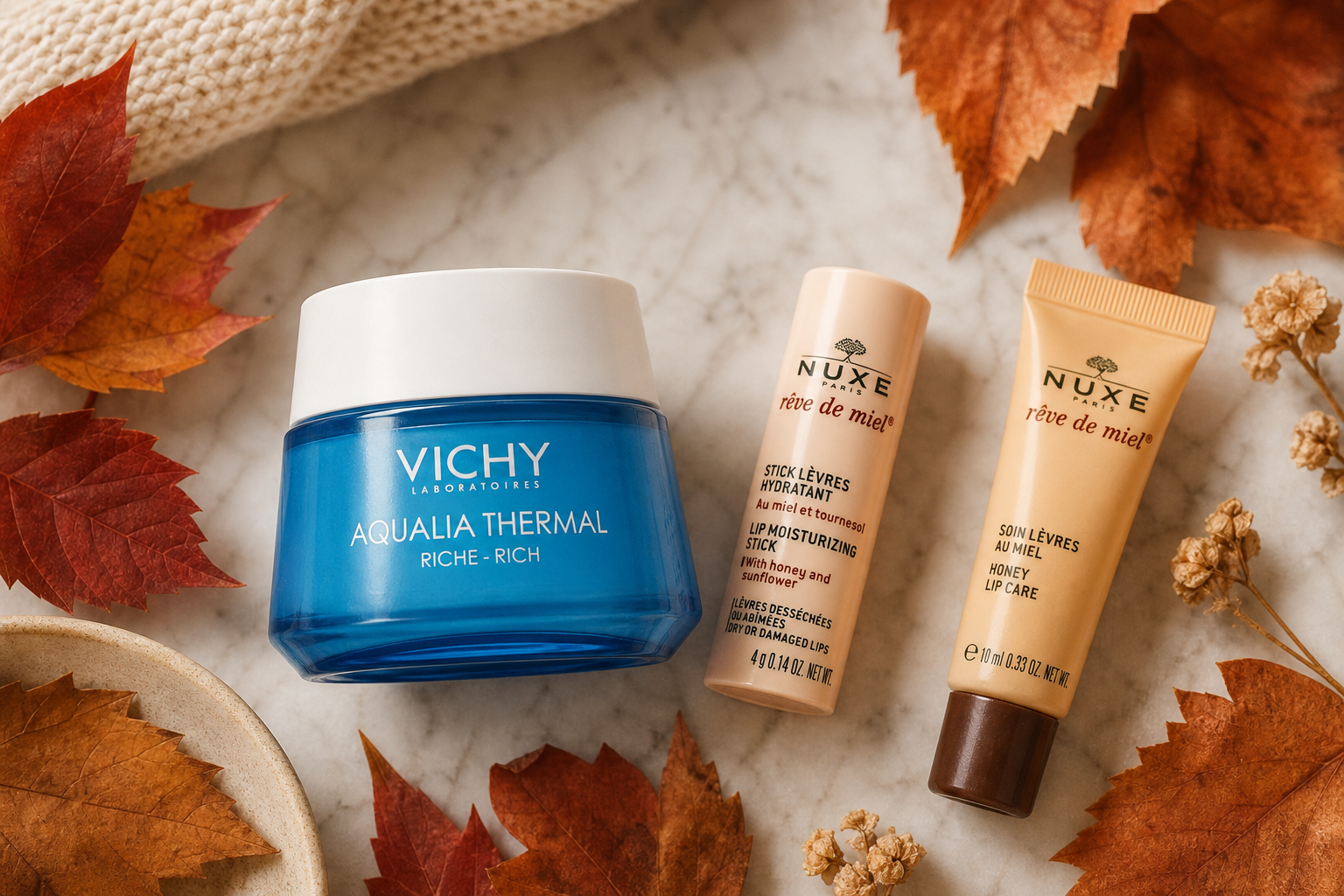
Vichy uses mineral thermal water; the Aqualia Thermal hydrating line offers creams suitable for the autumn transition. The richer Aqualia Thermal Rich Cream is intended for the face – you don't apply it to the lips, but it can handle the area above the upper lip, where dryness often lingers the longest.
- Focus: hydration of dehydrated skin, thermal water as a base.
- Ideal when: your skin is more dehydrated than oily.
- Price level: premium.
Uriage – Xémose for Irritated Skin
The Xémose line is designed for skin that is dry and prone to itching. The oil balm from this line is often chosen when the skin around the lips is tight and reacts to every touch.
- Focus: very dry skin prone to itching.
- Ideal when: a regular balm isn't enough and your skin reacts easily.
- Price level: mid-range.
Nuxe – Care Specifically for Lips
Nuxe is the only brand among the six that offers products specifically for lips. Honey Lip Care with a honey base and Sweet Lemon balm are small items for your pocket or handbag; from the Nuxuriance Ultra line, you'll find care for eye and lip contours. If you're looking for a lip balm specifically, it's the easiest start.
- Focus: lip balms, care for eye and lip contours.
- Ideal when: you want a product specifically for lips, not a universal cream.
- Price level: premium, small packages.
The brands can be combined: facial or body care covers the area around the lips and a wider area, while the balm is for the lips themselves. Consider whether you're dealing with overall dry skin or just the lips – this will determine which brand suits you best.

Autumn Lip Care Routine: Specific Recommendations
Whether your lips are just slightly dry or still have some flaky patches from the summer, you don't need ten products for a refresh – you need consistency. Dedicate three to four weeks to this routine and only then evaluate the results. Lips renew quite quickly, so you'll usually notice some relief within a few days, but the suppleness that lasts until winter comes only after several weeks of consistent care.
The entire routine can be summed up in three steps that you'll remember right away:
- Morning – hydration and protection. Apply a light, fragrance-free balm without cooling ingredients to clean lips. Before leaving the house, add sun protection for your face and the area around your lips.
- Evening – a more nourishing layer. At night, opt for a thicker, more emollient balm that will last on your lips for several hours. Apply it as the last step, after your skincare routine, and don't skimp – your lips aren't going anywhere overnight.
- Once a week – gentle exfoliation. One mechanical treatment every seven days is enough, and only if your lips aren't cracked. More frequent exfoliation tends to reset the renewal process.
Sun protection is often forgotten after August, yet UV radiation doesn't decrease as quickly as the warmth does. Lip skin is thin and contains little pigment, so September and October in the mountains or by the water aren't much gentler than July. If you used the La Roche-Posay Anthelios range on your face during the summer, keep it in your bathroom for autumn and continue applying it to your face, including the area around your lips; for the lips themselves, choose a balm with an SPF factor.
Depending on your skin type and budget, choose one of the following combinations and stick to it for the entire cycle:
- Sensitive lips that redden quickly. In the evening, apply a soothing treatment from the Bioderma Atoderm or Uriage Xémose range around your lips and complement it with a simple fragrance-free balm for the lips themselves. In the morning, the same balm will suffice, topped with sun protection. Both ranges have calming formulations, making them suitable even when your lips are still stinging. Prices range around two to three hundred for a pack that lasts several months.
- Very dry and slightly cracked lips. At night, try Nuxe Honey Lip Care 10 ml – a thicker honey treatment applied in a thin layer and left to work. For daytime, the lighter Nuxe Sweet Lemon Lip Balm 15 g is more practical. Postpone exfoliation in this variant until the lip surface is smooth again.
- Minimalist and budget-friendly option. Use one moisturizing cream with ceramides, such as CeraVe Moisturising Cream, for the area around your lips and your hands, and the only additional purchase is a basic lip care balm. In the lower price range, you can manage with less than two hundred, and the routine remains the same – a thin layer in the morning, a thicker one at night.
Whichever combination you choose, one thing always holds true: a balm only works when it's within reach. Keep one in your purse, another by your bed, and a third in the car or in a desk drawer at work. This accessibility impacts the results more than the formulation you compare in the store.
And one last note. If cracks in the corners or a persistently peeling surface don't improve after several weeks of regular care, there's no point in adding another balm – in such cases, it's advisable to consult a doctor. Cosmetics can create good conditions for lip renewal, but they can't replace professional assessment when dryness is caused by another underlying issue.
Category
Recommended articles

"Give a girl the right shoes and she can conquer the world!" Marilyn Monroe
