

 Riiffs Freeze in Flames: Ice and Flames Illuminate Warsaw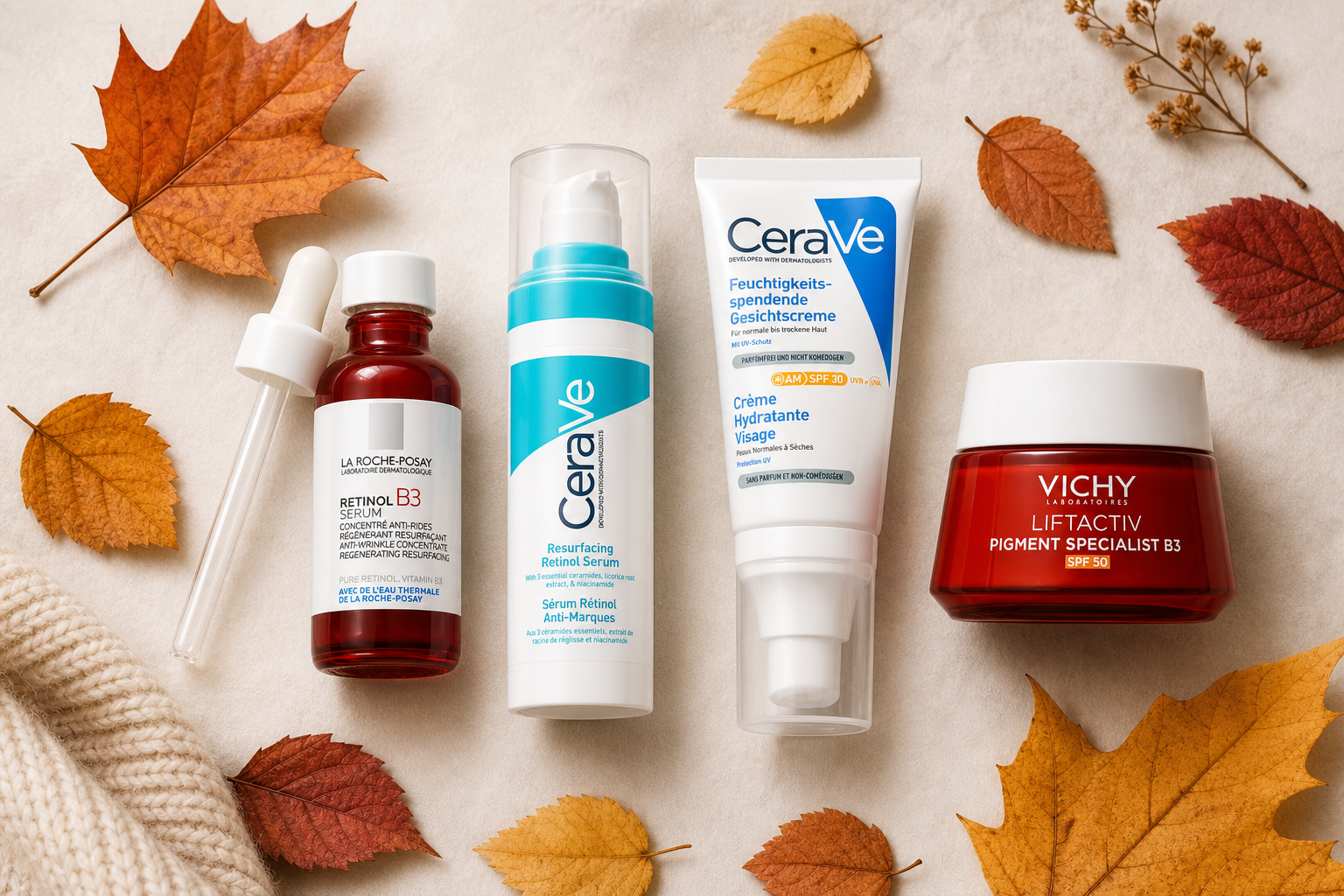
Have you heard about retinol but are worried about peeling and redness? We'll guide you through the first month of use – from frequency and amount to skin reactions that are normal and those that indicate it's time to slow down.
Why Autumn is the Perfect Time to Start Using Retinol
Summer has its own rhythm – long days, strong midday sun, and skin that manages quite well even without new products. Autumn calms this rhythm. The sun stays lower in the sky, UV intensity decreases, and naturally, we spend less time outdoors during midday. This is why retinol is traditionally introduced into skincare routines in autumn: the skin can gradually get used to this potent ingredient without being burdened by intense sun exposure at the same time.
This doesn't mean retinol is off-limits from spring to September. It just means that starting in autumn is more convenient. Sun protection is essential with retinol all year round, but it's easier to maintain in autumn, and the first few weeks of adaptation occur in calmer conditions. There's also a practical reason: after summer, the skin is often dried out from saltwater, chlorine, and heat, so any changes in skincare are typically made right now.
This text is for readers who have heard about retinol before. Maybe they've come across it in discussions, from a friend's recommendation, or from the description of a serum they looked at twice before putting back on the shelf. They're tempted by the idea of smoother skin but are put off by stories of peeling, redness, and a week of not wanting to show their face. These stories aren't made up – they mostly relate to one scenario: too high a concentration, too often, right from the start, and without hydration.
The good news is that the first month with retinol has clear rules. If you follow them, the start is usually much smoother than expected. It's not complicated science or dozens of steps; it's more about patience and a few decisions you make at the beginning and then stick to.
In the following sections of the article, we'll cover four things that will most influence the outcome:
- How often to apply retinol at the start and how to gradually increase the frequency without overloading your skin.
- How much to use – the amount is a more common source of issues with retinol than the concentration itself.
- How to read your skin's reactions, meaning what is normal adaptation and what is a signal to slow down.
- How to build the rest of your routine around retinol so it doesn't clash with other products.
Before we dive in, a note on expectations. Retinol is not a one-weekend solution, and even the most cautious approach won't make it a quick fix. It works over weeks and months and rewards perseverance rather than determination. So if you're starting this autumn, consider the first month as a getting-to-know-you period: the goal isn't to see results, but to reach winter with skin that tolerates retinol well and has adapted to it without unnecessary drama.
How Retinol Works and What to Expect
Retinol is a derivative of vitamin A and has been used in cosmetics for several decades. As a result, there is more expert literature on it than on most newer active ingredients – and that's also why you often encounter it in skincare product descriptions. However, to ensure a good first experience, it's worth knowing what you can and cannot expect from it.
Simply put, retinol helps the skin renew its surface layers more quickly. Skin cells renew continuously, but this process slows down with age and environmental influences. Retinol gently accelerates this, so over time, the skin appears smoother, more even, and reflects light better. Most visible changes, therefore, relate to texture and overall appearance – retinol gradually improves the skin, not dramatically.
The same mechanism also explains why the skin initially reacts: faster surface renewal means a temporarily weaker skin barrier. This is not a sign that retinol doesn't suit you, but an expected phase that is accounted for in the skincare plan.
Retinol, Retinal, and Retinol Esters
In descriptions, you'll come across several related names, and the difference between them is not just a detail. The skin can only utilize one specific form of vitamin A, and the others must first be converted into it. The fewer conversions needed, the faster the substance acts – and the more likely it is to be irritating for beginners.
- Retinol Esters (such as retinyl palmitate on packaging) are the gentlest of this trio. The conversion takes the longest, and changes occur more slowly, but the skin usually tolerates it without complaints.
- Retinol is a compromise between effectiveness and tolerability and is by far the most common variant in pharmacy and drugstore skincare. For a first introduction, it is generally a sensible start.
- Retinal (retinaldehyde) is one step closer to the form that the skin actually uses, so it acts faster. However, it tends to be more sensitive to irritation.
Prescription retinoids, such as tretinoin, are a separate category. These are not cosmetics but medicinal products and should be handled by a doctor – they cannot be compared with regular skincare.
When You Will See the First Changes
Retinol is a long-term commitment, and this is where most first attempts fail. The timeline looks roughly like this, although it varies for each person depending on skin type and concentration:
- Two to three weeks for adaptation – do not expect improvements at this stage.
- Four to eight weeks is usually enough to notice the first difference in texture; the skin tends to feel smoother to the touch.
- Three to six months is the timeframe in which you can assess the impact on fine lines and tone uniformity. Until then, it's worth not judging anything.
Why a Higher Percentage Doesn't Mean Better Results
Concentrations on packaging start at around 0.1%, and it's tempting to see them as a quality ranking. However, for beginners, the lower range, approximately 0.1 to 0.3%, has proven effective for several reasons.
- Percentages are not comparable across forms – 0.1% retinal behaves differently than 0.1% retinol.
- The entire formulation contributes to the result: the carrier, encapsulation, and accompanying soothing ingredients determine how well the skin tolerates the product.
- Consistency, not strength, is key. A gentler product that you can use for six months benefits the skin more than a strong one that you have to stop using after ten days.
Moreover, many manufacturers do not disclose the concentration at all, so it cannot be used as a selection criterion. A more practical guide is the description on the packaging: formulations intended for sensitive skin are usually more suitable for beginners than those marketed as intensive care. Realistic expectations are almost half the success with retinol.
The First Month Step by Step: From Frequency to Dosage
The most common mistake at the beginning is not choosing the wrong product, but moving too quickly. Your skin is just getting used to retinol and it takes weeks, not days. Consider the first month more as an introductory phase rather than full-fledged care – the goal is not to use the serum as often as possible, but to reach a frequency that your skin can tolerate long-term without issues.
A simple framework for the first four weeks might look like this:
- Week 1 – two evenings spaced at least two days apart, for example, Sunday and Wednesday. Spend the remaining evenings just on cleansing and moisturizing.
- Week 2 – stick to two evenings. If you notice slight tightness or gentle peeling, do not increase the pace and give your skin an extra week at the same rhythm.
- Week 3 – add a third evening, but only if the previous two weeks have gone smoothly.
- Week 4 – three to four evenings a week. Most beginners will stay at this frequency for a long time and have no reason to go higher.
The plan is a guideline, not a mandate. If your skin reacts, it's not wrong to stay at a lower frequency for an extra week or to take a step back; on the contrary, those who skip steps are likely to complicate the start. Retinol doesn't work based on how much you use at once, but on how regularly your skin receives it.
How Much Serum to Use
For the entire face, a pea-sized amount is sufficient. Squeeze it onto your finger, divide it into four smaller doses for the forehead, both cheeks, and chin, and then spread it into a thin, even layer. More product doesn't mean faster results – just a higher chance of skin irritation. Avoid the immediate eye area, corners of the nose, and lips, which have the most delicate skin; there are separate products with lower concentrations for the eye area.
Always apply to dry skin. After removing makeup and washing, let your face air dry for ten to fifteen minutes before applying the serum. Moist skin absorbs active ingredients faster, which is a disadvantage when introducing retinol – so it's worth not skipping this pause. And because retinol is sensitive to light and the skin becomes more susceptible to sunlight after using it, it should be used exclusively in the evening routine. It doesn't fit into the morning routine, even on days when you stay home.
The Sandwich Method for Sensitive Skin
If you're unsure how your skin will react, soften the start with the so-called sandwich method. The principle is simple: first apply a thin layer of moisturizer, wait a few minutes, add the retinol serum, and finally repeat the layer of cream. This way, retinol reaches the skin more gradually, and along with hydration, reduces the risk of tightness and dryness. Those with more resilient skin can skip the sandwich and apply cream after the serum.
Whichever option you choose, never skip the moisturizing step. A supported skin barrier is what determines whether the first month goes smoothly or ends in interruption.
High SPF in the Morning, No Exceptions
Morning protection is an integral part of the entire introduction, not an optional extra. Use a product with a high SPF 50 every day you're outside in daylight – including overcast autumn days when ultraviolet rays penetrate the clouds. Apply the cream as the last step in your morning routine, in a sufficient layer on the face, neck, and backs of the hands.
The reason is practical: without daily protection, the work retinol does overnight is largely lost, and the skin is unnecessarily burdened. If you know you won't reliably use SPF in the morning, it's wiser to postpone starting retinol until you establish the morning step.
Which Skin Reactions Are Normal and Which Are Not
The first few weeks with retinol can test your patience. Your skin is just getting used to the new stimulus, and some reactions that might surprise you are simply part of this period. Other symptoms, however, signal that you've overdone it – and the sooner you recognize them, the shorter the break you'll need.
Common reactions that appear initially and gradually subside on their own include:
- slight dryness and tightness, usually on the second or third day after application,
- mild peeling around the nose, chin, or forehead,
- slight roughness on the surface, which smooths out after applying cream,
- light redness that disappears by morning,
- temporarily increased sensitivity to products that previously suited you, such as a cleansing gel or perfumed body cream.
These symptoms usually peak between the second and fourth weeks and diminish with continued use. If dryness and peeling are your main concerns, usually adding more hydration is enough without changing the frequency.
On the other hand, take the following as a signal to stop:
- burning or stinging that doesn't subside within a few minutes of application,
- swelling, especially around the eyes and eyelids,
- weeping areas, cracks, or scabs,
- redness that persists in the morning and doesn't disappear by the next evening,
- itching or rash even in areas where you haven't applied retinol.
The difference between the two groups can be summed up simply. Adaptation is uncomfortable but limited and improves week by week. Irritation, on the other hand, escalates, spreads to surrounding areas, and becomes more pronounced with each application. If you're unsure, go by the morning condition of your skin: what subsides by morning is generally okay.
A break is not a step back or proof that retinol isn't for you. It's a normal part of the introduction process and can be done in several steps:
- Skip retinol for five to ten days, which could mean missing three or four planned applications.
- Simplify your skincare to the essentials – gentle cleansing, moisturizing cream, and SPF protection in the morning. Avoid acids, peels, cleansing brushes, and alcohol-based toners.
- Wait until your skin can last a whole day without burning, tightness, and redness. Only then is it sensible to continue.
- Resume at a lower frequency than where you left off. If retinol irritated you twice a week, start again once a week and increase slowly.
During and after the break, it's beneficial to use ingredients that help support the skin barrier. Look for them in product compositions: ceramides replenish lipids in the skin's surface layer, panthenol and glycerin help retain moisture, and cica ingredients, or extracts from Centella Asiatica, are long-favored in caring for irritated skin. A simple, non-greasy cream for sensitive skin without fragrance will also serve well. On the other hand, wait with other active ingredients – layering acids, vitamin C, and retinol is the most common reason why skin flares up initially.
However, not everything can be solved at home. See a dermatologist if redness and burning persist for more than two weeks without retinol, if swelling, severe rash, or pus-filled areas appear, or if you have diagnosed rosacea, eczema, or other skin conditions and are unsure how to handle retinol. Also, arrange a consultation during pregnancy and breastfeeding – retinoids are generally not recommended during this period, and a specialist can advise you on gentler alternatives.
How to Build an Autumn Routine with Retinol
When you put everything together, you'll find a surprisingly short list. Retinol doesn't require a ten-step regimen or a shelf full of active ingredients – it needs a stable foundation that allows it to work while keeping the skin barrier calm. An autumn routine for beginners can be composed of four steps: two in the evening and two in the morning. More importantly, you can maintain this routine for months without getting bored.
Evening Routine
- Gentle Cleansing – micellar water or a mild cleansing gel that removes makeup and impurities without leaving the skin feeling tight. If your face feels "squeaky" clean after washing, the cleanser is too stripping for use with retinol.
- Retinol Serum – a thin layer on dry skin, at the frequency you set in the first month. Avoid the eye and lip area, or use a product specifically designed for these areas.
- Nourishing Cream – while a light gel might have sufficed in the summer, in autumn it's worth opting for a richer texture with ceramides, panthenol, or glycerin. This step determines whether you can handle retinol without unnecessary irritation.
Morning Routine
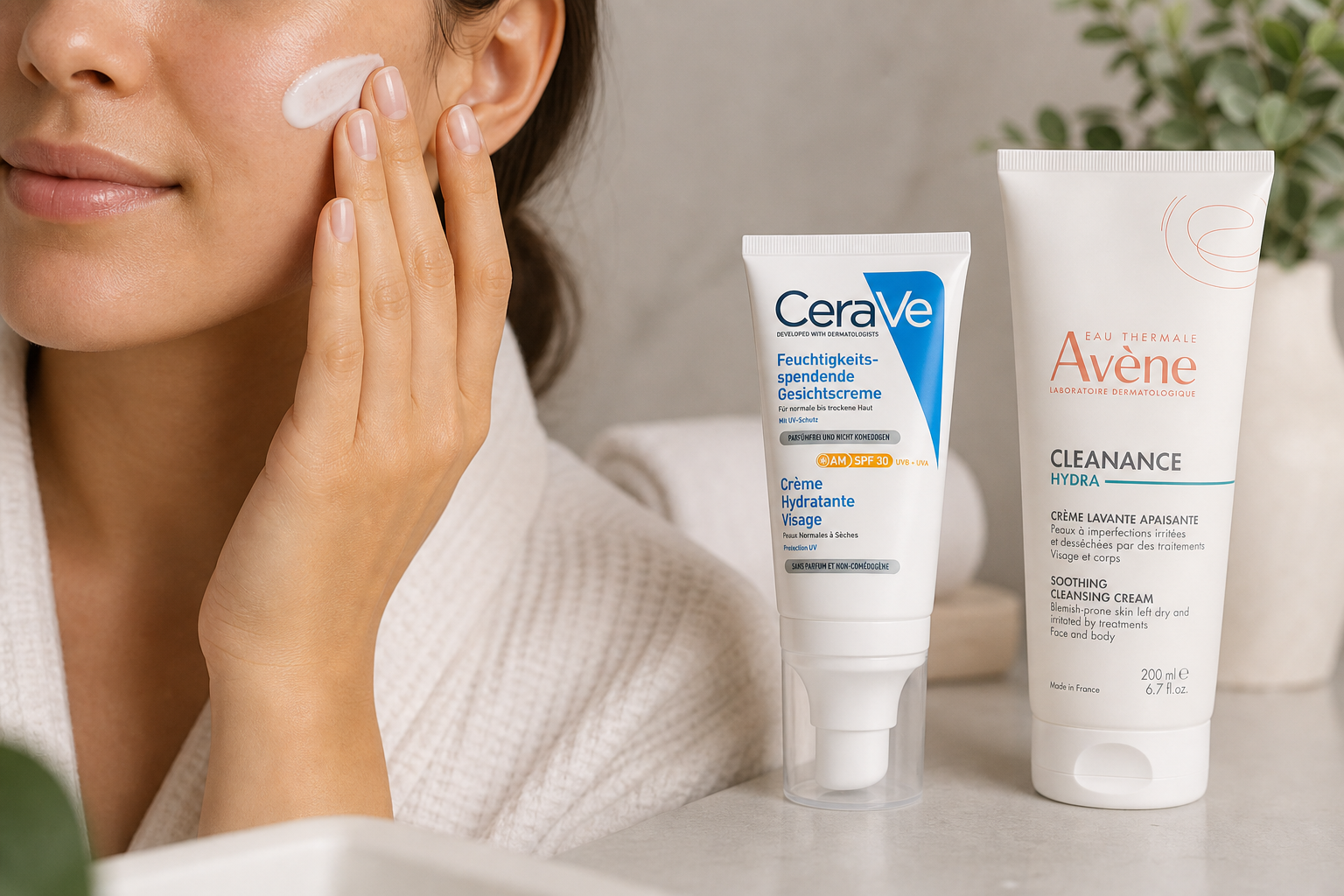
In the morning, simply rinse your face with lukewarm water or use a gentle cleanser, apply a moisturizing cream, and finish with SPF 50 protection. Morning protection is not an optional extra with retinol: the skin is more sensitive to light, and without a filter, you're working against your own efforts. If you dislike the extra layer, there are moisturizing creams with filters that combine both steps into one – in practice, this can be the difference between a routine you stick to and one you abandon after two weeks.
How to Adapt the Routine to Your Skin Type
- Sensitive Skin – choose a lower concentration or a gentler form of retinol, spread the introduction over a longer period, and apply a nourishing cream even before the serum.
- Dry and Atopic Skin – the foundation is a rich balm or cream with a restorative formula; add retinol only when the skin is calm and not flaky.
- Mature Skin – retinol pairs well with hydrating serums, typically with hyaluronic acid or niacinamide, which complement what retinol alone doesn't address.
- Oily and Combination Skin – lighter emulsions instead of heavy creams and a cleansing gel that doesn't rely on harsh surfactants. Retinol is not a substitute for acne care, which requires a separate plan.
Where to Find Specific Products
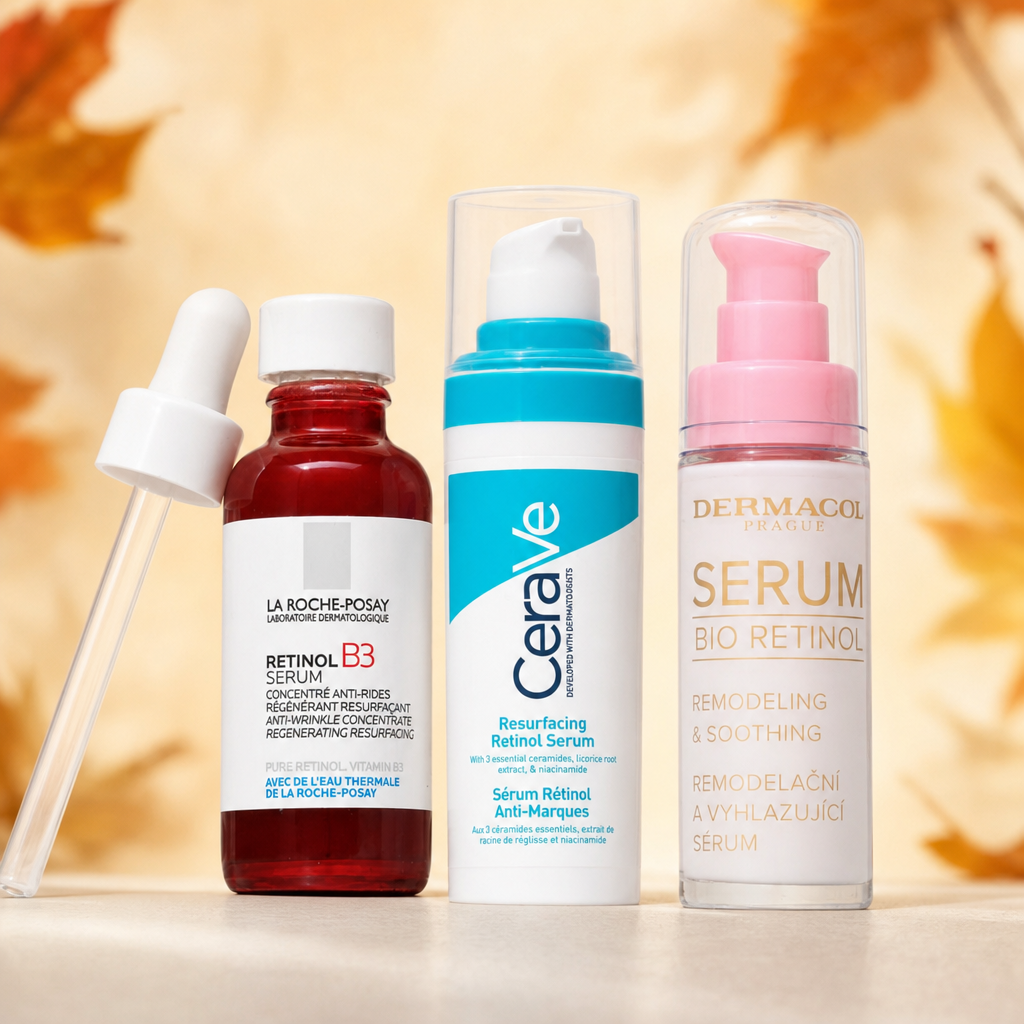
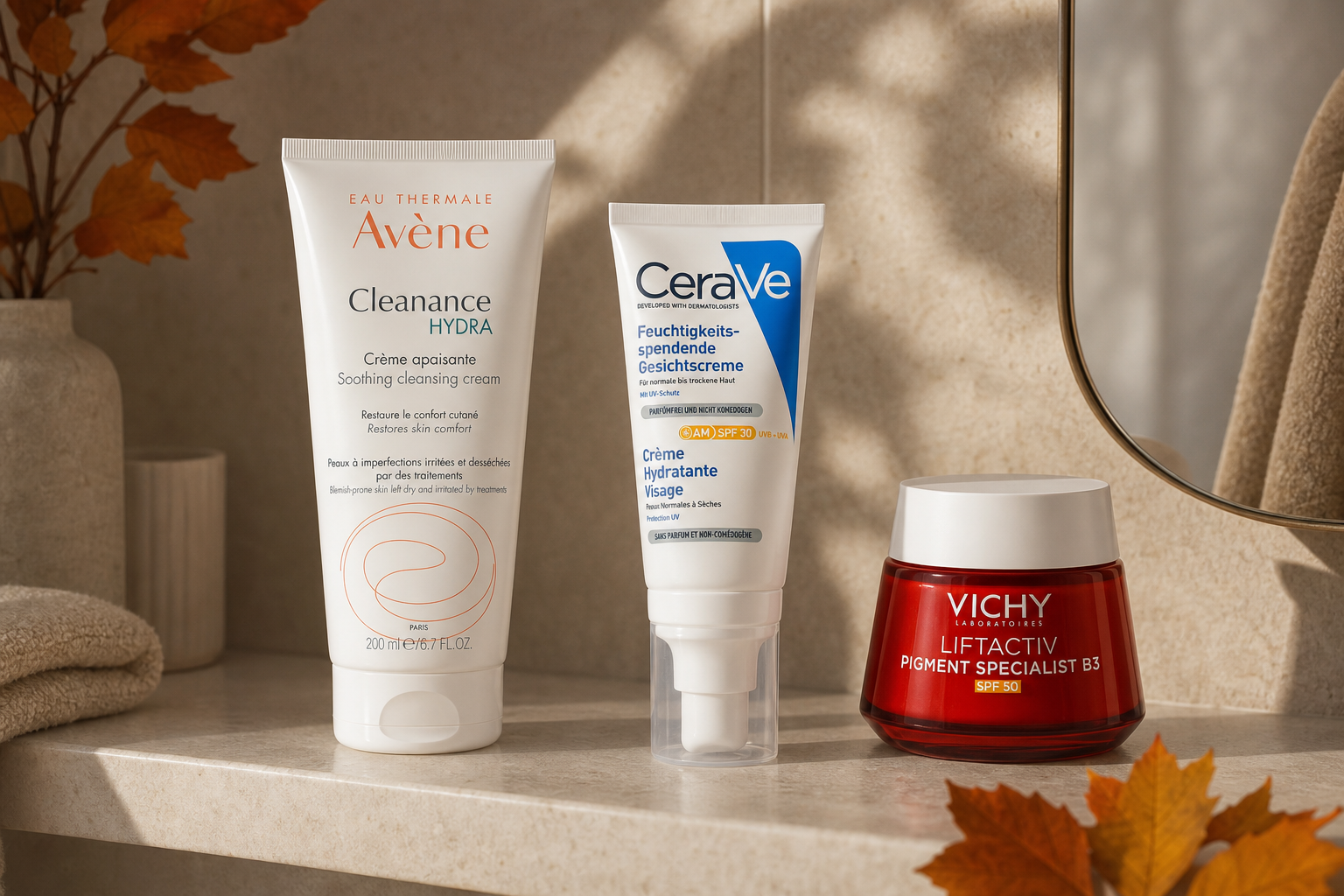
In the facial and body care category on Brasty, you'll find dermocosmetic brands that have been working with retinol for a long time and offer complementary care – cleansing, soothing creams, and protection with filters. These include La Roche-Posay, CeraVe, Vichy, Bioderma, or Uriage, and the price range is quite broad, so you can start without a large initial investment. It's more practical to assemble a complete trio from one line than to search for a single universal serum: the formulations complement each other, and you'll more easily identify what suits your skin.
And finally, the main point: retinol makes sense as part of a routine, not as a standalone step to make up for lost time. Regular cleansing, hydration, and daily protection do most of the work; retinol adds the rest if you give it time and peace. Autumn is a suitable season for such a start – make the most of it.
Category
Recommended articles
Riiffs Freeze in Flames: Ice and Flames Illuminate Warsaw "Give a girl the right shoes and she can conquer the world!" Marilyn Monroe