
Why Lips Become Dry at the End of Summer
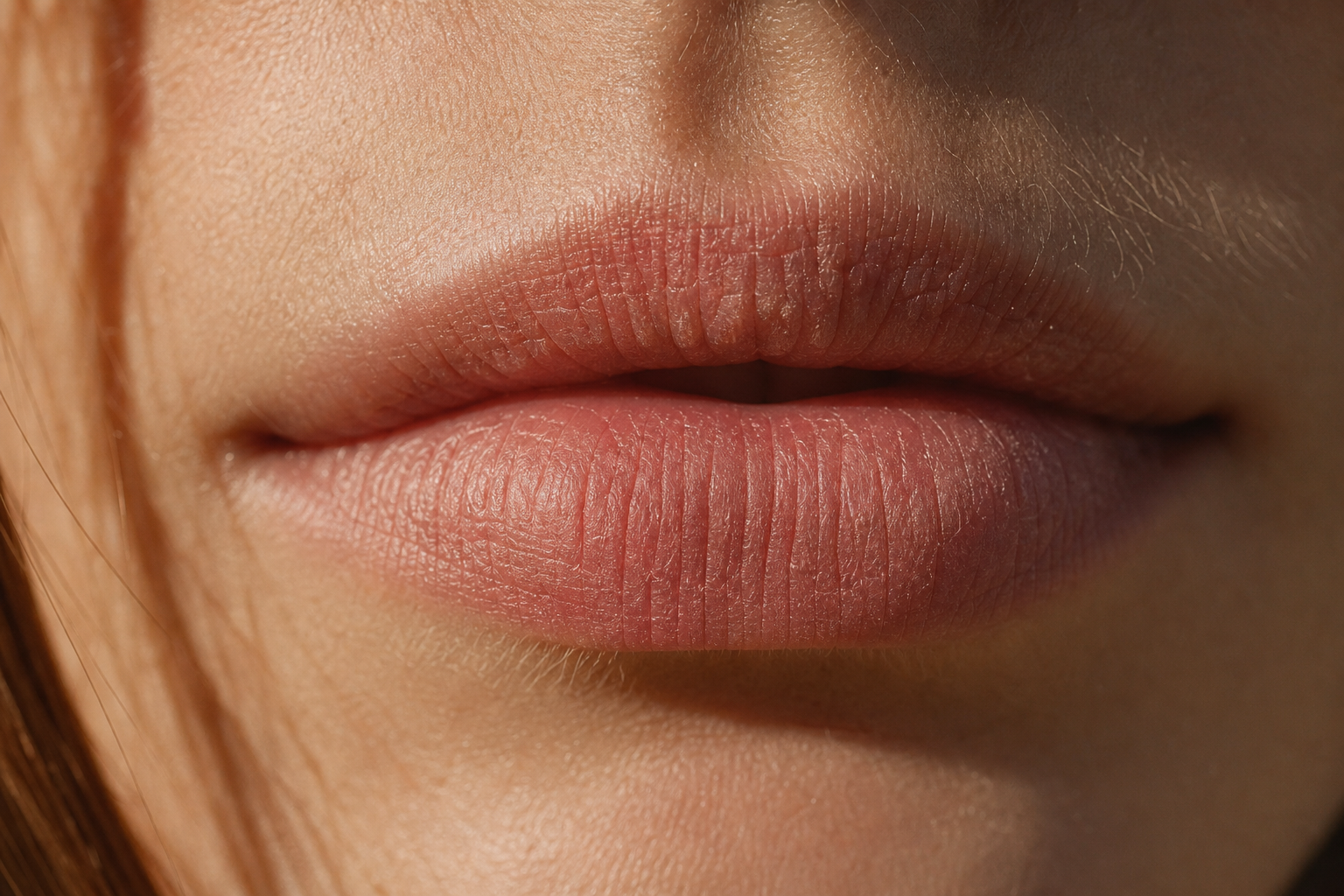
The end of summer is often first noticeable on your lips rather than the rest of your face. While the skin on your cheeks may just have a slightly uneven tone after weeks by the water, by the end of August, lips tend to feel tight, look dull, and may peel slightly with every smile. It's not just about not drinking enough water, as is often said—it's a combination of several factors affecting the lips throughout the summer months, with the consequences only becoming apparent in the fall.
The skin on the lips is structurally different from the skin on your cheeks. It's significantly thinner, has fewer cell layers, and crucially, lacks sebaceous glands. This means it doesn't have its own natural oil film, which elsewhere on the body helps slow down the evaporation of water from the surface. As a result, lips dry out much faster under the same conditions and can't retain moisture as long as the surrounding skin. The lower amount of melanin adds to their increased sensitivity to ultraviolet radiation—and lips are often the part of the face most frequently forgotten when applying sunscreen.
During the summer months, lips are exposed to several stressors simultaneously:
- Sun and heat – Ultraviolet radiation stresses the thin skin of the lips, and high temperatures increase water evaporation.
- Salt and chlorinated water – After swimming, a thin film of salt or chlorine remains on the lips, attracting moisture and drawing it away from the surface.
- Wind and dry air – At the seaside or in the mountains, flowing air removes moisture faster than the skin can replenish it.
- Air conditioning – In cars, planes, and offices, the relative humidity of the air drops, further intensifying dryness.
- Licking lips – Provides short-term relief, but evaporating saliva takes away the remaining moisture and speeds up the cycle.
The key point is that the damage may not show immediately while on vacation. In warm and humid air, even weakened lips can manage for a while, so you might not associate the problem with its true cause. However, as temperatures drop in September and October and heating systems are turned on, the relative humidity indoors significantly decreases. Lips that have lost part of their protective layer during the summer weeks have no reserve for this change—and that's when they start to crack, peel, and feel uncomfortable. Therefore, targeted lip care is most needed at the transition from summer to autumn, not during the vacation itself.
The good news is that lip skin regenerates relatively quickly, so even significantly dried lips usually calm down with regular care within a few weeks. The renewal process has three steps, and following them in this order makes the most sense:
- Replenish missing lipids so the lips can retain moisture.
- Gently remove dead skin that clings to the surface and prevents care from being absorbed.
- Establish a daily routine including sun protection to prevent the condition from returning.
Before reaching for the first lip balm you have on hand, it's worth knowing what your lips specifically lack. Otherwise, you'll provide a pleasant feeling for half an hour but not longer-lasting relief. Each of these steps is covered separately in this article, and for each, we'll discuss what to expect from the care and the limits of what cosmetics can achieve.
How the Lipid Barrier of Lips Works
In the world of cosmetics, lips are a unique area. The skin on them is several times thinner than on the cheeks, has a weaker stratum corneum, and almost no sebaceous glands to continuously replenish the protective film. Moreover, they are constantly in motion – when talking, eating, and drinking. The result is simple: moisture evaporates from the surface of the lips faster than elsewhere, and the lips cannot replenish it as effectively as the surrounding skin.
What helps them in this is called the lipid barrier – a thin layer of fat in the outermost part of the skin. Dermatologists usually describe it as a wall: the cells of the stratum corneum are bricks, and the lipids between them function as mortar. As long as the mortar holds, water stays inside, and external stimuli do not penetrate. Once it washes away, the wall allows passage in both directions: water escapes from the inside, and external elements penetrate that should not.
This mortar is primarily composed of three groups of substances:
- Ceramides – the main building block of intercellular lipids. They create a layered structure that retains water in the skin.
- Fatty Acids – provide flexibility to the barrier and help maintain a slightly acidic environment on the skin's surface.
- Cholesterol – connects ceramides with fatty acids into a cohesive whole; without it, the layer is fragile.
The essential point is that these components work as a team. It's not just about how much fat is in the barrier, but also about their mutual ratio – if one component significantly decreases, the barrier functions less effectively, even if the others remain in place.
And that's exactly what summer can do. Salty and chlorinated water gradually washes away surface lipids, hot dry air and air conditioning increase water evaporation, and ultraviolet radiation further stresses the thin skin of the lips. Licking your lips, which you instinctively do to alleviate the feeling of dryness, also plays a role: saliva evaporates and takes the remaining moisture with it. Each of these influences alone is not dramatic, but together they deplete more lipids over several weeks than the skin can replenish.
By the end of August, a thinned barrier meets a stratum corneum renewal that can't keep up. Lips start to peel, small flakes easily detach, and in the corners – areas that are constantly mechanically stressed and where moisture accumulates – cracks form. This is not damage that appears overnight; it's the result of a slow depletion that you might not have noticed over the summer.
This suggests a connection with dermatological lines for dry and atopic skin. Whether you know La Roche-Posay Lipikar, CeraVe, or Bioderma Atoderm, all three work on the same principle: replenish missing lipids, add ingredients that retain water in the skin, and omit anything that would irritate the weakened barrier – such as unnecessary fragrances and aggressive surfactants. This type of formulation is also suitable for lips, which need calm and nourishment rather than active ingredients after summer.
However, it's good to know where the limit is. Cosmetics support the barrier and create conditions for its renewal, but they do not replace treatment. If the corners crack repeatedly, hurt, ooze, or the condition does not improve within two to three weeks, it may be inflammation or a symptom of another cause, and the solution belongs to a doctor, not a care basket.
Gentle Removal of Dead Skin Without Irritation
At the end of summer, the surface of the lips is often covered with tiny flakes that peel unevenly, tempting you to pick or scrape them off. This is the moment when you decide whether your lips will calm down in a few days or if you'll extend the process for weeks. Dead skin is just a consequence – the real cause lies beneath, in the skin's impaired ability to retain moisture. If you remove the flakes forcefully, you'll also strip away a layer that still serves a protective function, causing your lips to dry out again, this time more quickly.
Mechanical Peeling Isn't Always a Good Idea
Sugar and salt lip scrubs work on a simple principle: coarse particles mechanically wipe away loose cells. For healthy lips that are only slightly uneven, this usually doesn't matter. However, if your lips are burning, cracked, red, or have sores in the corners, mechanical scrubbing will worsen the problem. Damaged skin doesn't have a strong enough surface to withstand abrasion, and the scrub becomes another stressor.
If you decide to use a scrub, stick to three rules: apply very gentle pressure with your fingertip, limit it to half a minute, and do it no more than once a week. A toothbrush or terry cloth is not suitable for lips – their abrasiveness is disproportionate for such thin skin.
Overnight Softening as a Gentler Approach
A gentler and usually more pleasant method for dry lips is to let the flakes fall off on their own. In the evening, apply a thick layer of a greasy balm or occlusive lip mask and leave it on overnight. The moisture retained under the occlusion softens the dead cells and loosens their connection to the underlying skin. In the morning, simply wipe your lips with a damp soft cloth or rinse with water, and the flakes will come off without pulling.
You know the same principle from body care. Smoothing creams like CeraVe SA Smoothing Cream or rich balms from the Bioderma Atoderm range don't tackle rough skin on elbows and feet by scrubbing, but by patient moisturizing, which allows the surface to even out on its own. These body products are not suitable for lips, as they are formulated for thicker skin elsewhere on the body. But the logic is the same: less mechanics, more time and lipids.
Besides the right technique, it's also important to know what not to do during this period. The following habits typically delay recovery:
- Licking your lips. Saliva evaporates faster than pure water and takes residual moisture with it. Short-term relief thus leads to greater dryness, and because saliva contains enzymes, it further irritates the already weakened surface.
- Picking dry flakes. Peeling off skin that is still attached creates a small sore – and it heals in days, not hours.
- Aggressive scrubs and exfoliating acids. Products with higher acid concentrations have different conditions on the lips: the stratum corneum is thinner here, so the reaction is stronger than you might expect.
- Menthol and camphor balms. The cooling sensation is tempting because it masks discomfort, but menthol, camphor, and strong aromatic components do not restore the barrier. For irritated lips, they are often the reason you reach for the balm again in twenty minutes.
- Long-lasting matte lipsticks. Until your lips calm down, put them aside – their formulation is designed to adhere and not transfer, which means further drying for cracked surfaces.
The entire process usually takes two to four days. You'll know you're done when your lips no longer feel rough to the touch and the balm spreads evenly without catching on the edges of flakes. Only then does it make sense to consider longer-term care.
Šest značek dermatologické kosmetiky pro suché rty
Ať už hledáte jednoduchý balzám do kabelky, nebo péči, která zvládne i suchou pokožku v okolí rtů, orientace mezi značkami dermatologické kosmetiky bývá snazší, než se zdá. Následující šestka patří k tomu, co v pleťové a tělové kosmetice vedeme nejčastěji, a jejich složení u vysušených rtů dává smysl. U každé značky najdete krátký kontext a odrážky pro srovnání – zaměření, typ pokožky a cenovou úroveň.
Bioderma – Atoderm pro velmi suchou pokožku
Bioderma patří u nás k nejprodávanějším značkám segmentu a řada Atoderm cílí na velmi suchou a atopickou pokožku. Pro rty ji využijete spíš nepřímo: balzámy a ultravyživující krémy z této řady se hodí na okolí rtů, koutky a bradu, kde se sucho po létě projeví jako první.
- Zaměření: velmi suchá až atopická pokožka, sprchové oleje a vyživující balzámy.
- Vhodné, když: vás po sprchování stahuje nejen tělo, ale i pokožka kolem rtů.
- Cenová úroveň: střední, u větších balení s příznivým přepočtem na mililitr.
La Roche-Posay – Lipikar pro doplnění lipidů
Lipikar je řada zaměřená na doplňování lipidů v pokožce, tedy přesně na to, co koncem léta chybí. Balzám Lipikar Baume AP+ M patří u nás k nejprodávanějším produktům v péči o pleť a tělo; na samotné rty je vhodnější mastnější balzám, na jejich okolí ale funguje dobře.
- Zaměření: suchá pokožka se sklonem ke stahování, doplnění lipidů.
- Vhodné, když: hledáte jednu texturu na tělo i na sušší místa v obličeji.
- Cenová úroveň: premium.
CeraVe – ceramidy jako základ složení
CeraVe staví složení na ceramidech a kyselině hyaluronové. Pokud vás zajímá spíš složení než vůně nebo balení, je to praktická volba: textury jsou neparfemované a nenápadné, takže se dají použít i na obličej a okolí rtů.
- Zaměření: ceramidové hydratační krémy a mléka, čištění citlivé pleti.
- Vhodné, když: preferujete jednoduché složení bez parfemace.
- Cenová úroveň: premium, obvykle ve velkých baleních.
Vichy – hydratace pomocí termální vody
Vichy pracuje s minerální termální vodou; hydratační řada Aqualia Thermal nabízí krémy, které se hodí do podzimního přechodu. Bohatší Aqualia Thermal Rich Cream je určená na obličej – na rty ji nenanášíte, ale zvládne oblast nad horním rtem, kde se sucho drží často nejdéle.
- Zaměření: hydratace dehydrované pleti, termální voda v základu.
- Vhodné, když: pleť máte spíš dehydrovanou než mastnou.
- Cenová úroveň: premium.
Uriage – Xémose pro podrážděnou pokožku
Řada Xémose je určená pokožce, která je vysušená a má sklon ke svědění. Olejový balzám z této řady bývá volbou ve chvíli, kdy je pokožka kolem rtů napnutá a reaguje na každý dotek.
- Zaměření: velmi suchá pokožka se sklonem ke svědění.
- Vhodné, když: běžný balzám vám nestačí a pokožka snadno reaguje.
- Cenová úroveň: střední.
Nuxe – péče přímo pro rty
Nuxe je ze šestice jediná značka, která má v katalogu produkty vyloženě na rty. Honey Lip Care s medovou bází a balzám Sweet Lemon jsou drobnosti do kapsy nebo kabelky; z řady Nuxuriance Ultra pak najdete péči o oční a rtové kontury. Pokud hledáte přímo balzám na rty, je to nejsnazší začátek.
- Zaměření: balzámy na rty, péče o kontury očí a rtů.
- Vhodné, když: chcete produkt určený přímo na rty, ne univerzální krém.
- Cenová úroveň: premium, malá balení.
Značky se dají kombinovat: pleťová nebo tělová péče pokryje okolí rtů a širší plochu, balzám pak samotné rty. Zvažte, jestli řešíte celkově suchou pokožku, nebo jen rty – od toho se odvíjí, která značka vám bude sedět.
Podzimní rutina pro rty: konkrétní doporučení
Ať už máte rty jen mírně sušší, nebo se vám na nich po prázdninách drží jemné šupinky, obnova nepotřebuje deset přípravků – potřebuje pravidelnost. Vyhraďte si na ni tři až čtyři týdny a teprve pak hodnoťte výsledek. Rty se obnovují poměrně rychle, takže první úlevu obvykle vnímáte během několika dní, ale vláčnost, která vydrží do zimy, přichází až po několika týdnech soustavné péče.
Celá rutina se dá zapsat do tří kroků, které si zapamatujete napoprvé:
- Ráno – hydratace a ochrana. Na čisté rty naneste lehčí balzám bez parfemace a bez chladivých složek. Než vyjdete z domu, doplňte ho ochranou proti slunečnímu záření na obličej i na okolí rtů.
- Večer – výživnější vrstva. Na noc sáhněte po hustším, mastnějším balzámu, který na rtech vydrží několik hodin. Nanášejte ho jako poslední krok, až po péči o pleť, a nešetřete – přes noc rty nikam nespěchají.
- Jednou týdně – šetrné odlupování. Stačí jediné mechanické ošetření za sedm dní, a to jen tehdy, když rty nejsou popraskané. Častější odlupování obnovu spíš vrací na začátek.
Na sluneční ochranu se po srpnu zapomíná nejčastěji, přitom ultrafialové záření neubývá tak rychle jako teplo. Pokožka rtů je tenká a obsahuje málo pigmentu, takže září a říjen na horách nebo na kole u vody pro ni nejsou o mnoho mírnější než červenec. Pokud jste v létě používali na obličej řadu La Roche-Posay Anthelios, nechte ji v koupelně i na podzim a nanášejte ji dál na obličej včetně okolí rtů; na samotné rty pak volte balzám s uvedeným faktorem SPF.
Podle typu pokožky a rozpočtu si vyberte jednu z následujících kombinací a držte se jí celý cyklus:
- Citlivé rty, které rychle zčervenají. Večer naneste zvláčňující péči z řady Bioderma Atoderm nebo Uriage Xémose na okolí rtů a doplňte ji jednoduchým balzámem bez vůně na samotné rty. Ráno stačí tentýž balzám a nad ním sluneční ochrana. Obě řady jsou postavené na klidnějším složení, takže se s nimi dá pracovat i ve fázi, kdy rty ještě štípou. Cenově se pohybujete kolem dvou až tří stovek za balení, které vydrží několik měsíců.
- Velmi suché a jemně popraskané rty. Na noc zkuste Nuxe Honey Lip Care 10 ml – hustší medovou péči, kterou nanesete v tenkém filmu a necháte působit. Na den je k tomu praktičtější lehčí Nuxe Sweet Lemon Lip Balm 15 g. Odlupování v této variantě odložte, dokud povrch rtů nebude zase celistvý.
- Minimalistická a rozpočtově střídmá varianta. Jeden hydratační krém s ceramidy, například CeraVe Moisturising Cream, použijete na okolí rtů i na ruce, a jediný nákup navíc je obyčejný balzám z kategorie péče o rty. V nižším cenovém pásmu se dá vystačit s částkou pod dvě stě korun a rutina zůstává stejná – ráno tenká vrstva, večer silnější.
Ať zvolíte kteroukoli kombinaci, jedno platí vždy: balzám funguje jen tehdy, když je na dosah. Nechte si jedno balení v kabelce, druhé u postele a třetí v autě nebo v šuplíku v práci. Právě tohle rozhoduje o výsledku víc než složení, které si v obchodě porovnáváte.
A ještě jedna poznámka na konec. Pokud praskliny v koutcích nebo trvale olupující se povrch neustoupí po několika týdnech pravidelné péče, nemá smysl přidávat další balzám – v takové situaci je na místě poradit se s lékařem. Kosmetika umí rtům vytvořit dobré podmínky pro obnovu, ale nezastoupí odborné posouzení, když se za suchostí skrývá jiná příčina.
Category
Recommended articles
"Give a girl the right shoes and she can conquer the world!" Marilyn Monroe