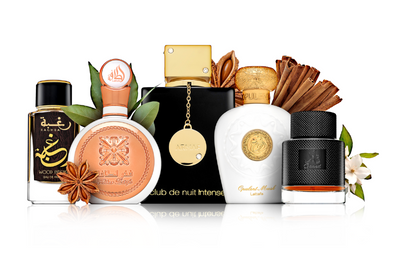




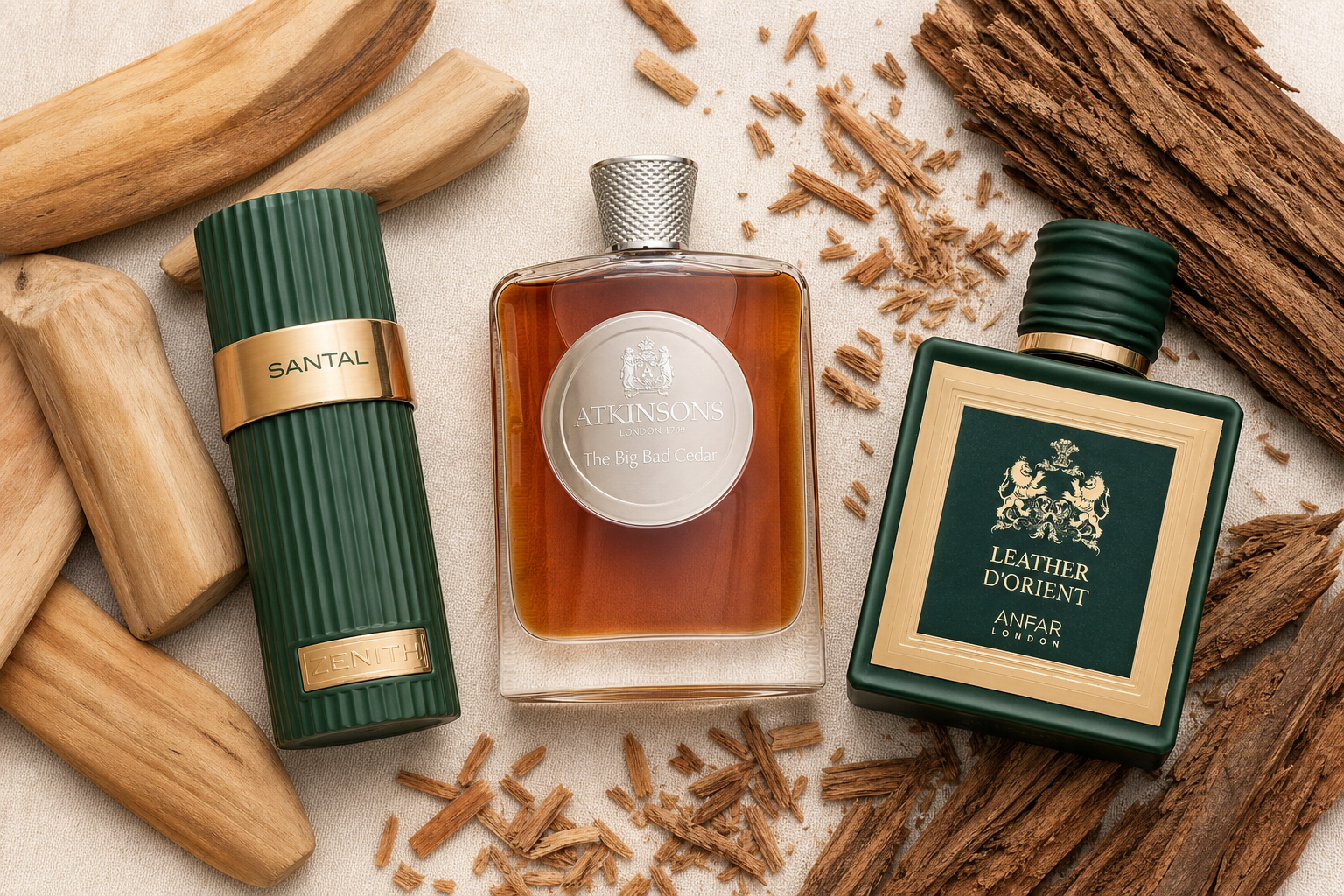

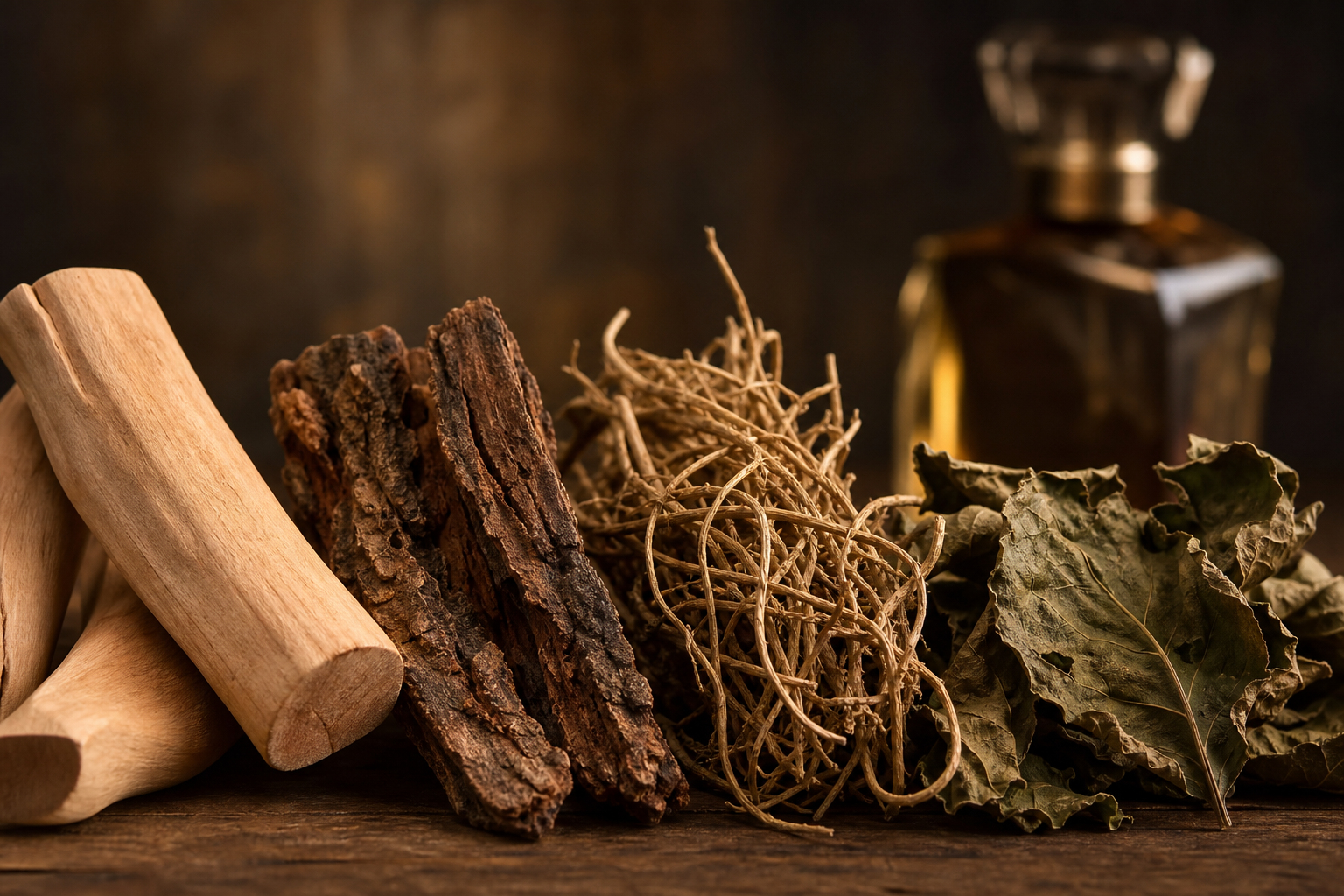
The woody family is not a single scent but a group of raw materials with very distinct characters — from creamy to earthy. We'll explain how sandalwood, cedar, vetiver, and patchouli smell, how they behave on the skin, and in which tone combinations you most often encounter them.
Why the Names of Woody Ingredients in Perfume Descriptions Mean Nothing to You
You probably read a perfume description like most people do: you glance at the price, the volume, and then the list of notes. "Sandalwood in the base," "vetiver heart," "woody-oriental composition" — words that sound professional and trustworthy, but when you try to associate them with a specific sensation, nothing happens. You don't know if you're in for something warm and soft, or dry and strict. So, you decide based on the bottle, the brand, or what someone else likes.
It's not your fault, and it certainly doesn't mean you lack a sense for scents. You know citrus, vanilla, cinnamon, or rose from the kitchen and garden, you have something to connect them with. It's different with woody family ingredients: you don't usually get sandalwood, vetiver, or patchouli in your hands, and if you do, it's in a processed form that doesn't resemble the final impression in a perfume. You're missing a reference point, a memory to which the description could cling.
There's another issue. The woody family isn't a single scent but a rather loose group of ingredients with very different characters. Under one label, you can find creamy, almost milky softness and dry sharpness reminiscent of freshly sharpened pencils, damp earth after rain, and smoky, slightly scratchy grass. Two perfumes described as woody can feel almost opposite on the skin — and if you tried one and it didn't suit you, it doesn't mean woody notes aren't for you.
There's one more thing. Two of the four ingredients we'll focus on aren't botanically wood at all: vetiver is the root of a tropical grass and patchouli is the leaf of a low plant. They are classified as woody due to their aromatic expression, as they behave in compositions similarly to real woods — they hold the base and give it weight. The term woody doesn't describe the origin of the ingredient, but how the nose perceives it.
Woody notes are not a marginal affair. Sandalwood, patchouli, and cedar are among the ingredients that repeatedly appear in descriptions across perfumes for women, men, and unisex, often in the base notes. It's worth getting to know them — even if you don't see yourself as a wood lover. The following text will cover four of them that you will encounter most often: sandalwood, cedar, vetiver, and patchouli. For each, you will learn three things:
- how it smells — how to describe its character so that one can imagine it even without the bottle in hand;
- how it behaves on the skin — when it unfolds, how long it lasts on you, and how prominent it is in the trail you leave behind;
- what it is usually combined with — which notes enhance its character and which push it in a completely different direction.
Whether you're choosing your first woody perfume and want to know what you're getting into, or you're trying to decipher the one you already wear and can't quite name why it suits you — after reading, you should be able to look at the composition and have a fairly realistic idea of the impression awaiting you. It's not an exact science, and your skin always has the final say. But you'll recognize the difference between creamy sandalwood and earthy patchouli even when you only have the text on the label in front of you.
Where Wood Sits in the Fragrance Pyramid and Why It Lasts the Longest
Perfume descriptions are traditionally divided into three layers, known as the fragrance pyramid. This isn't just a conventional way of writing descriptions — it reflects the reality that a scent on the skin is not static. Different ingredients evaporate at different rates, so what you smell in the first minute and what lingers on your sweater in the evening can be almost two different compositions.
- Top Notes — the first impression, usually lasting the first few minutes up to about half an hour. These often include citrus, aromatic herbs, light fruity, and aquatic accords. They are the most volatile, and therefore the most noticeable.
- Middle or Heart Notes — the core of the composition, which develops as the top layer fades. Perfumers typically place flowers, spices, or tea accords here. The heart holds the character of the perfume for most of the time you actively perceive it.
- Base Notes — the heaviest and least volatile layer. This includes resins, musk, vanilla, amber, leather accords, and especially woods. The base lingers on the skin the longest and determines how you remember the perfume.
Woody ingredients almost always sit in the base, and there's a physical reason for this. Their scent molecules are generally heavier and evaporate more slowly from the skin's surface than citrus oil molecules. Slower evaporation means two things at once: wood asserts itself only gradually at the beginning, as it is overshadowed by the more prominent top notes, but it also lasts significantly longer. This is why woody compositions are often described as "developing" — their main ingredient comes to the fore only when it has a calmer space.
In practice, this leads to one thing that greatly changes how a perfume is judged. A woody perfume often smells significantly different on a paper strip than it does after an hour on the skin. A paper strip lacks temperature and moisture, so it mainly retains the top and heart notes, and the base only partially develops. Therefore, immediate evaluation after spraying can be misleading for a woody scent: in the first few minutes, you're mostly judging what will disappear in twenty minutes, and often not the ingredient for which you chose the perfume.
Concentration also plays a role. Eau de Parfum contains more fragrance components than Eau de Toilette, so the base ingredients, including wood, are more discernible and last longer. This doesn't mean that a higher concentration is automatically a better choice — but with woody scents, the difference between Eau de Toilette and Eau de Parfum is often more noticeable than with light citrus compositions, because that slow base part gets more room.
One more thing that sometimes surprises readers: wood in modern perfumery largely comes from synthetic fragrance molecules, not from the distillate of an actual tree trunk. For some woods, like sandalwood, the natural source is limited and its collection regulated, so synthetic alternatives are a common and legitimate route. This is not a deficiency or a "second-rate" substitute — synthetic woody molecules often have a more stable quality than natural batches, which vary according to origin and harvest, and some of them last even longer on the skin than natural ingredients. So if you come across a woody note in the description, don't necessarily expect the scent of sawdust. Expect rather an effect — a sense of smoothness, dryness, or smokiness that the perfumer has deliberately crafted.
Sandalwood and Cedar: Creamy Softness vs. Dry Sharpness
Under the general term "woody base" in perfume descriptions, you'll most often find one of two ingredients that have very little in common. Sandalwood and cedar belong to the same fragrance family, but you can distinguish them on the skin almost immediately: one warms and envelops, while the other draws sharp edges. This difference will tell you whether you expect soft warmth or a clear structure from a woody scent.
Sandalwood: Milky Creaminess
Sandalwood feels soft and rounded. It is typically described as milky, gently sweet, and smooth — without peaks, without sharp onset, more like a warm veil that spreads over the skin and slowly warms up. It doesn't have anything of wood chopped into logs; it approaches the impression of cream, powder, or warm skin. That's why many people perceive it as the most wearable wood.
In compositions, you'll most often encounter sandalwood alongside vanilla, musk, amber, and tonka bean — tones that further extend its creaminess. It also pairs well with floral partners: with rose or jasmine, it creates a soft base that prevents the flower from sounding sharp or sour. It belongs in soft oriental compositions, gourmand fragrances, and very often in niche perfumery, which likes to put milky woodiness at the center of attention.
One thing is good to know when reading descriptions: true Indian sandalwood is a rare and strictly regulated ingredient, so perfumery commonly supports its milky character with other materials. Mention of sandalwood in the tone pyramid is therefore more a description of the resulting impression than information about the origin — and that's quite enough for your choice.
Cedar: Dry and Trimmed Tone
Cedar aims precisely at the opposite pole. It is dry, slightly sour, and resinous, with that well-recognizable tone of sharpened pencils or sawdust in a woodworking shop. It doesn't warm, sweeten, or envelop — instead, it gives the composition outline and tension. Interestingly, it often appears sooner than one would expect from wood: although it lasts the longest in the base tones, its dry trace is noticeable already in the heart of the fragrance, where it trims any sweetness and keeps the scent upright.
The differences between the various types are audible. Atlas cedar tends to be somewhat softer, more resinous, and with an amber hint, while Virginia cedar is drier and most closely matches the idea of pencil wood. So if one cedar suited you and another didn't, it might not be a whim of mood, but truly a different ingredient.
In composition, cedar likes to neighbor with bergamot, lavender, aromatic herbs, and leathery tones; together with musk, it creates a clean, tidy impression that is also suitable for the office. You can expect it primarily in aromatic and fougère compositions, in fresh woody scents, and in a large part of men's colognes, where it often holds the entire structure together.
Two Woods in a Nutshell
- Impression: Sandalwood is creamy, milky, and warming; cedar is dry, trimmed, and slightly sour.
- Behavior on Skin: Sandalwood spreads and blends with the skin; cedar remains readable and defined.
- Typical Surroundings: For sandalwood, vanilla, musk, amber, and flowers; for cedar, bergamot, lavender, herbs, and leather.
- Where to Expect: Sandalwood in soft oriental and niche compositions; cedar in aromatic, fresh woody, and men's fragrances.
In practice, both ingredients often meet in one bottle, and their tension is what makes the fragrance interesting: cedar provides the framework, sandalwood cushions it.
Vetiver and Patchouli: Earthiness That Divides
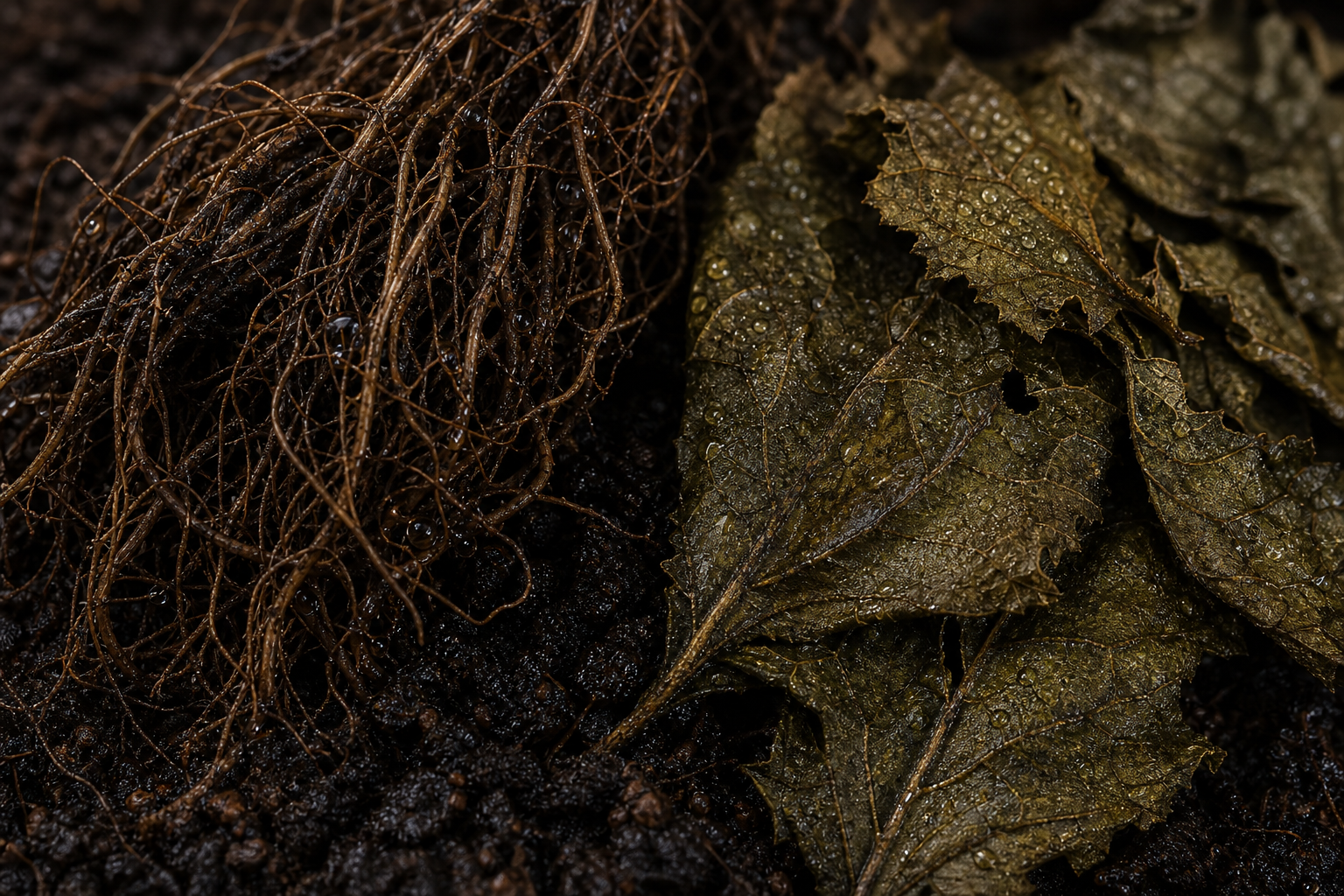
Sandalwood and cedar are generally well-received — people mostly debate their intensity. Vetiver and patchouli are in a different league: reactions range from enthusiasm to outright rejection. This is no coincidence. Both materials come from the lower parts of plants — vetiver from the roots of tropical grass, patchouli from the leaves of a low tropical shrub. This gives them a character described as earthy: a scent reminiscent of damp soil, dust, or dried leaves. If such an impression is not pleasant to you, you'll usually notice it within the first minute on your skin.
Vetiver: Smoky Grass with a Bitter Signature
Vetiver has a uniquely ambiguous scent. Its profile can include freshly cut grass and a hint of smoke, along with dry earthiness and a subtle bitterness that some people compare to grapefruit peel. This bitter note is typical of vetiver and distinguishes it from soft, creamy woods.
In modern perfumery, vetiver is processed in two very different ways:
- Dark, Smoky Line — vetiver remains raw and earthy, complemented by tobacco, leather, or dark resins. The result feels more serious and is often perceived as an autumn or evening choice.
- Refined, Fresh Line — vetiver is set in a citrus-aromatic framework with bergamot, grapefruit, or lavender. The earthiness doesn't disappear, but its expression changes: it feels more like a refined, cool freshness than damp soil.
If you previously thought vetiver wasn't for you, it's worth distinguishing which of these two forms you've actually tried. The difference between them is noticeably greater than the difference between two different citrus perfumes.
Patchouli: From Dark Moisture to Lightened Depth
Patchouli carries the strongest cultural baggage of the entire woody family. Many people associate it with a dense, dark, and slightly musty impression — the scent of a damp cellar, dried leaves, and overly sweet resin, as known from fragrant oils or older perfumes. This form of patchouli still exists and holds a firm place in classic chypre compositions.
However, contemporary perfumes often work with a lighter patchouli, where the moist, musty component recedes, leaving a darkly sweet depth with a subtle cocoa undertone. In this form, patchouli primarily acts as a connector:
- in gourmand fragrances, it links vanilla, caramel, or coffee with the base, ensuring the sweetness doesn't remain flat and candy-like;
- in fruity compositions, it supports juicy tones and prevents them from sounding too youthful;
- in floral scents, it deepens rose or jasmine, giving them a more mature expression.
That's why patchouli appears in perfumes you wouldn't label as a "patchouli scent" at all. It's often present more as a structure than a prominent motif — and if you've ever reached for a sweet gourmand novelty, it's quite likely you've had patchouli on your skin without even noticing.
Why Both Materials Behave Differently on Everyone
For vetiver and patchouli, more than other woods, the final impression depends on the conditions. On warmer skin and in summer heat, earthy tones develop faster and are perceived as sweeter and denser; in the cold, their drier, sharper side comes to the forefront, and the entire perfume can feel more closed. The same bottle thus offers a quite different experience in July and November.
This leads to one practical note: with earthy materials, judging by the scent from a paper tester or the bottle's neck is the least reliable in the entire woody family. It's worth giving them time and your own skin.
How to Experience Woody Notes in Practice and Where to Start
Descriptions of ingredients provide you with a vocabulary, but the decision is made only when you have the fragrance on your own skin. Woody bases are more challenging than citrusy openings: they develop slowly and change depending on how they react to the warmth and oils of your skin. That's why testing woody perfumes requires a different approach than we're used to with light, fresh scents.
The basic rule is simple: test on skin, not on paper. A paper tester will show you the top notes and a rough outline of the composition, but the wood will remain flat and usually appears drier than it actually is. The creaminess of sandalwood or the smoky layer of vetiver emerges only after several minutes, and you usually won't experience this on a card.
A Method You Can Manage Even in a Store
- Apply the fragrance to your wrist or the crook of your elbow and do not rub it — rubbing breaks down the finest molecules and flattens the composition.
- Test no more than two to three fragrances at once, each on a different spot. More than that and you won't be able to distinguish them, as your sense of smell will quickly tire.
- Give it at least two hours. The wood in the base asserts itself gradually, and the first few minutes will tell you almost nothing about it.
- Observe which of the four ingredients stands out the most in the end — and whether it is still pleasant to you after several hours, when practically only the base remains of the perfume.
- Note down your impression immediately, not a week later. Just two words: what you smelled and how it felt to you.
A Guide Based on What Suits You
If you're unsure during testing about what exactly you're responding to, a rough assignment of the impression to an ingredient might help. It's not a rule, just a reference point for further exploration:
- Creamy, milky sweetness — look for sandalwood. It tends to be soft, warm, and blends with the skin.
- Clean, crisp dryness — that's cedar. It feels sharper, more airy, and holds the composition together.
- Smoky green, the impression of freshly cut grass and earth — that's vetiver. It's the most polarizing of the four and worth testing repeatedly.
- Moist, dark earthiness — patchouli. In today's compositions, it's lightened but remains recognizable.
If you're new to the woody family, clearer compositions where wood is dominant and not hidden under layers of spices, fruit, or sweet vanilla make sense. You'll learn to recognize the raw material itself — and once you have it in your mind as a reference, you'll identify it even in more layered perfumes where wood is just one of many components. The opposite approach usually leads to all woody scents blending into one indistinct mass.
If you want to narrow down your search, browse the categories of perfumes for men, for women, and unisex — you'll find woody compositions in all three, just with different accompaniments. A separate chapter is niche perfumery, where wood is often led solo and without a sweet accompaniment, making it easier to recognize individual ingredients. And for initial orientation, smaller samples are more practical than a full bottle: they give you a day or two of real wear, which is exactly the experience a paper tester won't provide.

Category
Recommended articles

"Give a girl the right shoes and she can conquer the world!" Marilyn Monroe