



Oily hair or a heavy feeling often can't be solved by shampoo alone. We'll show you the benefits of scalp exfoliation, deep cleansing shampoos, and serums, and how to incorporate them into your weekly routine.
Why Hair Care Begins at the Scalp
Whether your hair gets greasy the day after washing or your scalp feels weighed down, the issue often isn't with the lengths themselves. Hair grows from the scalp, and its condition reflects in how your hairstyle looks and how long it stays fresh. Focusing care only on the lengths and ends might miss the area where hair appearance is most influenced.
Regular washing removes most surface dirt, but the scalp is living skin that is constantly active. Sebaceous glands produce sebum, which naturally protects the hair, the outer skin layer continuously renews itself, and dead cells gradually shed from the surface. Add to this the remnants of styling products—hairsprays, mousses, dry shampoos, or waxes—as well as dust and sweat. If these layers aren't thoroughly removed during washing, they can build up at the roots. Hair then appears limp, gets greasy faster, and the scalp may not feel as comfortable as you'd like. Shampoo alone may not be enough, especially if you use a lot of styling products or wash your hair quickly.
To choose the right care, it's worth first determining what type of scalp you have. A few simple guidelines can help:
- Oily scalp – Hair at the roots loses volume and becomes shiny soon after washing, often by the second day. The scalp feels greasy to the touch, and hair clumps into strands.
- Weighed-down scalp – It may not be noticeably oily, but you feel a heaviness or a slight film on it. Hair lacks volume at the roots even shortly after washing. This is usually a combination of sebum and styling residue.
- Sensitive scalp – Reacts with tightness, itching, or redness, perhaps to a new product, hot water, or dry air during the heating season. It requires a gentle approach and gradual introduction of new products.
These types can overlap—the scalp can be oily and sensitive at the same time. Therefore, it's worth observing how it behaves over several days after washing, not just immediately after. This way, you'll more easily determine whether it needs more thorough cleansing or calming.
If your scalp is persistently itchy, flakes significantly, is red, painful, or you notice unusual hair loss, consult a dermatologist. Hair care products can help with daily comfort and cleanliness, but they don't replace professional diagnosis.
Fortunately, scalp care can be structured into a few simple steps that can be tailored to your type and schedule. We'll guide you on how to do it.
Scalp Exfoliation: Why You Should Include It and How Often to Do It
Dead skin cells, oil, and residue from styling products gradually accumulate on the scalp. A regular shampoo will wash away most of it, but not always everything—especially if you frequently use hairsprays, mousses, or dry shampoo. Exfoliation is a way to occasionally loosen these layers so that your scalp feels fresher and subsequent care can penetrate better.
Scalp exfoliators are divided into two basic categories:
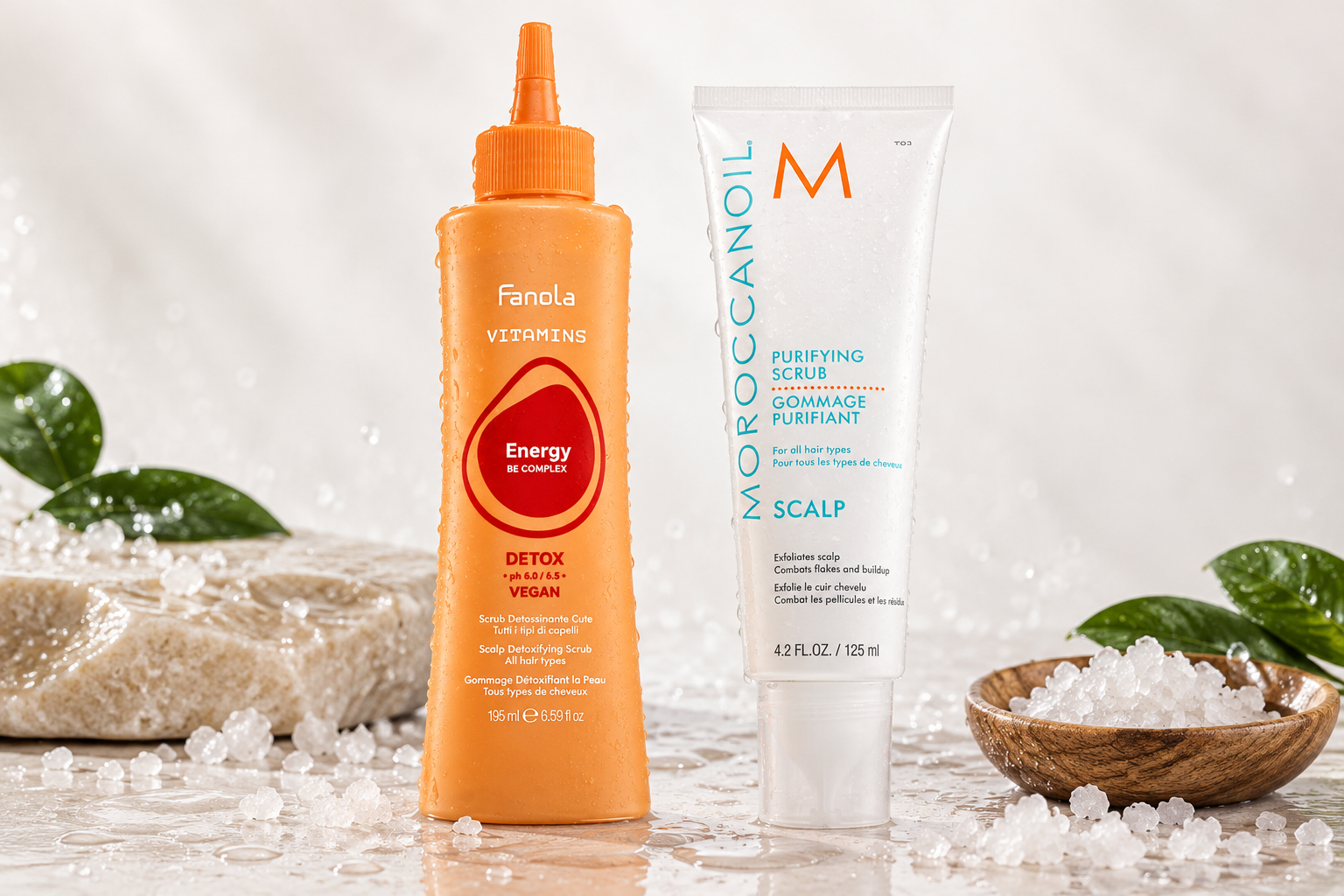
- Mechanical exfoliation contains fine particles, such as ground salt, sugar, or small plant seeds, which release impurities during massage. You can feel the results immediately, and many people appreciate the refreshing sensation after washing. However, the particles should be really small and rounded to avoid unnecessary irritation of the scalp.
- Chemical exfoliation works with acids—salicylic acid is often used, which helps release oil and dead cells without scrubbing. It is a suitable choice where the scalp gets oily quickly or where friction is not well tolerated.
Both options have their place. If you're unsure, start with a gentler product and observe how your scalp reacts.
Exfoliation is usually applied to damp skin, so after wetting your hair and before shampooing. This procedure is recommended:
- Divide your hair into several sections so that the product reaches the scalp directly and not just the lengths.
- Apply the exfoliator in small amounts and gently massage with your fingertips in circular motions for about two to three minutes.
- Do not press hard or use your nails. Vigorous scrubbing is more likely to irritate the skin—the particles or acids will do the work for you, not force.
- Rinse thoroughly with lukewarm water and continue with shampoo and conditioner for the lengths.
With chemical exfoliators, the procedure may vary—some need to be left on for a while, others are applied to dry skin. Always follow the instructions on the specific product's packaging.
Exfoliation is not an everyday care routine. Generally, once a week to once every two weeks is sufficient. If your scalp gets oily quickly and you wash your hair often, a weekly interval is usually more suitable. For a scalp that gets oily slowly or tends to be dry, once every two weeks is usually enough. The key is how your scalp feels after exfoliation—if it feels tight or itchy, extend the interval.
It's better to skip exfoliation in these situations:
- right after coloring or lightening, when the scalp is more sensitive—wait a few days instead,
- if the scalp is irritated, red, or scratched,
- after sunburn,
- if you have ongoing scalp issues—in such cases, it's best to consult a dermatologist.
Deep Cleansing Shampoo as an Occasional Reset
Even with careful washing, layers gradually build up on the hair and scalp that regular shampoo doesn't completely remove. These include silicones from conditioners and leave-in treatments, residues from hairsprays, gels, foams, and styling pastes, as well as minerals from hard water. Hair can then feel weighed down, lose volume quickly, styles don't hold as well, and the scalp may not feel fresh even right after washing. This is when a deep cleansing shampoo comes in handy – a product that serves as an occasional reset, not for everyday use.
How it differs from regular shampoo
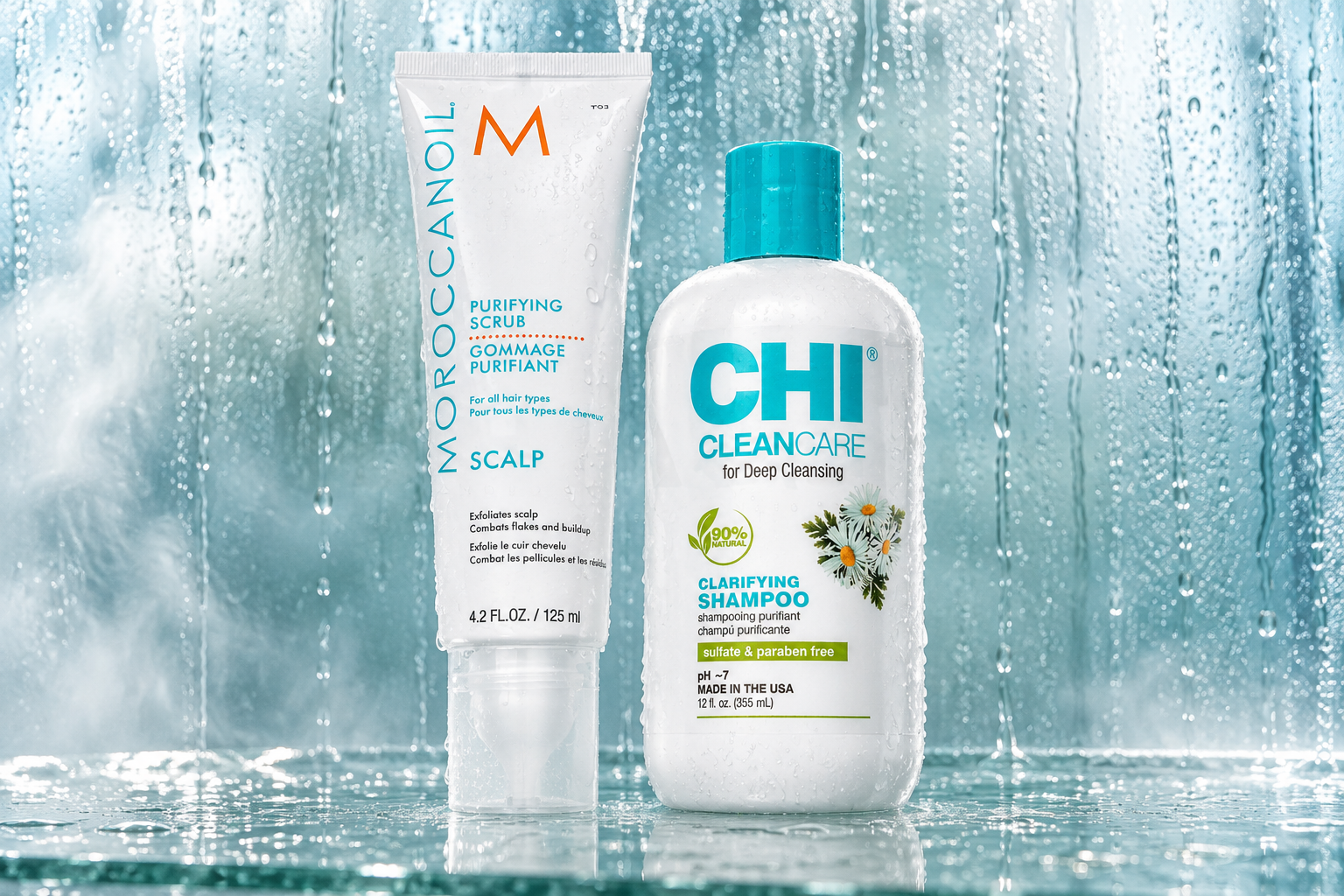
A regular shampoo is designed to gently cleanse hair and scalp with every wash. A deep cleansing shampoo, often referred to by the English term "clarifying," has a more intense cleansing effect and is intended to remove build-up that accumulates over weeks. It usually doesn't contain silicones or other film-forming ingredients, so it doesn't leave an additional layer on the hair. The result is often a feeling of lightness and a "clean slate" for subsequent care.
The stronger cleansing effect is also why it shouldn't be used with every wash. If you were to use it every time, it could strip more natural oils from the hair and scalp than is comfortable. The lengths may become drier and coarser to the touch, the ends more prone to splitting, and a sensitive scalp may react with a feeling of tightness.
When and how often to use it
For most hair types, a deep cleansing shampoo is sufficient about once every one to two weeks. You can adjust the frequency based on how you use your hair:
- If you use styling products or rich leave-in treatments daily, you might prefer using it once a week,
- If you live in an area with hard water and your hair loses its shine over time, using it about once every two weeks is effective,
- If you have dry, fine, or sensitive hair, use it only when you feel your hair is weighed down.
Apply the shampoo to wet hair and massage it mainly into the scalp and roots, where build-up is most prevalent. The lengths will be cleaned by the foam that runs down during rinsing. If your hair is heavily weighed down, you can repeat the wash and then rinse everything thoroughly with lukewarm water.
Don't forget to care for the lengths after the reset
Deep cleansing removes not only build-up but also part of the hair's natural protection. Therefore, it's advisable to apply a conditioner or mask to the lengths and ends immediately after washing, ideally with nourishing and hydrating ingredients. Avoid the scalp to keep it light and fresh. Leave the mask on as recommended on the packaging, then rinse thoroughly.
Colored hair deserves caution
If your hair is colored or toned, be aware that a deep cleansing shampoo can speed up color fading. This is especially true for vibrant shades like copper, red, or pastel tones. Use it sparingly and not in the first days after coloring – during that time, a shampoo for colored hair is more suitable. Some hairdressers, on the other hand, recommend deep cleansing shortly before coloring to ensure the color adheres evenly to the hair. It's a good idea to discuss this option directly with your hairdresser.
Scalp Serums: What They Do and How to Apply Them
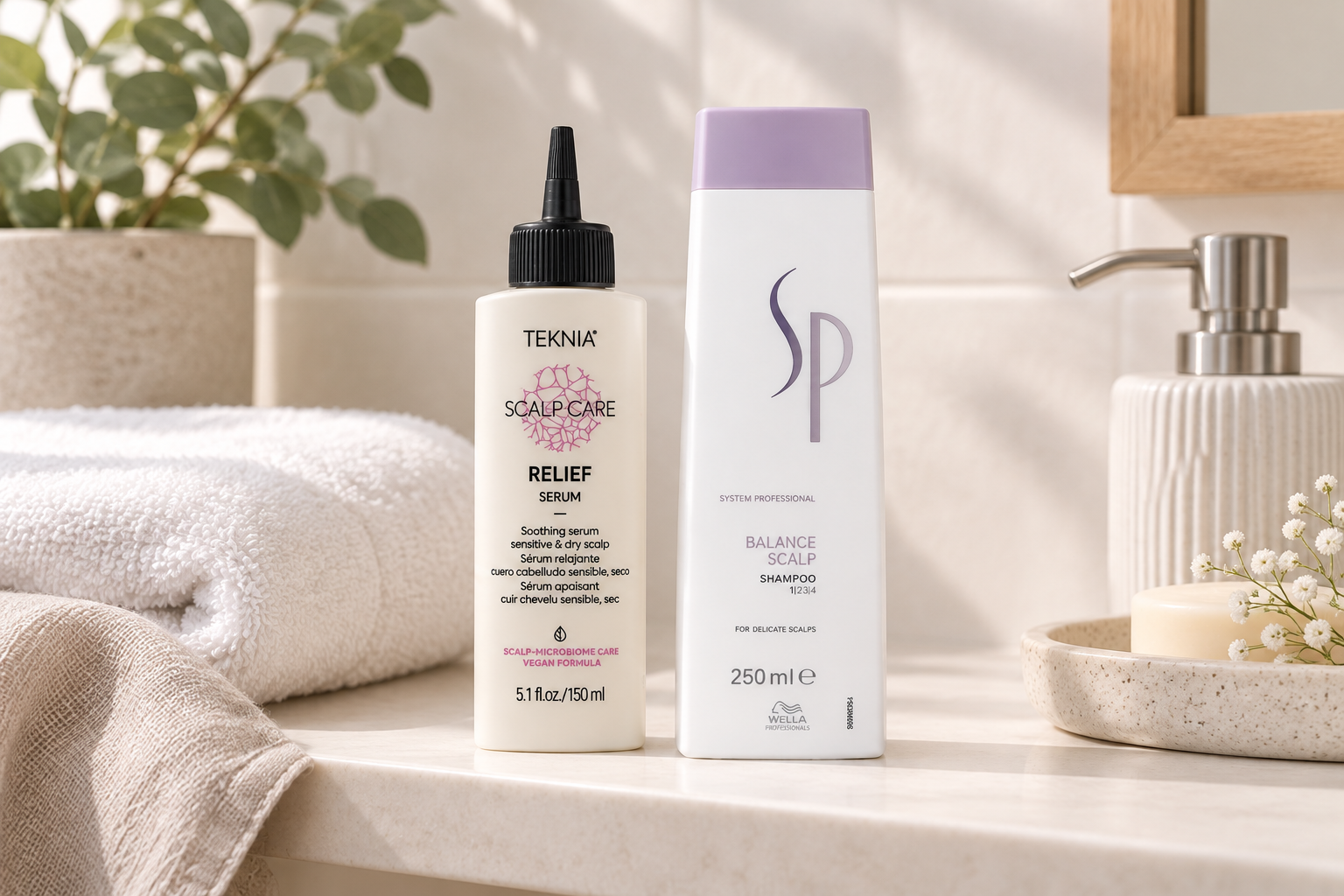
A scalp serum is a lightweight liquid or gel product applied directly to the skin between your hair, not on the lengths. It doesn't wash out but stays on the scalp, caring for it between washes. Serums are usually targeted at specific needs, so it's worth choosing based on what your scalp requires.
- Soothing – for sensitive skin that feels tight, itchy, or quickly turns red after washing.
- Oil Control – for scalps that get oily quickly; these types of serums provide a feeling of freshness and help hair at the roots retain volume longer.
- Support for Thinning Hair – serums that care for the environment from which hair grows. They are not a substitute for treatment; if hair suddenly falls out or in large quantities, it's advisable to see a dermatologist.
Scalp Serum, Oil, or Length Serum? The names are similar, but the purposes are not. Length and end serums smooth and protect against split ends – they would weigh down the scalp. Hair oils are denser and more nourishing; they are sometimes used on the scalp as a pre-wash treatment but are always washed out. Scalp serum, on the other hand, has a light texture, absorbs quickly, and should not weigh down hair at the roots.
How to Apply Serum
- Create a parting with a comb and apply the serum directly to the exposed skin – using a dropper or applicator, not your palm.
- Create another parting about two centimeters away and repeat the process. Cover the crown, temples, and nape, or just the areas the serum targets.
- Gently massage the skin with your fingertips in circular motions for one to two minutes. Do not press with your nails or scrub – the massage is meant to spread the serum, not irritate the skin.
- Let the serum absorb and style your hair as usual.
Most serums do not rinse out. They are designed to stay on the skin until the next wash; rinsing them off would negate much of their purpose. Always follow the instructions on the packaging – some products are meant to be rinsed off after a certain time.
When to Use Serum and How Much Time to Give It
The ideal time is after washing, on clean, towel-dried skin – sebum or styling residues won't prevent the serum from spreading evenly. Many serums can also be used on non-wash days, typically in the evening. If you blow-dry your hair, apply the serum before blow-drying and use a cooler setting. Add styling products afterward and only on the lengths.
Patience pays off. You might notice a soothing or refreshing feeling after just a few uses, but any changes in hair appearance occur slowly, as hair grows about a centimeter a month. Therefore, use the serum regularly for several weeks to months before evaluating. Results vary for everyone, and no serum can guarantee them – that's why it's worth choosing a product based on your scalp type and using it consistently.
Weekly Routine for Scalp Care, Including Sensitive Skin
Sensitive scalp needs the same steps as any other, just with more care. If you feel tightness, itching, or burning after washing, it's worth simplifying your routine and introducing new products gradually, not all at once. This way, you'll also find it easier to identify which product doesn't suit you.
What to Watch Out for with Sensitive Scalp
- Gentler Exfoliation. Instead of products with sharp or coarse particles, choose gentler options and smooth the skin with your fingertips rather than scrubbing it.
- Lower Frequency. For sensitive skin, it's enough to use exfoliation and deep-cleansing shampoo less often, about once every two to three weeks.
- Patch Test. Try a new product on a small area first, such as behind the ear or at the hairline, and wait a day to see how the skin reacts.
- Fragrance-Free When Irritated. When the skin is irritated, opt for fragrance-free or lightly scented products and apply styling products away from the scalp.
If problems persist or worsen, it's advisable to consult a dermatologist – cosmetics can support care, but they don't replace professional examination.
What a Typical Week Might Look Like
- Monday: Wash with a shampoo that suits your skin type, then apply serum along the partings.
- Wednesday: Regular washing and serum as needed – more often for oily skin, more sparingly for dry and sensitive skin.
- Saturday: Exfoliation before washing, then a gentle shampoo and conditioner only on the lengths. For sensitive skin, alternate this step with regular washing so it's not done every week.
- Once Every Two to Four Weeks: Deep-cleansing shampoo instead of exfoliation – never both on the same day.
- Days Without Washing: Let the skin rest, or use a leave-in serum if it's intended for that purpose.
Consider this schedule as a starting point, not a fixed plan. Those who wash their hair daily can simply repeat regular washing, just don't increase exfoliation and deep-cleansing.
From Our Selection
- Wella Professionals SP Balance Scalp Energy Serum – a leave-in scalp serum applied along the partings, fitting well into regular care.
- Depot No. 105 Invigorating Shampoo – a refreshing shampoo from a brand focused on men's care, also available in large salon sizes.
- Vichy Dercos Anti-Dandruff – a shampoo from the Dercos dermocosmetic line designed for scalp prone to dandruff.
- Eucerin Dermo Capillaire – a dermocosmetic line focused on the scalp, offering shampoos and other care; a suitable choice if you're looking for gentler products.
All four brands are generally in the premium price range. Larger packages usually turn out to be more economical with regular use, so it's worth considering which product you'll use most often.
Category
Recommended articles

"Give a girl the right shoes and she can conquer the world!" Marilyn Monroe
