


When Cold Water Hurts: Understanding Tooth Sensitivity
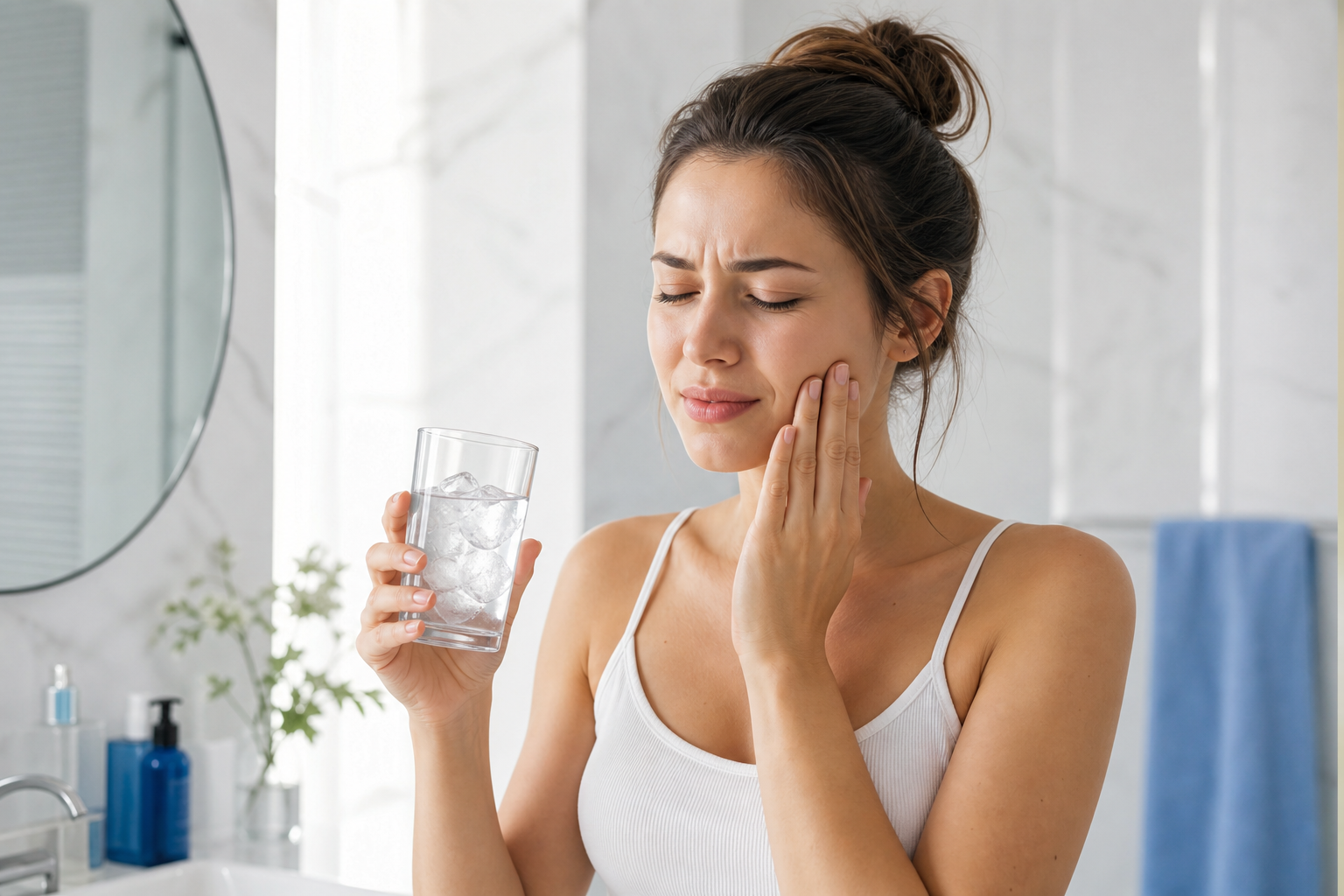
A glass of water from the fridge, the first spoonful of ice cream, or a breath of frosty air on your way to work – and a sharp, fleeting pain shoots through your tooth. It's gone in seconds, as if nothing happened. If this scenario sounds familiar, you're among the many who live with sensitive teeth and accept it as a given. Yet, this minor, recurring pain is a sign that your daily dental care might need a few adjustments.
Tooth sensitivity, known medically as dentin hypersensitivity, has a rather characteristic pattern. The pain comes on suddenly, is sharp and stabbing, lasts briefly – usually a few seconds – and fades away once the trigger is removed. So, your tooth doesn't hurt on its own when you're sitting quietly at your computer; something always sets off the pain.
The most common triggers include:
- cold drinks, ice cream, or ice in a drink,
- hot tea, coffee, or soup,
- sweet foods, especially candies and chocolate,
- acidic flavors, such as citrus fruits, vinegar, or white wine,
- cold air inhaled through your mouth during winter,
- the mere touch of a toothbrush or interdental brush during cleaning.
Sometimes only one tooth reacts, other times an entire side of the mouth. It's also common for sensitivity to fluctuate – it might not bother you for weeks, then return, perhaps after a stressful period or a change in toothpaste. That's why many people don't address it: if it's not bothering them right now, it's as if it doesn't exist.
It's important to distinguish sensitivity from pain that requires a visit to the dentist. A dull, throbbing pain that lasts for minutes, wakes you at night, shoots into your jaw or ear, or is accompanied by swelling, bleeding gums, or a painful bite – that's not something a new toothbrush can fix. Similarly, a sudden and intense reaction to heat deserves its own attention. Products for sensitive teeth can alleviate unpleasant reactions, but they won't replace a dental examination or solve the underlying cause.
Why is it important to address sensitivity as soon as it appears? Because it tends to become a vicious cycle. You subconsciously start to avoid the painful area: you clean it more quickly, less thoroughly, or you avoid it altogether. This allows plaque to build up more easily, gums become irritated, and the discomfort worsens. The opposite scenario is also common – in an effort to "scrub it clean," you apply too much pressure with your toothbrush, exposing the tooth necks faster than necessary.
The good news is that you can influence a large part of these issues yourself, every day at the sink. The technique of brushing, the pressure applied, the hardness of the toothbrush bristles, and the toothpaste and mouthwash you choose all play a role. In the following sections, we'll explore what often causes tooth sensitivity, how to brush gently yet effectively, and how to choose products that make dental care easier for you.
Why Sensitivity Occurs: Exposed Necks and Weakened Enamel
To understand sensitive teeth, it helps to take a brief look inside. The crown of the tooth is covered by enamel, the hardest tissue in the human body. Beneath it lies dentin, which is softer and is interwoven with microscopic tubules leading to the dental pulp with nerve endings. As long as the dentin remains hidden under the enamel and in the neck area of the tooth under the gum, nothing unusual happens. But once it is exposed, external stimuli – cold, heat, sweet or sour taste – reach the tubules much closer to the nerve. This is where the short, sharp reaction you know from the first sip of ice-cold water comes from.
Exposed dentin most commonly occurs in two ways. Either the gum recedes and exposes the neck of the tooth, which is covered by enamel only very thinly or not at all, or the enamel on the biting and outer surface gradually thins. Both are processes that take months to years, so you usually only notice them when they start to become uncomfortable.
The most commonly cited circumstances that accelerate both processes include:
- Receding gums. This is related to age, gum inflammation, and long-term harsh brushing. The exposed neck tends to be more sensitive than the rest of the tooth.
- Too much pressure when brushing. The toothbrush should not scrub the teeth. Strong pressure irritates the edge of the gum and, in combination with horizontal "sawing," gradually damages the necks.
- Hard bristles. A hard toothbrush does not clean better, just more aggressively. For sensitive teeth, soft bristles with rounded ends are commonly recommended.
- Acidic drinks and foods. Citrus fruits, fruit juices, carbonated drinks, wine, or vinegar in dressing temporarily soften the enamel surface. In itself, this is not catastrophic, but the problem arises with high frequency during the day.
- Grinding and clenching teeth. This often occurs at night or under stress, so you may not even be aware of it. Repeated pressure stresses the enamel and neck area.
These influences tend to add up. A typical combination is a glass of orange juice followed by thorough tooth brushing: at that moment, the enamel is softened by acid, and mechanical cleaning affects it more than usual. Therefore, after acidic food or drink, it is worth giving your mouth a little time, rinsing it with water, and waiting with the toothbrush.
At the same time, it's fair to say where the possibilities of regular daily care end. Oral hygiene products can support gentle habits – softer brushing, less mechanical irritation, regularity. However, they cannot replace an examination. If sensitivity persists longer, worsens, appears in only one tooth, is accompanied by pain without an obvious trigger, bleeding gums, or swelling, it is a task for a dentist. Similar symptoms can be caused by tooth decay, a cracked filling, an exposed neck requiring treatment, or gum inflammation – and only a specialist who looks into your mouth can distinguish them.
The good news is that the causes from everyday life can be influenced. When you know that sensitivity is caused by hand pressure, bristle hardness, and the frequency of acidic drinks, you have three specific things you can start working on immediately – and that’s exactly what the rest of this text is about.
Gentle Cleaning Technique Step by Step
For sensitive teeth, technique matters more than force. When your gums react to cold water, the first instinct is to press harder and clean more thoroughly – but pressure and hard bristles usually only increase sensitivity. A gentle approach isn't any more time-consuming, it just happens differently: slower, with less force, and with more attention to the gum line.
Eight Steps Without Unnecessary Pressure
- Choose a toothbrush with soft bristles. Harder bristles don't clean better, they just aggressively impact exposed gums and the gum line.
- Apply a pea-sized amount of toothpaste. More foam may enhance the feeling of cleanliness, but it doesn't affect the result.
- Place the bristles against the gum at about a 45-degree angle. The tips should point to where the gum meets the tooth – that's where plaque tends to accumulate the most.
- Hold the toothbrush lightly, with just three fingers. Gripping it in your palm encourages pressure, which is not what you want for sensitive teeth. A thinner handle or an electric toothbrush with a pressure indicator can also help.
- Use short movements. Gently vibrate the bristles in place over a few millimeters, then move them away from the gum towards the edge of the tooth. Long horizontal scrubbing back and forth is unsuitable for sensitive gums.
- Proceed systematically in sections. Divide the upper and lower arches into thirds and in each section, clean the outer side, inner side, and chewing surface.
- Allocate about two minutes. Most people brush for a shorter time than they think. A timer on your phone will give you a real sense of how much time you actually need.
- Finally, just spit out the toothpaste. Rinsing your mouth with a large amount of water isn't necessary – a thin film of toothpaste will stay on your teeth a bit longer.
Why Wait a While After Acidic Foods
Enamel temporarily softens after contact with acids – such as citrus fruits, sour fruits, wine, or carbonated drinks. If you brush at that moment, you're cleaning a surface that's more prone to abrasion than usual. Dental hygienists typically recommend waiting about half an hour after acidic foods. In the meantime, you can rinse your mouth with clean water; the enamel will have time to recover during the break. The same logic applies after a surge of stomach acids.
This is also related to another common misconception: that more pressure means cleaner teeth. Plaque is soft and can be easily removed; extra force doesn't help, but gradually wears down the gums and pushes the gum line back. If the bristles of your toothbrush splay out to the sides within a few weeks, it's a clear sign you're pressing too hard.
Interdental Spaces: Carefully, but Regularly
A toothbrush reaches about three-fifths of the tooth's surface. The rest lies between the teeth, and that's where cleaning can be most uncomfortable for sensitive gums – which is why many people skip it. However, neglected spaces mean plaque stays longer and the gums become irritated, which usually worsens sensitivity.
- Choose interdental brushes of a size that passes through without force. A correctly chosen brush will glide smoothly, without needing to file or push it through with force.
- Floss is suitable for tight gaps where a brush can't reach. Don't saw towards the gum, but press it against the side of the tooth in a C shape and guide it along the surface up and down.
- An oral irrigator is a suitable supplement when interdental spaces are painful to touch. However, it doesn't replace mechanical cleaning.
In the first few days, the gums may bleed slightly as they get used to regular stimulation; this usually subsides after a week or two. If bleeding, swelling, or sharp pain persists, stop experimenting with technique and schedule a check-up with a dentist or dental hygienist.
Toothpastes, Brushes, and Mouthwashes for Sensitive Teeth
Whether you're dealing with sensitivity for the first time or it keeps coming back, the choice of toothbrush and toothpaste will determine how your teeth feel in a few weeks. You don't need a medicine cabinet full of products – just three things that work well together: a gentle toothbrush, toothpaste designed for sensitive teeth, and possibly a mouthwash without irritating ingredients.
Toothbrush: Soft Bristles and a Smaller Head
The basic guideline is the hardness of the bristles. For sensitive teeth and receding gums, it makes sense to choose a soft or even ultra-soft toothbrush. The bristles bend under pressure before they can irritate the gum line, so you transfer less mechanical irritation to the most vulnerable part of the tooth.
- Soft or ultra-soft bristles with rounded ends,
- A smaller head that can reach even the last molars without pressing into the gums,
- A handle that you can hold loosely – the tighter you grip the toothbrush, the more pressure you tend to apply,
- For electric toothbrushes, heads for sensitive teeth and a lower intensity mode,
- Replace approximately every three months, or sooner if the bristles start to splay.
Toothpaste for Sensitive Teeth: Read the Ingredients, Not Just the Label
Toothpastes for sensitive teeth work on two levels. They tend to be less abrasive to avoid further wearing down exposed dentin during brushing, and they contain substances that help reduce the transmission of stimuli from the tooth surface inward. Therefore, look for fluorides in concentrations typical for adults and ingredients specifically noted for sensitivity – often potassium nitrate, tin compounds, or hydroxyapatite.
Be cautious with toothpastes that promise quick whitening. Whitening and strong cleaning variants tend to have higher abrasiveness, which can worsen sensitivity on exposed roots. Strongly mentholated toothpastes can also be unpleasant on irritated gums – in such cases, try a milder flavor.
Interdental Brushes in Thin Sizes
For sensitive teeth, interdental spaces are often delicate – this is where roots are most frequently exposed. Choose an interdental brush in the smallest size that fits without pressure; thin diameters around 0.4 to 0.6 mm are a reasonable start. If you have to push, the brush is too large and may harm the gums. Dental floss remains an alternative, but for wider gaps, an interdental brush can do the job more comfortably. Get advice on size from your dentist – the range includes ultra-thin options from brands like TePe or Biorepair, allowing you to proceed in small steps.
Mouthwash as a Supplement, Not a Substitute
Mouthwash does not replace a toothbrush or interdental cleaning, but for sensitivity, it can be a useful supplement – especially alcohol-free versions that do not dry out the mucous membrane. Sharp alcoholic mouthwashes can sting on irritated gums and are less suitable for daily use on sensitive teeth. Do not use mouthwash immediately after brushing to avoid washing away the toothpaste from the enamel surface. It is better used as a separate step during the day, perhaps after lunch.
What to Expect from Oral Care Products and What Not To
Products for sensitive teeth do not work like a switch. Relief usually comes gradually, over several weeks of regular use, so it makes sense to stick to one line for a longer period instead of switching every month – otherwise, you won't know what actually helped. At the same time, no toothpaste or mouthwash will remove the cause if it's a cavity, crack, or gum inflammation. If the pain intensifies, stays with one specific tooth, or persists even after the stimulus is gone, it's time to visit the dentist. Oral care products are there to soften daily care – not to replace a check-up.
Build a Gentle Daily Routine for Sensitive Teeth
Advice only makes sense when it becomes a habit. Sensitive teeth don't need a complex ritual or ten products in the bathroom – they mainly need consistency and a gentle touch. This routine is intentionally simple, so it can be maintained even on days when you come home late and would rather go straight to bed.
Morning and Evening: Twice a Day, Always Calm
- Wait a while after an acidic breakfast. After orange juice, yogurt, or fruit, give your enamel about half an hour before reaching for the toothbrush. In the meantime, just rinse your mouth with clean water.
- Brush for two minutes. Set a timer or play a song – two minutes are noticeably longer than they seem in the morning rush.
- Allow more time in the evening. Evening cleaning is the more important of the two. At night, saliva production naturally decreases, so whatever remains in your mouth stays there for hours.
- After evening cleaning, only water. No sweetened tea, no snacks in front of the TV.
Using toothpaste for sensitive teeth makes sense continuously, not just on days when it hurts. If you decide to alternate it with regular toothpaste, at least use the sensitive one in the evening – evening cleaning is the most stable point in the routine.
Interdental Spaces Once a Day
Include an interdental brush or floss once a day, ideally in the evening before brushing. Once a day is really enough; for sensitive gums, one careful pass is better than three hasty ones. If you've recently started using interdental brushes and your gums bleed slightly in the first few days, don't give up right away – just go slowly and without pressure. However, if bleeding persists after two weeks, it's a matter for the dentist, not home experimentation.
Select the size of the interdental brush based on the narrowest space, not just what "somehow fits." A brush that's too thick irritates the gums and exposed roots; thinner sizes are usually more suitable for sensitive teeth, and there are also options with softer wire.
Mouthwash as Needed, Not Out of Obligation
Mouthwash is a supplement, not a replacement for brushing. If it feels good, use it at a different time than brushing – perhaps after lunch at work. Choose an alcohol-free option, as it's gentler on irritated mucous membranes, and don't overdo the frequency; twice a day is the maximum that most people need.
Change Takes Weeks, Not Days
This is probably the most important expectation to set right from the start: a gentle routine shows results gradually. It's usually a matter of several weeks of regular use, not two days. If after a week you think it's not working and revert to your old technique, the whole process starts over from scratch. A little patience with your diet helps too – limit acidic drinks and avoid sipping them throughout the day.
And when should you stop relying on home care? When the pain doesn't subside even after a month, when it intensifies, when it lingers long after the stimulus, wakes you up at night, or is linked to one specific tooth. These are not just exposed roots but a question for a dentist – and nothing replaces a preventive check-up twice a year. A dental hygienist can also show you the technique directly on your teeth, which you simply can't learn from an article.
When putting your routine together, you'll find everything you need in the Dental Care category: soft TePe toothbrushes, interdental brushes in thin sizes, and Biorepair toothbrush and mouthwash designed for sensitive teeth. Choose based on what you actually lack in your routine – not just what's new.
Category
Recommended articles
"Give a girl the right shoes and she can conquer the world!" Marilyn Monroe