




Burning, redness, or ingrown hairs after shaving are not a necessity – they are usually the result of poor preparation or technique. We will show you step by step how to prepare your skin for shaving, how to handle the razor, and how to soothe and moisturize your skin afterward.
Why Skin Burns or Turns Red After Shaving
You know the feeling: you shave in a rush in the morning, rinse your face, and before you even button your shirt, the skin on your neck starts to burn. Sometimes it just leaves a pink hue that disappears within an hour, other times small bumps appear and the feeling of tight skin lasts all day. It's not bad luck or hypersensitivity – it's a fairly logical reaction to what's really happening to your skin during shaving.
The razor doesn't just remove hair. The blade glides over the skin's surface, taking with it the top layer of dead cells and part of the protective film that keeps the skin supple and slows down water evaporation. Shaving is, in a way, a mechanical exfoliation – just done with a tool not designed for exfoliation. Freshly shaved skin therefore loses moisture faster than before and is less able to defend against everything it encounters: cold air, hard water, alcohol in aftershave, or perfumed ingredients in shower gels.
The burning sensation that comes immediately after shaving is a reaction to this temporary weakening of the barrier. Redness occurs because the friction of the blade increases blood flow to the capillaries just beneath the surface. And the small bumps or itchy spots that appear with a few hours' delay are more related to the shaving technique – too much pressure, a dull blade, or repeated strokes over the same area.
Why does it not bother one person, while another has a neck like it's been burned after every shave? The difference lies in the initial condition of the skin:
- Sensitive skin has a thinner and more permeable protective barrier, so it reacts more quickly and intensely to mechanical irritation than normal skin.
- Dry skin lacks oils even before shaving. The blade takes away from the little it has, and the uncomfortable tightness after shaving is therefore stronger.
- Skin weakened by external influences – after sun exposure, frost, frequent washing with hot water, or aggressive cleansing products – behaves similarly to sensitive skin, even if it doesn't normally belong to this type.
- Coarse or curly hair offers more resistance to the blade. It requires more strokes, and irritation naturally adds up.
- Dry shaving in a hurry is a combination that can irritate even skin that usually doesn't have any issues.
It's helpful to view irritation as a sum of small factors, not as one big mistake. Rarely is redness caused by a single thing; it's usually a chain where insufficiently softened hair, a blade that's past its prime, and skin that hasn't been rehydrated after shaving all come together. That's why there's no single universal solution: just changing the razor or the aftershave cream usually improves the situation but doesn't solve it.
The good news is that almost all of this is in your hands. Irritation doesn't occur in a single moment, but in three: when you prepare (or don't prepare) your skin for shaving, when you guide the blade, and when you care for your skin afterward. Each of these three steps can significantly improve or worsen the result – and that's why we'll go through them one by one in the following parts of the article, including what you really need from your usual bathroom supplies.
Skin Preparation: Soap, Gel, or Foam?
A lot of irritation occurs before the blade even touches the skin. A dry beard is tough, and the razor has to cut through it with force, which also affects the surrounding skin. In contrast, a beard soaked in warm water softens, bends, and offers less resistance – the blade glides through more smoothly, and you don't have to go over the same spot multiple times. So preparation isn't an extra delay, but the simplest way to reduce the risk of burning and redness even before the first stroke.
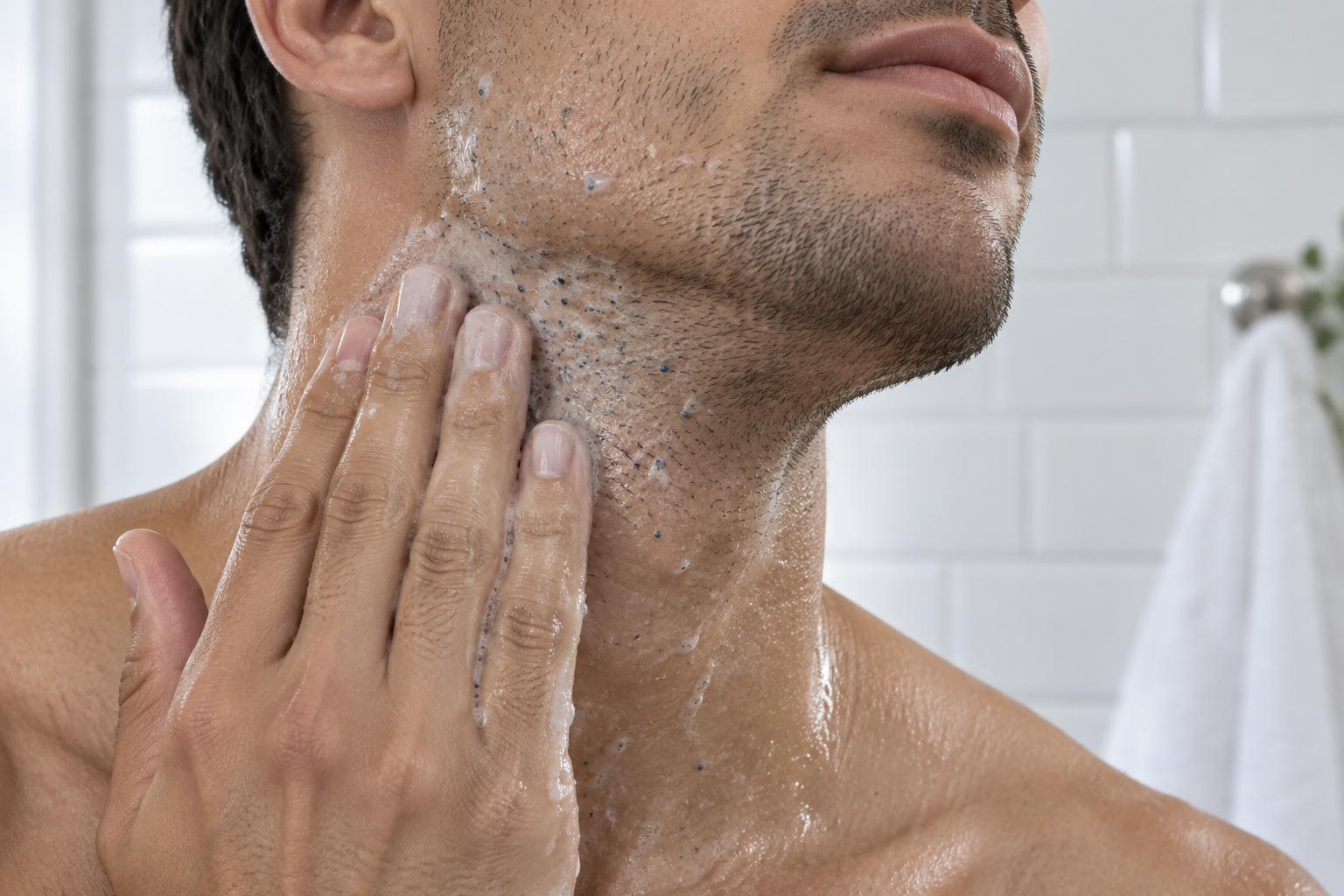
The first step is warmth and time. The best time for shaving is at the end of a shower when the skin is warmed up and the beard has been in moisture for several minutes. If you're shaving over the sink, give your face at least two to three minutes of washing with warm – not hot – water, or apply a warm, damp towel to your face. You'll notice the difference in resistance between a beard soaked for half a minute and one soaked for three minutes.
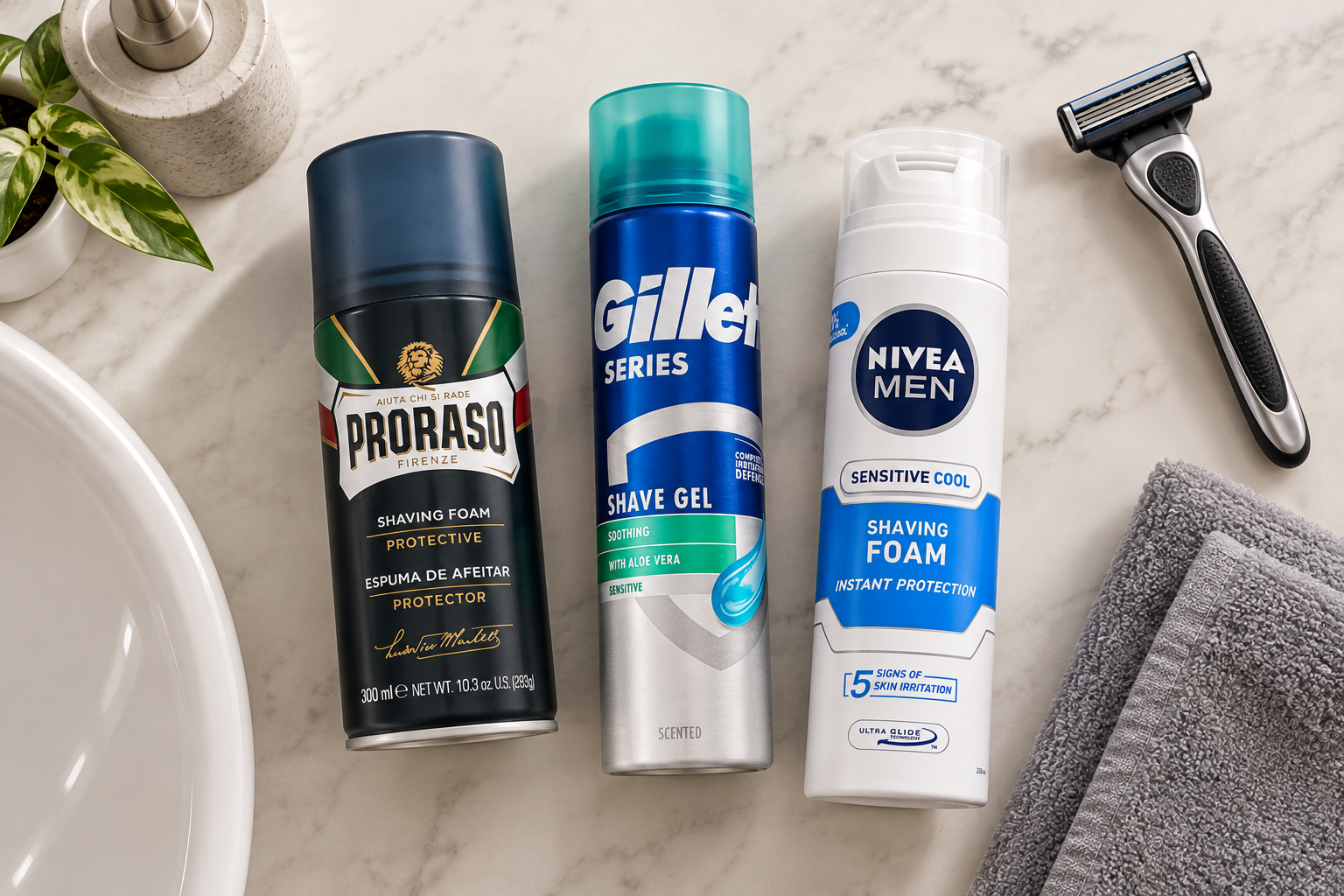
Only on such prepared skin should you apply a shaving product. Its tasks are threefold: to keep water in the beard, create a glide between the blade and the skin, and visually separate shaved areas from unshaved ones, so you don't unnecessarily go over spots you've already done. These three tasks are fulfilled differently by each format.
- Shaving Soap – a traditional format in a jar or bowl, whipped into a thick creamy foam with a brush. It retains moisture the longest of all three options, which is appreciated by coarse beards and longer shaving sessions. However, it requires a brush, some practice, and about an extra minute.
- Shaving Gel – applied directly from the tube or turns into foam in your hand. It creates a thinner and often more transparent layer, so you can clearly see the contours of the beard, chin, or neck transition. It's usually suitable for sensitive skin because its composition typically relies on soothing and hydrating ingredients rather than a large volume of foam.
- Foam Spray – the quickest option, ready immediately. It's airy, so it holds water on the skin for a shorter time and can dry out during slower shaving. It's often perfumed, which isn't an ideal combination for reactive skin with a freshly disturbed protective layer.
For sensitive skin, a simple guideline applies: less fragrance, less alcohol, more soothing and hydrating ingredients. If your skin regularly burns after shaving, try switching from perfumed foam to unscented gel or soap first, and only then change the razor or technique. A gentle cleansing gel for sensitive skin used just before shaving can also be beneficial – it removes sebum and impurities, so the shaving product adheres better and the blade clogs less.
The biggest contributors to irritated skin, however, are two things that have nothing to do with product choice. The first is dry shaving, that is, without water and without any product. In such a case, the blade has nothing to glide on, unevenly removes dead cells, and creates microscopic abrasions that manifest as burning or small bumps. The second is haste. A rushed morning shave done in ninety seconds means cold water, a thin layer of foam, and more pressure on the razor – precisely the set of factors that weaken the skin the most.
It's worth considering the whole ritual, not just the shaving itself. Five minutes, including preparation and rinsing, is a realistic timeframe in which you can shave gently. That this is a step Czechs haven't abandoned is evident from the demand: traditional shaving soaps and gentle cleansing gels for sensitive skin are among the long-term sought-after formats at Brasty across seasons. If your current preparation isn't working for you, try a different format for several weeks – skin reacts to changes gradually, not after just one shave.
Shaving Technique That Won't Irritate
Your skin is warmed, the beard is softened, and the product is in place – now it's time to decide whether your skin will be calm or irritated after shaving. The actual shaving takes just a few minutes, but most minor cuts and redness occur during the first strokes when the direction and pressure are not yet adjusted.
The Direction of Beard Growth Matters
Beards don't grow uniformly across the face. On the cheeks, they typically grow downward, on the neck they often curve to the sides or upwards, and under the chin, the direction can change within a few centimeters. You can easily check this: run your dry fingers over a day's stubble. In the direction of growth, the beard is smooth and offers minimal resistance, against the direction it feels rough. Go over your entire face and neck this way – do it thoroughly once, and next time you'll know where to guide the razor.
Shaving against the direction of growth cuts the beard below the level of the surrounding skin, making the result appear smoother and last longer. The price for this is greater mechanical stress: the blade lifts the beard and cuts more sharply against the skin than when shaving in the direction of growth. For sensitive skin, this results in burning and redness, and for coarser or curly beards, there's an increased risk of the shortened hair curling back into the skin. This doesn't mean shaving against the grain is forbidden – it's just not the best starting choice for the entire face.
Shaving in Two Phases
A reasonable compromise between smoothness and calm skin is to divide shaving into two phases instead of trying to solve everything in one pass.
- First Phase – With the Grain. Go over your face and neck in the direction you felt. This removes most of the beard length with minimal irritation.
- Second Phase – Across the Grain. Apply a thin layer of product again and guide the razor perpendicular to the direction of growth. This shortens the beard a bit more without pulling it from the skin.
- Only on Problem Areas – Against the Grain. If noticeable stubble remains, typically under the chin or in the submandibular groove, finish by shaving against the grain only in this area.
The difference in smoothness between the second and third phases is usually smaller than expected. If you regularly experience redness or bumps after shaving, skipping the third phase is often the quickest change worth trying.
Pressure on the Razor and Number of Passes
Razors and traditional blades are designed to cut with their own weight. More pressure won't shorten the beard further, it just pushes the blade into the skin and scrapes off its surface layer. Hold the razor loosely, guide it with short strokes, and rinse it under running water after each pass to prevent a mixture of hair and foam from sticking between the blades. Use your free hand to lightly stretch the skin – excessive stretching leads to the beard retracting below the surface when released.
Repeatedly going over the same spot is the most common cause of irritation. If you need to pass over an area a third time, it's usually due to a dull blade, insufficient product, or inadequately softened beard – not a surface that needs to be conquered with force.
A worn blade tends to tear rather than cut the beard, skips spots, and forces you to press harder, irritating the skin much more than a fresh razor. Depending on the coarseness of the beard, a blade lasts about five to ten shaves; the signal to replace it is when shaving feels rough or leaves unshaven strips. After shaving, let the razor dry outside the shower, as constant moisture dulls the blade faster than shaving itself.
Finally, rinse your skin with lukewarm, preferably cooler water. A hot shower immediately after shaving will dilate the blood vessels and accentuate burning and redness. Then don't rub your face, but dry it by pressing a clean towel against it – rubbing freshly shaved skin is unnecessary mechanical irritation.
How to Prevent Ingrown Hairs
Ingrown hairs are not a matter of chance or bad luck, but rather a common mechanical issue. The blade cuts the hair just above or slightly below the skin's surface, leaving it with a sharp end. If such a hair doesn't find its way out as it grows, it curls back and grows into or under the skin. The surrounding area then reacts as it would to a foreign body: it turns red, hardens, and forms a sensitive bump, sometimes with a whitish tip. This most often happens on the neck, under the jaw, and on the chin, where hairs grow most irregularly and where the razor moves over uneven surfaces.
Why Some People Experience It More Than Others
The difference between those who deal with ingrown hairs after every shave and those who barely notice them usually comes down to a combination of three factors:
- Coarseness of the hair. Thick, stiff hair is more likely to pierce the skin from both the outside and inside. Where a fine hair would simply soften and bend, a coarse hair forces its way through.
- Shape and curliness of the hair. Hair that grows in a twisted or spiral shape naturally points back towards the skin. For wavy and curly hair, ingrown hairs are more of a rule than an exception, regardless of how carefully you shave.
- The pursuit of a perfectly smooth result. The deeper you cut the hair, the longer it has to travel to reach the surface again. Repeated strokes, taut skin, and shaving against the grain cut the hair below the skin's level, which is exactly the condition that leads to ingrown hairs.
You can't influence the first two factors, but you can control the third. That's why it's worth reconsidering whether you really need a smoothness that you can't see but only feel.
Prevention Between Shaves
Most of the work happens on the days you don't shave. The goal is to keep a clear path on the surface so the hair doesn't have to find a detour under the skin.
- Gentle exfoliation two to three times a week. This removes dead skin cells that clog the hair follicle openings. Opt for a gentle scrub or a washcloth and circular motion, not harsh scrubs that could scratch irritated skin. Skip exfoliation the day before and the day after shaving.
- Cleansers with salicylic acid. This acid, a type of beta-hydroxy acid, penetrates into oil-filled pores and helps keep them clear. In the form of a cleansing gel or facial toner, it's ideal for the neck and chin area, where ingrown hairs most commonly appear.
- Leave a minimal hair length. A trimmer with an attachment that leaves a short stubble is often a better choice for sensitive skin than daily shaving to smoothness. The difference in appearance is small, but the difference in the number of inflamed bumps is significant.
- Don't squeeze or pick. Trying to extract the hair with a needle or fingernail usually results in a wound that takes longer to heal than the original bump.
When It's No Longer a Cosmetic Issue
One or two ingrown hairs that disappear on their own within a few days are part of the usual routine. However, if the bumps multiply, merge into larger painful areas, ooze pus, the surrounding skin is hot, or the problem keeps recurring in the same spot, it may be folliculitis, and home care may not be enough. In such cases, schedule an appointment with a dermatologist – they will assess what's happening in the follicles and recommend treatment that a cosmetic product can't replace. The same applies if ingrown hairs leave scars or noticeable dark spots.
Until the skin calms down, give the razor a break. A few days without shaving is often more effective than any product you might apply to the irritated area.
Post-Shave Care: Balm, Not Perfume
Aftershave is one of the oldest rituals in men's grooming and is a staple for many men as the finishing touch to their morning shave. However, this is often where care takes a turn: traditional aftershave is largely a perfumed alcohol solution. The burning sensation that follows is not proof of effectiveness but a reaction of freshly irritated skin to the harsh component. If your skin turns red, itches, or feels unpleasantly tight after shaving, it makes sense to shift the final step from fragrance towards moisture and calm.
Aftershave or Balm?
The difference isn't in the name but in the composition and what the product is supposed to achieve on the skin.
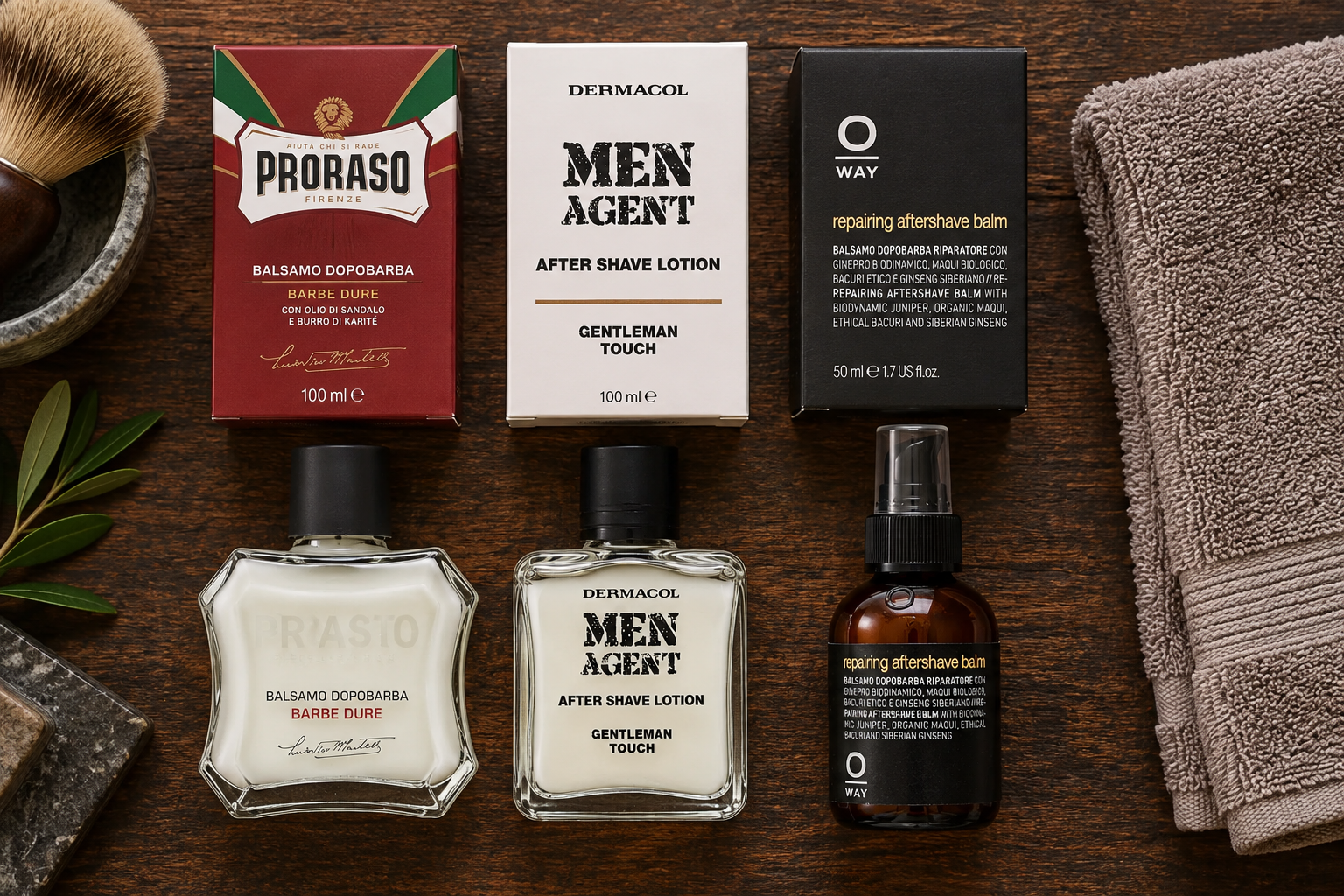
- Aftershave is based on alcohol and a fragrance composition. It refreshes, evaporates quickly, and leaves a strong scent on the skin – but it also draws moisture away from the skin, which is weakened after the razor.
- Balm or post-shave emulsion has a creamy consistency, contains soothing and hydrating ingredients, and alcohol plays only a minor role or is absent altogether. It is applied in a thin layer on dried skin.
- Fragrance-free option makes sense for sensitive skin and also when you don't want the scent of the post-shave product to clash with the perfume you apply afterward.
If you like the cooling effect, you don't have to give it up completely: menthol post-shave products are pleasant and have a firm place in traditional men's grooming. Just keep in mind that skin that already burns may not tolerate them.
What to Look for in the Ingredients
After shaving, the skin doesn't need strong active ingredients but hydration and soothing. Therefore, look for more subtle items in the ingredient list:
- Panthenol – a classic in soothing care that helps reduce the feeling of tension after shaving.
- Niacinamide – an ingredient commonly included in care for sensitive and red skin; also suitable for a light day cream.
- Ceramides – fats naturally present in the skin that support its protective barrier disrupted by the razor.
- Glycerin and hyaluronic acid – common hydrating ingredients that prevent the skin from feeling tight after shaving.
- Bisabolol or chamomile extract – gentle soothing ingredients suitable for skin that reacts to every shave.
Be cautious with products where alcohol is listed at the beginning of the ingredient list and with strong fragrances. Neither is inherently bad, but for sensitive or dry skin, they are often the first things to try replacing.
Hydration Not Only on Shaving Days
Shaving is a one-time stress, but the condition of the skin is determined between shaves. Permanently dry skin reacts more intensely to every stroke of the razor than skin that is well-hydrated. If you shave every other day or daily, it's worth using a moisturizing cream morning and night, just like the balm – and not only on the days you've used the razor. In summer, it also makes sense to use a day cream with a protective factor, as freshly shaved skin is more sensitive to the sun.
Guideline Tips from Our Range
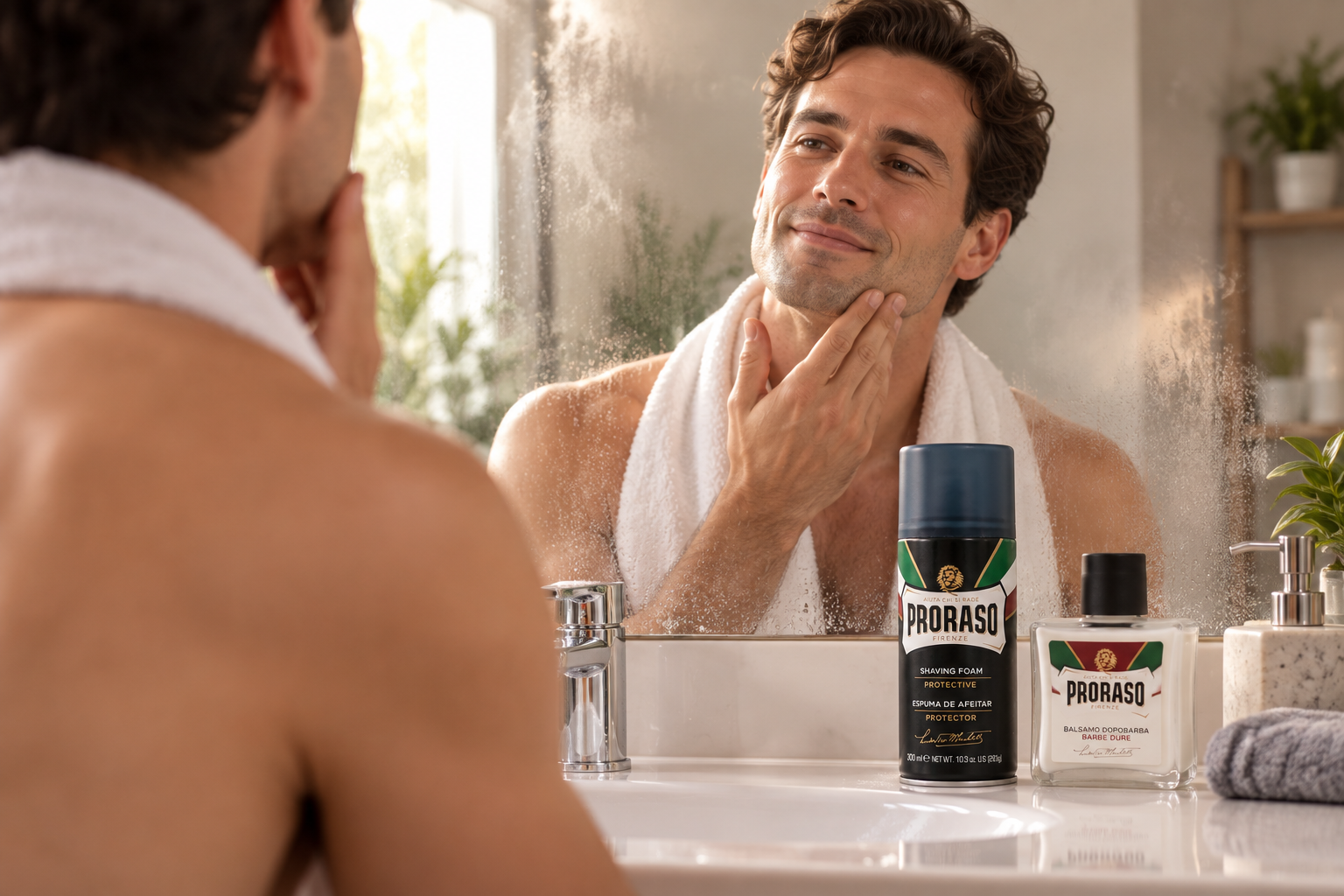
Popular choices on Brasty include post-shave products from the Italian brand Proraso, which offers follow-up care in the same spirit alongside traditional shaving soaps. For skin that reacts sharply, the soothing range from Bioderma Sensibio or La Roche-Posay Toleriane is suitable – both are designed for sensitive skin and also offer fragrance-free options. If you're looking for a simple men's routine that you can manage in a minute in the morning, check out Vichy Homme's moisturizing care. Whatever you choose, the same rule applies: the last step after shaving should calm the skin, not perfume it.
Category
Recommended articles

"Give a girl the right shoes and she can conquer the world!" Marilyn Monroe