
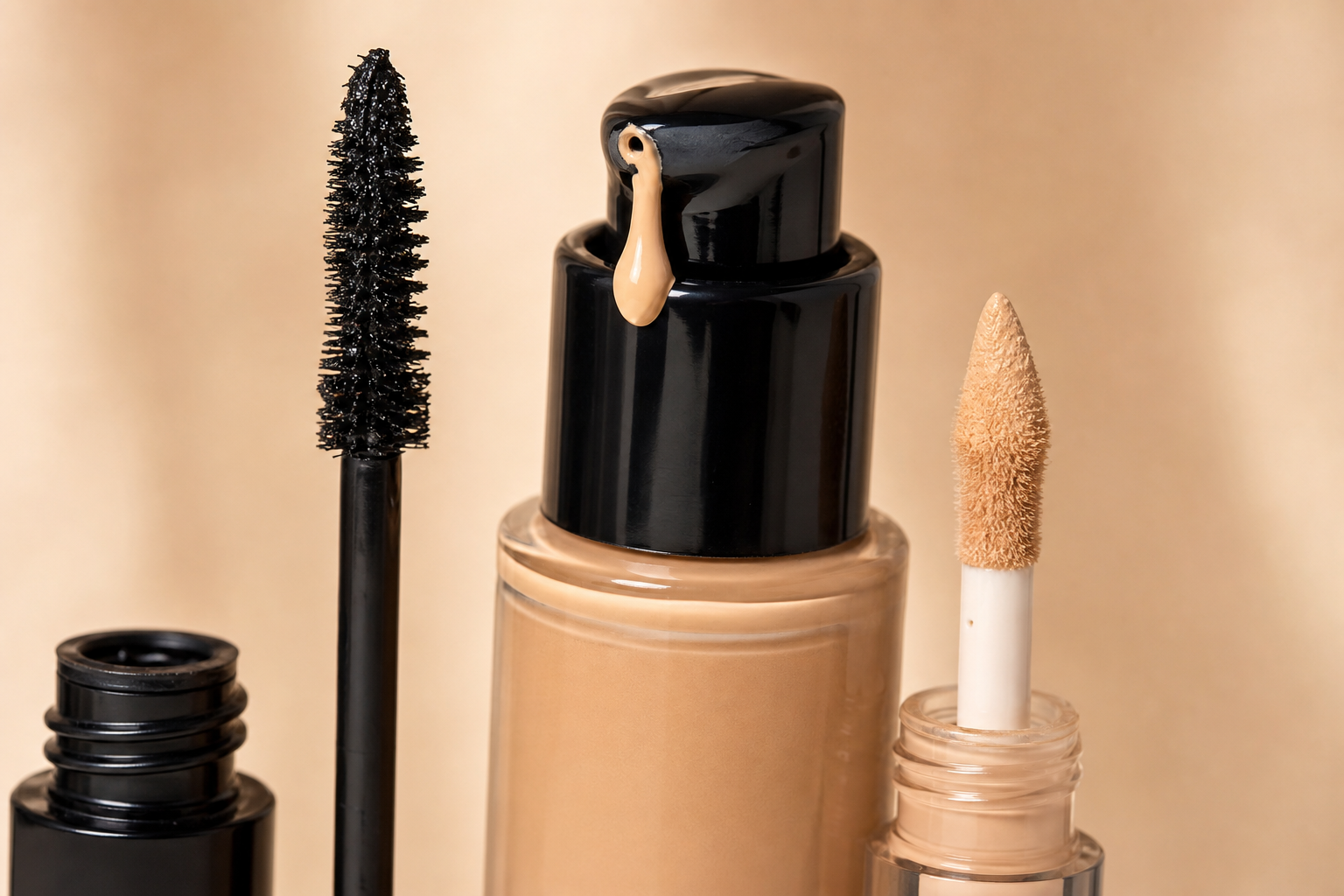

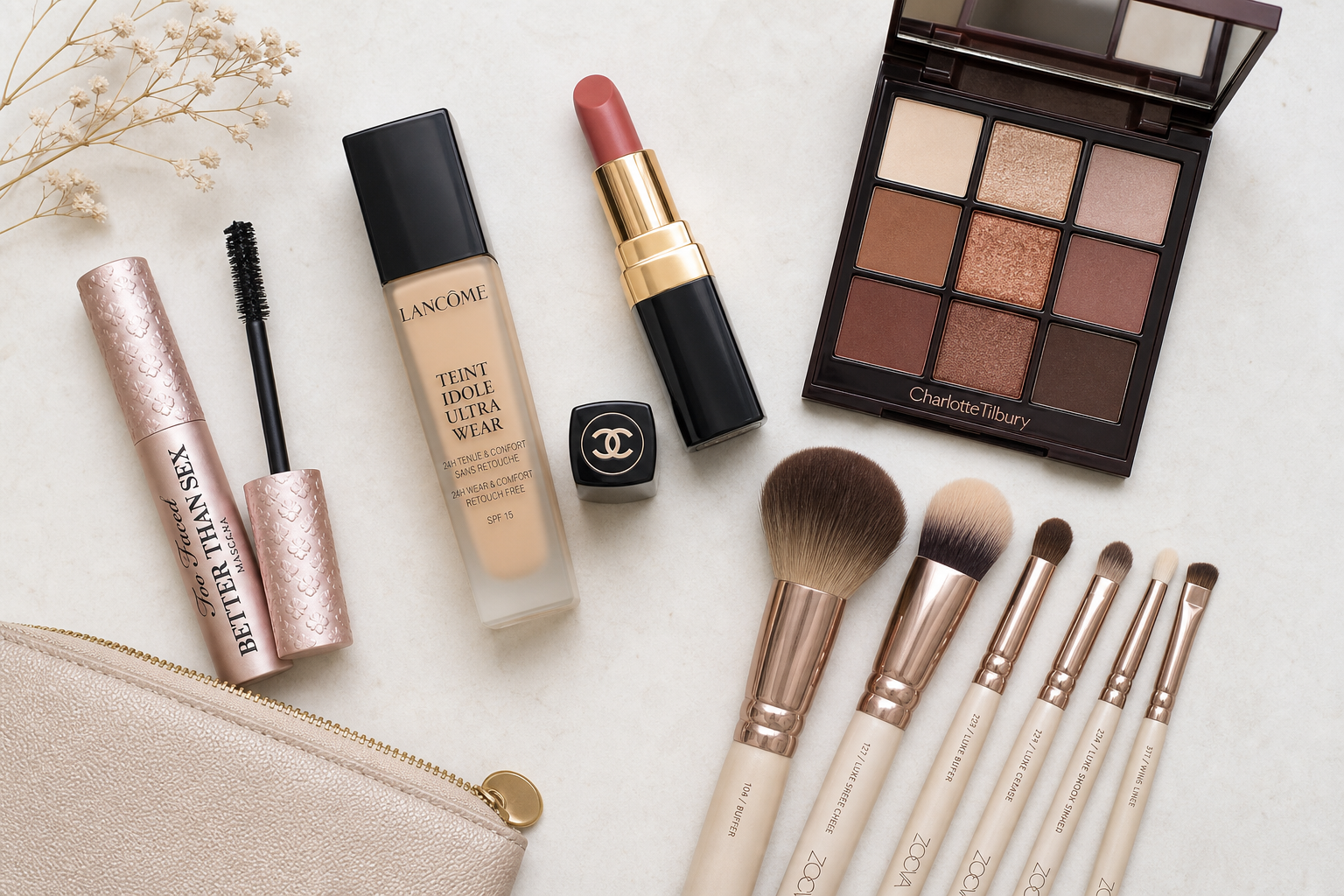
How many months does mascara last after opening, and when is it time to throw it away? In this guide, we'll explain how to read the open jar symbol on the packaging and how long makeup retains its quality.
Why Decorative Cosmetics Have a Limited Shelf Life
The mascara you bought two years ago may still look the same at first glance. The brush can be pulled out, the formula clings to the bristles, and the shade is as black as the first day. Yet, it is one of the products that changes most quickly in your makeup bag—not because of how it looks, but because of what happens inside. The shelf life of decorative cosmetics is not a matter of aesthetics, but of hygiene.
Every product with a water component contains a preservative system that prevents the growth of microorganisms. However, it doesn't work indefinitely. With each opening, air enters the package, and with each application, the brush, sponge, or fingers return—along with microscopic residues from the skin, dust, and older cosmetics. Over time, the balance inside the package shifts, and the product is no longer as clean as it was when you first removed the protective foil.
The changes affect not only microbial purity but also the texture itself. Liquid foundations and concealers can separate into oil and water phases over time. Powders and eyeshadows lose adhesion, and a harder film forms on the surface from oils transferred from the skin. Lipsticks and balms oxidize, their scent becomes sweet or stale, and the formula starts to crumble. Mascara, on the other hand, dries out because the brush draws more air into the narrow tube with each pull.
How to Tell When a Product Needs to Be Discarded
More reliable than a calendar is your own observation. Most products will clearly signal when they have reached the end of their life:
- Changed scent – A sour, musty, or unusually sweet smell is often one of the first signs in cosmetics.
- Different consistency – The formula crumbles, clumps, separates, thickens, or becomes unusually thin.
- Color shift – Foundation darkens or turns yellow, lipstick loses vibrancy, shadows appear dull.
- Poor application – The product doesn't blend well with the skin, clings to brush marks, or breaks down faster during the day.
- Unpleasant feeling after application – Burning, itching, redness, or watery eyes.
With eye products, a more cautious approach is warranted compared to the rest of your makeup bag. The eye mucosa is sensitive, and mascara and liquid liners are applied in close proximity, so any irritation will manifest more quickly than elsewhere. If you've had conjunctivitis or a stye, it's wise to replace mascara and liner regardless of how long you've had them.
However, none of this means you should dump your entire makeup bag into the trash after reading this article. A large portion of decorative cosmetics lasts longer than commonly believed, and many products are used up before age catches up with them. It makes more sense to maintain a calm and regular overview: know which products are delicate, recognize when something is amiss, and don't hesitate to discard that one piece that is no longer in good condition. The rest you can continue to use without worry.
Open Jar Symbol: How to Read Packaging Labels
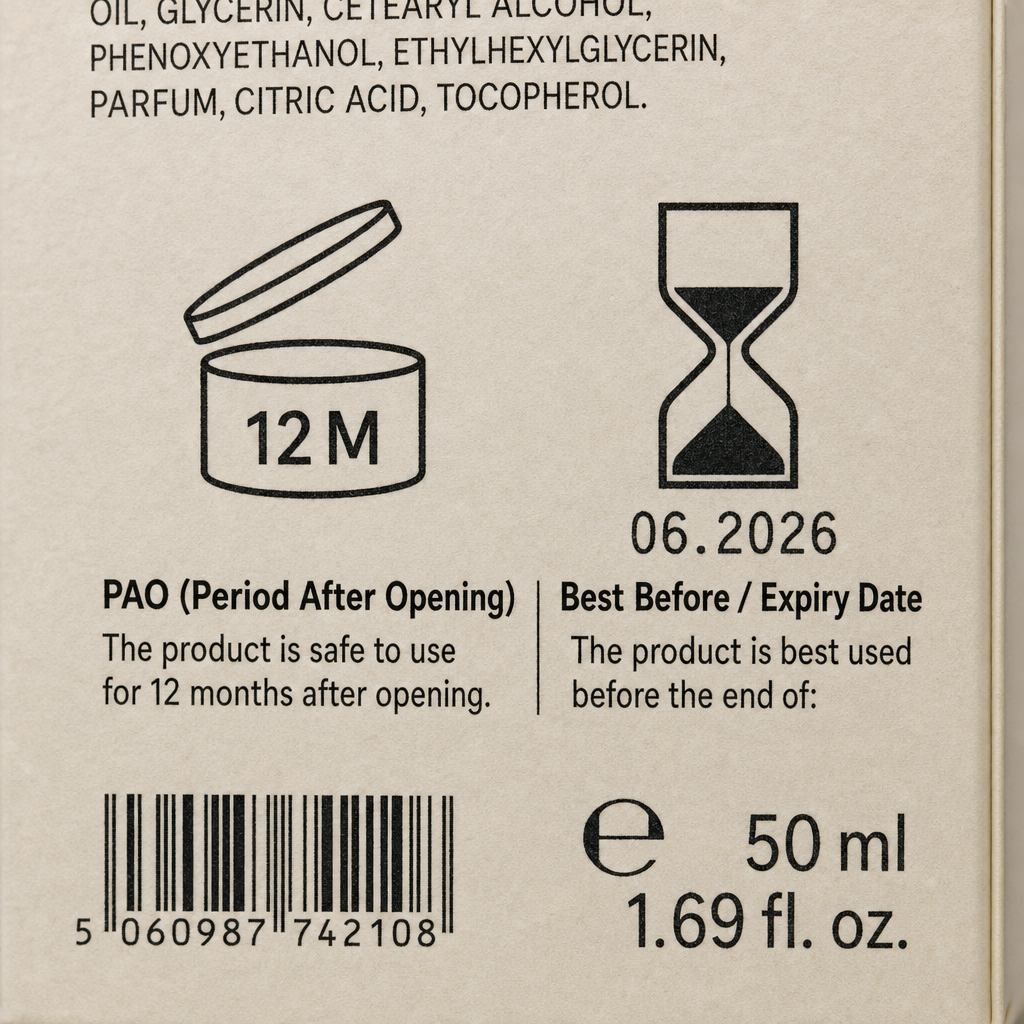
The packaging of decorative cosmetics may initially seem like a jumble of pictograms, but two pieces of information are always worth noting. The first tells you how long the unopened package will last. The second indicates how many months you have to use it after opening the product for the first time. They can be easily confused, yet it's the second one that determines when it's time to discard the mascara.
Open Jar: What 6M, 12M, or 24M Means
The open jar symbol is most commonly found on the back of the packaging or at the bottom of the tube. It's a small drawing of a jar with the lid off, and inside or next to it, you'll see a figure like 6M, 12M, or 24M. The letter M stands for months, and the number indicates the recommended period of use after opening. So, a 6M label means the manufacturer expects the product to be used for about six months from the time you open it.
Importantly, the countdown doesn't start from the manufacturing date or the purchase date, but from the first opening. An untouched mascara in a drawer isn't governed by this number – only when you open it does the brush begin to introduce air and microorganisms into the tube, starting the usability period. The figure is also a manufacturer's recommendation based on normal usage, not a strict guarantee.
Minimum Shelf Life Date Applies to Unopened Packages
The second piece of information relates to unopened packaging. It's usually stated as Best Before or with an hourglass symbol and a date. It tells you how long the sealed product retains its declared properties under normal storage conditions. Once you open the package, the jar symbol takes precedence – even if the minimum shelf life date is still far off.
European regulations link the two labels: if the minimum shelf life is longer than thirty months, the manufacturer doesn't have to provide a date, and instead, the open jar symbol should be on the packaging. This is why many products only have one of the two labels, and it's not a mistake. The jar symbol is absent where the period after opening doesn't make sense – for single-use packages, aerosols, and products in sealed dispensers where air hardly gets in.
The third code you'll find on the packaging is the batch number. It's a combination of letters and numbers that allows the manufacturer to trace a specific production batch. You can't determine shelf life from it yourself – it's mainly for complaints and potential product recalls. So, when you're figuring out when to replace cosmetics, follow the jar symbol, not the batch number.
The simplest way to translate the labeling into practice is to note the opening date. It takes a few seconds and saves you from later guesswork:
- Use a permanent marker to write the month and year directly on the packaging – the bottom of the mascara tube works well, and for makeup, the back of the bottle.
- If you don't want to write on the packaging, use a small adhesive label or a piece of tape.
- Along with the opening date, note the target replacement month; for a 12M label, a note of 3/26 becomes a clear by 3/27.
- If you prefer not to write on the packaging at all, a note on your phone or a photo of the packaging with the date saved in a separate album will suffice.
So when you decide whether the mascara is still good, you won't rely on memory. You'll have the date in black and white, and the labeling on the packaging will turn from a puzzle into practical information.
How Long Do Mascara, Foundation, and Concealer Last After Opening?
Mascara, liquid foundation, and concealer are the most commonly used trio in a typical makeup bag – and also the most sensitive to usage time. All three contain a high percentage of water, come into direct contact with the skin or eyes, and their packaging is opened practically every day. That's why it's worth keeping track of how long they've been in use, rather than waiting until they're used up to the last drop.
Mascara: The Shortest Lifespan of All Three Products
For mascara, the general guideline is approximately three to six months from opening. The reason is simply mechanical: the brush travels between the eye and the tube several times a day, each time carrying moisture and microorganisms from the surrounding lashes. The liquid inside the tube is a welcoming environment for them, and the closed packaging gets aerated each time the brush is pulled out. The eye area is sensitive, so the risk of irritation is higher than with facial products.
You can help by not pumping the brush in the tube – the up and down motion introduces air, causing the mascara to dry out faster. When the formula starts to thicken, never dilute it with water or makeup remover: while dilution may temporarily restore the consistency, it also introduces more moisture into the tube. Dried-out mascara is a signal for replacement, not rescue.
Liquid Foundation and Concealer: The Type of Packaging Matters
For foundation and concealer, the general guideline is about six to twelve months after opening, but the specific information can always be found in the symbol on the packaging. A significant difference is made by how the product is dispensed:
- Bottle with a Pump – the most gentle of the options. The contents remain sealed, untouched by fingers, and minimal air enters.
- Tube or Applicator with a Tip – typical for concealers. The tip or sponge repeatedly returns to the packaging, so it's good to occasionally wipe it with a clean tissue and not leave the tube open.
- Jar or Open Container – the most demanding on hygiene, as fingers are used to scoop the product. Here, it's worth using a spatula or clean sponge to scoop the product and closing the lid immediately after use.
Compact and cream forms of foundation, which are applied with a sponge from a solid cushion, contain less water than classic liquid emulsions, and therefore usually tolerate slightly longer use. However, they don't last indefinitely – their weakness is the applicator. The sponge or brush retains residues of skin oils and needs to be washed regularly, otherwise, the product becomes contaminated even if the contents remain untouched.
Signs That Indicate It's Time for a Replacement
The opening date is a guideline, not a verdict. What matters is how the product looks and smells right now. Discard it if you notice any of these signs:
- The formula has dried out, crumbles, or forms clumps on the brush,
- The scent has changed to a sharp or sour tone,
- The foundation in the bottle has separated into an oily and watery layer and cannot be shaken back together,
- The shade has noticeably darkened or yellowed,
- The consistency suddenly becomes watery, sticky, or clumps on the skin,
- After application, you feel burning, itching, or see redness that wasn't there before.
If you're unsure, stricter criteria apply to eye products than to the rest of the makeup bag – it's better to replace mascara sooner. For foundation and concealer, it's also good to consider how much you realistically use: if one bottle lasts you two years, it's better to opt for a smaller package next time. A package that you can finish within the declared timeframe is a better choice than a large one that ends up unused in the cabinet.
Lipsticks, Powders, Shadows, and Brushes – Longevity by Product Type
If there's one rule to take away from this topic, let it be this: water is key. The more water a product contains, the more it invites microorganisms – and the shorter its shelf life after opening. In contrast, dry pressed and loose textures are significantly more resilient. Following this logic, you can go through your makeup bag without having to decipher the fine print on the bottom of each container.
Powders, Blushes, and Pressed Shadows: Counted in Years
Powders, blushes, bronzers, highlighters, and classic pressed or loose eyeshadows are among the most durable makeup items. Manufacturers usually indicate 24 to 36 months after opening, and in practice, real usage approaches this – as long as moisture doesn't get in. That's why you shouldn't use a damp brush on them.
You can reliably tell it's time for a replacement by touch rather than smell:
- A hard shiny film has formed on the surface, making it difficult for the brush to pick up product,
- The pigment is harder to pick up and lasts a shorter time on the skin than before,
- The texture crumbles or the shade has shifted,
- A sweet or musty smell has appeared.
Lips: Lipsticks Last, Glosses Considerably Shorter
Classic solid lipstick is essentially a mix of waxes, oils, and pigments, so it's close to dry products – typically noted as 12 to 24 months after opening. Lip glosses, liquid matte lipsticks, and balms with a higher oil and water content fare worse, generally around 12 months. The application method also contributes: the sponge applicator returns to the tube each time, bringing back residue from the lips.
Discard lipstick as soon as you detect a rancid oily smell, it starts to crumble, or it burns after application. Small droplets on the surface of solid lipstick don't necessarily mean spoilage – they are often the result of temperature fluctuations and can be wiped off.
Liquid Eye Products Belong to a Shorter Interval
Liquid and gel liners, cream shadows, and eyeshadow primers have the shortest lifespan among eye products, typically 3 to 6 months. The reason is the same as with mascara: the applicator travels back and forth between the eye and the container. It's worth being stricter with eye products, as even minor irritation is unpleasant here. Never dilute dried-out liner with water or any other product – it will only introduce more impurities into the content.
Brushes and Sponges: Often Overlooked Part of the Bag
Accessories are often forgotten during a bag review, yet they determine how long the products themselves will last. A mixture of pigment, sebum, and dead cells settles in the brush fibers – and an unwashed brush diligently returns this mixture back into the powder or blush.
A practical routine looks something like this: wash brushes and sponges for liquid and cream textures after each intensive use, at least once a week; brushes for powder products can handle an interval of about two weeks. Lukewarm water and a gentle shampoo or cleansing gel are sufficient. Dry the brush horizontally with the fibers over the edge of a table, never stand it upright when wet – water will run into the metal ferrule, loosen the glue, and the fibers will start to fall out.
It's worth replacing the entire brush with a new one when:
- The fibers fall out even after drying and remain on your face,
- The shape has permanently splayed and the brush no longer draws a clean line,
- The ferrule wobbles or detaches from the handle,
- The smell or hardened fibers don't disappear even after thorough washing.
Cosmetic sponges are consumables – they typically last one to three months and should be discarded sooner if torn, lose elasticity, or have stains that won't wash out. A quality brush, on the other hand, will last for years with regular care.
Storage and Rotation: How to Keep Your Makeup Bag in Shape
The information on the packaging tells you how long the product will last under reasonable conditions. Whether it actually meets those conditions is up to you—where you store your cosmetics and how often you use them. The good news is, you can organize your entire makeup bag in one afternoon and then just maintain it.
Where to Store Cosmetics
Decorative cosmetics don't fare well with heat, humidity, and light. Unfortunately, this means that the bathroom, where most of us apply makeup, isn't ideal for long-term storage. The best place is a dry, dark drawer in a room or a closed box on a dresser. Follow these guidelines:
- Away from direct sunlight. A windowsill or car dashboard is not a storage space. Heat changes the consistency of cream products and accelerates the oxidation of oil ingredients.
- Away from hot and humid bathrooms. Steam from showers creates a moist environment where bacteria thrive better than in a dry drawer. If you have no other option, at least keep your makeup bag closed and don't leave it open by the sink.
- With tightly closed lids. Unsealed mascara, concealer, or lip gloss dry out faster and absorb dust. Taking a few extra seconds to close them properly will extend their usability more than any trick.
- Bottles upright. Store liquid foundation with a pump and primer standing up to prevent the dispenser from clogging and the product from settling around the neck.
- No sharing of eye products. Don't lend or borrow mascara, eyeliner, or false eyelashes. Eye products transfer bacteria between users, and eye irritation isn't worth the saved penny.
Biannual Makeup Bag Review
To prevent your cosmetics from piling up, establish a regular review routine. Twice a year is enough—perhaps at the start of spring and autumn, when you change makeup shades according to your tan. The whole process takes an hour:
- Dump the contents of your makeup bag onto a table and wipe the inside of the bag with a damp cloth.
- Check each product for the open jar symbol and the date you noted on the packaging.
- Sort cosmetics into three piles: use, don't use, and discard.
- Go through the "don't use" pile again. What you haven't picked up in six months, you probably won't in the next half-year either.
- Wash brushes and sponges, let them dry flat, and only return what you actually use.
During the review, notice what you regularly have left over. If your lipstick or liquid foundation is always half full, it's not a lack of discipline, but the size of the packaging. For products you can't finish, opt for smaller or travel sizes next time. It might cost a bit more per use, but you won't be throwing away half the contents, and you can try new shades more often.
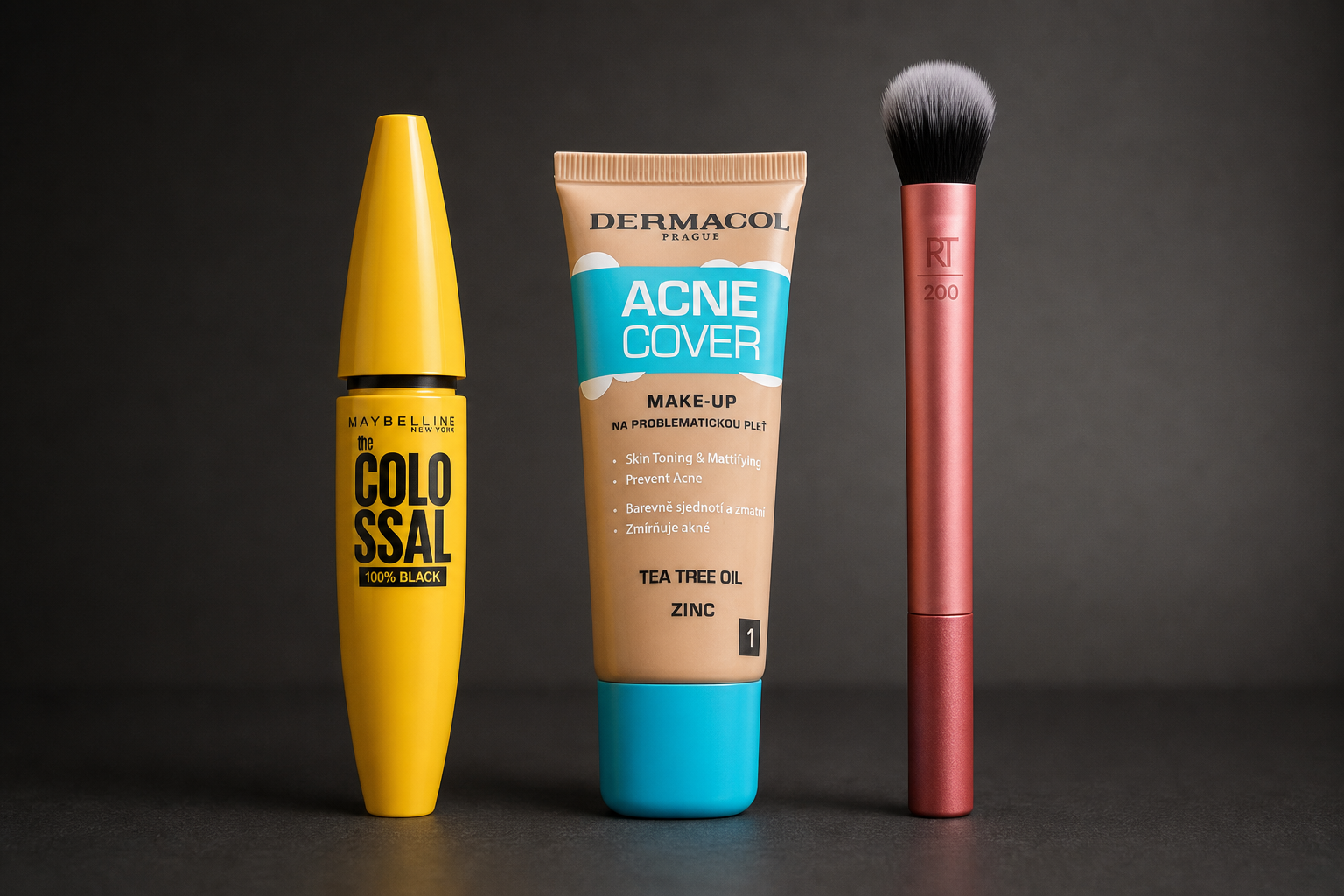
When replacing a product, it helps to know that there's no huge gap between price levels. In categories like mascara, makeup, and makeup brushes, Brasty offers both affordable classics like Maybelline or Dermacol, and pricier options like L'Oréal Paris or Real Techniques. Decide based on how quickly you use the product: you replace mascara several times a year, so a more economical choice makes sense, while brushes or palettes can last for years with proper care, and are worth investing more attention in.


Category
Recommended articles

"Give a girl the right shoes and she can conquer the world!" Marilyn Monroe