




You carefully select body care products, but the skin of your entire body is also affected by little things that often go unnoticed – shower temperature, towels, fabric of your clothes, washing methods, or the humidity level at home. We'll go through habits that are relevant all year round and show you how to align them with the care routine you already use.
Why Your Skin Perceives More Than Just Cosmetics
Many of us choose body lotion, shower gel, or post-bath balm thoughtfully – we read the ingredients, compare textures, and look for a product that suits our skin type. However, cosmetics are only in contact with the skin for a few minutes a day. The rest of the time, it is surrounded by the water we bathe in, the textiles we wear from morning to night, and the air in the rooms where we spend most of our day. These everyday circumstances can influence whether your skin feels comfortable or tight and unpleasant – even if you choose your care products carefully.
The skin primarily serves a protective function. Its outermost layer, often referred to as the skin barrier, works a bit like a brick wall: the cells are the "bricks" and the lipids between them are the "mortar" that helps retain water inside and limit external irritants. This layer is constantly renewing itself and reacts to the conditions we expose it to. Hot water and long washing can strip it of natural oils, rough or non-breathable materials can mechanically stress it, and overly dry air can deplete its moisture. These are not dramatic changes – rather, they are small influences that accumulate day by day.
This applies to the entire body, from shoulders and back to arms, torso, legs, and feet. Each area reacts a bit differently: the skin on the shins and elbows is naturally drier, the back and shoulders are in contact with clothing all day, and areas where fabric rubs against the skin tend to be more sensitive. That's why it's worth considering body care as a whole, not just as a cream applied to one problematic spot.
It's important to note that these habits aren't just seasonal. We enjoy a warm shower after sports in the summer just as much as on chilly evenings, we wear clothes every day, and dry or overly humid air can affect us at any time of year – in an air-conditioned office, in a car, or in a steamy bathroom. Small adjustments to daily habits make sense all year round, not just when the skin starts to show discomfort.
At the same time, these habits complement rather than replace cosmetics. Even a well-regulated water temperature won't make up for missing hydration, and even high-quality body lotion may not suffice if the skin is burdened daily by long hot showers or irritating textiles. They make the most sense together: gentle habits help protect the skin barrier, and care provides what it needs.
Whether your skin is normal, sensitive, or on the drier side, in the following sections you'll find simple adjustments you can make without major changes. You don't need to overhaul your entire routine – often it's enough to adjust how you shower, how you wash your clothes, or how you ventilate. If your skin troubles you long-term or is significantly irritated, consult a dermatologist.
From Shower to Towel: Water Temperature, Shower Duration, and Drying Method
The shower is one of the most common moments of the day, and that's why it's easy to overlook the little details that your skin will notice. It's not about complex rituals – just go through the washing process step by step and pause at each step for a moment.
Hot water is tempting, especially after a long day. However, it strips your skin of some of its natural lipids, which form its protective layer, leading to feelings of tightness or itching after drying. A gentler choice is lukewarm water – water that feels pleasant but doesn't burn and doesn't leave your skin red. If you prefer a warmer shower, try gradually reducing the temperature towards the end of your wash.
The same goes for the length of your shower. The longer your skin is exposed to water and cleansing products, the more lipids are washed away. For regular hygiene, a few minutes is usually enough. Save long hot showers and baths for occasional relaxation, not as a daily habit.
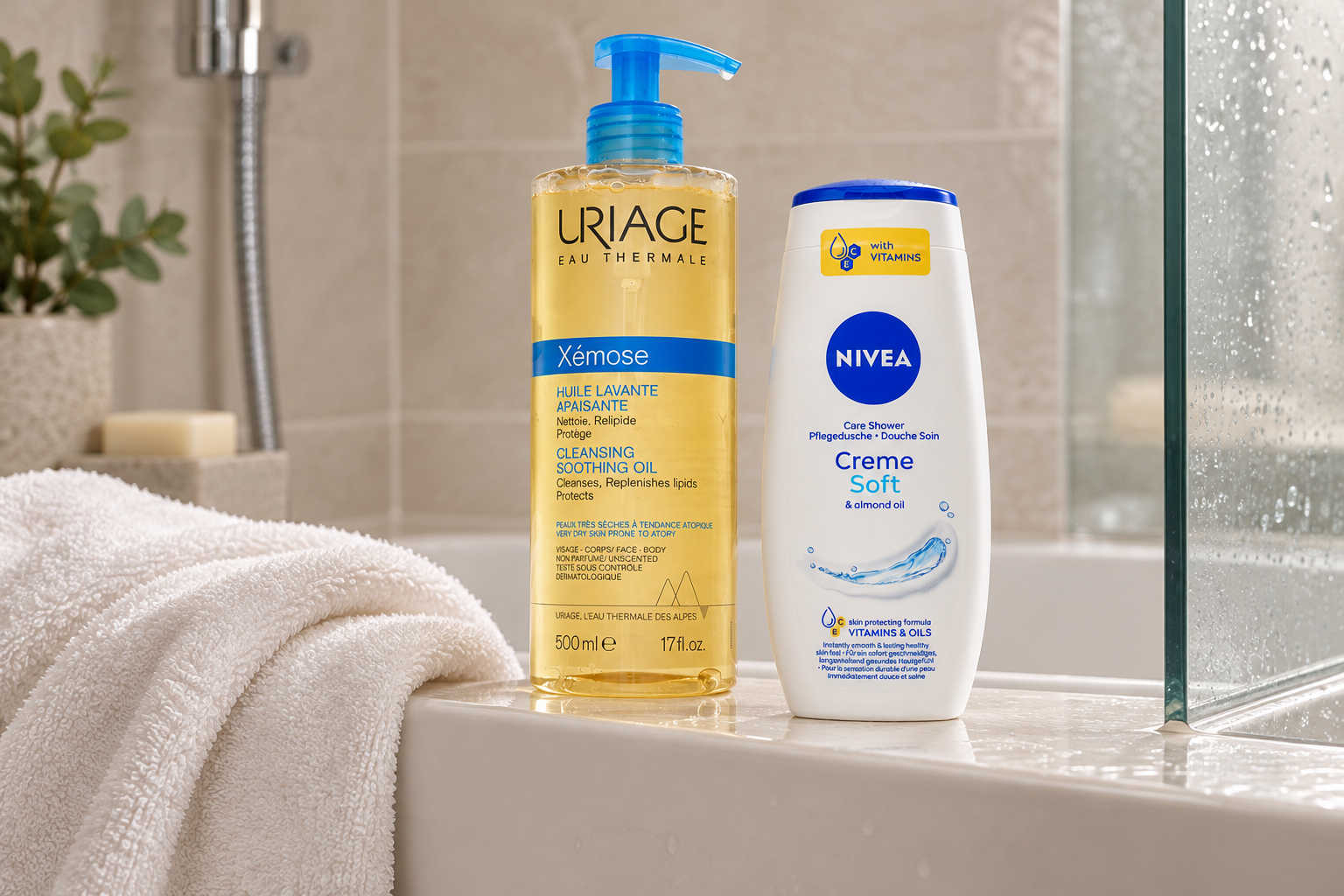
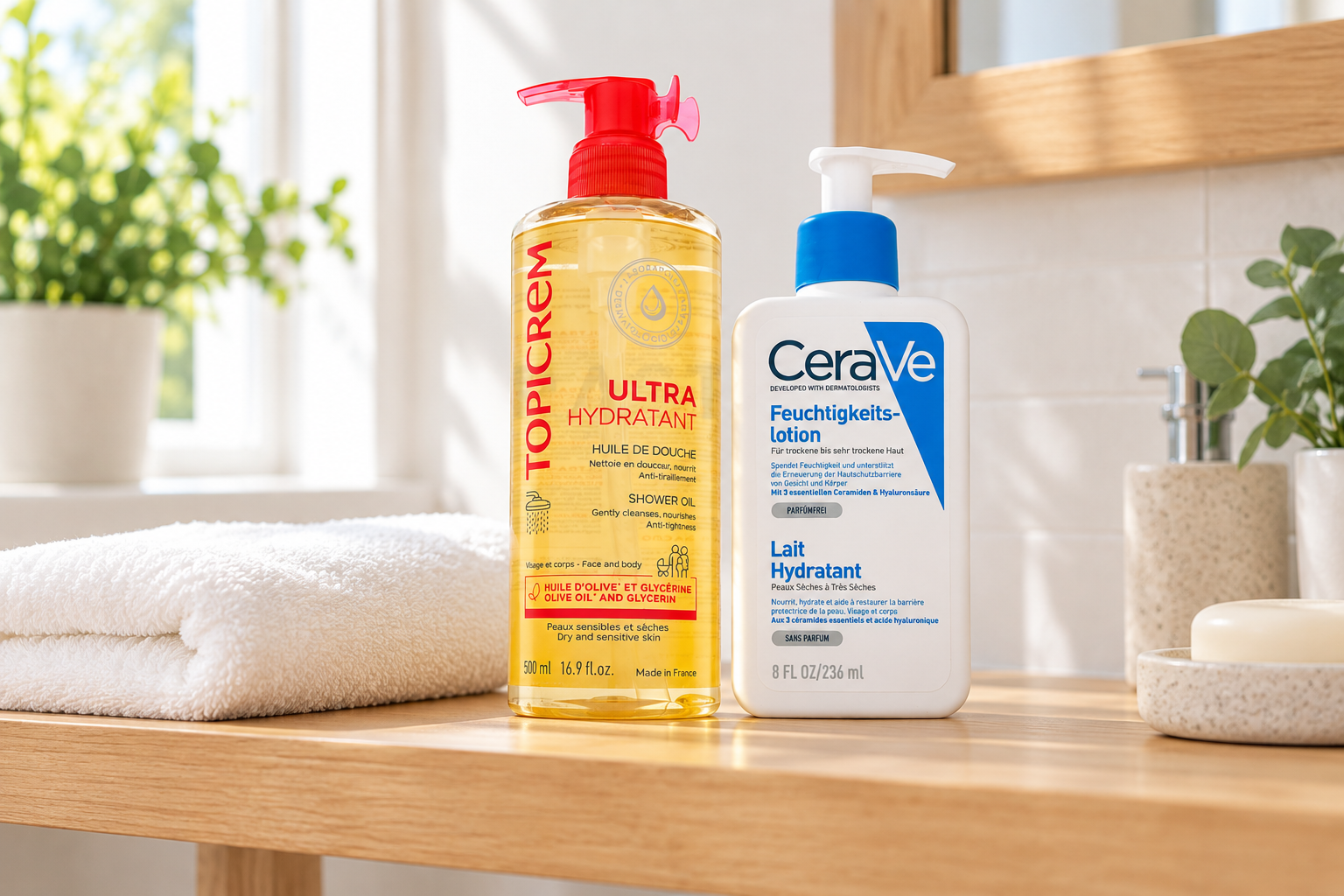
The cleansing product itself deserves attention too. Traditional bar soap tends to be more alkaline and can leave dry or sensitive skin feeling stripped. A gentler alternative is a mild shower gel with milder cleansing agents, or a shower oil that transforms into a light emulsion upon contact with water and doesn't leave a feeling of tightness after rinsing. Use cleansing products sparingly – they are most needed in areas where sweat accumulates, such as the underarms, groin, and feet, while the rest of the body usually just needs a light wash and thorough rinse.
The second half of the routine involves the towel, and here too, details matter:
- Pat, don't rub. Vigorous rubbing with a towel unnecessarily stresses the skin, especially if it's sensitive. Just press the towel against your body and gently absorb the water by patting.
- Change towels regularly. A damp fabric is a welcoming environment for microorganisms. Spread out the towel after each use to dry it quickly, and replace it with a clean one after several uses.
- Everyone should have their own towel. Sharing towels easily transfers microorganisms from one person to another. Having a personal towel for each household member, perhaps color-coded, is a simple habit that makes bathroom hygiene easier.
Finally, there's a moment you shouldn't miss. Right after drying, when your skin is still slightly damp, is the perfect time to apply body care – lotion, cream, or balm. The product spreads well at this point and helps retain the moisture that the shower provided. You don't need to dry yourself completely. If you apply body care within a few minutes after your shower, you give it the best chance to do its job effectively.
Fabric Material, Washing, Fabric Softener: Textiles on Your Skin All Day
You apply cosmetics to your body only a few times a day, but your skin is in contact with textiles almost continuously – during the day in clothing, at night in pajamas and bed linen. That's why it's worth looking at what your clothes are made of, how they fit, and what you wash them with.
Material and Fit. Cotton and linen are breathable natural materials that absorb moisture well. They are especially suitable for underwear and clothing that you wear directly on your body all day. Synthetic fabrics, like polyester or polyamide, dry quickly and hold their shape, but are less breathable, allowing heat and sweat to accumulate more easily underneath. If you have sensitive or dry skin, it's worth choosing natural materials or blends with a higher cotton content for everyday wear.
The fit is equally important. Clothes that are too tight, narrow elastics, and rough seams constantly rub against the skin – at the waist, hips, underarms, or inner thighs. Repeated friction can cause the skin to become red, rough, or irritated. If you notice pressure marks in certain areas, try a looser fit, flat seams, or tagless underwear.
Washing Without Unnecessary Residues. Some of what you wash your clothes with remains on the fibers and comes into contact with your skin all day. Here are a few principles worth following:
- Measure according to the instructions. More detergent doesn't mean cleaner clothes – excess is harder to rinse out and its residues can irritate sensitive skin. Follow the manufacturer's recommendations, water hardness, and level of soiling.
- Give clothes a thorough rinse. For underwear and bed linen, it's worth using an extra rinse cycle if your washing machine offers it.
- Use fabric softener sparingly. Fabric softener softens clothes but leaves a thin layer on the fibers. If you have sensitive skin, consider using a smaller amount or skipping it altogether.
- Fragranced additives with caution. Scented beads and heavily fragranced detergents please the nose but offer nothing to the skin. If you're sensitive, opt for fragrance-free options instead.
- Wash new clothes first. New clothing and bedding may carry residues of dyes, textile finishes, or dust from manufacturing and storage.
Sportswear and Pajamas. Functional sportswear is often tight and made from synthetic fibers, and you sweat in it during activity – a combination of heat, moisture, and friction is not good for the skin in the long term. After training, it's worth changing into dry clothes as soon as possible and not leaving sweaty items in the bag, but washing them right away, ideally inside out. Fabric softener often harms functional materials because it reduces their ability to wick moisture – follow the label instructions.
Pajamas and bed linen are in contact with your skin for seven or eight hours at a stretch, and during the night, sweat and skin oils naturally transfer into them. Loose pajamas made of cotton or linen don't constrict and allow the skin to breathe freely at night. Change pajamas after a few nights and wash bed linen regularly, perhaps once every one to two weeks. If you apply body lotion or balm before bed, give it a few minutes to absorb so it stays on your skin and not on the fabric.
Humidity Control All Year Round: Bathroom, Bedroom, Air Conditioning
The air surrounding you constantly touches your skin – in the morning in the bathroom, during the day at the office or in the car, and at night in the bedroom. When it's too dry, water evaporates from the skin's surface more quickly, making the skin feel tight, rough to the touch, or more prone to itching. The opposite extreme isn't beneficial either: long-term humid and unventilated air can cause sweating where the skin touches clothing or bedding, and create conditions for mold in the home. For living spaces, a comfortable relative humidity is usually around 40 to 60%.
This isn't limited to one season. Air conditioning can create dry air in the summer, while excess moisture occurs after every shower or when drying laundry indoors – both happen regardless of the calendar.
Air Conditioning at Home, Office, and Car. Air conditioning cools the air and removes moisture, so your skin may feel drier in an air-conditioned room even in the middle of summer. It's helpful not to sit or sleep directly in the airflow and not to set the temperature unnecessarily low. In the office, you often can't control the settings, but you can usually choose your location – just make sure the airflow isn't directed at you. In the car, aim the vents away from your hands, neck, and legs, and on longer journeys, occasionally open the windows briefly.
Steamy Bathroom. After a shower, the humidity in the bathroom is very high, and steam condenses on walls, mirrors, and fabrics. A slightly humid environment is pleasant for post-bath care, but a long-term steamy space isn't ideal – towels and bath mats dry poorly, and microorganisms thrive on damp fabrics. After a shower, turn on the exhaust fan or open a window and leave the door ajar to let the moisture escape.
Bedroom. You spend about a third of your day in the bedroom, so air quality here is most noticeable. A short but thorough airing before bed refreshes the air more quickly and effectively than leaving a window slightly open all day. If you dry laundry in the bedroom, humidity can easily rise above recommended levels, while air conditioning can lower it. It's good to leave bedding uncovered for a while in the morning to let it dry.
Estimating humidity by feel is tricky, so it's worth taking a few simple steps:
- Hygrometer – a small digital hygrometer, often combined with a thermometer, shows the actual conditions in each room. Place it away from windows, heat sources, and bathroom steam, and monitor the readings over several days at different times.
- Regular Ventilation – airing out briefly and fully several times a day is a simple habit that removes excess moisture and brings in fresh air. It's especially useful in the morning, after cooking, after a shower, and before bed.
- Humidifier – can be useful if the hygrometer consistently shows low levels, such as in an air-conditioned bedroom or office. It needs to be cleaned regularly according to the manufacturer's instructions, and humidity should be monitored to ensure it doesn't exceed the recommended range.
- Dehumidification – if levels are consistently high and water condenses on windows, more frequent ventilation, bathroom exhaust, drying laundry outside living areas, or a dehumidifier can help.
Adjusting air humidity doesn't replace body care, but it creates better conditions for it. When your skin doesn't have to face drying air currents or steamy environments all day, it feels more comfortable, and the cosmetics you regularly use naturally complement these habits.
How to Align Daily Habits with Your Existing Skincare Routine
Here's some good news: none of the habits described require a bathroom overhaul or a new wardrobe. You can gradually incorporate most of them into your daily routine, making small changes one at a time. They complement each other, and your skin benefits the most when you seamlessly integrate them with the body care products you already have at home.
A Quick Daily Overview
- In the shower: use lukewarm water, keep showers short, and opt for a gentle cleanser instead of traditional soap.
- After the shower: pat your skin dry with a towel rather than rubbing it, and apply skincare products while your skin is still slightly damp.
- In the wardrobe: choose breathable fabrics where clothing is in contact with your body the longest, use laundry detergent and fabric softener sparingly, and rinse thoroughly.
- In the environment: occasionally check the humidity levels, ventilate regularly, and ensure the air conditioning isn't blowing directly on you.
How to Complement Habits with Body Care
Body care has two natural moments during the day. The first is during the actual washing. If your skin feels tight after a shower, try using a shower oil or a gentle cleanser designed for sensitive skin instead of a highly foaming gel. These products typically cleanse more gently and pair well with lukewarm water. In the Body Care category, you can find products like Bioderma Atoderm Huile de Douche shower oil or Uriage Xémose cleansing oil.
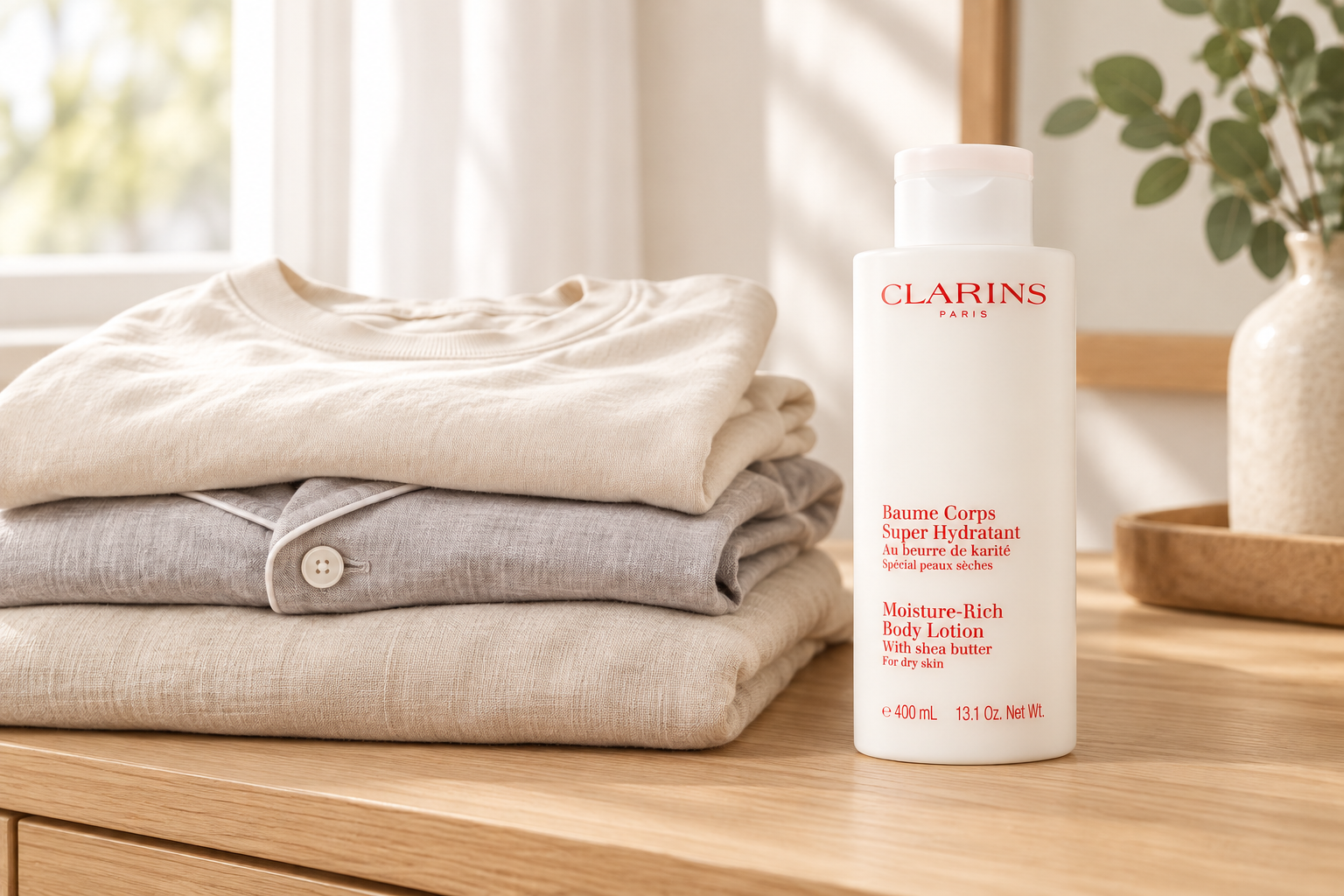
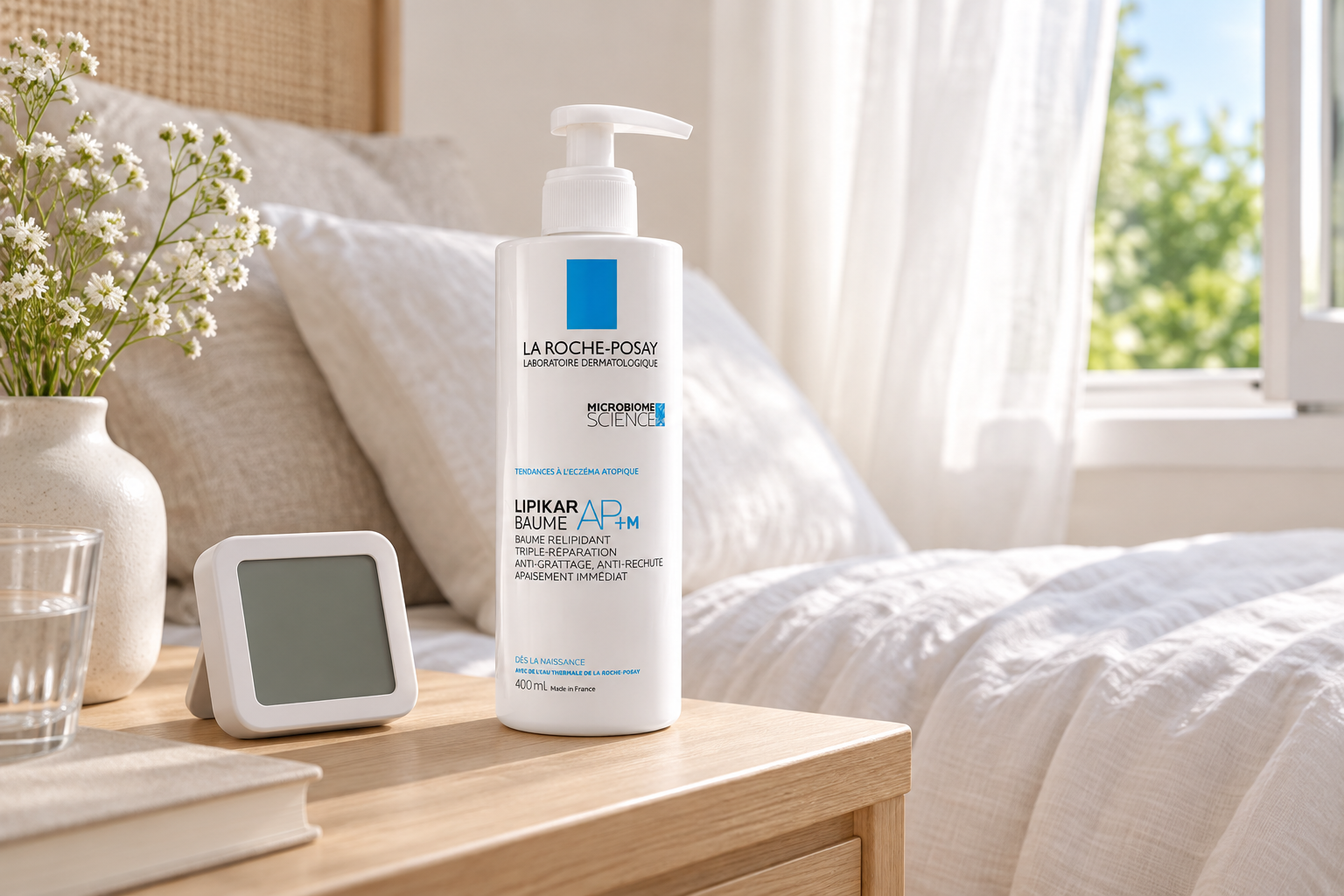
The second moment is the first few minutes after drying off. Apply body lotion or a nourishing balm to slightly damp skin – it usually spreads more easily and is better absorbed by the skin. Richer textures are offered by products like Bioderma Atoderm PP Baume or CeraVe Intensive Moisturizing Cream, while lighter body lotions are suitable for days when you don't want to feel any residue on your skin. You don't need to buy anything new: if your current products suit you, often it's enough to change when and how you use them.
Tips Based on Skin Type
- Normal skin: usually, a basic routine suffices – a gentle cleansing gel, light body lotion, and the habits described above. Save richer care for days when your skin feels drier, such as after spending time in an air-conditioned environment or after exercising.
- Sensitive skin: it's worth choosing fragrance-free products or those with simpler formulations and trying new products gradually, one at a time. Approach new laundry detergents and fabric softeners with the same caution – it will be easier to identify what doesn't suit you.
- Dryer skin: a combination of shower oil and nourishing balm is a natural choice. It helps to apply care after every wash, not just occasionally, and to monitor the humidity in the rooms where you spend most of your time.
If certain areas of your body have been bothering you for a long time – itching, flaking, or redness – and adjusting your habits or care doesn't help, it's time to consult a dermatologist. Cosmetics and good habits complement each other, but they don't replace medical care. You don't have to start with everything at once: choose one habit that makes the most sense to you, and gradually add others based on how your skin responds.


Category
Recommended articles

"Give a girl the right shoes and she can conquer the world!" Marilyn Monroe