


Six face creams from the best-selling brands in our range – Bioderma, Vichy, La Roche-Posay, CeraVe, Uriage, and Dr. Hauschka – are evaluated based on texture, composition, and protective factor. We’ll help you decide which one best fits your normal skin care routine.
Normal Skin Isn't Maintenance-Free – What to Expect from a Day Cream
In cosmetics, normal skin can be a bit misleading. It sounds like skin that doesn’t need any care – it takes care of itself, and using a cream is more of a habit than a necessity. In reality, it describes a state where sebum production is balanced, and the protective barrier functions as it should. This doesn’t mean that this state will maintain itself. With normal skin, it's common to grab the first cream at hand, and after a few months, you might notice tightness, uneven tone, or dry patches where there were none before.
Before we dive into specific creams, it's worth verifying that you indeed have normal skin. You can recognize it by several signs:
- After washing your face, you don’t feel significant tightness or burning – your skin calms down on its own in a few minutes and doesn’t immediately cry out for cream.
- In the T-zone, meaning the forehead, nose, and chin, a slight shine may appear during the day. However, it's not an oily film that you need to mattify.
- Pores are visible more up close and evenly across the face, not clustered around the nose.
- Your skin doesn’t usually react with redness or itching to weather changes or new products.
- Rough texture and flakes appear seasonally – in winter, after a seaside vacation, or during periods when you skipped skincare for a few weeks.
This is where the daily routine for normal skin differs from other types. Dry skin needs to replenish lipids and protect against water loss, so it can handle rich, buttery textures. Oily and combination skin, on the other hand, deals with sebum production and seeks lightweight formulas that won’t clog pores. Normal skin doesn’t have either of these issues – and a cream designed specifically for them usually doesn’t suit it. Too rich care unnecessarily burdens it, while strongly mattifying formulas can disrupt the balance that didn’t need adjusting.
The Role of a Day Cream: Maintain, Not Repair
A day cream for normal skin has two main roles. The first is hydration – to keep the skin moisturized all day, maintaining its elasticity and smooth surface. The second is protection against sun exposure, which impacts the skin’s long-term condition more significantly than most other external factors. An SPF in a day cream is not a luxury today but a standard part of the morning routine, even on cloudy days.
Everything else is an add-on, not a necessity. A serum with vitamin C, night care with retinol, or targeted pigmentation products make sense when you consciously add them for a specific goal – not because normal skin lacks something without them. With normal skin, it’s easy to keep adding steps until trouble-free skin becomes irritated.
From this perspective, we’ve selected six day creams to focus on: Bioderma, Vichy, La Roche-Posay, CeraVe, Uriage, and Dr. Hauschka. Together, they cover three different approaches – dermocosmetics with a pharmaceutical background, minimalist formulas based on a few proven ingredients, and certified natural care. Each suits a slightly different routine, and it’s in their differences that you’ll find which one suits you best.
How We Compare Six Creams: Texture, Composition, and SPF
The six creams we've gathered share one thing: they all make sense for normal skin. However, they differ enough for us to outline the criteria we use to compare them. We've chosen four key aspects that determine whether a cream will fit into your routine or end up forgotten in the bathroom cabinet after two weeks.
- Texture – from a light fluid to a gel cream to a richer, more nourishing consistency.
- Moisturizing Composition – what hydrates the skin and helps retain moisture.
- SPF Protection – whether the cream provides daily sun protection or if you need a separate product.
- Packaging Size – indicates whether the cream is intended just for the face or for larger areas.
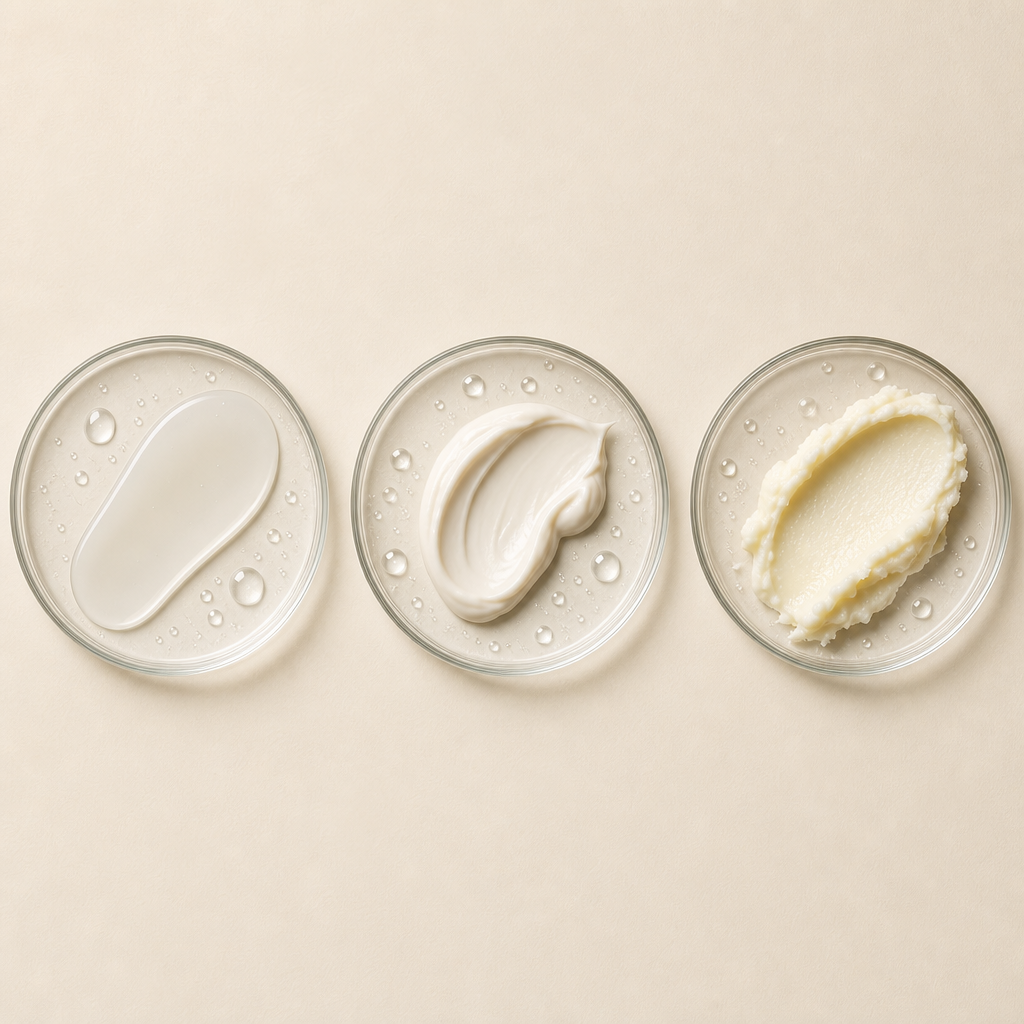
Texture is something you'll notice immediately upon application, and for normal skin, it often plays a decisive role. A light fluid absorbs quickly, leaving the skin matte, making it suitable under makeup and in warmer months. A gel cream is somewhere in the middle: it provides a fresh feeling but leaves a slightly more noticeable film. A richer cream with a creamy to balm-like consistency spreads more slowly and is appreciated in winter, after a shower, or in the evening when you're not in a rush. Normal skin can handle all three variants – it's more about what feels comfortable and suits the season.
The second aspect is composition, specifically the dual role you expect from hydration. One group of ingredients draws water into the skin and binds it – this includes hyaluronic acid, glycerin, or panthenol. The second group helps retain water in the skin and supports the skin barrier; here you'll often find ceramides, plant oils, and butters. For normal skin, a reasonable balance of both is usually sufficient, without the need for a significantly greasy balm. We also note the length and density of the composition: some brands opt for a short, simple list of ingredients, while others offer a more elaborate combination of plant extracts.
The third criterion is SPF protection. A cream with SPF simplifies your morning routine by combining hydration and protection in one step – especially appreciated by those who don't want to layer three products before heading to work. A cream without SPF offers more flexibility: it's suitable for the evening, and during the day, you can add separate protection depending on how much time you spend outdoors. Neither option is better; they are two different approaches, and both are represented in our selection of six.
The last aspect is the volume of the packaging and how generously you apply the cream. The range is quite broad: on one end, a small jar of Dr. Hauschka Rose Day Cream 30 ml, which is enough for the face and used sparingly, and on the other, a large package of CeraVe Moisturising Cream 340 g, intended for hands, elbows, or the whole body. Smaller packaging doesn't mean a weaker cream, but a different purpose – and also a different frequency of repurchase.
Across all four criteria, there's another difference worth mentioning. Pharmacy brands like Bioderma, Vichy, La Roche-Posay, CeraVe, or Uriage focus on a dermocosmetic approach: simple compositions, usually minimal fragrance, and formulas targeting specific skin needs. Dr. Hauschka takes the natural cosmetics route, where plant extracts and a more pronounced natural scent play a role. This distinction is evident in both the composition and the sensory experience of application – which is why two creams with the same purpose can feel completely different on the skin and in the bathroom.
Bioderma, Vichy, and La Roche-Posay: Hydration with a Pharmaceutical Heritage
These three brands, familiar from pharmacy shelves, are among the most sought-after in skincare at Brasty. They share a straightforward approach to formulation and lines built around skin needs rather than seasonal trends. For normal skin, this means a simple choice: you’re not choosing between "strong" and "weak" care, but between different cream densities and whether you want to include a protective factor in one step.
Bioderma Hydrabio: A Light Concentrate for Skin Losing Moisture
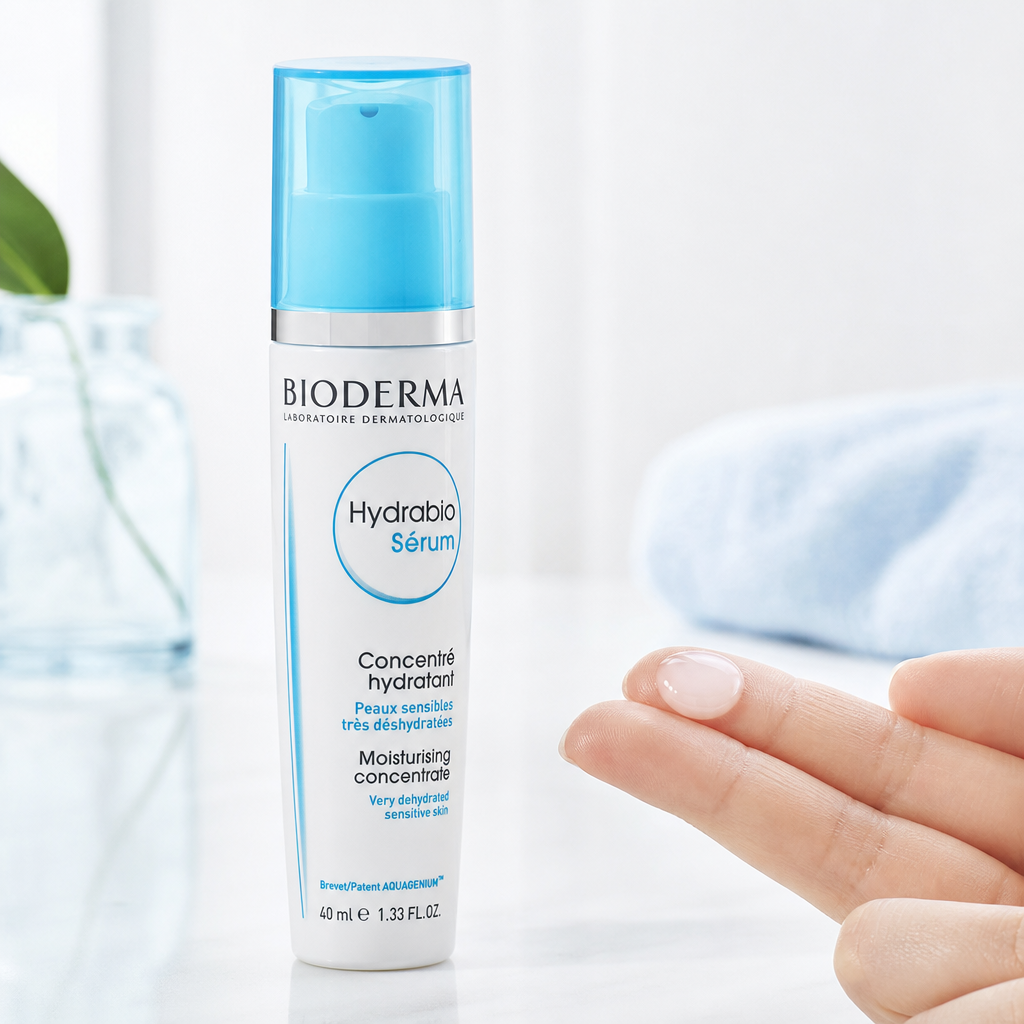
Hydrabio is Bioderma's hydrating line designed for skin that tightens during the day, even if it otherwise has no significant issues. Represented in the catalog by Bioderma Hydrabio Serum Moisturising Concentrate 40 ml – a concentrate with a notably more liquid, serum-like consistency than traditional creams. It spreads into a thin layer, absorbs quickly, and leaves no greasy film, allowing you to proceed with makeup without waiting.
It's suitable for normal skin that is situationally dry – after the heating season, a day in an air-conditioned office, or after extended exposure to wind. You can apply it in the morning as the first hydrating layer under a day cream, in the evening after cleansing, or on its own. If traditional cream feels unnecessarily heavy during warm months, this is a lighter way to hydrate your skin.
Vichy Aqualia Thermal Rich Cream: A Richer Texture for Year-Round Hydration
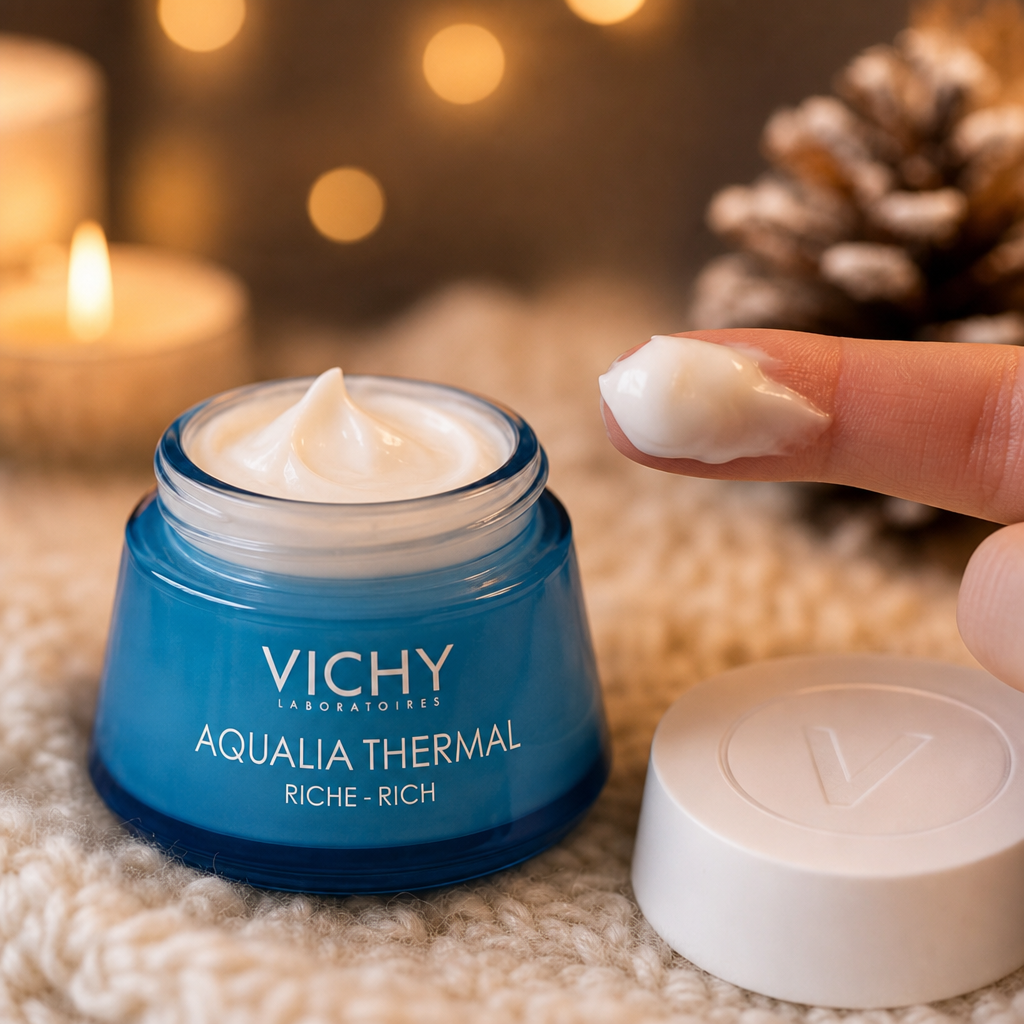
Where the Hydrabio concentrate is airy, Vichy Aqualia Thermal Rich Cream 50 ml goes in the opposite direction. The "rich" label indicates a denser variant of the Aqualia Thermal line – the cream has a thicker, creamier texture that stays on the skin longer. It spreads more slowly and should be applied sparingly, or it will linger on the skin for a while.
It suits normal skin that behaves like dry skin in winter, and those who enjoy the "wrapped" feeling – when the skin feels noticeably supple after applying cream, not just matte hydrated. It works best in the evening as the final step in your routine, giving it all night to absorb. In the morning, it's appreciated during the colder part of the year; in summer, it can be too rich for normal skin under makeup.
La Roche-Posay Toleriane Rosaliac AR: Hydration and Protection in One Step
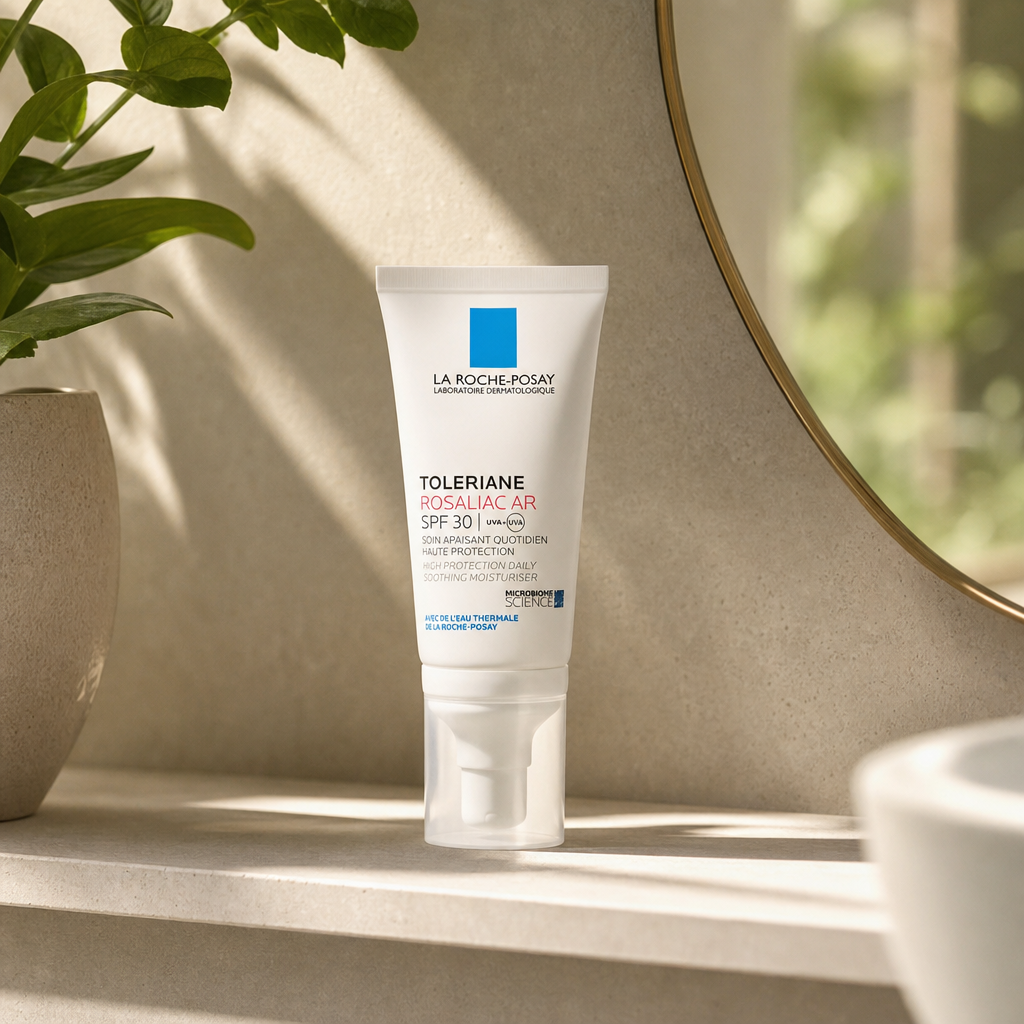
La Roche-Posay Toleriane Rosaliac AR Moisturiser SPF 30 50 ml addresses a situation familiar to anyone in a morning rush: cream and sun protection in a single product. The texture is a middle ground between the previous two – thicker than a serum concentrate but lighter than a rich night cream. As is typical with products containing a protective factor, expect a slight mattifying effect immediately after application.
It's a choice for normal skin prone to redness, such as when an uneven blush appears around the nose and cheeks, and you want to prevent it while also protecting against the sun. It is used exclusively in the morning as the last step before makeup. In the evening, there's no need for a product with a protective factor – a purely hydrating cream takes its place.
How the Three Textures Differ in Practice
- Lightest of the trio: Bioderma Hydrabio Serum Moisturising Concentrate – serum-like consistency, morning and evening, layers well.
- Richest of the trio: Vichy Aqualia Thermal Rich Cream – creamy texture, ideally in the evening or winter.
- Daytime with protection: La Roche-Posay Toleriane Rosaliac AR Moisturiser SPF 30 – medium texture, exclusively morning use.
All three can be combined with each other – a lighter concentrate under a richer cream makes sense in colder months. Just remember that hydration isn't measured by the number of layers; normal skin usually only needs one well-chosen cream.
CeraVe, Uriage, and Dr. Hauschka: From Minimalism to Botanical Care
The three creams we are about to introduce demonstrate that even within a single category for normal skin, there is no consensus on what daily care should look like. One brand focuses on a simple formula and two packaging sizes, another adds smoothing and a protective factor to hydration, while the third relies on plant-based ingredients and a fragrance that turns the cream into a small morning ritual. Normal skin can afford such a choice – it doesn't primarily have to worry about irritation and can decide based on what suits it in daily use.
CeraVe: Simple Formula in Two Sizes
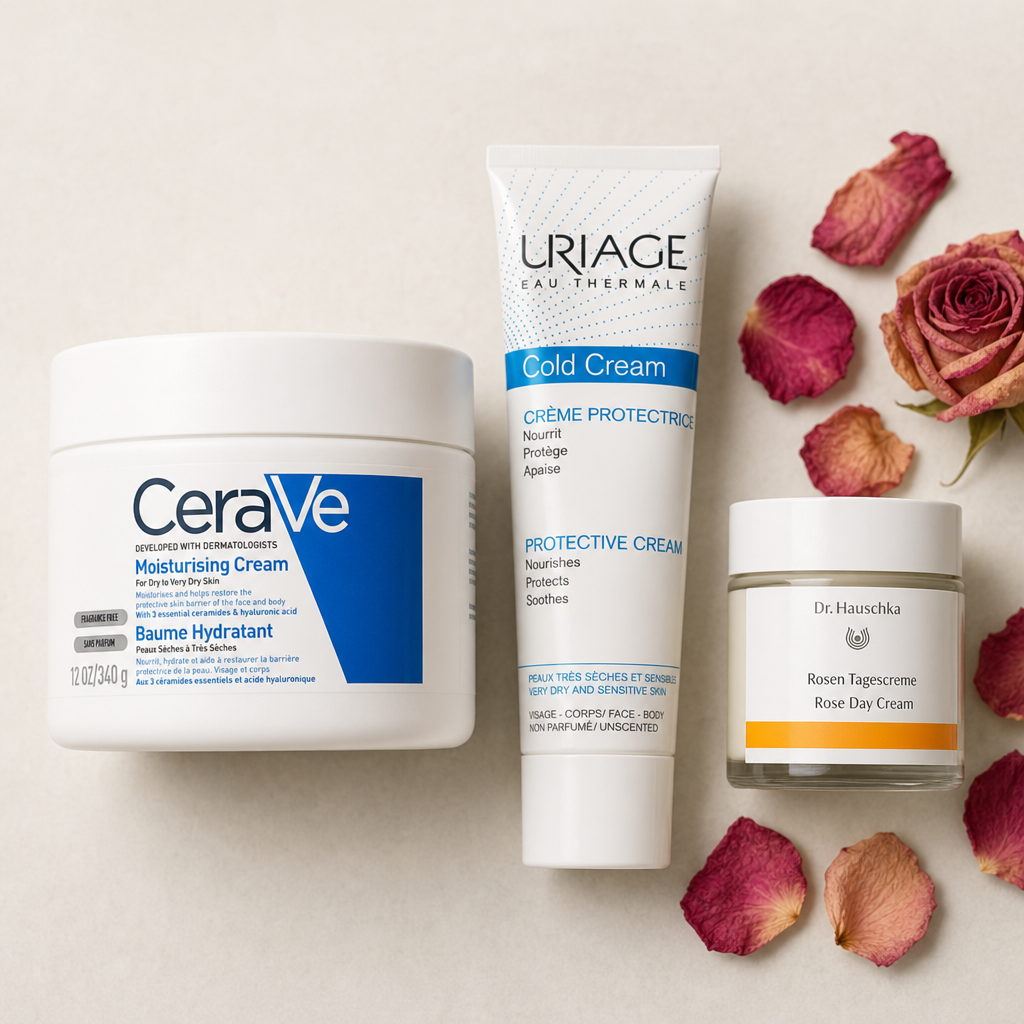
CeraVe represents the minimalist approach in this selection. The ingredient list is short and consistent across the range, so if one product suits you, you'll likely get along with the others as well. Interestingly, the brand offers practically the same concept in two formats, and it's up to you which one fits into your bathroom.
- CeraVe Moisturising Cream 340 g – a rich jar variant with a thicker texture. The 340 g size makes sense if you use the cream on your body as well, especially on elbows, knees, and hands; the face will only use a fraction of it.
- CeraVe Facial Moisturising Lotion 52 ml – a lighter facial emulsion in a tube, convenient for travel. It's suitable when you focus care only on the face and neck, while the richer cream seems unnecessarily heavy under makeup.
The difference is not in ambition, but in scope and texture. If you appreciate cosmetics where one product can fulfill multiple roles, the larger packaging makes sense. If you have a separate solution for the body, you'll use up the smaller format in a reasonable time without it being open for half a year.
Uriage Age Lift SPF 30: A Day Cream That Protects Against the Sun
Uriage Age Lift SPF 30 Protective Smoothing Day Cream 40 ml is explicitly a morning cream. It adds surface smoothing and SPF 30 to basic hydration, allowing your morning routine to have one less step – instead of applying a cream and a separate sunscreen, you apply one layer. This makes it a strong seasonal choice: from spring to the end of summer, when you spend more time outdoors, protection is useful even on a regular commute to work.
The texture of a day cream with SPF is crucial – it's applied every morning and stays on the skin all day, so it shouldn't be heavy or sticky. Keep in mind that 40 ml is a standard facial size, meaning it's a few months' worth of daily use.
Dr. Hauschka Rose Day Cream 30 ml: Natural Cosmetics Based on Rose
The last cream in the trio takes the opposite direction from CeraVe. Dr. Hauschka Rose Day Cream 30 ml belongs to natural cosmetics and is committed to it with its fragrance – the rose composition is as essential as the texture. The cream is richer and more suitable for cooler months or for skin that tends to tighten in winter despite being labeled "normal."
If you see skincare as a moment to stand in front of the mirror without rushing, this type of cream offers more than just hydration. Conversely, if you don't particularly seek fragrance in skincare, you'll be happier with a simpler formula. Neither path is objectively better – they are two different ideas of what a cream should accomplish in the morning.


Which of the Six Creams Will Fit Into Your Routine?
Comparing creams side by side only makes sense when you translate the result into your own bathroom. Normal skin gives you a lot of freedom – you don't have to worry about excess oil or tightness after washing – so it’s more about how the cream fits into your morning and evening. The following three scenarios cover most common routines; once you recognize yours, your choice is practically made.
When You Want a Generous Daily Supply
Do you use cream morning and night, apply it to your neck and décolleté, or perhaps someone else in the household uses it too? Then volume is the deciding factor. CeraVe leads here: CeraVe Moisturising Cream 340 g is a typical representative of this logic – a thicker texture that only needs to be applied in a thin layer on normal skin, no fragrance, and packaging that lasts for months. If a thicker cream seems unnecessarily rich for the warmer months, the same philosophy is offered in a lighter consistency with CeraVe Facial Moisturising Lotion 52 ml. Both options assume that a cream should be a cream – not simultaneously a serum and a makeup base.
When You Want One Step Instead of Two
The most common reason a morning routine falls apart after a few weeks is its length. A cream with SPF solves this problem elegantly: it combines two steps into one. La Roche-Posay Toleriane Rosaliac AR Moisturiser SPF30 50 ml is a day cream with SPF 30 and a lighter texture that pairs well with subsequent makeup. Uriage Age Lift SPF30 Protective Smoothing Day Cream 40 ml targets the same scenario, just with a more mature audience – it’s suitable if you’re interested in hydration and protection as well as caring for skin with the first signs of aging. The main difference between them is how they feel on the skin.
When the Cream Should Be a Small Ritual
Not everyone wants a purely pharmaceutical approach in their bathroom. If you enjoy the sensory aspect of care – scent, richness, the very moment of application – Dr. Hauschka Rose Day Cream 30 ml is the clear choice. Its rich rose composition and thicker consistency make it a cream to savor rather than rush through. The smaller packaging reflects this: this type of care is used more sparingly and with greater attention. For normal skin, it’s a pleasant compromise between nourishment and lightness, especially in the cooler part of the year.
How to Integrate the Cream Into the Rest of Your Routine
Whichever of the six creams you choose, your skin will only notice the difference if you integrate it with the rest of your care. The most important step is before the cream: skin free of makeup residue and impurities will absorb subsequent care much better. For evening cleansing, micellar water is effective for normal skin – for example, Bioderma Sensibio H2O 500 ml, with its large packaging designed for daily use.
The order is then simple: cleansing, possibly serum, cream. In the morning, add SPF, whether built directly into the cream or as a separate step. And above all, give each new combination a few weeks – normal skin reacts gradually.
If you want to compare your chosen cream with other options, browse the Skincare category in the Brasty catalog. You'll find both the pharmaceutical lines mentioned above and alternatives with different textures or compositions.
Category
Recommended articles

"Give a girl the right shoes and she can conquer the world!" Marilyn Monroe