

The same fragrance can refresh in summer and seem to disappear in winter – it's all about temperature, humidity, and perfume concentration. We'll guide you on when to opt for a light eau de toilette and when to choose a richer perfume.
Why a Fragrance Doesn't Smell the Same All Year Round
You might have experienced this yourself: a perfume that sparkled with freshness on your skin in July and lingered all afternoon seems to vanish by December before you even reach work. The bottle is the same, the number of sprays too – yet the result is different. It's rarely due to the quality of the perfume or the bottle being "stale." The environment in which you perceive the scent has changed, and so has your skin.
A Fragrance Needs Warmth to Unfold
Scent components are released from the skin through evaporation, and this process is sensitive to temperature. The warmer the skin, the faster the light top notes – citrus, bergamot, or aromatic herbs – are released into the air, and the sooner the heart and base notes follow. In the summer heat, the perfume acts immediately and intensely, but it also depletes faster. In winter, the logic is reversed: cool and often dry skin slows down evaporation, the composition develops slowly and stays close to the body. Many people interpret this as the perfume not lasting. In reality, it simply hasn't had the chance to unfold into the space.
Humidity and what you're wearing also play a role. Humid summer air carries scent molecules further, making the fragrance trail more noticeable to others. Conversely, dry air in heated rooms works against you, and a sweater, coat, or scarf simply holds part of the fragrance close to your body, where you mainly smell it yourself.
In simple terms, four main factors influence how you perceive a fragrance:
- the temperature of your skin and the surrounding air, which determines the rate of evaporation,
- the humidity of the air, which decides how far the scent travels,
- the condition of your skin, as hydrated skin holds the scent noticeably longer than dry skin,
- the layers of clothing and the environment you're in – a sunlit terrace is different from a heated office.
Adding More Isn't Always the Solution
When a perfume seemingly doesn't work in winter, the simplest reaction is to add a few more sprays. But this usually doesn't help. A light, fresh composition won't unfold in the cold, even if you double the dose, and instead of longer-lasting fragrance, you'll just get a stronger first impression. Conversely, if you take a rich winter scent into a hot summer day, the opposite happens: the heat amplifies it so much that it can be overwhelming in an enclosed space.
It's more practical to work with the concentration of the fragrance component. Eau de Toilette and Eau de Parfum differ not just in longevity, but mainly in how they behave in warmth and cold. Consciously alternating between the two depending on the season will serve you better than searching for a single universal perfume that performs equally well in August heat and at Christmas markets.
In the following parts of the article, we'll look at how the different concentrations differ, which notes handle summer heat, and which need coolness to shine. By the end, we'll piece together a simple guide to help you know when to reach for a lighter Eau de Toilette and when to opt for a richer Eau de Parfum.
Eau de Toilette vs. Eau de Parfum: Concentration is Key
When you compare an eau de toilette and an eau de parfum with the same name, you might notice they smell slightly different. To some extent, this is true – but the difference isn't about quality or one version being "the real deal." They differ in concentration, meaning the proportion of fragrance oils dissolved in alcohol and water. This ratio determines how the scent starts on your skin, how quickly it develops, and how long it lasts on you.
Eau de Toilette contains fewer fragrance oils. Typically, its concentration is in the single to low double digits percentage-wise, which means a lighter, airier opening. The alcohol evaporates more quickly, so the scent feels fresh and clear from the first moments, without heaviness. It also settles into a gentler profile sooner, and its trail around you is shorter. This isn't a drawback – for many situations, this subtlety is exactly what you need.
Eau de Parfum has significantly more fragrance oils. The opening is fuller and denser, the scent develops more slowly, gradually revealing both middle and base notes that are only hinted at in the lighter version. It lingers longer on the skin and clothing, and its presence is more noticeable to those around you. This also affects how you apply it: with a higher concentration, you need fewer sprays than with the lighter version, and it's easier to overdo it.
To complete the overview, it's useful to know the entire range from the lightest to the most intense:
- Eau de Cologne – the lowest concentration of all, very refreshing and very short-lived. Often used after a shower or as a quick refresh during the day when you don't want the scent to linger for hours.
- Eau de Toilette – lighter, fresh start and medium longevity. The most common format you'll encounter in perfumery.
- Eau de Parfum – higher concentration of fragrance oils, slower development, and longer-lasting. The scent feels richer and more cohesive.
- Perfume Extract – the most concentrated form, usually in smaller bottles. Applied drop by drop or very sparingly, and it stays on the skin the longest.
Specific percentages vary from brand to brand and aren't strictly standardized. The label on the bottle should be seen more as a guide to the expected intensity rather than an exact technical detail. A practical rule is simple: the higher the concentration, the slower the scent opens, the longer it lasts, and the more cautiously you should apply it.
All this leads to one important point – none of the variants is objectively better than the others. A lower concentration isn't a diluted eau de parfum, and a higher concentration isn't a more luxurious version of the same. They are tools with different properties, and each makes sense under different conditions. You'll appreciate the lighter format when you want to feel refreshed but don't want to fill the space around you. You'll reach for the more intense version when the scent needs to last long and be part of the overall impression. Being able to consciously switch between them is a more useful skill than searching for one universal bottle for all occasions.
Summer Belongs to Citrus: Why Lighter Eau de Toilettes Handle the Heat
High temperatures alter the behavior of perfume before you even notice. Warm skin acts as a mild evaporator: fragrance notes release more quickly and intensely, so a composition that seemed balanced in April might feel much heavier on an August afternoon. Add humid air that holds the scent close to the body, and even a modest application can suddenly feel like a dense cloud. It's not a flaw in the perfume or a mistake in your taste—it's physics, and you can account for it.
This is where the strength of lighter concentrations comes into play. Eau de Toilette contains a lower proportion of fragrance oils, so it stays closer to the body and leaves a more airy trail. When the heat intensifies it, you end up roughly where a more intense variant would be under milder conditions—pleasant, but not overwhelming. Fresh compositions also open up more quickly in the heat, so you enjoy them from the first few minutes after application.
Concentration isn't the only factor; the olfactory family is equally important. In summer, these groups are particularly effective:
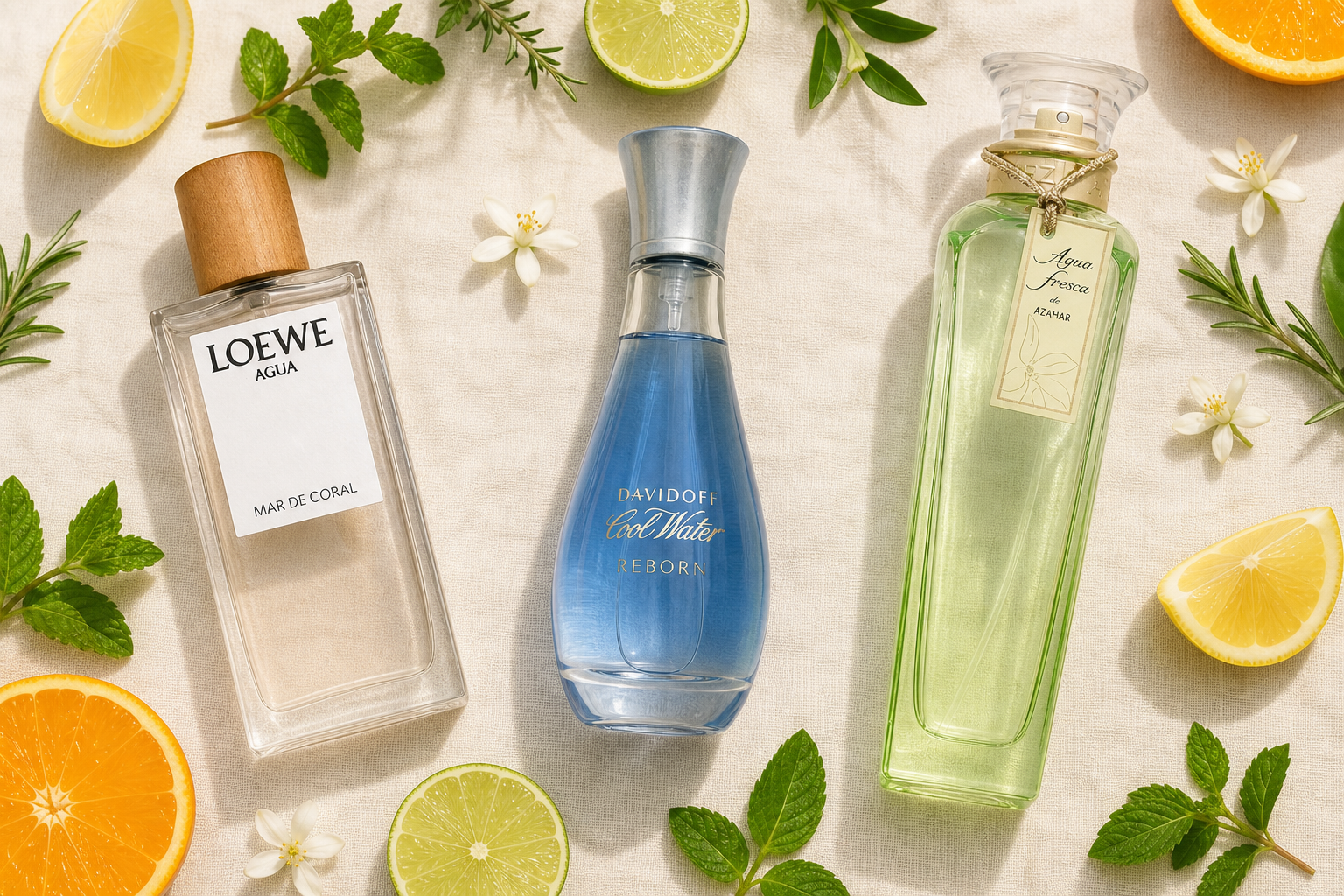
- Citrus Openings – bergamot, mandarin, grapefruit, lemon, or lime. They give the fragrance immediate freshness but are volatile, so they dissipate faster than expected. Look for them combined with a more stable base to hold them.
- Aromatic Notes – lavender, rosemary, sage, or mint. They have a herbal and clean effect, balancing sweetness and usually don't become heavy in the heat.
- Water and Green Accords – compositions reminiscent of sea air, wet leaves, or cucumber freshness. They tend to be quiet and unobtrusive, which is an advantage in a crowded tram or office.
- Light Floral and Musk Compositions – airy jasmine, neroli, or clean musk. They work as a gentle second layer when you want something more personal than pure citrus.
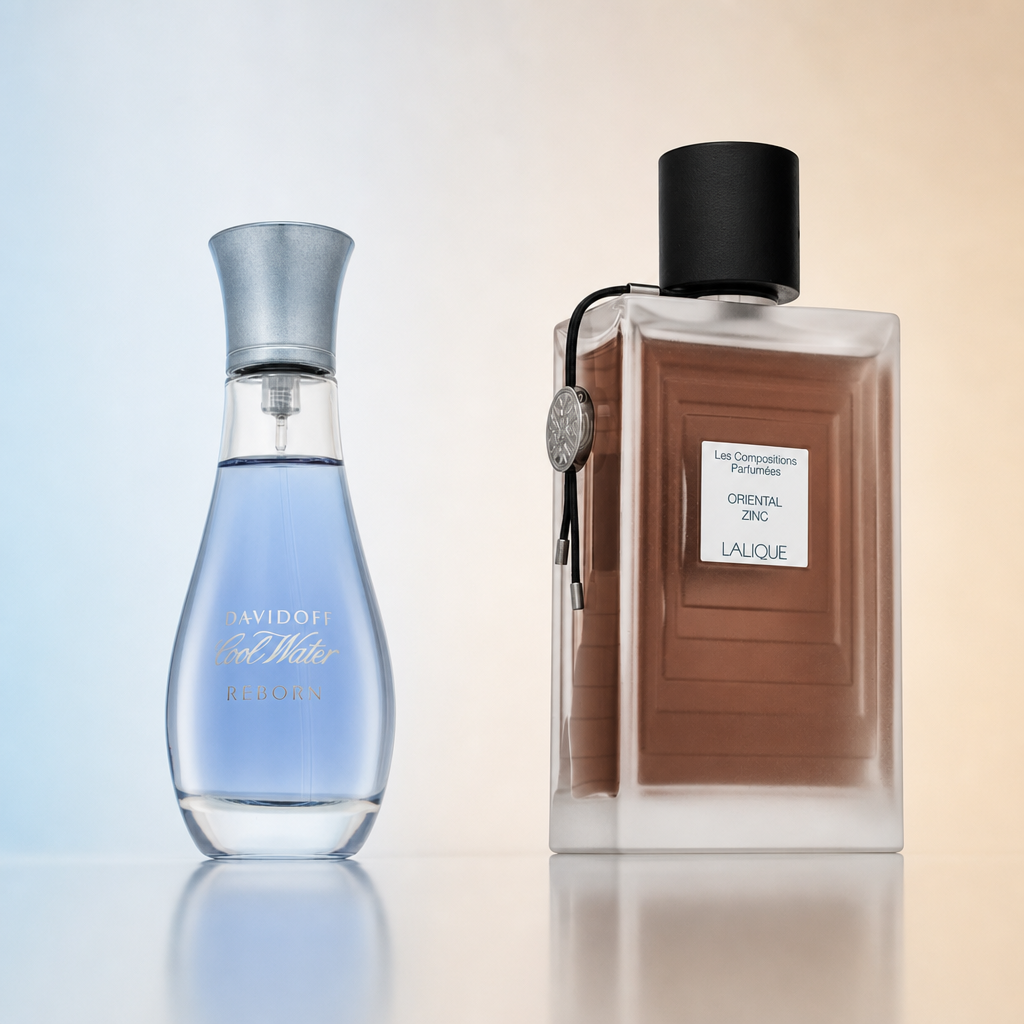
You can easily get a concrete idea from summer classics that have long been favorites here. Dolce & Gabbana Light Blue in Eau de Toilette form builds on citrus freshness complemented by a subtle woody base, and many people associate it directly with summer by the sea. Davidoff Cool Water relies on a watery and aromatic character that feels clean and effortless. You don't even have to buy either of them immediately to benefit: they serve as a clear reference point. If they suit you, you know to stick to fresh and light directions in summer, and you can choose accordingly.
It's also worth adjusting the application itself. In the heat, a few simple rules suffice:
- Reduce by one or two sprays compared to what you're used to in cooler months. The heat will do the rest.
- Apply to clean and well-hydrated skin. Fragrance lasts noticeably shorter on dry skin.
- Choose areas that aren't in direct sunlight all day—fragrance dissipates fastest there.
- Expect to reapply during the day. With Eau de Toilette, this is a common practice, not a sign of poor quality.
- Don't leave the bottle in the car or on the windowsill. Heat and light alter the composition faster than months spent in a dark cabinet.
So summer doesn't require compromise, just a slightly different approach: lower concentration, fresher fragrance family, and a more delicate hand when spraying.
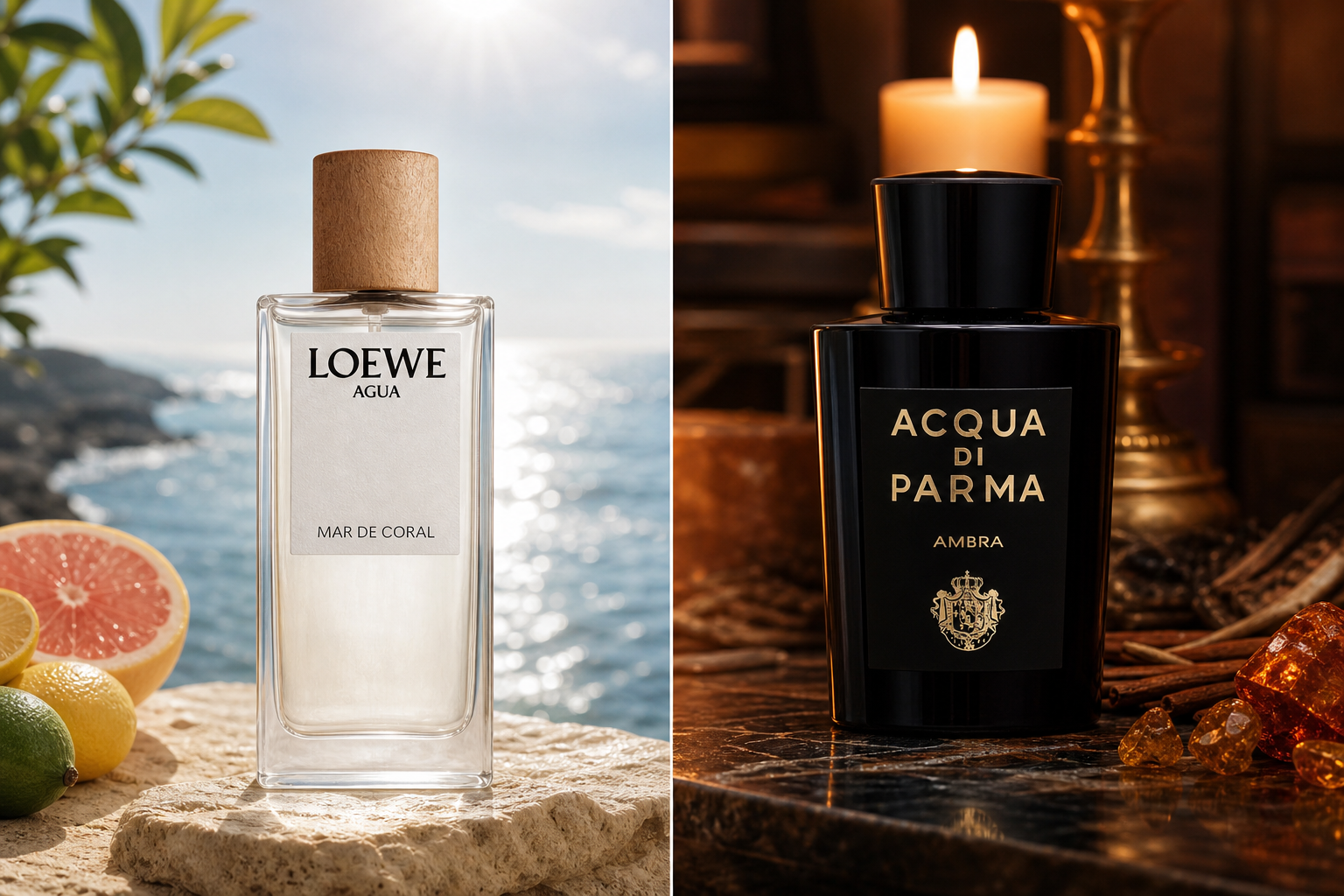
Cold Months Call for Higher Concentration: Vanilla, Amber, Musk
As temperatures drop to freezing, perfumes behave differently on the skin than in summer. Fragrances evaporate more slowly from cold skin, causing the composition to develop more hesitantly and release less into the surroundings. Layering clothing also plays a role – a scarf, sweater, and coat absorb part of the scent before it can fully manifest. A light Eau de Toilette that worked perfectly in July often sounds like an echo of itself in December.
This is where reaching for a higher concentration makes sense. Eau de Parfum contains a higher proportion of fragrance components than Eau de Toilette, and its richer base notes have enough material to assert themselves even in frosty air. It's not that it's of higher quality – it's just built more robustly, and the cold suits it better than a tropical afternoon.
Winter compositions are often based on ingredients that have a warming character themselves. They can be roughly divided into three families:
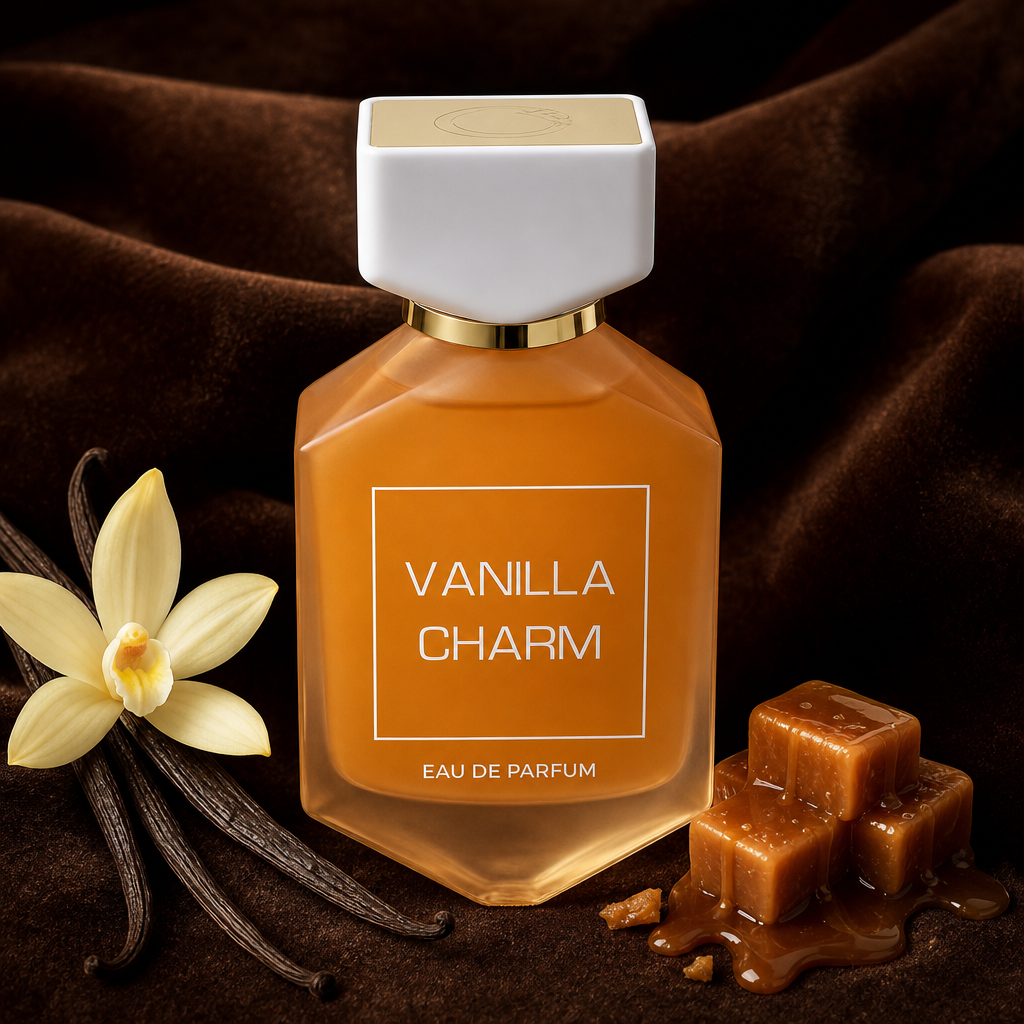
- Gourmand Notes – vanilla, Tonka bean, caramel, or coffee and cocoa accords. They feel sweet and cozy, cling close to the skin, and develop slowly in the cold.
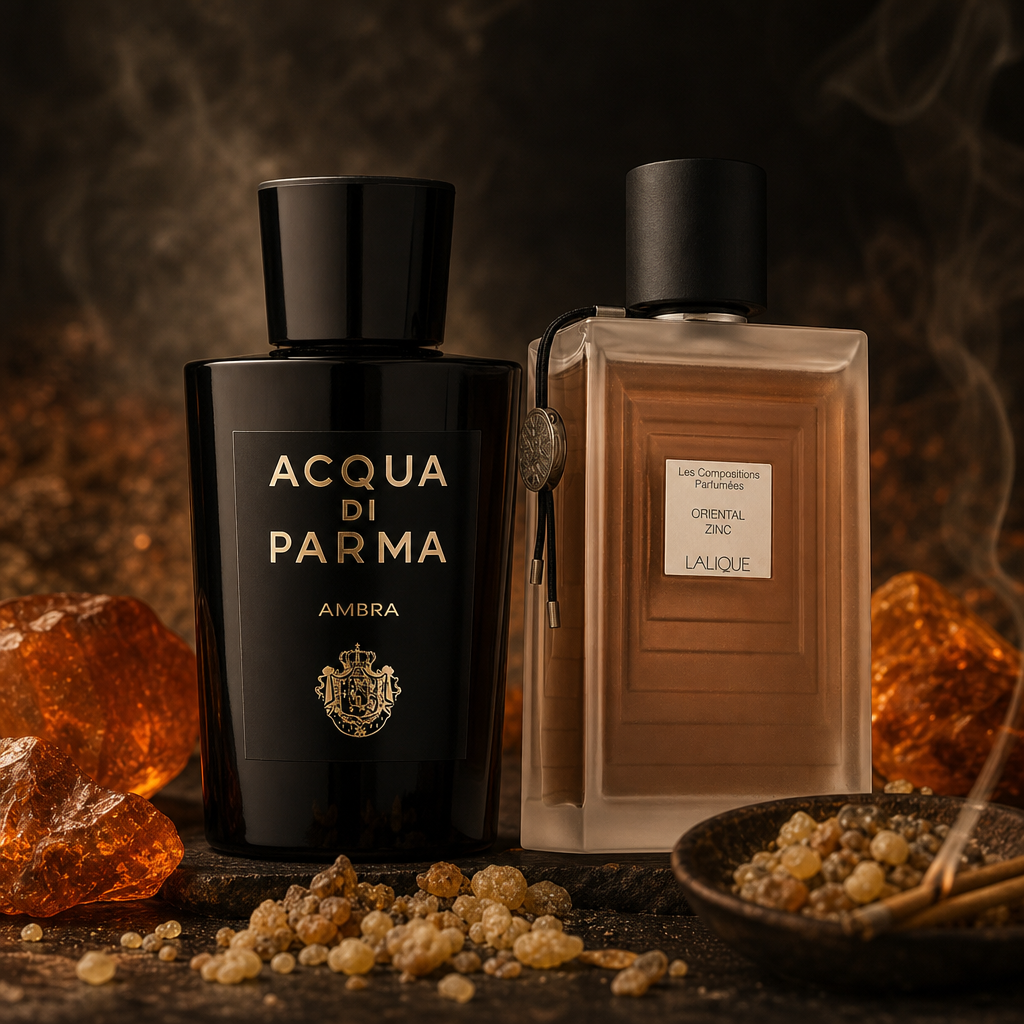
- Oriental Bases – amber, resins, incense, and spices like cardamom or cinnamon. They add depth to the composition and are often noticeable even after several hours.
- Woody and Musky Accords – cedar, sandalwood, vetiver, and musk. They hold the entire structure together and give the fragrance a soft, clean finish that often lingers on clothing.
In Brasty's perfume selection, vanilla-spiced Eau de Parfums and musky or woody compositions are among the most sought-after during the colder months, across women's, men's, and unisex variants. Unisex compositions with Tonka bean or amber are a practical choice in winter if you share the scent as a couple or are still finding your direction. If you're interested in a sweeter profile, gourmand Eau de Parfums with vanilla and coffee accords form one of the strongest groups in the catalog today.
However, a higher concentration doesn't mean more sprays, quite the opposite. Two sprays on the wrist and behind the ear are usually enough; if you add a third, be aware that in a heated office or tram, the fragrance will be noticeable much sooner than outside in the cold. Apply it to clean and ideally moisturized skin – on dry winter skin, the scent usually lasts a shorter time. Avoid wool and silk materials, as darker concentrations can leave a stain on them.
And one more practical note: try out a richer perfume during the period you'll be wearing it. What seems heavy and overwhelming in an overheated perfume shop often turns into a pleasantly warm veil outside in five degrees.
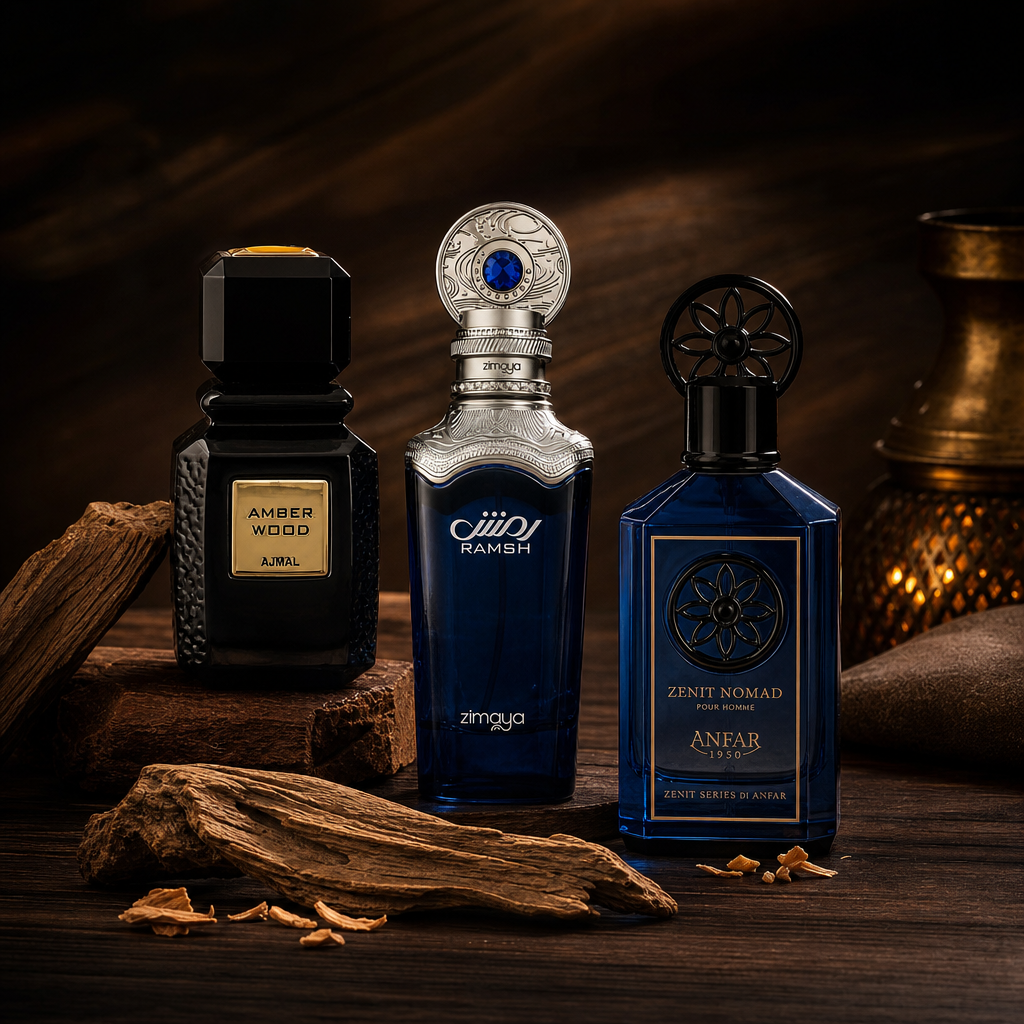


How to Choose a Seasonal Pair of Fragrances for the Whole Year
When you sum up everything mentioned before, the decision boils down to a few simple questions. You don't need to remember the percentage of fragrance ingredients or the breakdown of the pyramid into top, middle, and base notes – just answer four things before buying, and the choice will narrow down on its own.
- Temperature – the warmer it is, the lighter the concentration. Heat enhances and highlights the fragrance, so a fresh Eau de Toilette feels more balanced on a hot day than a heavy Eau de Parfum.
- Occasion – for the office, commuting, and doctor's appointments, a more discreet scent is suitable, while for an evening or social event, you can opt for a more pronounced composition.
- Duration of Wear – do you need it to last from morning till night without the chance to reapply? A higher concentration will save you the trouble. If you carry the bottle with you, feel free to choose a lighter version and refresh it in the afternoon.
- Expected Intensity – ask yourself if you want to primarily smell the fragrance yourself or if you want those around you to notice it too. This is ultimately the biggest difference you perceive between Eau de Toilette and Eau de Parfum.
Minimalist Pair: One Fresh, One Rich
Two bottles will suffice for the whole year. The first is a fresh Eau de Toilette for the warm months – citrusy, aromatic, or aquatic, with a light trace that you can tolerate even in the midday heat on public transport. The second is a richer Eau de Parfum for the colder season – vanilla, amber, musk, or woody, a type of composition that requires fewer sprays in winter yet lasts.
This pair has a practical advantage: both bottles can be used up in a reasonable time. Perfumes aren't immortal, and an open bottle used continuously for half a year is better than five opened ones that you reach for occasionally. If you like to switch it up, add a third fragrance as a supplement for special occasions, but keep the foundation on two.
Spring and Autumn: Months When Both Fragrances Meet
Transitional periods are exactly when the rules don't apply literally. In April, mornings can be chilly and afternoons almost summer-like – and you can adapt your choice accordingly. A proven method is simple: lighter Eau de Toilette in the morning, Eau de Parfum in the evening. Another option is to play with the dosage. You can use the richer Eau de Parfum more sparingly in spring, with one spray on clothing instead of two on the neck, and conversely, indulge in the summer Eau de Toilette more generously in autumn, as it releases more slowly from the skin in the cold.
The weather outside the window is often a better guide than the calendar. If you reach for a coat in the morning, reach for a richer fragrance too.
One more thing makes the choice easier: many popular perfume lines are available in both concentrations. Alongside the classic Eau de Toilette, there is often a more intense Eau de Parfum version of the same fragrance, or even a variant labeled as a perfume. This means you don't have to look for two different fragrances and learn two different characters – you stick with the composition you like and only change its strength and richness. Such sibling versions never smell exactly identical, as higher concentrations usually enhance the base notes, but the family resemblance remains clearly recognizable.
Before you decide, compare both versions side by side – for the fragrances that interest you, you can compare the available concentrations, volumes, and composition descriptions in the Brasty perfume section and choose a pair that makes sense to you in January as well as in July.
Category
Recommended articles

"Give a girl the right shoes and she can conquer the world!" Marilyn Monroe