

Tangle Teezer is one of the most popular hairbrushes thanks to its patented teeth technology that detangles wet and dry hair without painful pulling. Discover six key models and find out which one is perfect for your hair.
Why Tangle Teezer is So Popular
Whether you're battling your child's tangled hair every morning or struggling with your own thick mane after washing, you know the moment when the brush gets stuck and the next stroke hurts. This everyday annoyance is exactly what the Tangle Teezer brand has built its name on. At first glance, its brushes look ordinary, almost like a plastic soap dish with teeth, but detangling with them takes just a few strokes – on both wet and dry hair.
This isn't just a passing trend. In hair care, Tangle Teezer is among the brands that hold a stable place in the accessories category, with interest growing by 54% year-on-year. In the Brasty catalog, the brand offers nearly two hundred variants, from colorful versions of one model to brushes designed for specific hair types and situations.
What makes this brush so attention-grabbing? When you look at what people who use it daily say, a few points keep coming up:
- It works on both wet and dry hair, so you don't need to switch between two different tools depending on the washing and drying phase.
- Detangling takes just a few strokes, which is especially appreciated in the morning and by children who can't sit still for long brushing sessions.
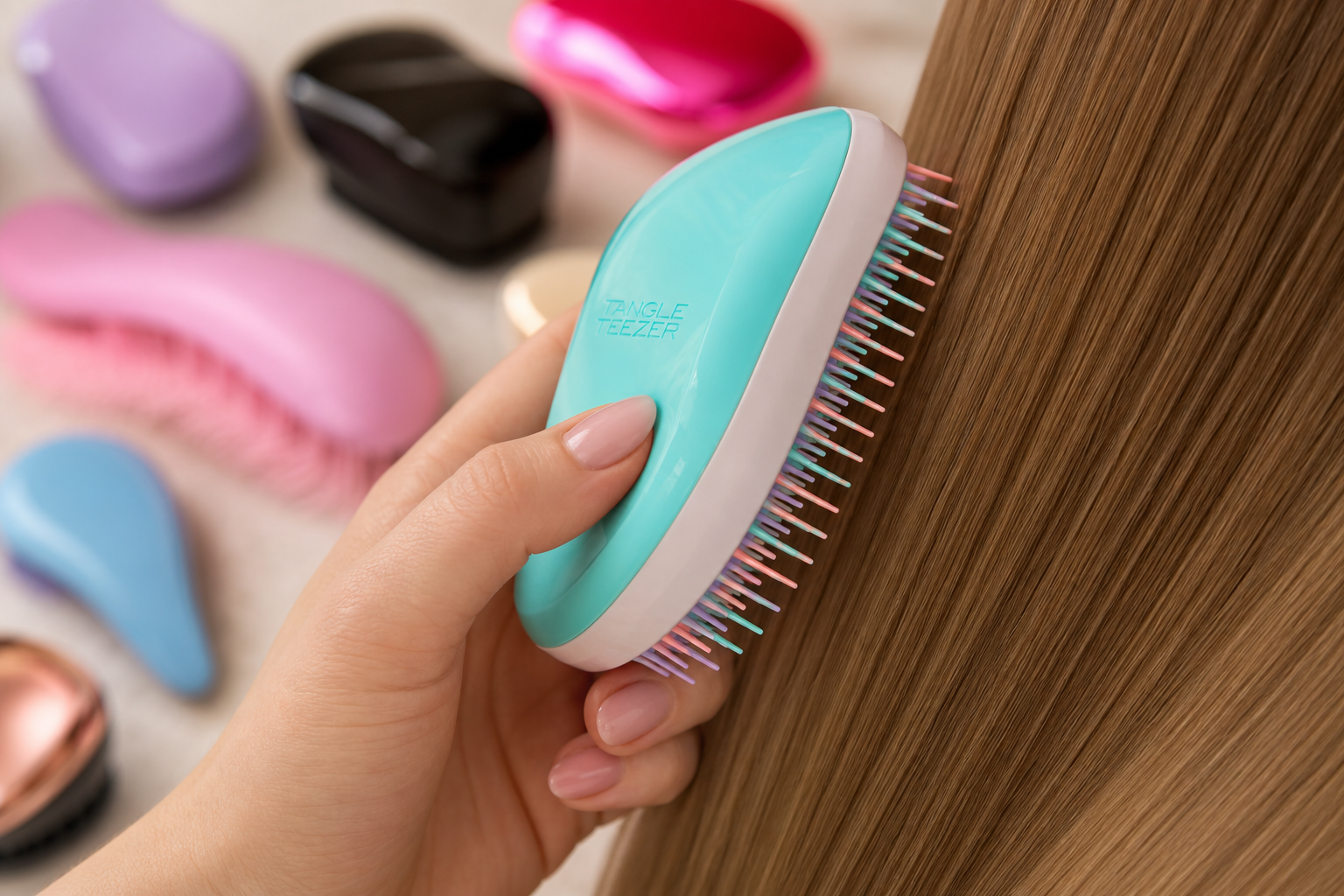
- Most models don't have a traditional handle. The brush is held in the palm, fits well in the hand of even a small child, and fits in a handbag.
- The range covers various situations, from fine children's hair to thick curls and detangling during blow-drying.
Interestingly, the brand's popularity doesn't rely on a complex promise of hair transformation. Tangle Teezer doesn't address regeneration or shine; that's what shampoo, masks, or leave-in treatments are for. It tackles one narrow but annoying issue: getting a comb through tangled hair without pain and without taking fifteen minutes. This specialization is why a brush costing a few hundred pounds has become a common piece of equipment in bathrooms and hair salons.
The second factor is affordability. The brushes are priced in the mid-range of hair care products, so you can easily get one for home and another for travel, or a separate one for each family member. For accessories used daily and moved between the bathroom, handbag, and suitcase, this makes practical sense.
In the following sections of the article, we'll look at how the brush is constructed and why it behaves differently on hair than a regular comb. Then we'll go through six specific models and discuss which hair types and users each one suits best.
How the Patented Tooth Technology Works
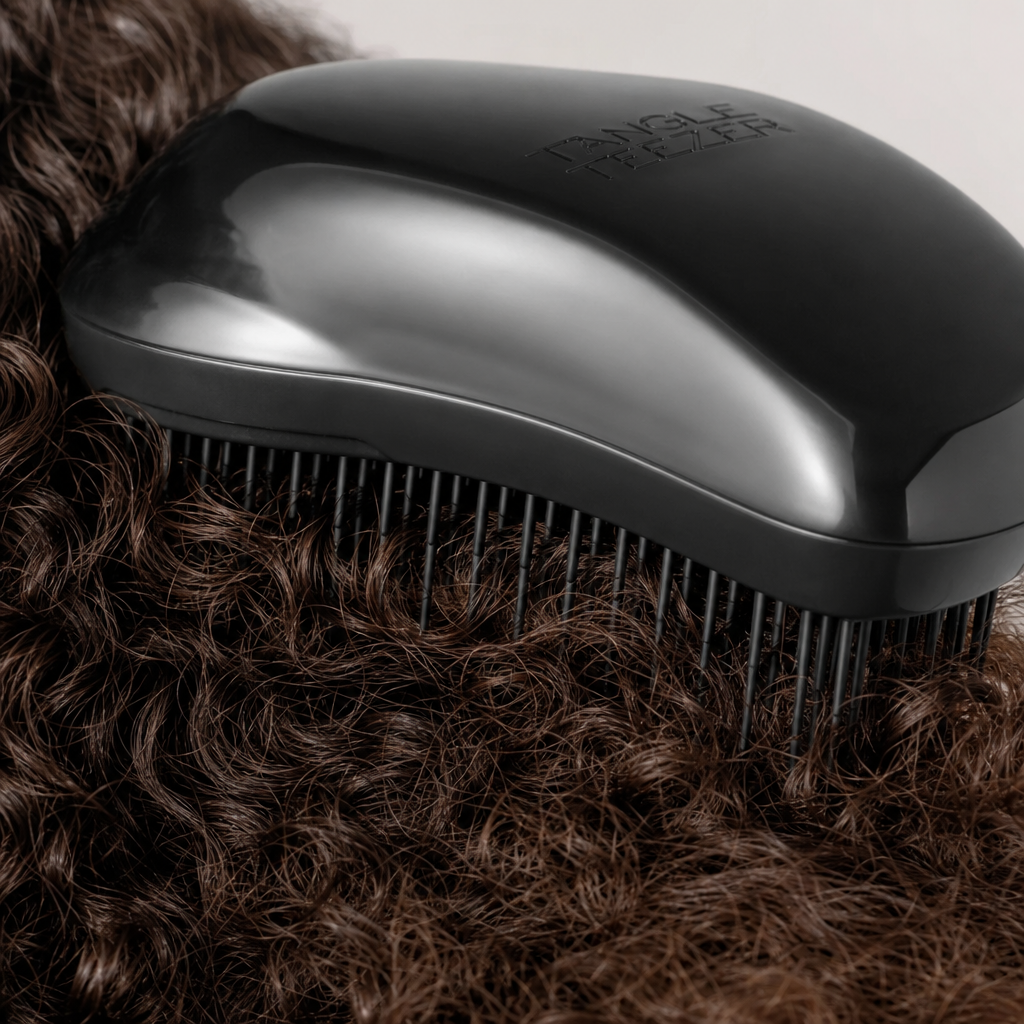
At first glance, the Tangle Teezer looks unassuming – a flat shell without a traditional handle and densely packed with small plastic teeth. The difference from a regular brush lies not in the material, but in how the teeth are arranged and how they behave when they encounter resistance.
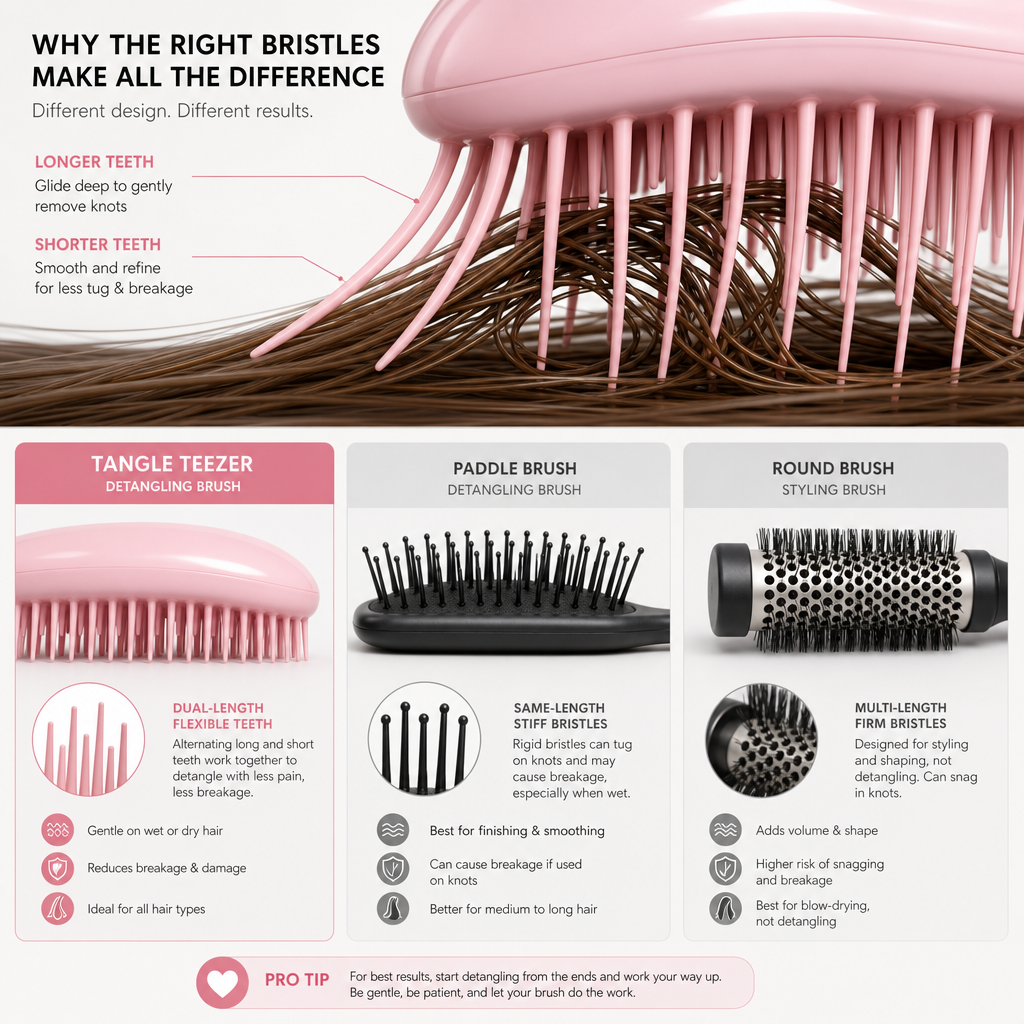
The teeth are not all the same length – they alternate between two lengths. The longer ones pass through the volume of hair first, dividing the mass into thinner strands. The shorter teeth, which follow right behind, then pass through this reduced layer closer to the roots. Thus, the hair is not detangled with one strong stroke, but in several successive steps with a single hand movement. The force needed for one stroke is therefore lower than with a brush with uniform bristle length.
The second part of the design is flexibility. Each tooth is thin, tapered at the tip, and mounted to bend under pressure. When it encounters a knot, it bends back and partially loosens the knot, instead of pulling it all at once. The tangled spot is thus gradually worked through – with the next stroke, the teeth pass more easily. This is also why the brush doesn't need dense traditional bristles: the main work is done not by the density of the teeth, but by the ability of each tooth to yield.
This detail is particularly noticeable with wet hair. Hair soaked with water is more pliable and stretches more when brushed, so it reacts differently to a rough stroke than dry hair. The flexible teeth yield to resistance before the pull is transferred along the entire length of the strand. However, this doesn't mean you can do anything with wet hair – it's still advisable to start from the ends, work towards the roots, and let the hair dry a bit in a towel after washing.
The design also relates to a difference that is often blurred in practice: detangling and styling brushing are not the same.
- Detangling is the mechanical separation of hair – untangling knots, smoothing strands, preparing before drying or after washing. Here, a flat brush with flexible teeth makes sense because its job is to pass through the hair with minimal resistance.
- Styling brushing is shaping hair with the help of heat. A round brush must hold the strand in tension so that the hot air from the dryer sets it into the desired shape. There you need firmness and pull, the exact opposite of flexibility.
The practical conclusion is simple: a flexible brush will detangle your hair and prepare it for the next step, but it won't create volume at the roots or smoothly curled ends on its own. For that, use a round brush and a hairdryer – and ideally, heat protection too, because styling with heat places different demands on the hair than simple detangling.
The term "patented technology" in relation to Tangle Teezer refers specifically to this shape and arrangement of teeth, not to any conditioning effect. The brush doesn't nourish or repair the hair, it only changes the way mechanical force acts on it during brushing. Leave the actual care to shampoo, conditioner, masks, or leave-in treatments – the brush is a tool, not a substitute for them.
Wet Detangler and Ultimate Detangler for Wet Hair
Wet hair tends to tangle the most right when you're brushing it – immediately after washing, with conditioner residue and tangled ends. For this specific situation, two lines have been created that form the core of the brand's offering: Wet Detangler with a classic long handle and The Ultimate Detangler, which fits in the palm of your hand.
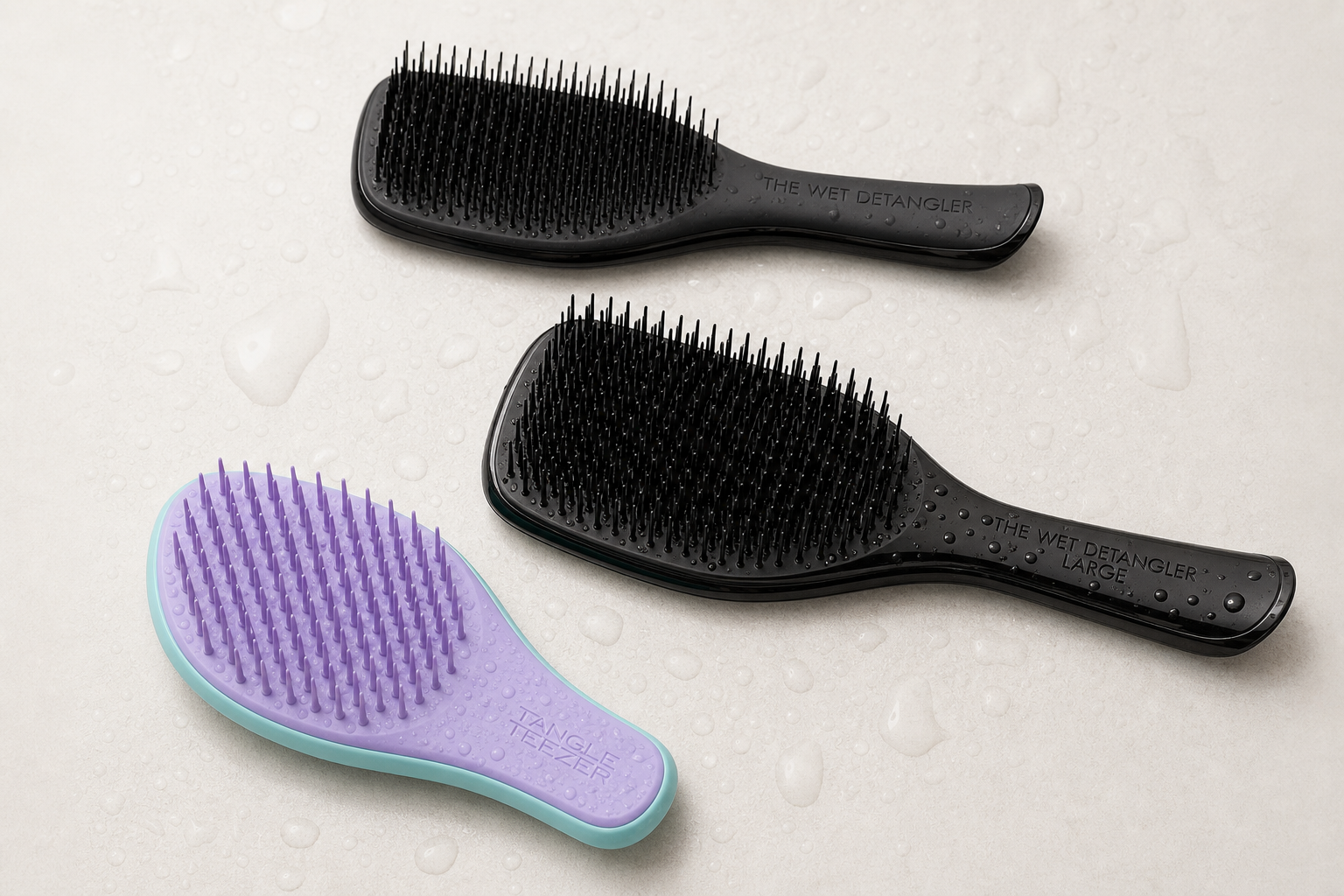
Tangle Teezer Wet Detangler Midnight Black is the best-selling brush of this brand in the hair accessories category on Brasty, with a price around 223 Kč. The matte black design is intentionally understated, so it doesn't stand out in the bathroom or travel bag. However, the handle is the main feature: it allows you to hold the brush further from your head and gives you better control over the pull, which you'll appreciate when detangling longer hair from the bottom up. If you're used to a regular brush and don't want to change your grip, the Wet Detangler is a natural entry into the brand's range.
It's also suitable for anyone who brushes someone else's hair – parents dealing with children's hair in the morning can reach the head from a greater distance with the long handle and see exactly where the pull starts. It's equally handy when brushing your hair in the shower with conditioner applied: the handle is comfortable to hold even with wet hands.
The The Ultimate Detangler line takes the opposite approach. The brush has no handle, fits entirely in the palm, and you guide the pull with a wrist movement. Our range recently expanded with two color variants – Tangle Teezer The Ultimate Detangler Vibrant Leopard and Tangle Teezer The Ultimate Detangler Runway Pink. These are the same type of brush in two different designs, so your decision is purely based on which look you prefer. The compact shape is practical when moving the brush between the bathroom, handbag, and wardrobe, without the handle getting caught on anything.
Typical usage for both models looks similar:
- Detangling after washing – gently squeeze your hair into a towel, start at the ends and work your way up in sections. Shorter strokes work better than one long stroke over the entire length.
- Application of leave-in care – distribute the applied care evenly along the length by brushing, instead of it remaining concentrated only where you sprayed it.
- Everyday morning routine – both brushes handle dry hair too, so you don't need to switch to another piece of equipment just because you didn't wash your hair in the morning.
The difference between the two models is mainly in ergonomics, not the result. If you're detangling long hair, children's hair, or working directly in the shower, opt for the version with a handle. If you want a brush that takes up minimal space and is easy to carry with you, the palm model makes more sense. And if you're unsure, try deciding based on where you'll realistically have the brush most often – that's a more reliable guide in practice than a technical description.


Three More Models: Handbag, Thick Curls, Blow-Drying
The collection is completed by three models that address more specific situations than everyday brushing at home in front of the mirror. They mainly differ in the shape of the body, the size of the brushing surface, and the stiffness of the bristles – these three parameters determine whether the brush is suitable for a handbag, thick curly hair, or for use while blow-drying.
Compact Brush for Your Handbag
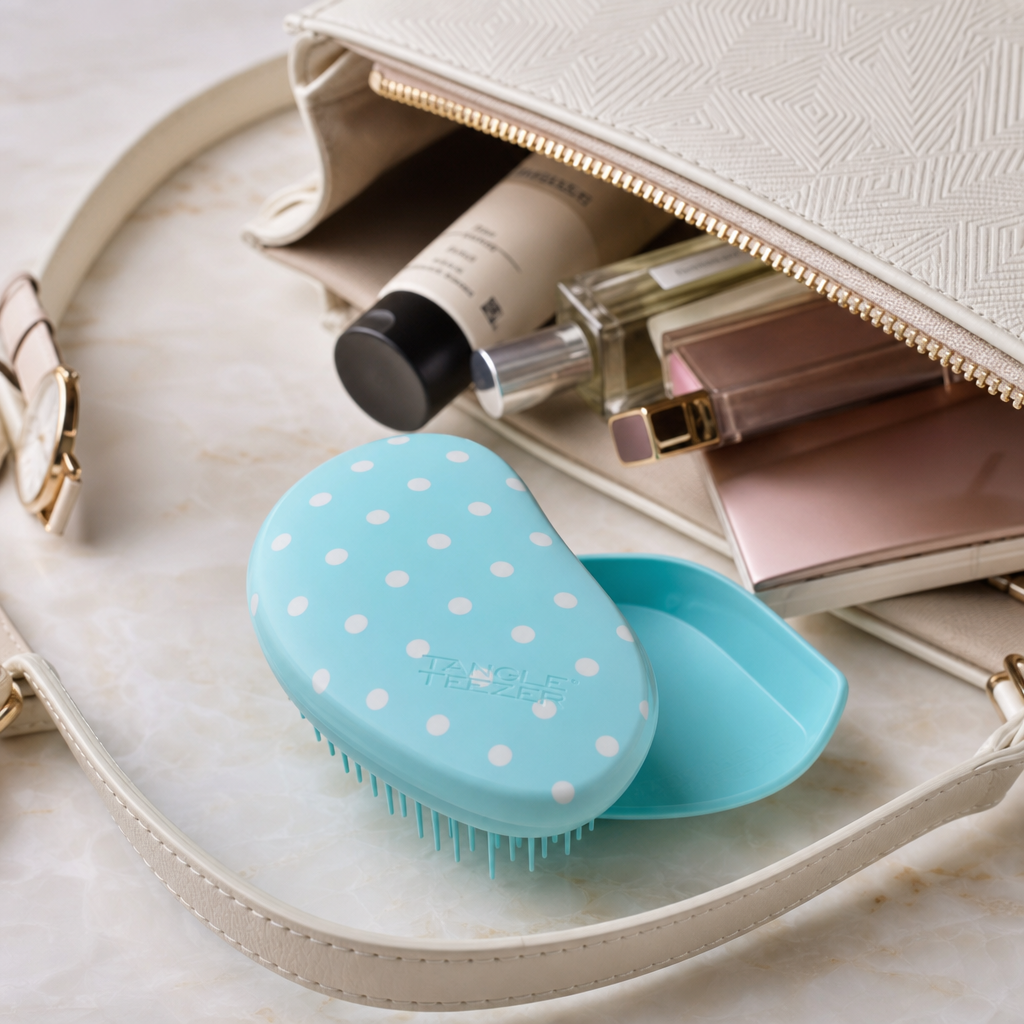
Compact versions have a smaller body and a flip or snap-on cover to protect the bristles among cosmetics and keys. The brushing surface is smaller, so one stroke covers a narrower strand, and brushing longer hair takes a few more strokes. In return, the brush fits into a handbag pocket or sports bag, and the bristles retain their shape because they don't lean against anything. It's ideal when you need to tidy your hair before a meeting, after removing a hat, or post-workout – basically anywhere you don't have a full-sized brush handy.
Model for Thick and Curly Hair
Thick, strong, or curly hair offers more resistance when brushing, so standard-length bristles may slide over the surface instead of going through the entire strand. Models designed for this type of hair usually have longer, firmer bristles spaced slightly wider apart – they can push through thicker strands and won't snag at the ends. The body is somewhat larger to handle a wider strand in one stroke. Work from the ends upwards and tackle one strand at a time; with curls, this is gentler than brushing the entire head at once.
Brush for Blow-Drying
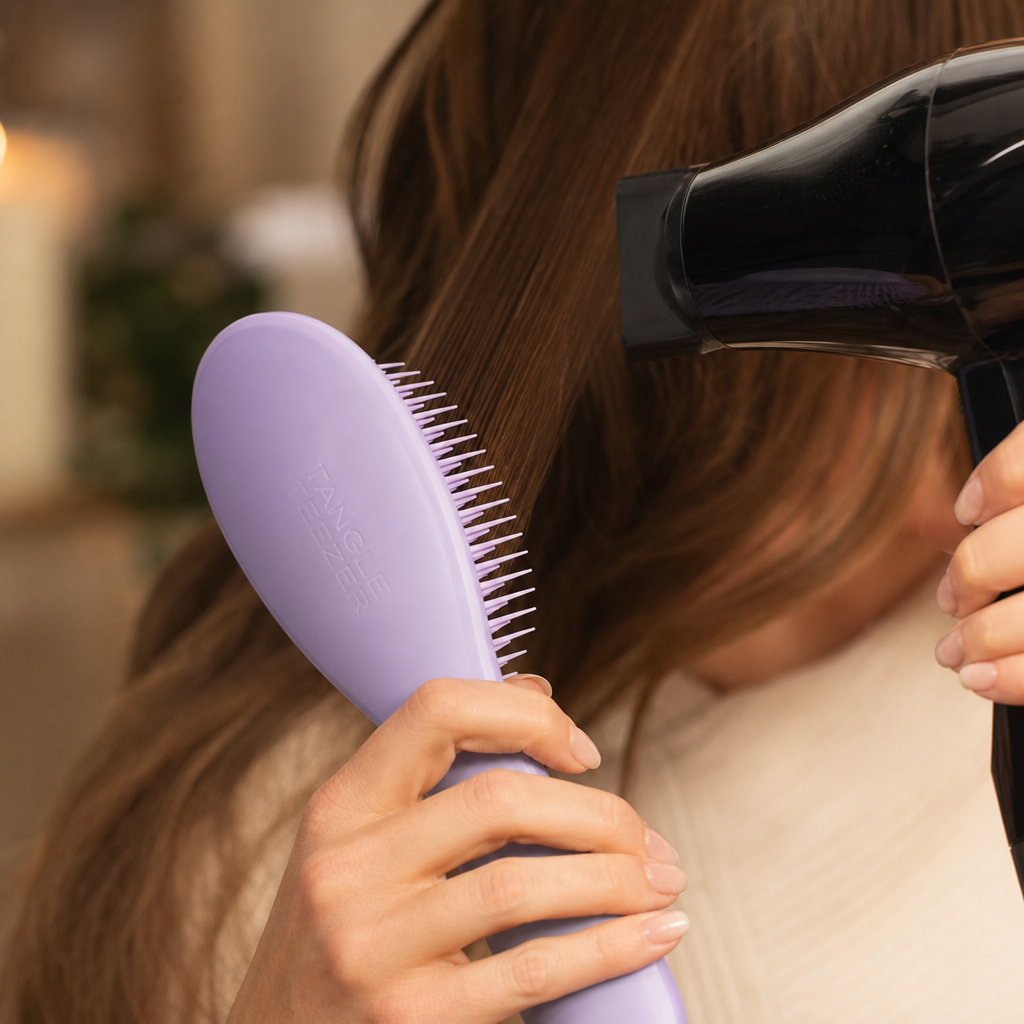
The third model is aimed at the moment when you hold a hairdryer in one hand and a brush in the other. The body is designed for a firm grip, and the bristles are stiffer and arranged to keep the strand taut while allowing airflow between them. Unlike a classic detangling brush, this one focuses less on untangling and more on guiding the strand so the hair dries smoothly. The material is made to withstand warm air contact, but it's still wise to keep the dryer at a distance and not dry one spot for too long.
In summary, when you place the three models side by side:
- Compact Handbag Model – smallest body of the trio, bristle cover, shorter strokes; for quick touch-ups on the go.
- Model for Thick and Curly Hair – longer and firmer bristles, wider spacing, larger body; for strands that resist.
- Blow-Drying Model – firm grip and stiffer bristles that guide the strand in the warm air flow, not primarily for detangling.


Which Tangle Teezer to Choose Based on Hair Type
Whether you're interested in the classic brush for wet hair or a compact model for your handbag, choosing the right one is ultimately easier than it seems at first glance. It comes down to a combination of two things: your hair type and the situations in which you most often reach for a brush. The following guide summarizes the previous chapters into a few typical scenarios.
- Fine hair that breaks easily – opt for the classic detangling brush for wet hair, namely the Wet Detangler range. The best-selling variant is the Tangle Teezer Wet Detangler Midnight Black; its flexible bristles bend rather than pull on the strands, which is especially appreciated by those with fine hair.
- Long and thick hair – here, a model with longer bristles that can get through the entire volume makes sense, or the Ultimate Detangler range. It is also available in colorful variants, such as Vibrant Leopard or Runway Pink, so you can choose according to your taste.
- Curls and waves – curly hair requires a brush designed for dense textures, which works through the strands in sections without breaking the wave definition. It's better to detangle them when damp and with leave-in care applied to the lengths.
- Children's hair – for kids, the main criteria are gentleness and speed. A smaller brush with flexible bristles can handle morning brushing in no time, turning it from a daily battle into a quick task.
- Travel and carrying in a bag – a compact model with a cover fits into a handbag or carry-on luggage, keeping the bristles clean. It's also practical for work or day trips.
- Detangling while blow-drying – if you detangle your hair directly under the dryer, look for a model designed for blow-drying. Its construction accommodates heat and allows air to flow through the brush.
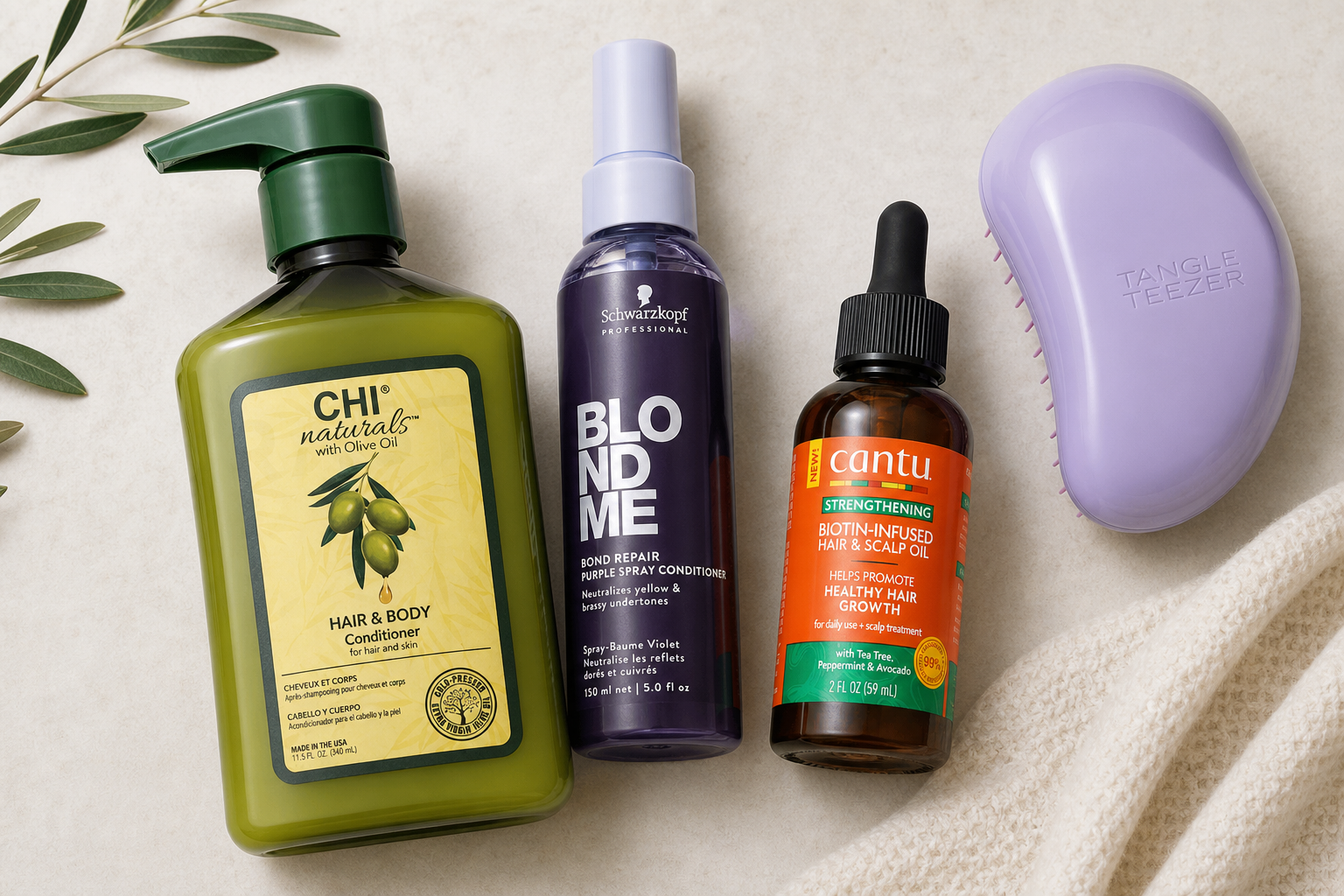
The brush itself isn't the whole story. The results can be significantly improved with complementary care, which you likely already have in your bathroom. Conditioner after each wash smooths the hair surface, reducing tangling. Leave-in care in spray or milk form is especially helpful for longer hair, where most knots occur at the ends. A small amount of hair oil is ideal for the tips, particularly if you frequently blow-dry or color your hair. Remember, less is more – too much product can weigh your hair down.
A practical note to end on: your brush deserves the same care as your hair. Regularly remove fallen hair from it and occasionally rinse it with lukewarm water and a drop of shampoo, letting it dry with the bristles facing down. This will make it last significantly longer.
If you'd like to view the selected model, you can find the entire brand range in the hair cosmetics category, in the accessories section – alongside brushes, you'll also discover the rest of the care products mentioned above.
Category
Recommended articles

"Give a girl the right shoes and she can conquer the world!" Marilyn Monroe