

 Riiffs Freeze in Flames: Ice and Flames Illuminate Warsaw
In the first installment of the series The History of Fragrances, we return to ancient Egypt and Mesopotamia, where scents served as offerings to the gods, medicine, and part of funeral rituals. Discover kyphi, myrrh, and incense, as well as the trade routes that brought precious resins from Punt and southern Arabia.
Where the History of Fragrances Begins: Ancient Egypt and Mesopotamia
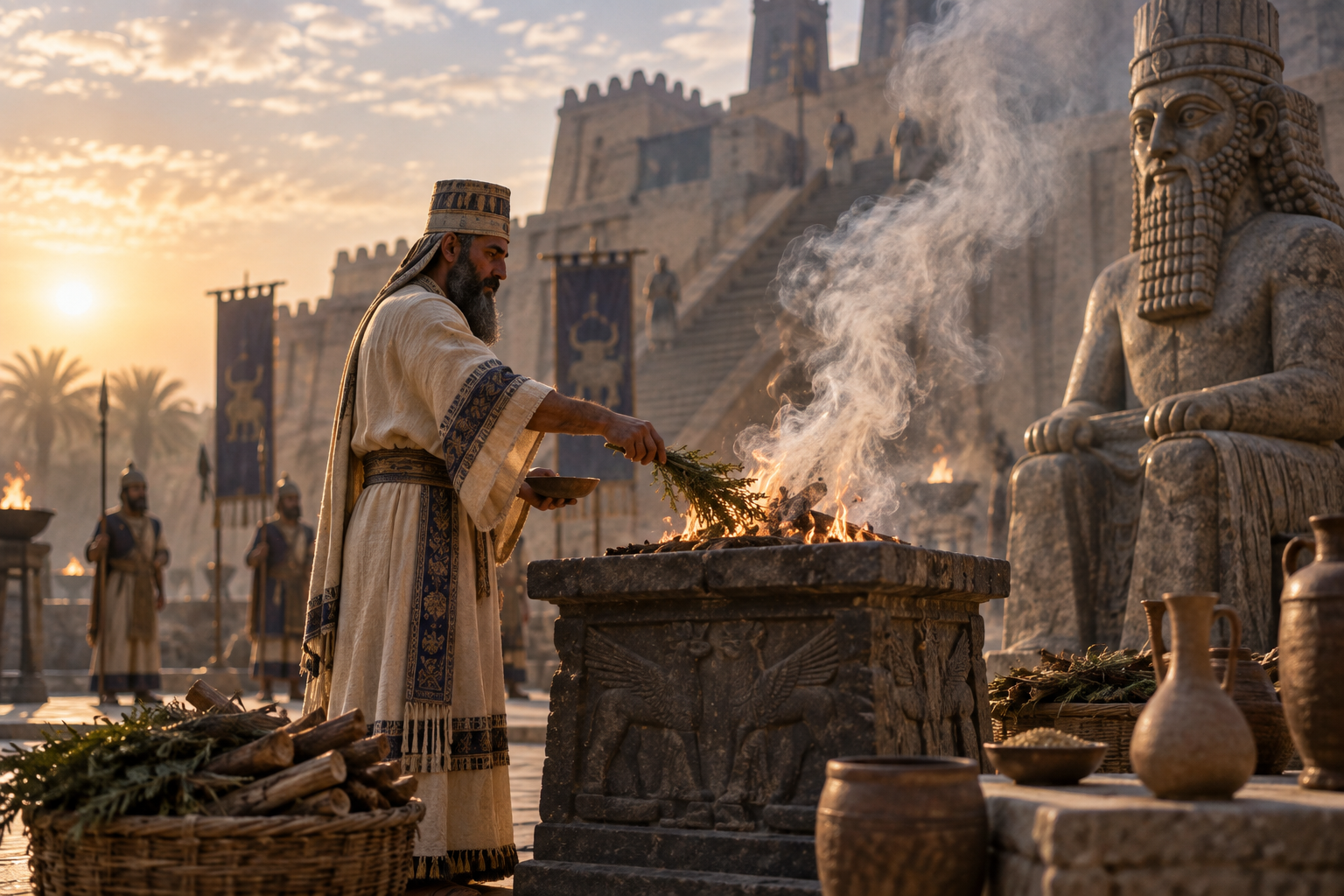
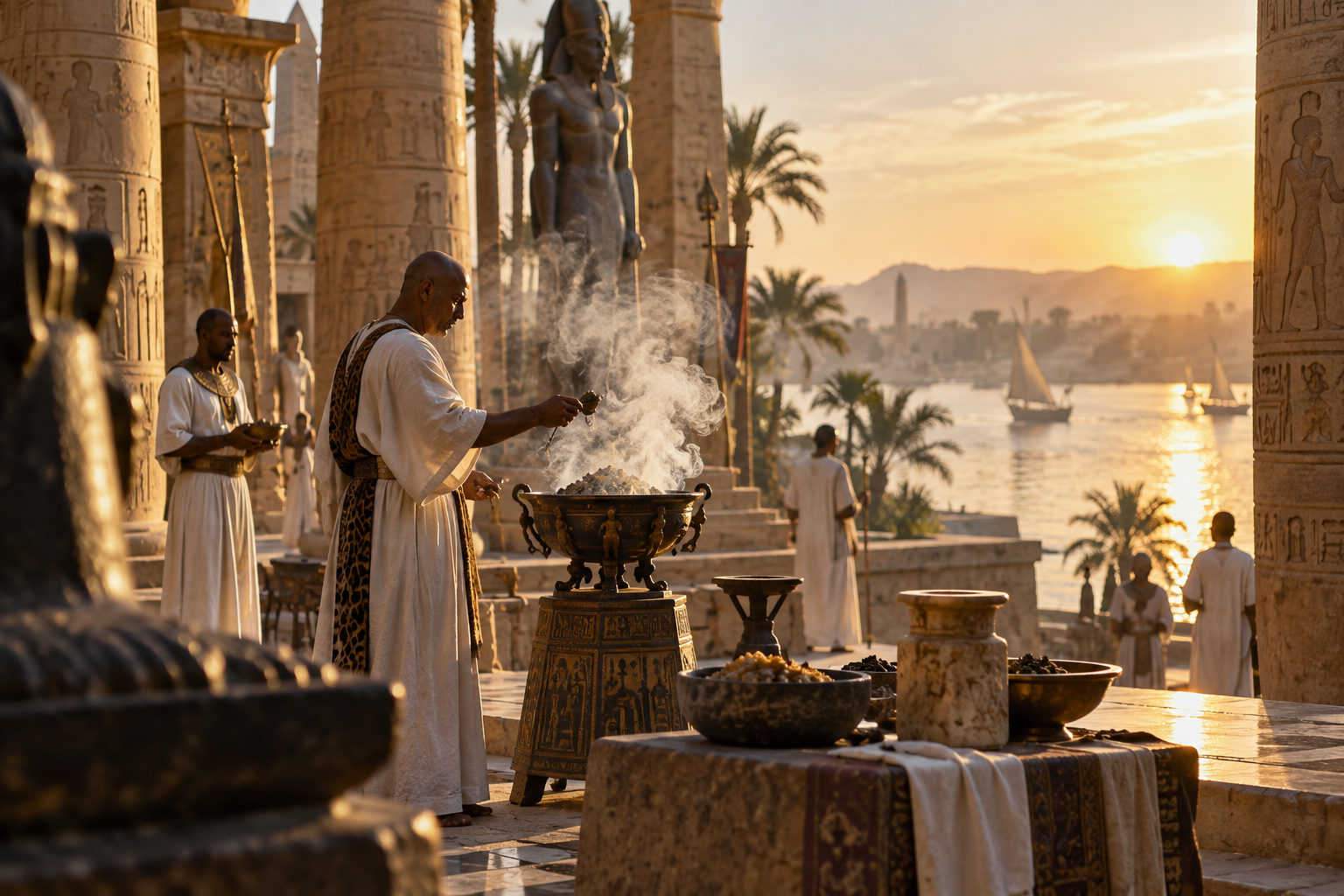
Imagine a temple courtyard on the banks of the Nile shortly after sunrise. The stone columns still hold the night's chill, priests in white linen walk among the altars, and thick, sweet smoke rises from the censers. The air is filled with the scent of resin, honey, and spices. These are the images at the very beginning of the story that our new series, The History of Fragrances, will guide you through—from ancient temples to medieval apothecaries and court perfumeries to the present day.
Even the word perfume reminds us of this trace. It derives from the Latin per fumum, meaning "through smoke." The oldest fragrances were not applied to the skin but were burned. The smoke rose to the heavens, and people believed it carried their prayers, pleas, and thanks.
Why do we start in Egypt and Mesopotamia? In the fertile valleys of the Nile, Euphrates, and Tigris, some of the first civilizations that could write emerged. Thanks to clay tablets with cuneiform script, inscriptions on temple walls, and papyri, we know much more about fragrant substances from over four thousand years ago than from other areas of the same period. And from these sources, one fundamental thing emerges: fragrant substances belonged first to the gods and only then to people.
In Mesopotamia, cedar and cypress wood and fragrant resins were burned before the statues of the gods. According to the Epic of Gilgamesh, after the flood, Utnapishtim offered a sacrifice whose pleasant scent the gods smelled and gathered around. We also know from Mesopotamian tablets of a woman named Tapputi, who lived around the 13th century BC and is considered the first recorded female perfumer. The record of her work mentions flowers, oils, and resins, as well as a process that was repeated several times.
In Egypt, fragrant substances held a similarly sacred status. The Egyptian word for incense is often interpreted as "that which makes divine." Scents accompanied the daily care of the statues of gods in temples, as well as the lives of pharaohs and ultimately their journey to the afterlife.
In this first episode, we will look at four areas where fragrant substances played a major role in ancient Egypt and Mesopotamia:
- Sacrifices and Temple Rituals – why gods were offered smoke daily and what was hidden in the famous kyphi mixture.
- Healing and Body Care – fragrant oils and ointments that protected the skin from the dry desert climate and were part of the healing practices of the time.
- Funeral Rituals – how myrrh and resin helped in mummification and what fragrance meant for the concept of eternal life.
- Long-Distance Trade – expeditions for precious resins to the distant land of Punt and southern Arabia, which gave rise to the first fragrant trade routes.
Many of the raw materials from that time—myrrh, frankincense or olibanum, cedar, and cinnamon—are not just museum pieces. In transformed forms, you can still find them in the base notes of many oriental and woody fragrances. Next time you perceive the warm, resinous veil of a perfume, you can remember that its roots reach back to temple courtyards shrouded in fragrant smoke.
Fragrant Smoke for the Gods: Kyphi, Myrrh, and Frankincense in Temple Rituals
When you reach for a perfume today, you're likely thinking about yourself—how you'll smell and how you'll feel. In ancient Egypt and Mesopotamia, however, fragrance was primarily for the gods. The fragrant smoke rising from altars and temple sanctuaries was both an offering and a mediator: it carried prayers upwards and was meant to please, appease, or summon the deity. Burning incense was thus an integral part of daily temple operations, not just an exceptional gesture.
Three Substances That Fragranced the Temples
- Frankincense (olibanum) – resin from trees of the Boswellia genus. When burned, it emits a light, clean, and slightly citrusy smoke, associated with clarity and the solar deity.
- Myrrh – a darker, bitterly balsamic resin from shrubs of the Commiphora genus. Its scent is deeper and warmer, used in temples both on its own and as part of more complex mixtures.
- Kyphi – an Egyptian fragrant mixture, considered one of the oldest known "recipes" for fragrance. It consisted of resins, honey, wine, raisins, and various spices or aromatic plants.
Kyphi: A Recipe Carved in Stone
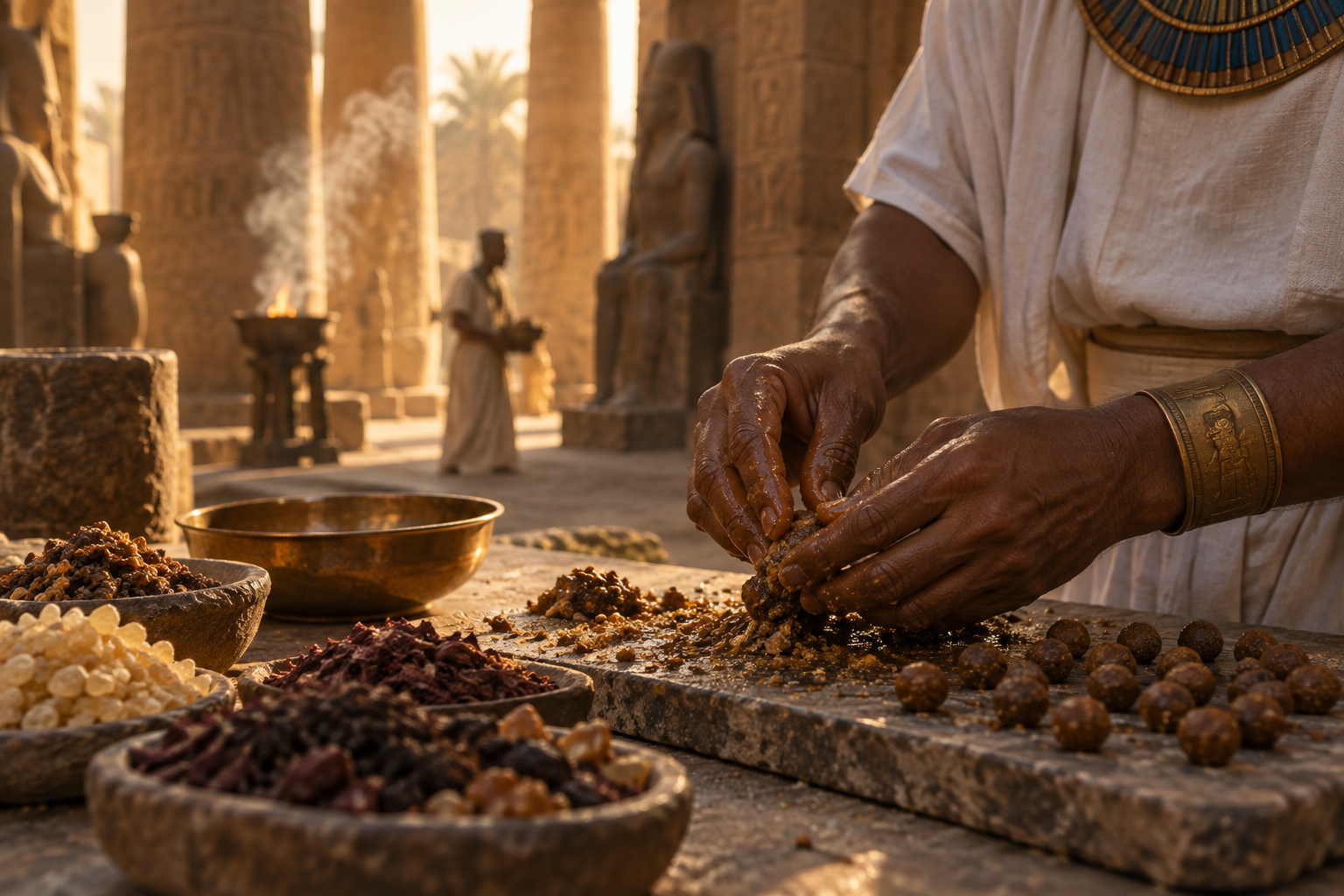
Kyphi was not a simple incense but a carefully prepared composition. Ingredients were crushed, soaked in wine, sweetened with honey, and left to mature before being shaped into small balls for burning. Recipes have been preserved on the walls of temples in Edfu and on the island of Philae, dating from the late, Ptolemaic period of Egyptian history. The individual versions vary in the number and type of ingredients, and some plants cannot be identified with certainty today, so each modern "reconstruction" of kyphi is more of an expert estimate than an exact copy.
Ancient authors who wrote about Egyptian rituals mention that different scents alternated throughout the day—kyphi is primarily associated with evening ceremonies. If you take this information with a grain of caution, you won't go wrong: Greek and Roman sources were created centuries later and did not always accurately describe Egyptian practices.
Cedar, Cypress, and a Woman Named Tapputi
In Mesopotamia, fragrant wood played a similar role. Cedar and cypress wood were burned during rituals along with aromatic plants and resins. The motif of a fragrant offering, whose scent the gods would smell and gather around, also appears in Mesopotamian literature, such as the flood narrative in the Epic of Gilgamesh.
From Mesopotamia also comes one of the first names associated with the production of fragrant substances. A cuneiform tablet, usually dated to the end of the 2nd millennium BC, mentions a woman named Tapputi, who served as an overseer in the royal palace and prepared fragrant mixtures from flowers, oil, and aromatic plants. She is therefore cited as one of the first documented female perfumers—although from a single text, we know very little about her life.
Through Smoke
The connection between fragrance and smoke is also preserved in language. The word perfume is traditionally derived from the Latin per fumum, meaning "through smoke." Linguists note that the word entered European languages via Italian and French, but the image it carries is accurate: the first fragrances in human history were not meant for the skin, but for the air—and for the gods.
Fragrance as Medicine: Scented Oils, Ointments, and Cones on Wigs
Today, when we talk about perfume, we primarily mean the olfactory impression. However, for the inhabitants of ancient Egypt and Mesopotamia, fragrance was something much more practical. The same scented ointment could be used in ceremonies, body care, and healing – and the boundary between cosmetics, religion, and medicine was likely indistinguishable to the people of that time.
Oils and Ointments Against Sun and Dryness
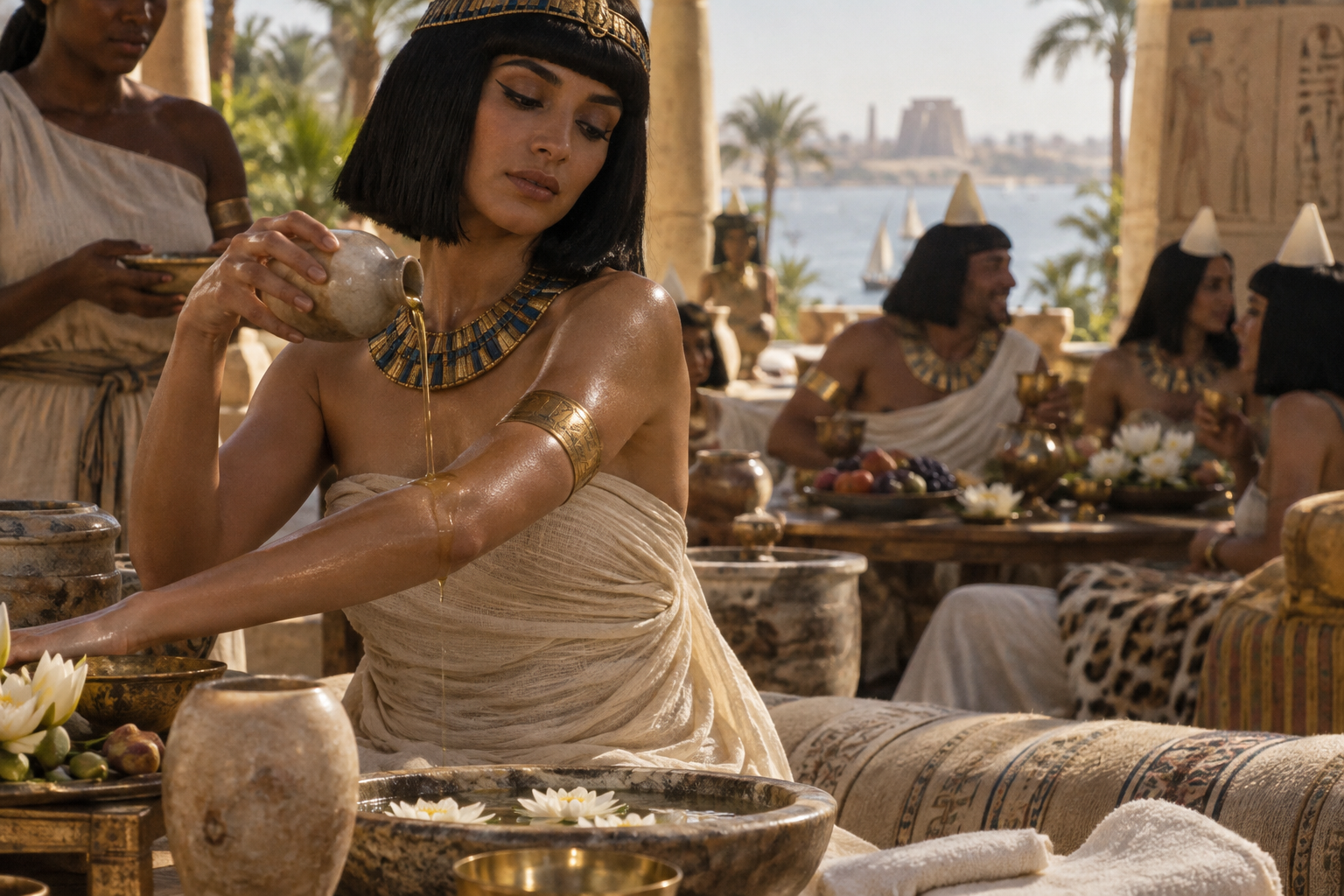
Life on the edge of the desert meant harsh sun, dry air, and sand. Egyptians regularly applied oils and ointments made from plant oils or animal fats, infused with aromatic ingredients like myrrh, frankincense, cedarwood, as well as lily or lotus flowers. Alcohol as a fragrance carrier was unknown then, so scented oil was the very foundation of perfumery at that time.
Skin care was not an exclusive privilege of the elite. Documents from the workers' settlement of Deir el-Medina reveal that oil, alongside grain, was part of the regular rations for craftsmen building royal tombs. Imagine scented oils as more of a daily necessity than a luxury. In Mesopotamia, they also had a firm place – cuneiform texts mention anointing with oil in ceremonies and for everyday hygiene.
What Medical Papyri Say About Fragrances
The most famous source on Egyptian medicine is the Ebers Papyrus, written around the 16th century BC. It contains hundreds of recipes, many of which include ingredients known from scented mixtures: myrrh, frankincense, honey, resins, oils, and herbs. According to the papyrus, these were used to prepare ointments for wounds, skin preparations, and incense mixtures, where smoke from heated ingredients was allowed to affect the patient or the surrounding area.
These recipes reflect the contemporary understanding of illness, intertwining observation with belief in the influence of gods and demons. Fragrance was meant not only to "heal" but also to purify and ward off evil forces. For historians, the papyri serve as evidence of how ancient people perceived the world – not as a guide for today.
The Mystery of Scented Cones
On wall paintings from the tombs of the New Kingdom, banquet guests are depicted with small light cones on their wigs. Egyptologists long assumed these were cones of scented fat that slowly melted during the feast and dripped down the hair. Other researchers argued it might be merely an artistic symbol – a sign of fragrance, a festive moment, or a sacred state.
The debate was advanced by findings from Amarna, the city of Pharaoh Akhenaten. At the cemetery there, two buried individuals were found with actual cones on their heads, hollow and made from a wax-like material according to analysis. However, traces of scented fat were not confirmed according to available reports. The finding supports the idea that cones were indeed worn, but it does not definitively answer their purpose – whether they were part of feasts, ceremonies, or beliefs in the afterlife. The question remains open.
Scents for Eternity: Myrrh, Resin, and Mummification
For the ancient Egyptians, death did not signify a definitive end but a transition to another form of existence. According to their beliefs, the soul of the deceased needed to return to the preserved body to continue in the afterlife. Therefore, scents in funeral rituals were not merely decorative—they were an essential part of the care for eternity. They were meant to protect, cleanse, and prepare the body for a dignified passage to the afterlife.
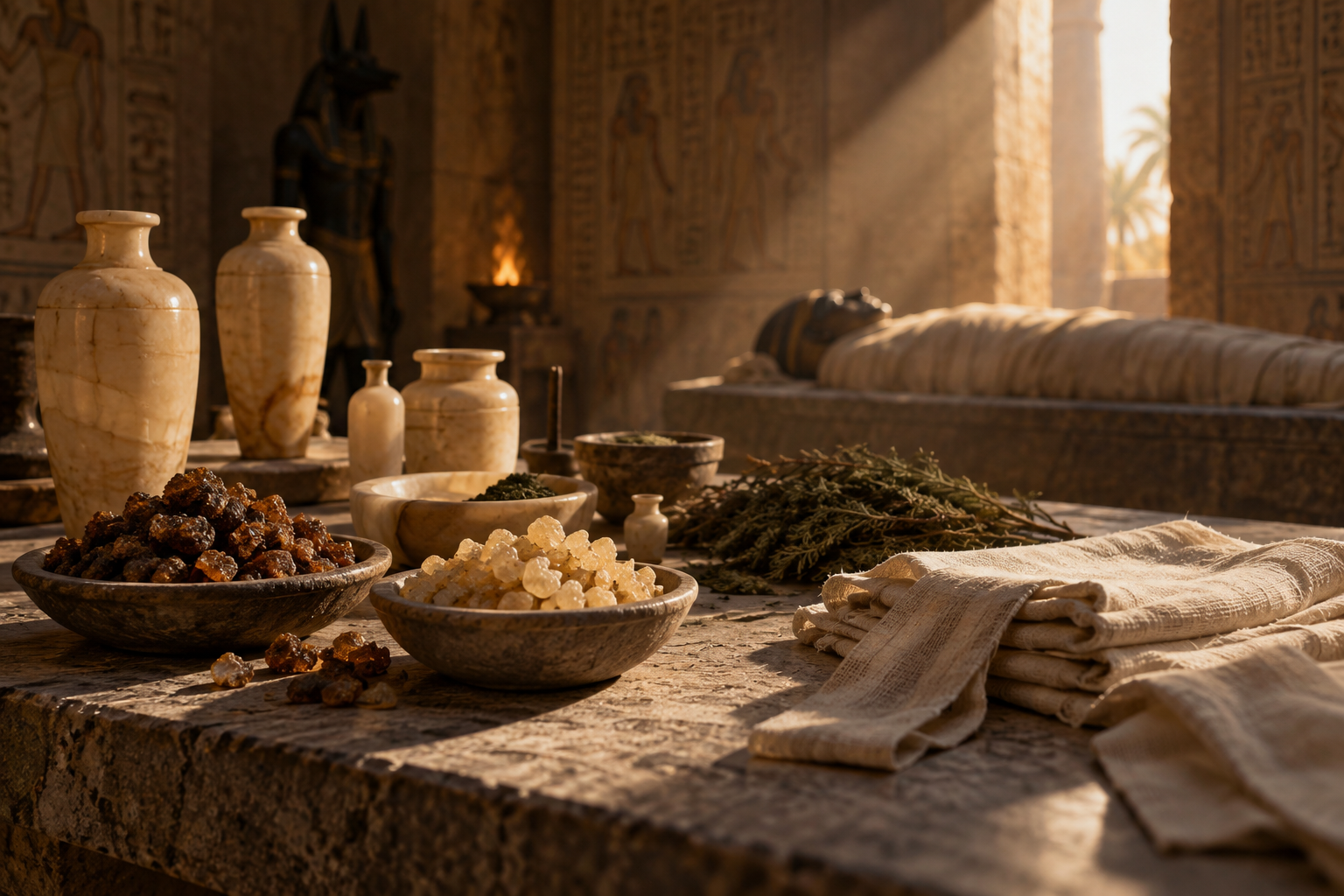
Mummification was a lengthy and meticulously planned process that, according to surviving descriptions, could take up to seventy days. Embalmers first dried the body with natron, a natural salt from drying lakes, and only then did the fragrant substances come into play. The Greek historian Herodotus, who visited Egypt in the 5th century BC, noted that the body cavities were filled with crushed myrrh, cassia, and other spices. However, his description was written at a time when mummification had already undergone over two thousand years of development, so historians read it with some caution.
Modern chemical analyses of residues from mummies, wrappings, and embalming vessels today clarify the picture from written sources. Among the substances used in mummification, the most frequently mentioned are:
- myrrh – an aromatic resin with a bitter, balsamic tone, valued for its fragrance and its ability to slow decay,
- conifer resin – likely from cedars, junipers, or pines; when heated, they created a protective layer on the body and wrappings,
- fragrant oils and fats – softened the skin and served as carriers for other aromatic components,
- beeswax – helped seal and protect the surface of the body,
- spices – according to ancient authors, especially cassia and cinnamon, whose warm scent was associated with the divine presence.
These substances served a dual purpose. Practically, they helped preserve the body—resins and wax created a barrier against moisture and insects, and some of them, according to current analyses, also inhibited the growth of microorganisms. At the same time, they masked the smell of decay, which was not only unpleasant for the Egyptians but also symbolically impure. Scents thus literally separated the transient from the eternal.
Care for the deceased did not end with placing them in a sarcophagus. Tombs were furnished with vessels of fragrant ointments and oils as provisions for the afterlife—the deceased was to have everything they needed in the next world, and scents were an indispensable part of that. The most famous evidence is the tomb of Tutankhamun, which Howard Carter opened in 1922. Among the rich furnishings were decorated vessels made of calcite, often referred to as Egyptian alabaster, with remnants of ointments. According to contemporary reports, even after more than three millennia, a faint scent was allegedly still detectable. Some of the vessels were empty, and one explanation is that the fragrant ointments were so valuable that they became the loot of ancient tomb robbers.
Funeral ceremonies and temple cults were united by the same idea: scent has a purifying power and brings humans closer to the gods. During funeral rituals, the same resins were burned as those that rose in sanctuaries, and the deceased treated with fragrant substances was thus, in the Egyptians' imagination, brought closer to the divine world. The next time you catch a balsamic, slightly bitter note of myrrh in the base notes of a perfume, you might remember that this very scent once accompanied people on their longest journey.
To Punt and Southern Arabia for Resins: The First Fragrant Trade Routes
Frankincense and myrrh, whose smoke rose in temples along the Nile and Euphrates, did not originate locally. The trees from whose bark these resins are harvested grow primarily in the arid regions of Southern Arabia and the Horn of Africa. Every grain of fragrant resin in an Egyptian or Mesopotamian temple had traveled a long journey—by sea, across deserts, and through the hands of many traders. Fragrant raw materials were among the first goods worth undertaking expeditions over hundreds and thousands of kilometers.
The Egyptians referred to the land from which the most precious resins came as Punt. Historians still debate its exact location. It is most commonly sought along the southern coast of the Red Sea, roughly in the area of present-day Eritrea, eastern Sudan, or Somalia. Contacts with Punt are documented as early as the Old Kingdom, but the most famous expedition is associated with Queen Hatshepsut, who ruled in the 15th century BC.
The course of this expedition is depicted in reliefs in her mortuary temple at Deir el-Bahari near Thebes. You can see ships loaded with ebony wood, ivory, gold, exotic animals, and especially fragrant resin. The depiction of live trees, which sailors transported with roots in baskets, is exceptional. According to the usual interpretation of the inscriptions, they were to be planted at the temple so that Egypt would have its own source of fragrant raw material directly with its gods. Whether the trees took root in the foreign climate is uncertain—but the attempt itself shows how valuable they were to the Egyptians.
The second major source was Southern Arabia, the area of present-day Yemen and Oman. From the cut bark of the frankincense tree, a milky resin flows, which hardens into translucent grains when exposed to air. Once the camel became a reliable pack animal, which historians believe happened around the turn of the 2nd and 1st millennium BC, caravans could reliably traverse even vast desert stretches. Southern Arabian kingdoms, the most famous of which today is Sheba, grew wealthy from the resin trade. The route that ran along the western edge of the Arabian Peninsula to the Mediterranean and further into Mesopotamia later became famous as the Incense Route.
Why were myrrh and frankincense such valued commodities? They combined several qualities at once:
- rarity – the trees grew in only a few areas and could not be cultivated elsewhere,
- durability – the dry grains could withstand months of transport without losing their fragrance,
- small volume and high value – even a small load represented considerable wealth,
- wide use – from temple offerings to fragrant ointments and embalming the dead.
The fragrance trade thus connected cultures that otherwise rarely met. Along with the resins, messages, customs, and ideas of what was sacred traveled between Africa, Arabia, and river civilizations. In the second part of the series, we will move to ancient Greece and Rome, where scents from temples permeated everyday life—to fragrant oils with which people anointed themselves after bathing and into public baths.
Category
Recommended articles
Riiffs Freeze in Flames: Ice and Flames Illuminate Warsaw "Give a girl the right shoes and she can conquer the world!" Marilyn Monroe
