


 Riiffs Freeze in Flames: Ice and Flames Illuminate Warsaw
In the fourth installment of the series The History of Fragrances, we explore how scents in Europe first became a remedy against the plague and then a courtly fashion. We journey through Renaissance Italy, pause at Catherine de' Medici and her perfumed gloves, and end in Grasse, where tanners became perfumers and the surrounding fields turned into the fragrant garden of Provence.
Fragrance as a Shield Against the Plague in Medieval Europe
In the previous installment, we ventured into the Arab world, where doctors and distillers perfected the alembic and learned to produce rose water on a large scale. This knowledge did not remain confined within the borders of Islamic empires. It returned to Europe via several routes – through the Iberian Peninsula, where Arabic medical texts were translated into Latin in Toledo, through Sicily with its mixed Arab-Norman culture, and also with crusaders and merchants who brought back spices, resins, and new customs from the Levant.
However, Europe, where this knowledge arrived, perceived fragrance differently than we do today. It was not primarily about beauty or personal signature, but about health.
Medieval medicine built upon ancient authorities and believed that many diseases spread through so-called miasmata – foul, stinking air rising from swamps, rotting waste, or decomposing bodies. Imagine narrow streets without sewage systems, and the logic of the doctors of the time becomes immediately understandable: if disease comes with a stench, a pleasant fragrance can drive it away. When the plague epidemic, known as the Black Death, swept through Europe in the mid-14th century, fragrant protection became a part of everyday life. Today, we know that the plague is caused by bacteria primarily spread by fleas, so fragrance could not protect against it. However, for people of the time, it was a logical and accessible defense.
Among the most famous fragrant aids of the time were:
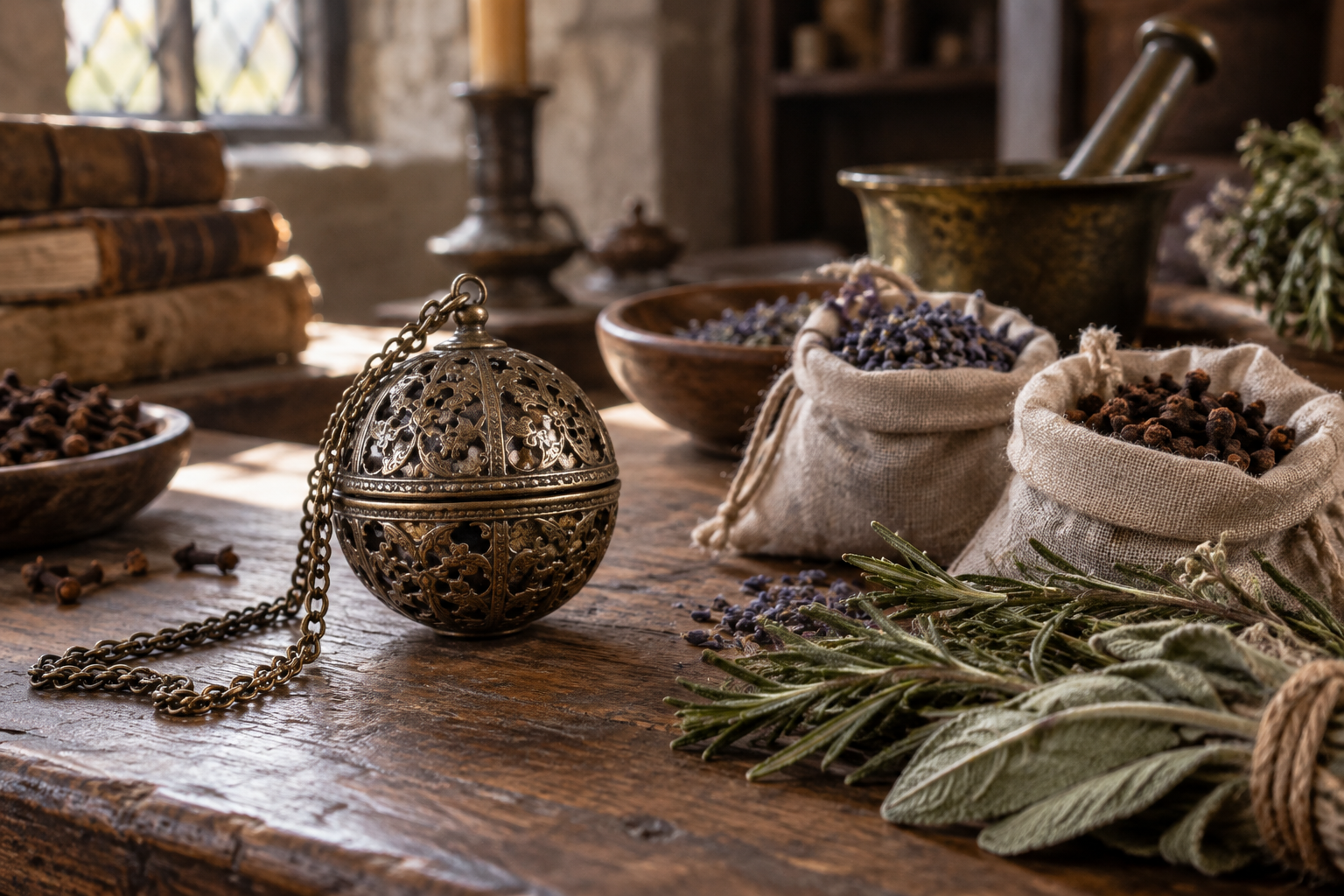
- Pomanders – fragrant balls made of ambergris, musk, spices, or resins, stored in perforated cases of silver or gold by wealthier owners. They were worn at the waist or around the neck and held to the nose in musty streets. The name is usually derived from the Old French pomme d’ambre, meaning "amber apple."
- Fragrant sachets – fabric bags filled with dried herbs such as lavender, rosemary, or sage. They were cheaper than pomanders and therefore accessible to the less affluent.
- Fumigation – juniper, incense, or rosemary was burned in homes and streets to "cleanse" the air with smoke.
A special place among these remedies is held by vinegar "plague water," later famous as Four Thieves Vinegar. According to a legend associated with later plague waves in France and told in many versions, a group of thieves robbed the homes of the sick and dead yet did not get infected. After being caught, they supposedly revealed their secret in exchange for a lighter sentence – vinegar infused with herbs such as sage, rosemary, wormwood, or lavender. Reliable contemporary evidence of this story is lacking. However, vinegar with herbs was indeed used as a protective and cleansing agent in folk practice.
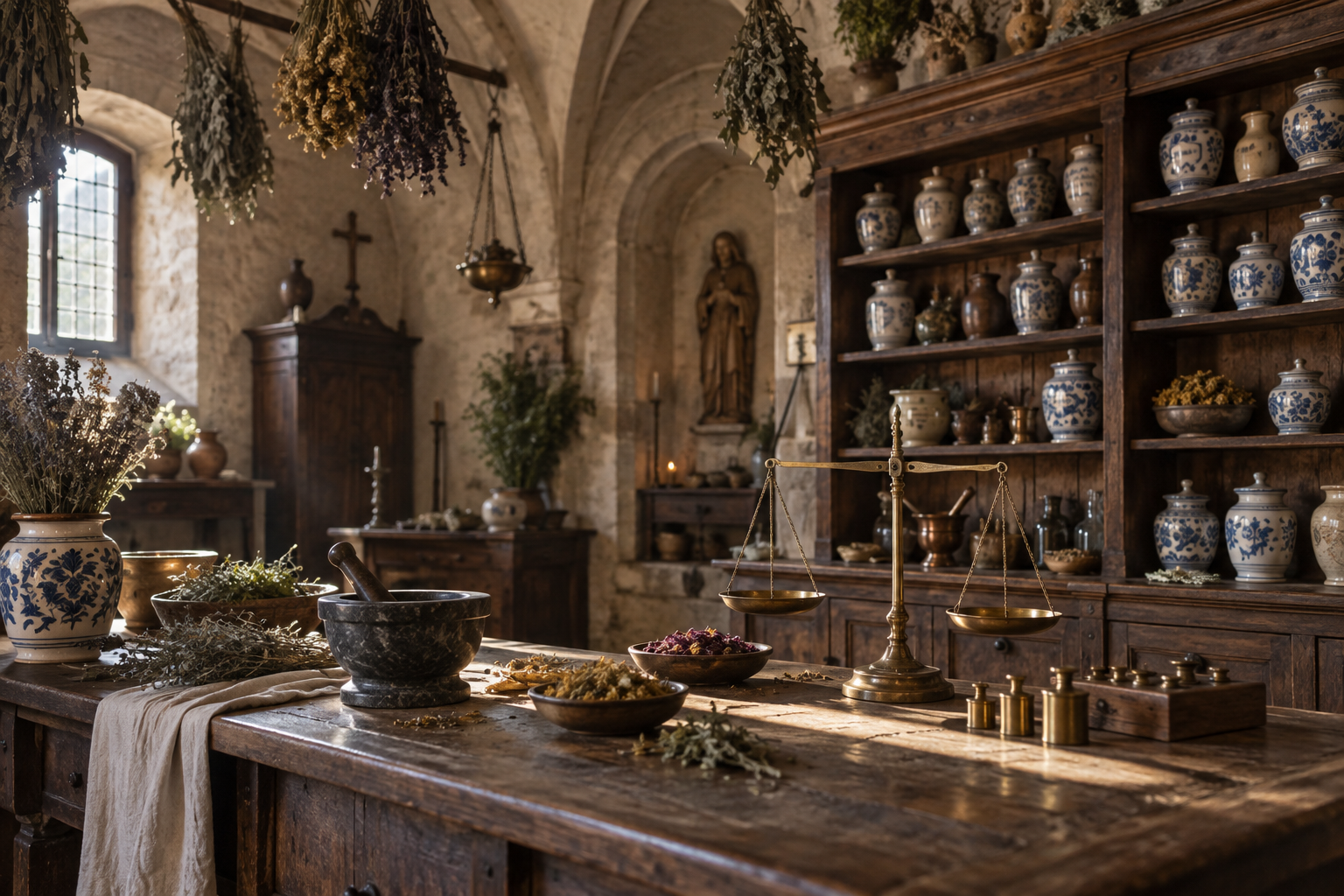
Monasteries played a significant role in preserving and transmitting knowledge. Monks and nuns cultivated medicinal herbs in monastic gardens, copied ancient and Arabic medical texts, and prepared ointments, tinctures, and herbal waters in monastic pharmacies. Gradually, distillation with alcohol was also applied here. An example is the so-called Hungarian water, an herbal distillate with rosemary, which tradition says was used by the Hungarian queen in the 14th century. Its origin, however, is shrouded in legends, and precise dating remains uncertain.
Whether it was the pomander of a wealthy townsman or a lavender sachet of a poor housewife, they had one thing in common: in this era, fragrance served primarily as medicine and protection, not as an ornament. Only with the development of trade and the new era did it slowly begin to become a matter of pleasure and social status.
Renaissance Italy – Venetian Spices, Florentine Pharmacies
While the Middle Ages viewed fragrance primarily as protection, the Renaissance rediscovered it as a pleasure, a sign of taste and status. If you were to look for a place in the 15th and 16th centuries where knowledge of aromatic substances was most advanced in Europe, your journey would most likely lead to Italy. Here, the wealth of trading republics, the scholarship of universities, the skill of pharmacists, and the ambition of royal courts converged – a combination unmatched elsewhere.
Venice owed its rise to trade with the Levant, that is, the ports of the Eastern Mediterranean. Venetian ships arrived from Alexandria, Beirut, or Constantinople laden with goods that traveled from Arabia, India, and other parts of Asia. Alongside silk and precious stones, they carried raw materials essential for the fragrant blends of the time:
- Spices – cinnamon, cloves, nutmeg, or pepper,
- Resins and balms – frankincense, myrrh, benzoin, or labdanum,
- Animal-derived materials – musk and ambergris, which were among the most expensive items.
Venetian merchants sold these raw materials across the continent, making their city the gateway through which exotic scents entered Europe. In 1555, in one of the main centers of book printing, a book titled Notandissimi secreti de l'arte profumatoria, attributed to Giovanventura Rosetti, was published here, often cited as one of the first printed manuals dedicated to the art of perfumery. Thanks to it, recipes for scented waters, pomades, and powders could spread beyond the closed circles of craftsmen.
In Florence, the craft of fragrance developed primarily in pharmacies. Dominican monks at the church of Santa Maria Novella cultivated medicinal herbs and prepared ointments, balms, and distilled waters for the needs of the monastery and the sick. This monastic pharmacy gradually became an independent institution, opening its doors to the public in 1612. Its story illustrates how thin the line was between medicine and fragrance at the time: rose water or orange blossom water was believed to refresh, calm, and scent simultaneously. Florentine pharmacists also belonged to the influential guild Arte dei Medici e Speziali, which included doctors, pharmacists, and spice merchants – fragrances, spices, and medicines were simply part of the same world back then.
Italian Renaissance courts – the Medici in Florence, the Este in Ferrara, the Gonzaga in Mantua, or the Sforza in Milan – competed in splendor. They vied with each other in their buildings and banquets, but also in how their chambers, clothes, and accessories smelled. Perfumers, alchemists, and pharmacists were therefore sought-after craftsmen. According to surviving sources, noblewomen themselves were interested in fragrant recipes: it is said that Isabella d'Este liked to mix her own fragrant blends, and Caterina Sforza is credited with a collection of recipes known as Experimenti, which includes not only medicinal procedures but also cosmetic and fragrant preparations.
So why is 16th-century Italy considered the laboratory of European perfumery? Three conditions came together here: easy access to raw materials through trade, knowledge of distillation and pharmacy developed in monasteries, guilds, and universities – in Padua, for example, a botanical garden was established in 1545, considered one of the oldest university gardens in the world – and finally, the demand from wealthy courts willing to pay generously for fragrances. Italian methods and craftsmen spread from here to other countries, with one of the paths leading directly to France.
Catherine de' Medici Brings Italian Perfumers to France
In the autumn of 1533, a wedding took place in Marseille that would have an unexpectedly long-lasting impact on the history of fragrances. Fourteen-year-old Catherine de' Medici, daughter of a Florentine banking and patron family, married the equally young Henry, the second son of King Francis I of France. He ascended the throne in 1547 as Henry II. Catherine brought with her to her new homeland not only a dowry but also a piece of the Italian court world – chefs, tailors, artists, and craftsmen who carried with them the customs of a then more advanced Italy.
Among these arrivals, the perfumer known as René le Florentin, or René the Florentine, is most frequently mentioned. Less is known about his life than his reputation might suggest. According to tradition, he ran a shop on the Saint-Michel bridge in Paris, offering perfumes, powders, cosmetics, and scented ointments. Contemporary reports describe him as a sought-after address for courtiers, who visited not only for fragrant goods but also for palace news. Whatever his true role was, his figure aptly illustrates how much France at the time looked up to Italian perfumers.
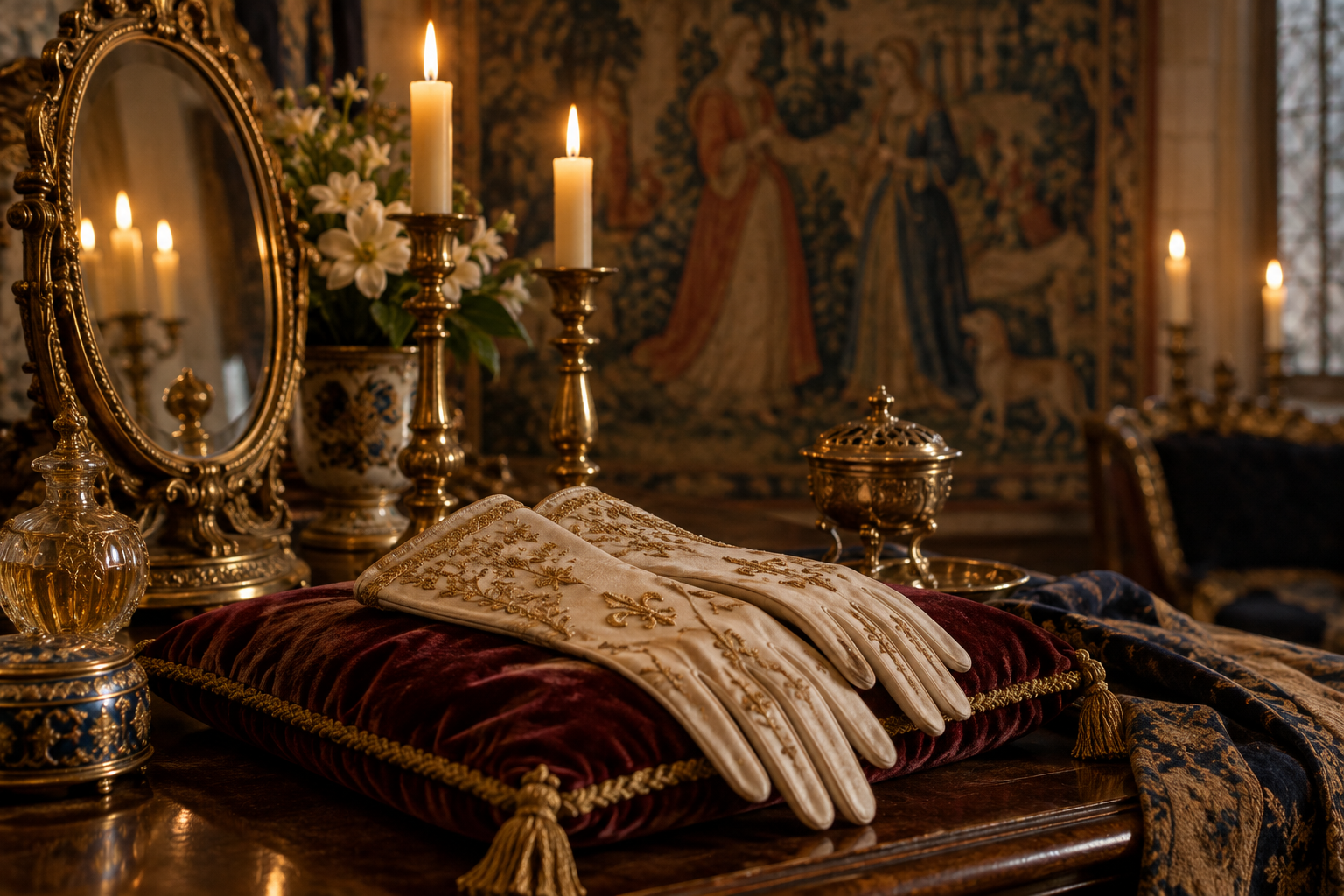
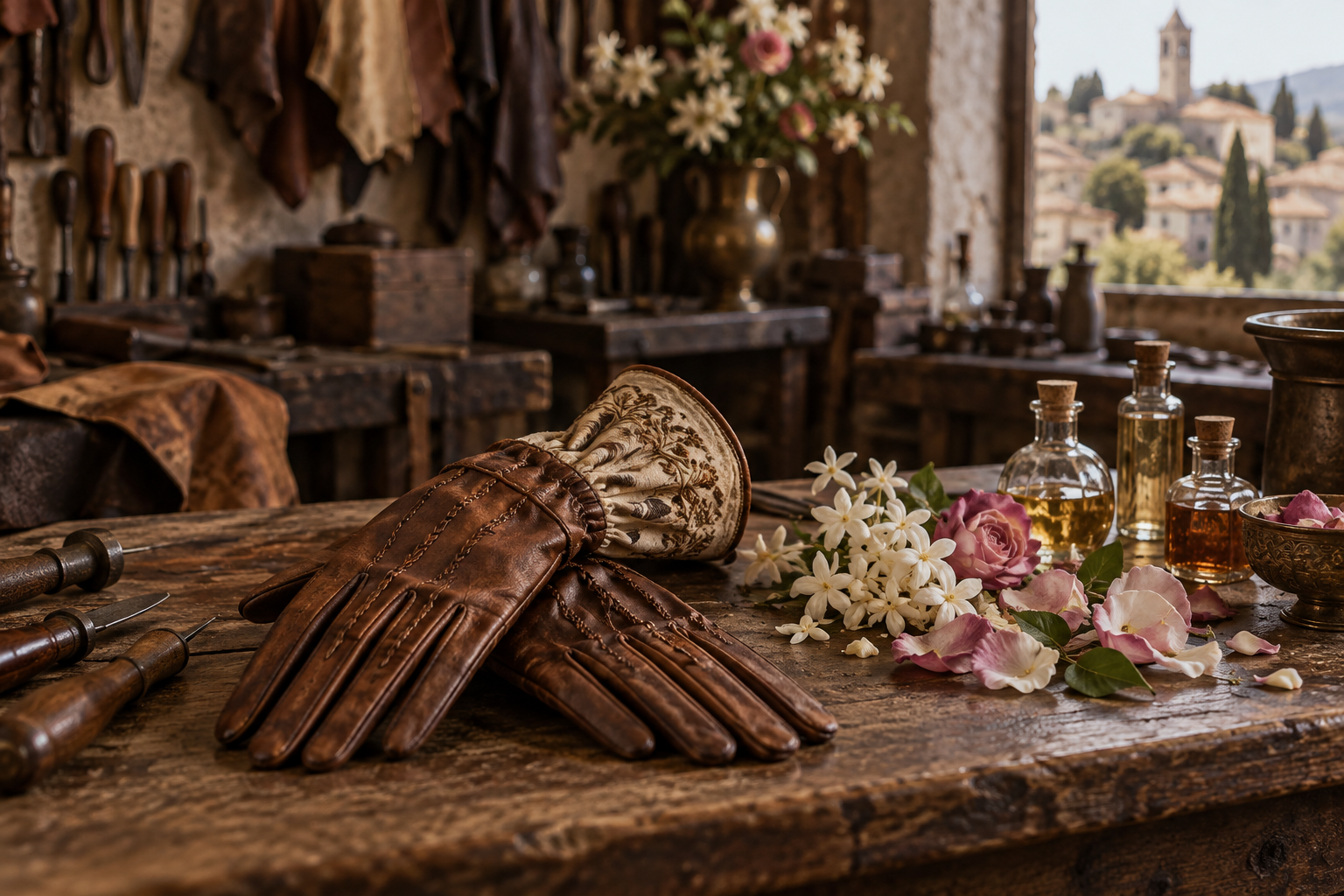
Catherine is credited with a great fondness for fragrances, and the French court eagerly adopted her taste. The most visible expression of the new fashion became the scented gloves. Leather gloves were not only hand protection but an important part of attire, indicating status. The fine leather was scented with mixtures of ambergris, musk, civet, rose water, or spices, so the fragrance accompanied every gesture. Imagine a court celebration where the scent of rare ingredients spreads with each greeting or handshake – gloves were given as gifts at celebrations and diplomatic meetings, and the more expensive the materials used, the more they spoke of the wealth and significance of their wearer.
The most famous legend of the entire era is associated with scented gloves. In June 1572, Jeanne of Navarre (Jeanne d'Albret), Queen of Navarre and a leading figure of the French Protestants, died in Paris. She had come to the city to prepare for the wedding of her son Henry of Navarre to Catherine's daughter Margaret of Valois. Soon after her death, a rumor spread that she had been poisoned by scented gloves, allegedly provided on Catherine's orders by René le Florentin. The rumor was fueled by the tense religious atmosphere – less than three months after the queen's death came the St. Bartholomew's Day massacre – and centuries later, it was popularized by Alexandre Dumas in his novel Queen Margot.
However, historians reject this version. There is no evidence of poisoning, and Jeanne of Navarre most likely died of illness – according to surviving reports, it was a lung disease, often cited as tuberculosis. The very idea of a poison that would reliably work through scented leather is also questionable. Therefore, consider the story of the poisoned gloves as a period legend. It tells us little about the actual death of the queen, but it does show how much power people attributed to fragrances at the time and how easily they could be seen as mysterious. The fashion for scented gloves, meanwhile, survived the poison legend without difficulty and continued to grow.
Grasse – Tanneries, Perfumed Gloves, and the Guild of Glove Makers-Perfumers
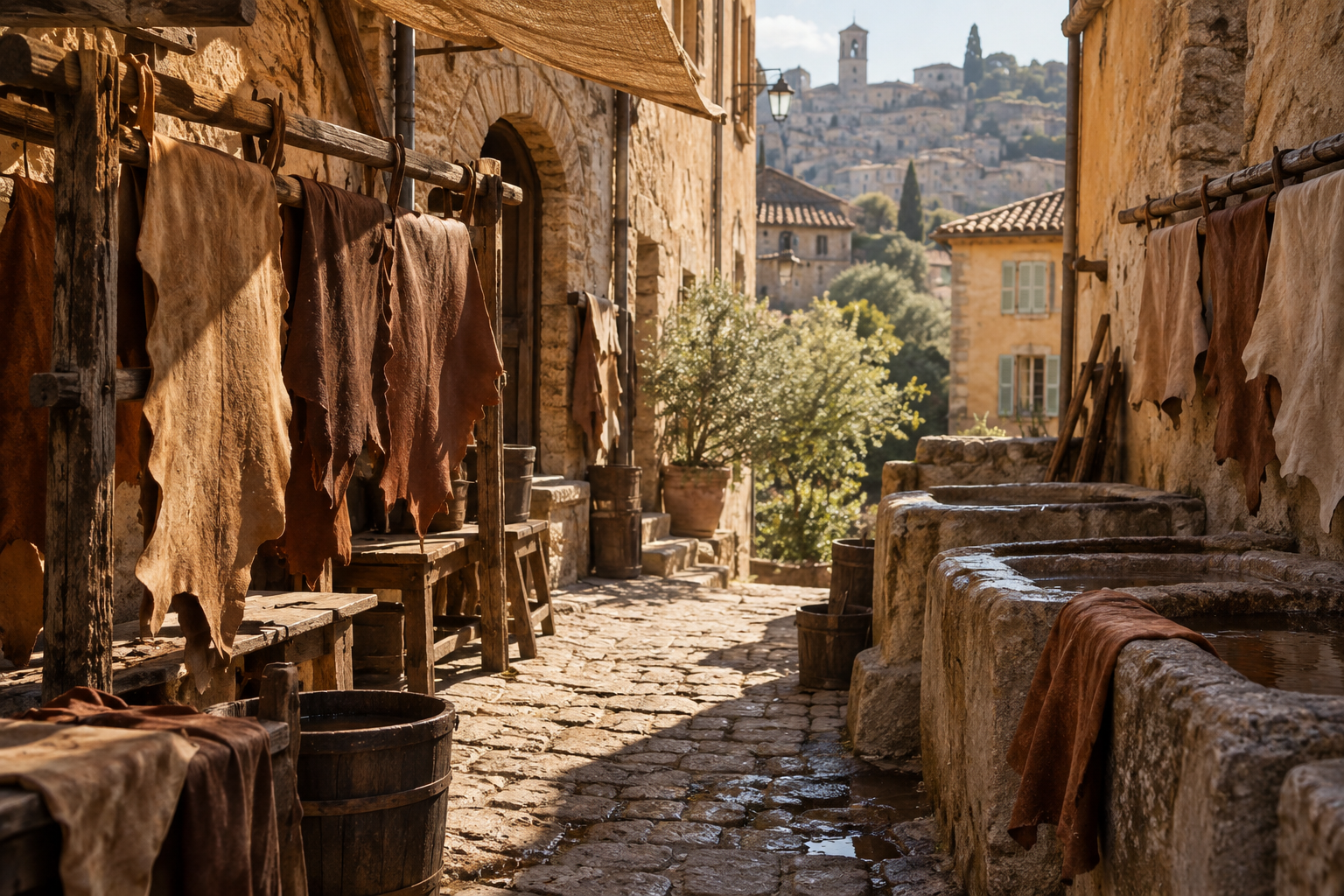
When you hear the name Grasse today, you probably think of a Provencal town surrounded by fields of flowers. However, in the Middle Ages and early modern period, its reputation was built on something entirely different – leather. The town was situated on the slopes above the Mediterranean Sea, had plenty of water from mountain springs, easy access to cattle from nearby pastures, and trade connections with Italian ports. Local tanners exported tanned leathers known for being strong, supple, and meticulously crafted.
The downside of the craft was the smell. The tanning processes used at the time sound rather unpleasant today: soaking in lime, dipping in urine, softening with animal dung, and long soaking in pits with tannins from bark or leaves. The resulting leather was durable but carried a heavy, penetrating odor that was hard to remove. And this is where fragrance enters the story.
In the 16th and 17th centuries, fine leather gloves were essential accessories for the nobility and wealthy townspeople. They were not only for hand protection but also a social symbol – given as gifts and worn at celebrations and court ceremonies. The fashion of perfumed gloves, brought to France by Italian taste, offered Grasse craftsmen an elegant solution to their problem: the smelly leather just needed to be scented. Gloves were infused with fragrant oils and pastes, to which rare animal ingredients like ambergris, musk, or civet were added, along with resins and spices. The fragrance masked the tanning odor and turned an ordinary accessory into a luxury item.
The production of scented gloves in Grasse became a lucrative industry. Craftsmen who could process leather, sew gloves, and scent them began to emerge as a distinct profession – gantiers-parfumeurs, or glove makers-perfumers. Their work required knowledge of materials, patience, and a sense of balance: too strong a mixture could be unpleasant, too weak would not mask the leather smell.
The guild's status is associated with two dates. The year 1614 is noted for the granting of royal privileges, confirming the glove makers-perfumers' title and their right to produce and sell perfumed goods. The year 1724 is usually related to statutes that more precisely regulated the guild's operations, the admission of masters, and the rules of the craft. Sources differ in details, so consider both dates as indicative milestones rather than precisely documented events.
During the 18th century, the balance began to shift. Tanning in Grasse gradually lost momentum – high leather taxes, increasing competition from other areas, and changes in fashion, where perfumed gloves were no longer a prominent accessory, all played a role. However, the fragrant part of the craft thrived. Glove makers-perfumers increasingly focused on the fragrances themselves: scented waters, pomades, oils, and powders, for which they had the raw materials, knowledge, and skilled hands in the surrounding area. The separation of the two professions is usually placed in the second half of the 18th century, when the tanning town began to transform into a town of perfumers.
The Floral Fields of Provence – Jasmine, Tuberose, Enfleurage
While workshops were busy figuring out how to mask the smell of tanned leather, the hills around Grasse were growing raw materials that would eventually bring the town much greater fame. Grasse is located in southern Provence, near the sea, but also sheltered by the foothills of the Alps, which protect it from the cold northern winds. Mild winters, plenty of sunshine, and water from mountain springs created conditions in which even more demanding flowers thrived.
Imagine terraced fields where several types of crops were harvested throughout the year. Among the most significant were:
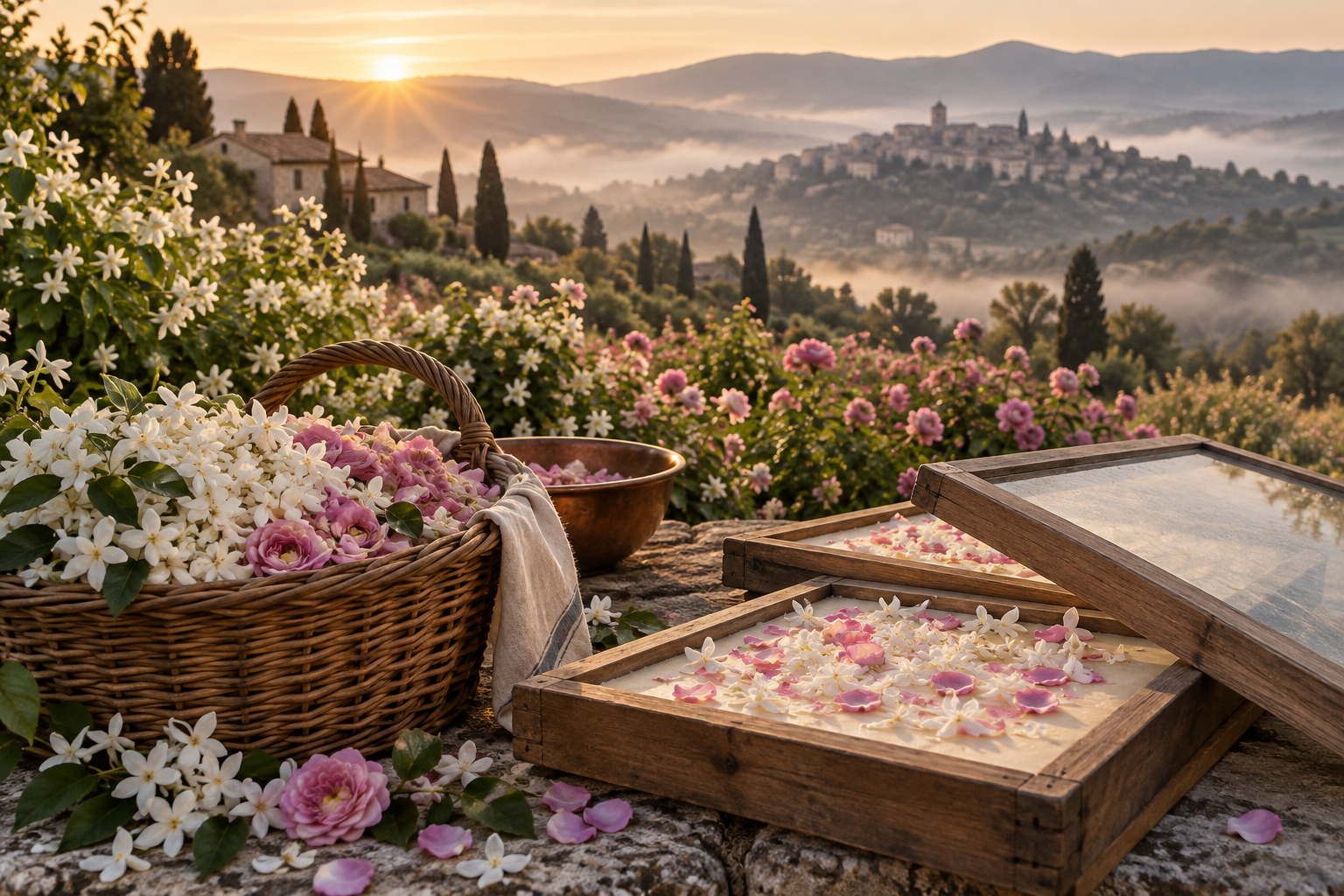
- Jasmine – large-flowered jasmine originates from the warmer regions of Asia and apparently reached Provence via the Mediterranean; its small white flowers were hand-picked early in the morning when they are most fragrant,
- Centifolia Rose – a full, richly scented rose, still known today as the May rose or the rose of Grasse,
- Tuberose – a plant native to Mexico, which arrived in Europe only after overseas voyages; its intoxicating, creamy scent is renowned in perfumery for its intensity,
- Bitter Orange – from its flowers, neroli is obtained; the name is traditionally derived from an Italian princess of Nerola, who supposedly perfumed her gloves and baths with this scent,
- Lavender – which grew more in higher and drier locations, often wild.
Roses, lavender, or orange blossoms can be distilled with steam. However, jasmine and tuberose lose their fragrance or change it beyond recognition when heated. Perfumers therefore relied on the old knowledge that fat readily absorbs scents – much like butter in the fridge absorbs the smell of surrounding foods.
Cold Enfleurage was roughly as follows: wooden frames with a glass plate, known in French as châssis, were coated with a thin layer of carefully purified fat, usually pork lard or a mixture with beef tallow. Fresh petals were manually spread into the fat, and the frames were stacked on top of each other. After about a day, the wilted flowers were removed and replaced with new ones. This process was repeated for weeks until the fat was saturated with fragrance. The result was a fragrant pomade, which could be used directly or later extracted with alcohol. Jasmine was particularly well-suited to this method because it continues to emit fragrance even after being picked.
Maceration, sometimes referred to as hot enfleurage, was quicker. Flowers were immersed in heated fat or oil, steeped for several hours, then strained and replaced with fresh ones. This method was more suitable for more resilient flowers, such as roses, orange blossoms, or violets.
Both methods were extremely labor-intensive, and a huge amount of flowers was needed for a small amount of fragrant pomade. However, it was this manual labor that gradually made Grasse a place where knowledge of floral raw materials was passed down from generation to generation. In the 20th century, enfleurage was largely replaced by more modern extraction methods, and today it is used only rarely, more as a nod to tradition.
In Part 5, we will move to Versailles with Louis XIV and the court, which is said to have been entirely fragrant.
Category
Recommended articles
Riiffs Freeze in Flames: Ice and Flames Illuminate Warsaw "Give a girl the right shoes and she can conquer the world!" Marilyn Monroe
