

 Riiffs Freeze in Flames: Ice and Flames Illuminate Warsaw
In the fifth installment of the series The History of Fragrances, we visit Versailles, where scent was part of court etiquette. Discover why the court feared water, how Marie Antoinette smelled, and what the revolution brought to court perfumery.
The Fifth Chapter of the History of Fragrances – The Court Where Scent Meant Status
Welcome to the fifth chapter of the series History of Fragrances. So far, we have explored ancient Egyptian temples where fragrant resins accompanied rituals and the afterlife, Roman baths and feasts filled with scented oils, the workshops of Arab scholars who perfected distillation and paved the way for fragrant waters, and finally, the Provençal town of Grasse, which transformed from a tanning town into a center for growing fragrant flowers. Now, we move a bit further north – to Versailles.
The royal court of the 17th and 18th centuries was a world of strict rules. Who could stand close to the monarch, how deeply one bowed, what clothes one wore – all conveyed a message. Scent was part of this silent language. Perfumed gloves, scented linens, or fragrant waters were not just a matter of personal taste: they indicated who could afford expensive ingredients, who followed court fashion, and who truly belonged to court society. Fragrance functioned much like jewelry or a coat of arms – it was invisible, yet revealed much about its wearer.
Why Versailles? In 1682, Louis XIV moved the court's residence here and transformed the original hunting lodge into the grand center of the French monarchy. Thousands of courtiers lived in and around the palace, competing for the king's favor. In such an environment, every detail became a tool of prestige – and fragrance was among the most prominent. French taste at the time set the tone for much of Europe, so what was fragrant in Versailles soon appeared at other royal courts.
In this chapter, we will guide you through the court step by step. We will explore the peculiar relationship people of the time had with water and washing and what they used to replace cleanliness. We will see how monarchs from Louis XIV to Louis XV dealt with fragrance, separating documented reports from later legends. We will also cover Queen Marie Antoinette and the perfumer who crafted bespoke scents for her, and finally, we will touch on the revolution that ended this entire world.
So sit back comfortably and let yourself be led into the gilded halls, gardens, and private chambers where status was determined even by the nose.
Cleanliness Without Water – Powder, Clean Linen, Fragrant Essences
Imagine a court where cleanliness is often discussed, yet water is scarcely used for it. To today's reader, this sounds like a contradiction, but for many people in the 17th and 18th centuries, it was quite logical. The medical beliefs of the time were based on the idea that warm water opens the pores, making the body more vulnerable to "tainted air," which was thought to spread diseases according to contemporary opinions. After experiences with plague epidemics, many doctors advised caution with bathing. Baths didn't disappear entirely from life – some bathed for therapeutic reasons, others for pleasure. However, daily body care for much of the court society shifted elsewhere.
White Linen as a Badge
Instead of washing, clean linen took its place. A white linen shirt was believed to absorb sweat and impurities, so frequent changing meant being "clean." The visible edge of the shirt at the neck and sleeves also showed others how much linen one could afford. Besides that, the body was wiped with a dry or damp cloth, sometimes with the addition of scented water. Cleanliness thus became mainly about what is seen and smelled, not what happens under the clothing.
Powder, Gloves, Scented Sachets
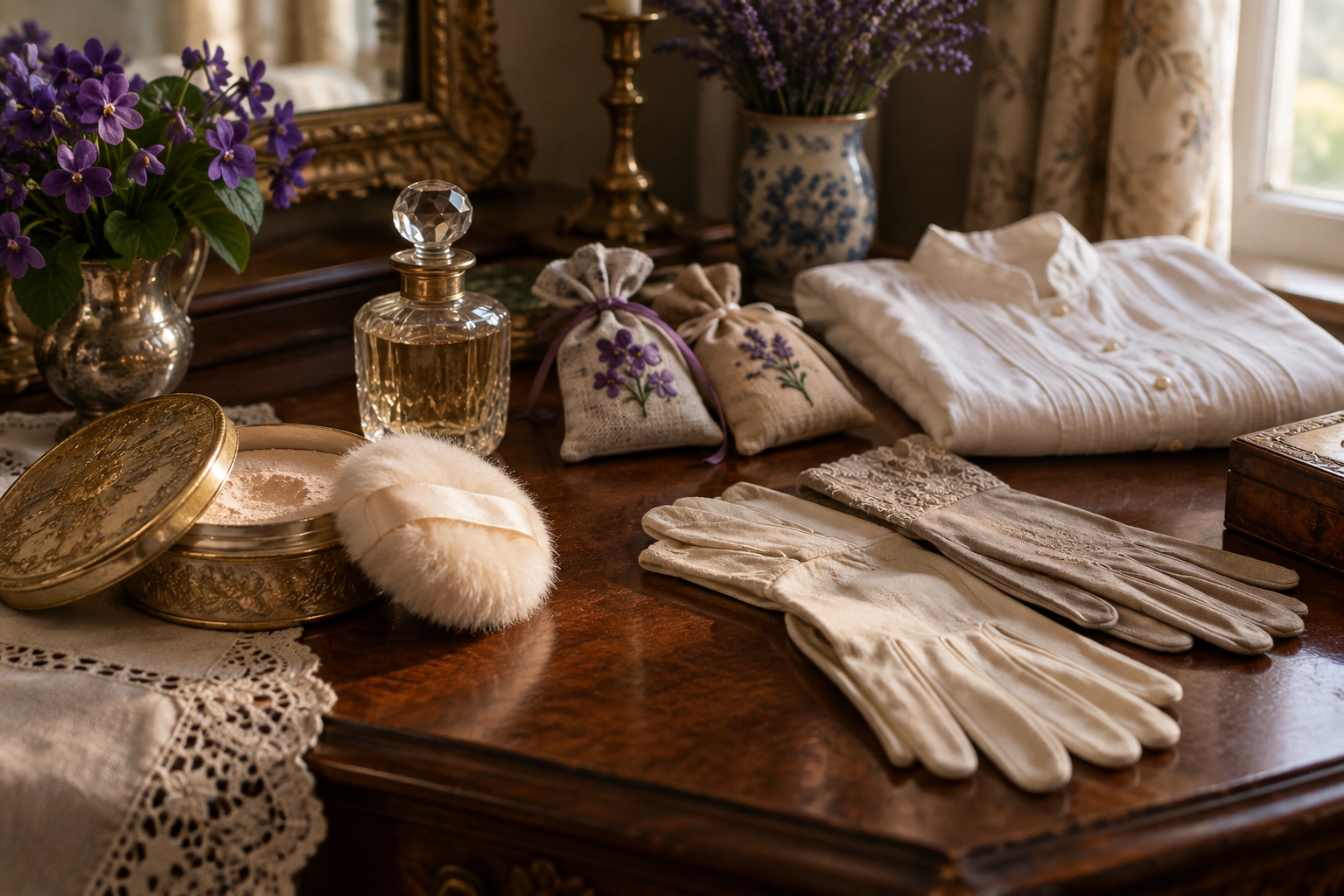
A striking element of the courtly appearance was hair and wig powder. It was usually made from fine starch and often perfumed, for example, with orris root powder, which has a soft, powdery scent. The powder visually lightened the hair, helped absorb grease, and carried a fragrance. Its form changed with fashion – in some periods, darker wigs prevailed, at other times, distinctly white hairstyles.
Other fragrant accessories included:
- Perfumed Gloves – tanned leather often had an unpleasant smell, so gloves were infused with fragrant substances. They became a popular and costly gift.
- Scented Handkerchiefs – they were simply held to the nose when the surroundings were less pleasant.
- Scented Sachets – small textile bags with dried flowers, herbs, and spices were placed among linen, in wardrobes, or carried on the person.
Period recipes reveal a fondness for strong animal-derived ingredients, such as musk, ambergris, or civet, but flowers, herbs, and spices were also used. The exact composition naturally varied according to the workshop, price, and personal taste.
Fragrance as a Cover, but Also a Status Symbol
In this environment, fragrance served two roles simultaneously. It was a practical aid to mask the smells of the body, clothes, and crowded halls. At the same time, it was a status symbol – quality fragrant essences, fine powder, and perfumed gloves were expensive, and not everyone could afford them. Those who smelled of costly materials indicated which social class they belonged to. However, it's important to remember that customs varied according to individuals, generations, and periods, and the image of an "unwashed court" is more of a simplification than an accurate description.
From Louis XIV to Louis XV – Fragrance as a Sign of Power
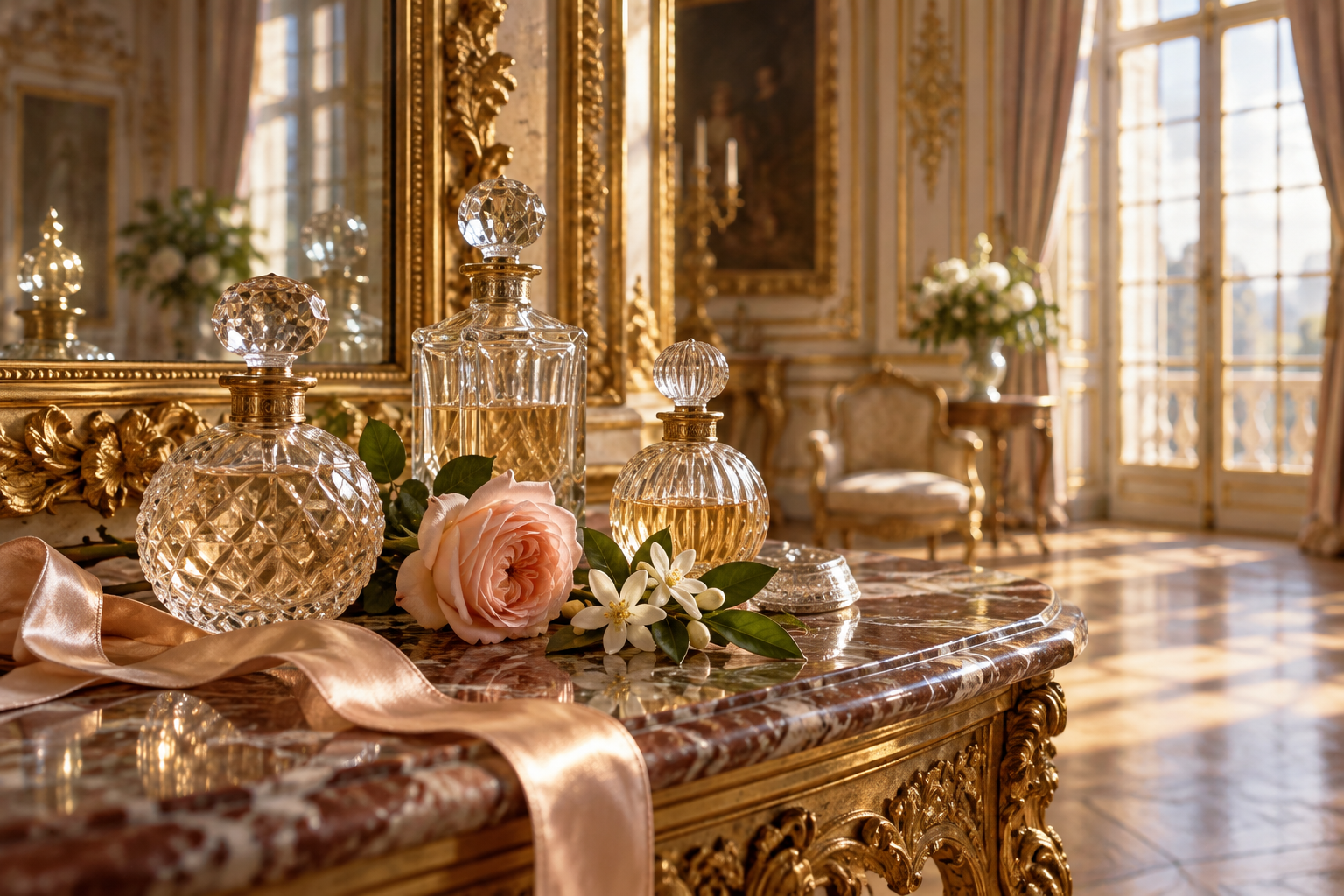
During the reign of Louis XIV, fragrance became an integral part of court ceremonies. The monarch, who transformed the palace of Versailles into a center of political power and fashion, ensured that every detail of his surroundings spoke of wealth and taste – and fragrances were as much a part of this as silk, mirrors, or gilded stucco.
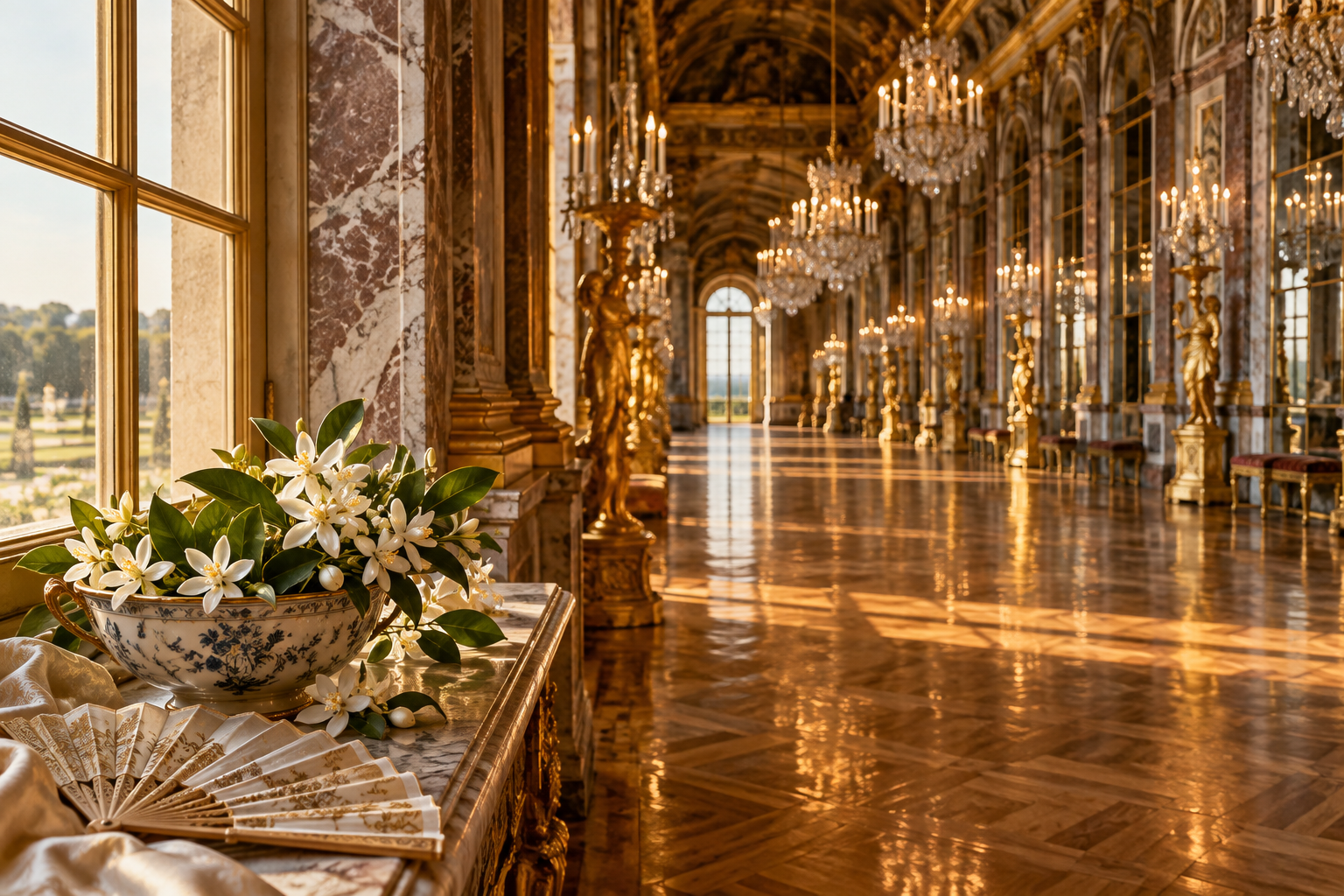
Biographers attribute a strong fondness for perfumes to the young king. It is traditionally noted that in his younger years, he liked to surround himself and his rooms with fragrant blends. However, as he aged, his relationship with strong scents reportedly changed: according to frequently repeated accounts, heavy and intense perfumes caused him discomfort and headaches, and courtiers were therefore advised to be restrained with fragrances in his presence. An exception was said to be the orange blossom – a fresh, gently sweet scent that the king traditionally preferred even when he rejected other fragrances.
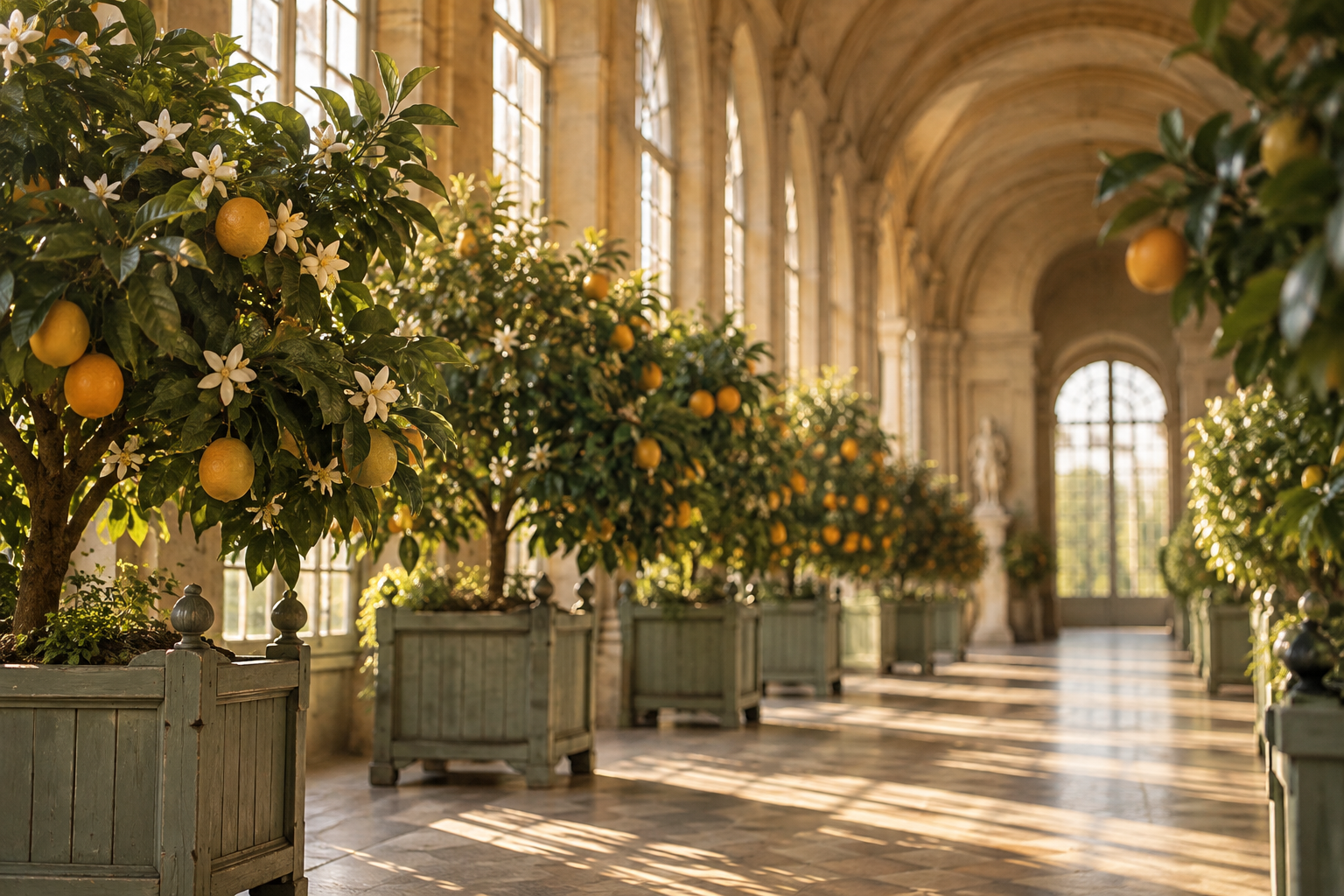
Orange trees also played a much more visible role at Versailles. The palace's orangery, in the form we know today, was created in the 1680s and housed hundreds of citrus trees in containers, which were moved to the gardens during the warm months. Cultivating southern plants in a northern climate required considerable effort and expense, and for this reason, orange trees were a symbol of luxury: they demonstrated that the king could afford to surround himself with a piece of the Mediterranean. The blooming trees also scented the gardens and spaces where some of them were moved.
Under Louis XV, the atmosphere of the court changed. The emerging Rococo brought lighter forms, more intimate salons, and an even greater emphasis on the refinement of everyday life. During this time, Versailles began to be nicknamed the "perfumed court." Along with this nickname comes the tale that fragrances at the court changed daily – one day everything was supposed to smell according to one composition, the next day according to another. However, this is more of a legend that captures the court's reputation rather than a documented rule.
Fragrance was also part of court festivities. During balls, banquets, and celebrations, halls, curtains, and furniture were perfumed, and contemporary accounts mention fountains from which water scented with floral essences flowed. Imagine a hall illuminated by hundreds of candles, where guests did not perceive the fragrance only on themselves or their partners – it surrounded them throughout the space as another decorative element alongside light, music, and floral arrangements.
Royal mistresses had a significant influence on court fashion. The most famous of them, Madame de Pompadour, was a notable patron of the arts and crafts, and her taste influenced interiors, porcelain, and fashion. She is traditionally credited with a great fondness for fragrances and generous spending on them; however, the specific amounts sometimes mentioned in this context should be taken with caution. What is certain is that at a court where fashion trends spread from the most influential personalities, fragrance continued to gain importance as an expression of status and taste.
Marie Antoinette – The Queen with Her Own Perfumer
When the Austrian Archduchess Marie Antoinette married the heir to the French throne in 1770, she entered a court where fragrance was as much a part of etiquette as powder or a fan. As queen, which she became in 1774, she brought her own taste to this world. Her influence in the realm of fragrance is still evident today—not only in preserved court records but also in how France's perception of what was pleasant and elegant evolved in the latter half of the 18th century.
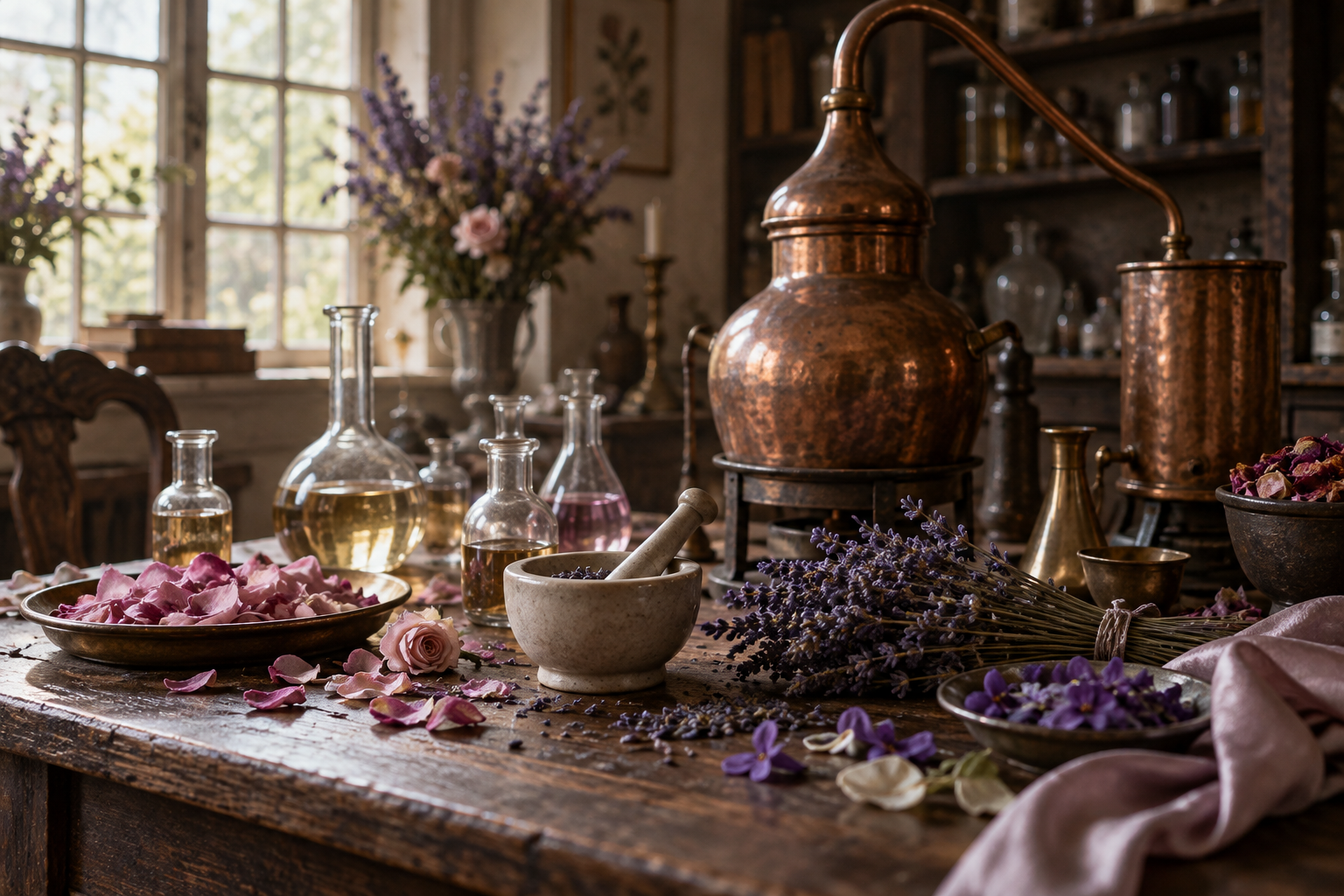
A key figure in this story is Jean-Louis Fargeon, a native of Montpellier, who was among the renowned Parisian perfumers of his time. Sources cite him as the queen's supplier, and his name appears in connection with orders for scented waters, powders, pomades, and perfumed gloves. Fargeon followed a family craft tradition, and his work illustrates how a perfumer became a confidant who knew his client's personal wishes. Modern awareness of him was significantly revived by French historian Élisabeth de Feydeau, who dedicated a book to his life based on period documents.
The queen's taste and that of her circle turned away from strong animalic notes like musk, amber, or civet, which previously masked hygiene shortcomings and signaled wealth. Lighter, fresher compositions featuring flowers and herbs came to the forefront:
- Rose – in the form of rose water and delicate essences, favored for its tenderness,
- Violet – powdery and discreet, typical for scented powders and sachets,
- Lavender – herbal and clean, associated with a sense of freshness,
- Orange blossom and jasmine – floral notes that added brightness to fragrances.
This transformation was not just a matter of scent. It was linked to the contemporary fashion of returning to nature, fueled by the ideas of Enlightenment philosophers, particularly Jean-Jacques Rousseau. The queen had an idyllic village with farms and a mill built around the Petit Trianon in the gardens of Versailles, where she could escape the strict ceremonial. Light muslin dresses, flower gardens, and meadow-like scents were all part of this – an expression of a desire for simplicity, albeit a very carefully arranged simplicity.
The ingredients for these fragrances often came from Grasse in southern France. As we mentioned in part 4, the local glove makers gradually turned into perfumers, and the surrounding fields of roses, jasmine, lavender, or tuberoses supplied workshops across the country. A Parisian perfumer like Fargeon stood at the end of a long chain that began with the harvest of flowers in Provence and continued with distillation and the production of scented pomades.
Many stories also formed around the queen. Traditional tales claim, for example, that the royal family, during their escape that ended in Varennes in 1791, carried toiletries and fragrances with them, or that Fargeon prepared scents for the queen even when she was imprisoned. These anecdotes should be taken with a grain of salt—they belong more to the legend that grew around Marie Antoinette than to documented facts. However, it is certain that her name became so intertwined with the history of perfumery that it still serves as a symbol of the refined, floral elegance of the late 18th century.
Revolution – The End of Courtly Perfumery
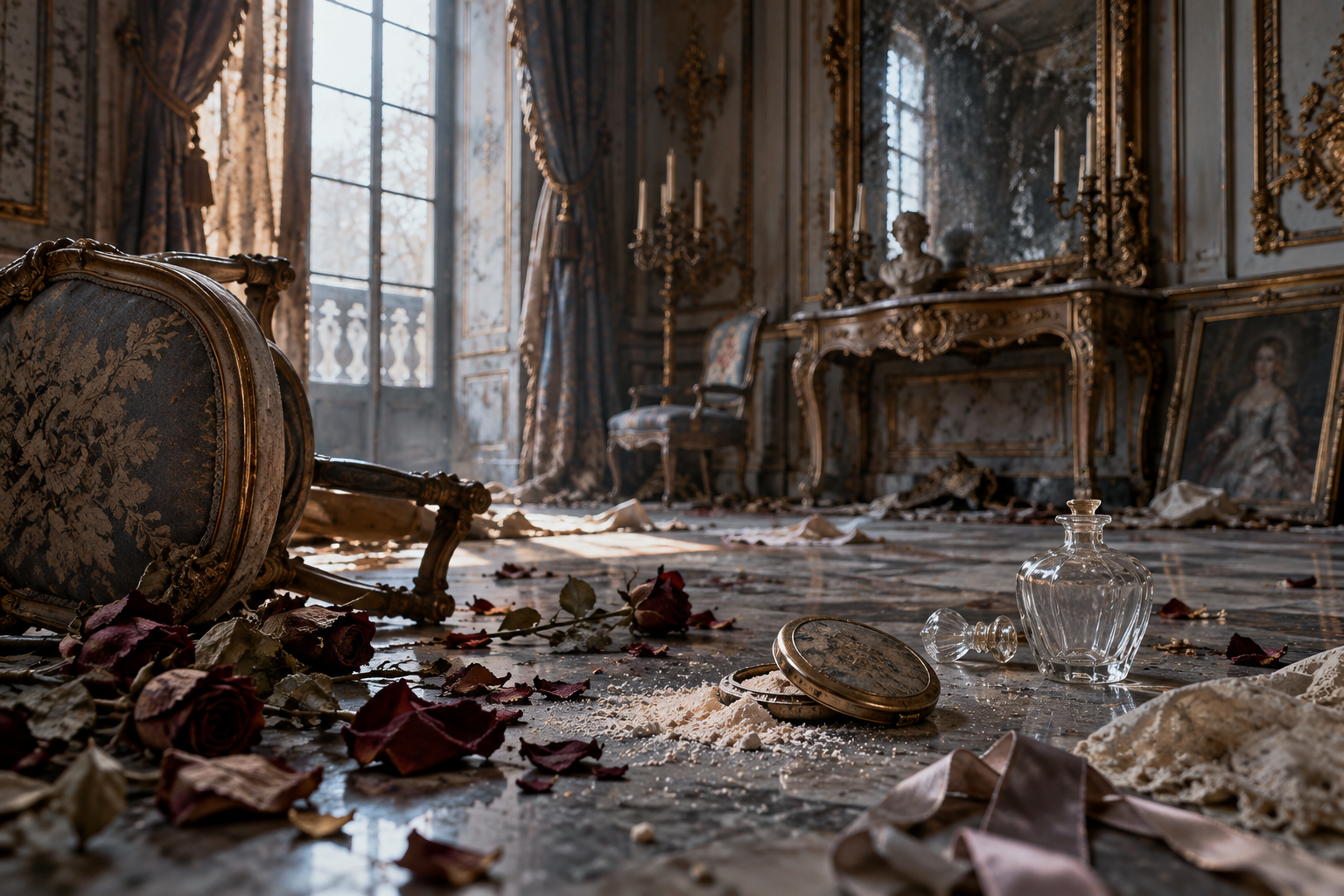
The year 1789 fundamentally changed France and with it, the world of fragrances. The court, which for generations dictated what and how lavishly people should scent themselves, vanished within a few years. Not long ago, fragrance signified prestige, but in revolutionary Paris, it became something suspicious. Scented gloves, powdered wigs, and bottles of fragrant essences reminded people of the world of privileges they were rebelling against. Those who smelled too strongly could easily attract unwanted attention.
The change was not just a matter of mood. Revolutionary laws of 1791 abolished the old guilds, including the guild of glovemakers and perfumers, which had for centuries determined who could produce and sell fragrant goods. The craft lost its previous rules, but at the same time, it opened up to new people – anyone with the skill and courage to venture could become a perfumer.
For those who supplied the court, the times were dangerous. Jean-Louis Fargeon, a perfumer associated with the queen, was, according to surviving records, arrested and imprisoned during the Reign of Terror. Unlike many of his customers, he escaped the guillotine and was able to return to his craft after the fall of the Jacobins. His fate illustrates how thin the line was between being a recognized supplier and a suspect servant of the monarchy.
However, fragrance did not completely disappear from Paris. After the Terror, a young fashion generation appeared in the streets, mockingly called muscadins – after musk (French musc), with which they scented themselves conspicuously. Strong perfuming thus became a political gesture and a sign of resistance against the austerity of the revolutionary years. Along with the eccentrically dressed incroyables and merveilleuses, these young men proved that the desire to smell good and look good could not be simply forbidden.
The real transformation, however, was happening elsewhere. Instead of royal orders, perfumers began to rely on customers from the bourgeoisie – merchants, officials, and their families. More shops appeared where anyone who could afford it could buy scented water, pomade, or fragrant soap. Some perfumeries founded before the revolution survived, and others were established shortly after; let us mention at least the house of Houbigant, opened in Paris in 1775, or the house of Lubin, founded at the end of the 18th century. Fragrance ceased to be the privilege of a single court and became a commodity.
So what did Versailles leave to future generations? Above all, the idea that fragrance is not just about masking unpleasant odors, but a part of personal style – just like clothing, hairstyle, or manner of speech. The notion that one chooses a perfume based on personality, occasion, or social status firmly took root in an environment where fragrance expressed who you were. When you think today about what to wear for an important meeting or a festive evening, you are, whether you like it or not, continuing a tradition that grew among the mirrors and gardens of Versailles.
In the next installment, we will look at the light citrus water that was gaining popularity across Europe during these turbulent times – Eau de Cologne.
Category
Recommended articles
Riiffs Freeze in Flames: Ice and Flames Illuminate Warsaw "Give a girl the right shoes and she can conquer the world!" Marilyn Monroe
