
 Riiffs Freeze in Flames: Ice and Flames Illuminate Warsaw
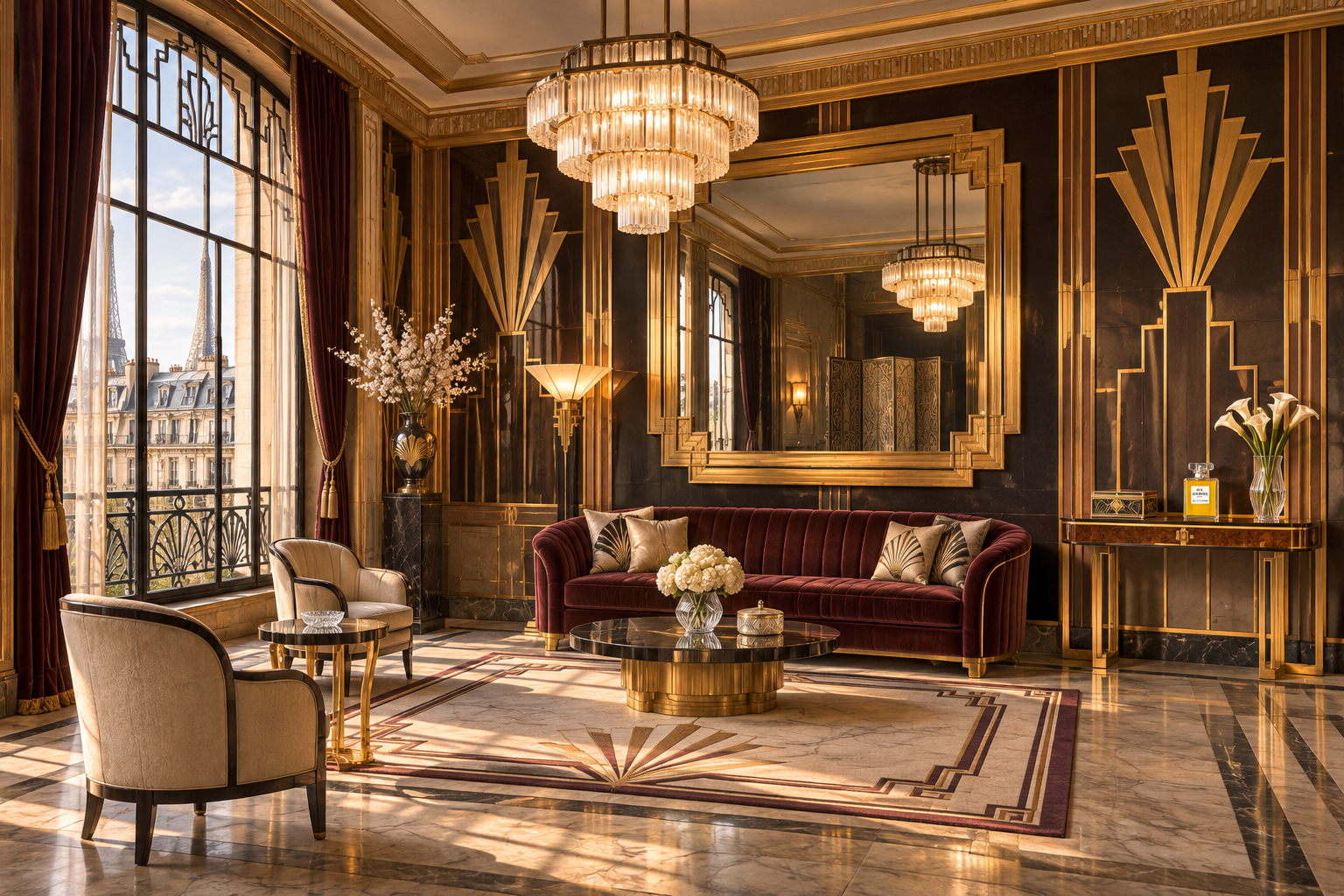
In the eighth installment of the series The History of Fragrances, we find ourselves in 1920s Paris, where perfume became a part of fashion branding. Discover what aldehydes are, how Ernest Beaux used them, and how Chanel No. 5 came to be.
Paris After the Great War: A New Woman Seeks a New Fragrance
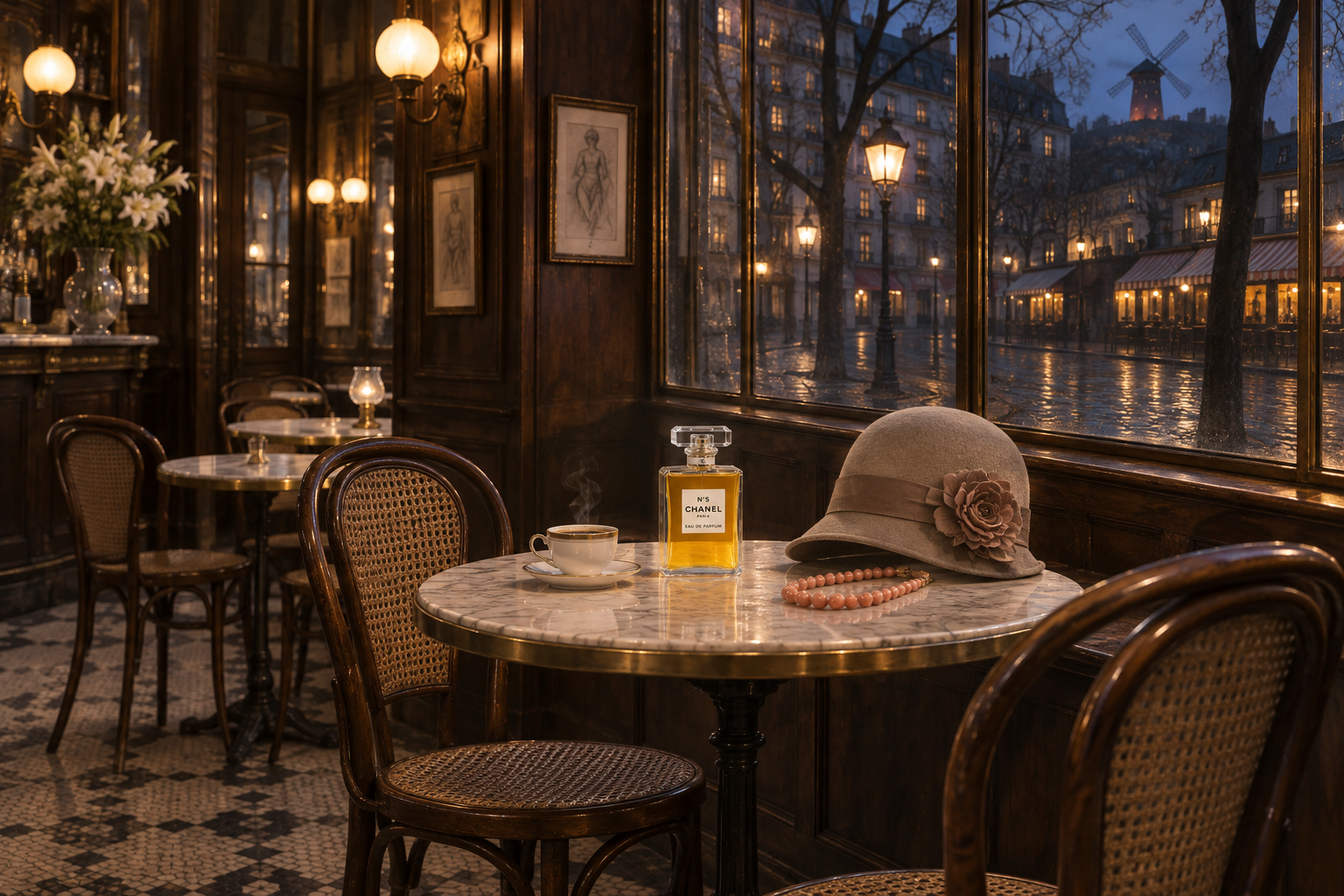
Imagine Paris at the beginning of the 1920s. The city is recovering from the First World War, cafes in Montparnasse are filled with painters, writers, and musicians, and the rhythm of jazz is infiltrating the nightclubs. The war not only changed the political map of Europe but also the everyday lives of women. During the war years, many worked in factories, offices, or hospitals, becoming accustomed to independence and more practical clothing, and they were reluctant to return to previous customs.
Fashion quickly responded to this transformation. Corsets disappeared from wardrobes, skirts shortened, silhouettes relaxed, and many women cut their hair into short bobs. The modern, confident, and mobile woman was nicknamed la garçonne in France – after the 1922 novel of the same name, which caused both scandal and admiration at the time.
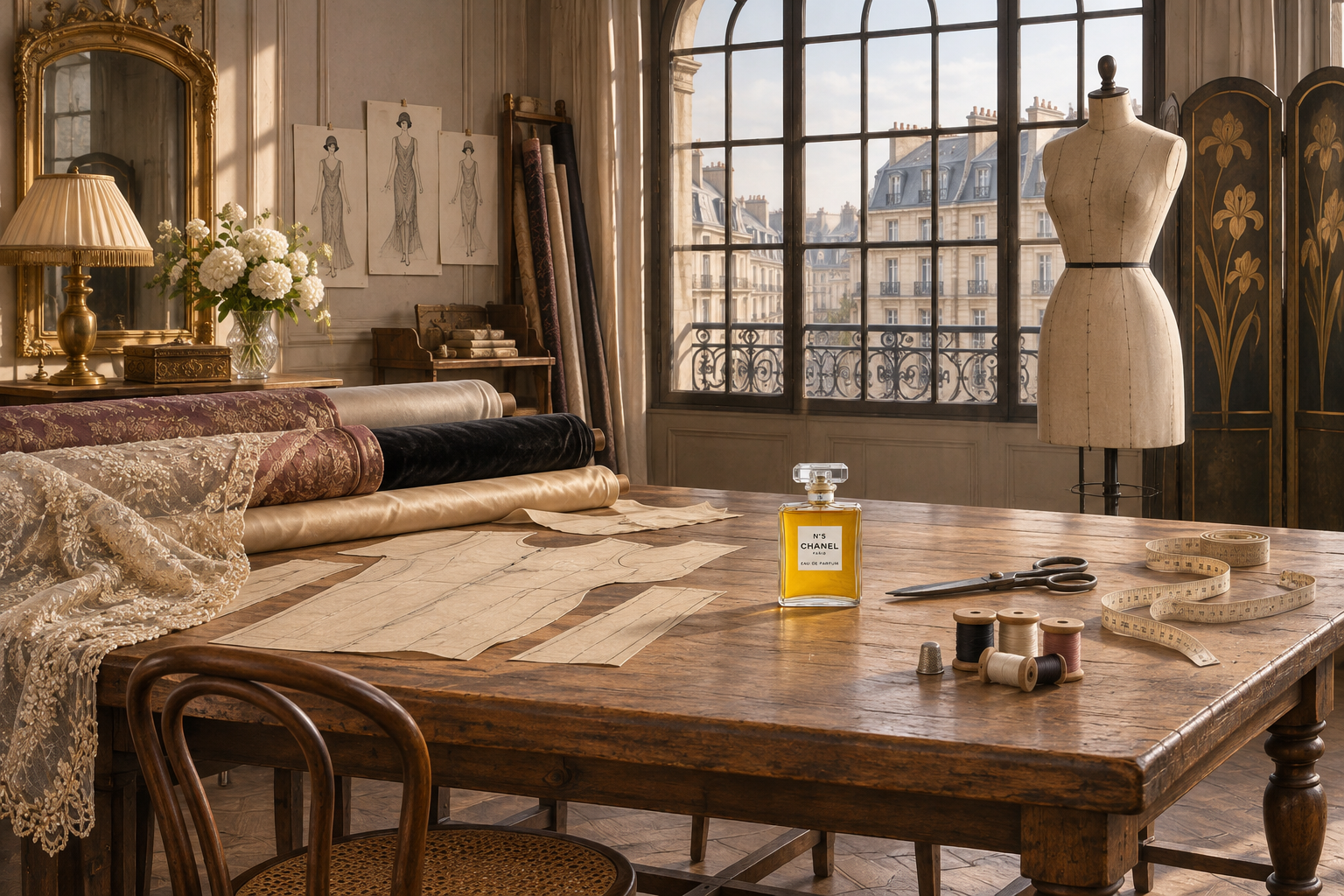
One of the personalities who captured and dressed this new style was Gabrielle Chanel, known as Coco. Her models of flexible knitwear, simple cuts, and emphasis on comfort felt like a breath of fresh air compared to the richly adorned dresses of the pre-war era. However, Chanel felt that one element was missing for a complete transformation of women's style – a fragrance that truly belonged to the new woman.
At the time, perfumes usually revolved around a single flower. Ladies smelled of rose, violet, lily of the valley, or gardenia, and a perfume was expected to faithfully resemble a flower bed or bouquet. Chanel, true to tradition, desired something different: a perfume that did not mimic a single flower but was a deliberately created composition – abstract, modern, and as unmistakable as her clothes.
The possibility of such a creation was hinted at by developments we discussed in the previous installment. Synthetic molecules, which chemists began producing in laboratories at the turn of the 19th and 20th centuries, showed that scents did not have to merely imitate nature. Perfumers suddenly had tones at their disposal that could not be found in any garden, allowing them to create bolder compositions than ever before.
In this installment, you will encounter a story where three seemingly distant worlds meet: a fashion house that wanted to offer women more than just clothing, a perfumer with a Russian past who learned his craft in Moscow, and laboratory substances called aldehydes. From their meeting emerged a perfume that became a symbol of an entire era and is still talked about today.
Couturiers Discover Perfume: Poiret, Lanvin, Patou
At the beginning of the 20th century, perfumes were still the domain of specialized perfumeries and pharmacists. Fashion designers made clothes, perfumers mixed scents – and both crafts met more often on a customer's dressing table than in a single atelier. However, within a few years, this boundary began to dissolve, and perfume became a natural part of a fashion brand.
Paul Poiret was among the first couturiers to recognize this opportunity. As early as 1911, he launched the perfume line Les Parfums de Rosine, named after one of his daughters. Poiret saw fragrance as an extension of his designs: just as his dresses freed women from corsets, his perfumes were meant to complete the overall impression, mood, and style. The atelier, fabrics, store interior, bottle, and scent all formed one world for the customer to enter.
In the 1920s, other fashion houses followed a similar path. Jeanne Lanvin introduced the perfume Arpège in 1927. It is said that the name was inspired by her daughter Marguerite's piano playing – after all, the word arpège refers to a broken chord. The round black bottle with a gold motif of mother and daughter, which became the symbol of the fashion house, demonstrated how closely a perfume could be linked to the brand's visual identity.
Jean Patou, a couturier associated with sporty elegance and the modern wardrobe of the active woman, launched the perfume Joy in 1930. It came during the Great Depression, and yet – or perhaps because of it – it featured a rich floral composition based on jasmine and rose. According to popular interpretation, it was meant to remind people that even in tough times, it's worth indulging in a piece of luxury. Joy soon became one of the best-known perfumes of its time.
What did these stories have in common? The main idea of the era can be summed up simply:
- The name of the fashion house on the bottle gives the perfume identity. The fragrance is no longer an anonymous blend but carries the story, style, and reputation of a specific designer.
- Perfume makes the brand accessible. A customer who might not buy a dress from the atelier can purchase a bottle and wear a piece of the brand every day.
- Fashion and fragrance strengthen each other. A successful perfume spreads the designer's name far beyond the salon and runway, while the atelier's prestige adds luster to the perfume.
This model – a couturier who also signs the perfume – quickly took hold in the 1920s and has endured to this day. When you choose a perfume with a fashion house logo in a perfumery, you are continuing a tradition that these pioneers established around a hundred years ago. But for a new fragrance to truly captivate, it needed more than just a famous name; it required a bold composition – and in the story of the 1920s, that became aldehydes.
Ernest Beaux and Aldehydes: The Spark of a New Fragrance
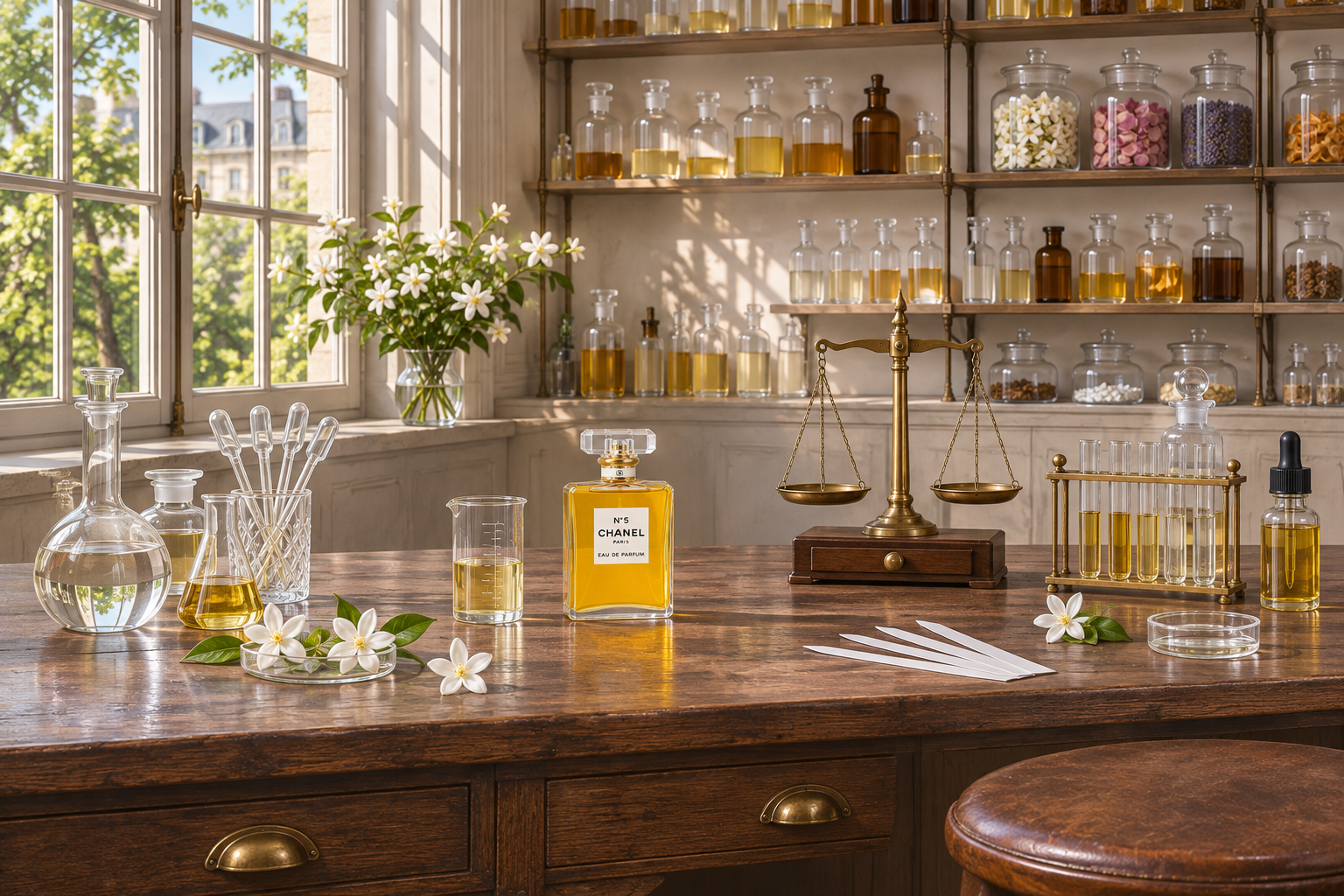
Behind one of the most famous fragrances of the twentieth century is not a Parisian salon, but a Moscow laboratory. Ernest Beaux was born in 1881 in Moscow to a family of French origin and learned the craft of perfumery at the Rallet company. Rallet was one of the leading Russian manufacturers of soaps, powders, and perfumes, supplying its products to the tsarist court. Beaux gained experience there from production to creating his own compositions, and by the time of World War I, he was already one of the company's renowned perfumers.
The revolution in 1917 ended his Russian career. After the war years, Beaux settled in France and continued his work at the Rallet facility near Grasse, a region that was then the heart of European fragrance raw material production. He brought with him experience from court perfumery and a fondness for substances that were just finding their place at the time—synthetic molecules.
What Are Aldehydes
Aldehydes are a group of organic compounds that chemists can synthesize and which occur in small amounts in nature, for example, in citrus peels. In perfumery, the most commonly used are the so-called aliphatic aldehydes with a longer carbon chain. On their own, they have a peculiar scent that many find unexpected:
- the cleanliness of freshly laundered clothes and soapy foam,
- wax and an extinguished candle,
- a metallic chill, which some compare to the scent of frosty air,
- and in some types, a slightly citrus or orange tone.
In a composition, however, they do not play the role of standalone scents. They function more as amplifiers and diffusers: they add sparkle to the top notes, brighten the heavier floral heart, and give the entire composition an airiness, as if the fragrance is shimmering around the skin. Thanks to them, even a rich bouquet seems less sweet and more abstract.
Not the First, but the Boldest
It is important to clarify the common notion that Beaux "discovered" aldehydes. Perfumers were working with them before him, and they can be traced in several compositions from the years before World War I. However, these were mostly small doses meant to subtly enliven the scent. Beaux's contribution lay in his courage to use them in an unusually prominent amount, turning an inconspicuous additive into one of the main character elements of the fragrance.
The Legend of Overdosing
This boldness is also linked to a story that is still passed down in perfumery today. According to it, one of Beaux's assistants accidentally added much more aldehydes than the formula prescribed while mixing a sample, and the result supposedly intrigued the perfumer so much that he decided to continue in this direction. No reliable contemporary evidence confirms this version, and many experts consider it more of a charming anecdote. It is more likely that it was a deliberate choice by an experienced perfumer who had been experimenting with aldehydes for a long time. Therefore, take the legend as part of the charm of the story, not as a verified fact.
The Fifth Sample: The Birth of Chanel No. 5
It's 1921, and Gabrielle Chanel is already a renowned figure in Parisian fashion. She's seeking a perfume that would complement her garments as naturally as clean cuts and subtle colors. She collaborates with Ernest Beaux, a perfumer working in the south of France at the time. According to tradition, he prepared two series of numbered samples for her – one with numbers from 1 to 5 and the other from 20 to 24. Chanel was to choose the bottle with the number five.
Why the number five? It's said that Chanel considered the number five to be lucky, and thus the perfume was not given a poetic name but simply the sample number. It's also told that the new fragrance was introduced on the fifth day of the fifth month. How exactly the selection took place cannot be reliably documented today. However, the story has been passed down for so long that it has become an inseparable part of the perfume's tale.
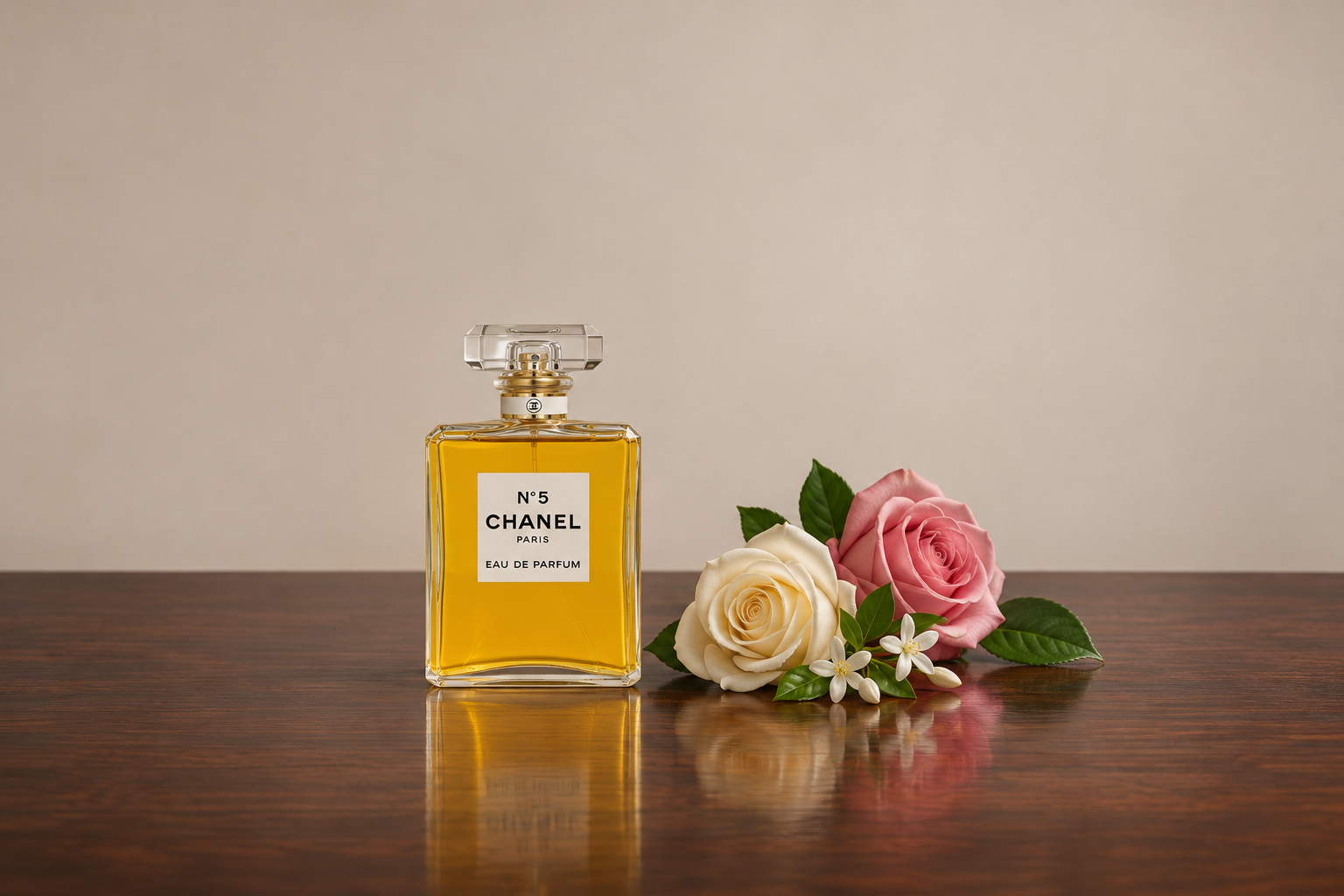
A bouquet that doesn't smell like any flower. Floral perfumes of the time usually mimicked a single specific flower – rose, violet, or lily of the valley – and tried to capture it as faithfully as possible in a bottle. Beaux took a different approach. The heart of the composition is a rich bouquet of jasmine, rose, and ylang-ylang, complemented by other floral notes, but none of them stands out individually. Aldehydes illuminate the bouquet and blend it into a single entity, so the result doesn't resemble a specific garden or individual flower. The base notes are often described as warm, woody, and powdery. Such an approach is called an abstract fragrance: it doesn't tell the story of one ingredient but creates its own, newly imagined impression.
This idea is linked to a statement usually attributed to Chanel, whose exact wording varies in different sources: "A woman should smell like a woman, not like a flower." Whether she actually said it in this form or it's a later simplification, it aptly captures what made the new perfume unusual for its time.
A bottle without embellishments. In the early twenties, perfumes were often sold in ornate bottles with reliefs, figurines, and colored glass, which themselves looked like jewelry. The Chanel No. 5 bottle, on the other hand, was understated: clear square glass, a simple white label with black lettering, and a faceted square stopper. It resembled more a laboratory or pharmacy container – and that's precisely what set it apart from the others.
There are various versions about where the shape originated. Consider them as possible interpretations, not documented facts:
- according to one, it was based on men's toiletry bottles carried in travel kits,
- another mentions inspiration from a whiskey decanter,
- the shape of the stopper is often associated with the layout of Paris's Place Vendôme.
The bottle has been subtly modified several times over the decades, but the fundamental idea of simplicity has remained. The numerical name, abstract bouquet, and understated bottle together created a whole that demonstrated that a perfume could be as much a part of fashion style as clothing.
The Legacy of Aldehydes: What Remains from the Twenties
The twenties lasted only a decade, but perfumery still draws from them today. What once seemed like a bold experiment gradually became a staple that perfumers continue to work with today. When you look at the current range of perfumes, you'll find the legacy of that era in many places – often where you wouldn't expect it.
Three Things That Remained from the Era
- Perfume as Part of a Fashion Brand. The idea that a fashion house has its own scent, complementing its style just like the cut of a dress, is common today. In the twenties, it became a business and aesthetic model that has endured for a century.
- The Courage for Abstraction. A perfume no longer had to mimic a single flower. It could be a composition you wouldn't find in nature – and that was its charm. This idea paved the way for modern perfumery.
- A New Family of Fragrances. Floral-aldehydic compositions established themselves as a distinct direction. They combine a rich floral heart with a bright, almost airy opening, and perfumers develop them in both classic and contemporary forms.
How to Recognize an Aldehydic Note
Aldehydes are easiest to recognize in the first few minutes after application when the top notes of the perfume are released. If you want to test your nose, pay attention to these impressions:
- Freshness Without Citrus. The scent feels bright and lively, even though you don't detect lemon or bergamot.
- Soapy Cleanliness. Many people associate aldehydes with the scent of freshly laundered clothes or gentle soap – the impression of cleanliness is typical for them.
- A Slightly Metallic Sheen. Some describe it as a fizz, others as the scent of frosty air or wax. It's a sparkle that gives the fragrance volume.
- Illuminated Flowers. Once the opening fades, the floral heart feels fuller and more spacious, as if the aldehydes lit the way at the start.
For a better idea, apply the perfume to a test strip and smell it several times during the first fifteen minutes. The initial flash changes quickly, and this transformation is characteristic of aldehydic compositions.
Where to Find This Style Today
If the elegance of the twenties appeals to you, focus on floral compositions in the perfume section that mention aldehydes in their description. It's worth checking the fragrance pyramid: aldehydes are usually listed among the top notes, often alongside white flowers or roses. Before you decide, give the perfume time on your skin – aldehydic compositions develop gradually, and their true character reveals itself only after a while.
However, the story of modern perfumery doesn't end there. In the next installment of the "History of Fragrances" series, we'll move further into the 20th century and see how perfumery evolved in the following decades.
Category
Recommended articles
Riiffs Freeze in Flames: Ice and Flames Illuminate Warsaw "Give a girl the right shoes and she can conquer the world!" Marilyn Monroe
