

Color fades and yellows between salon appointments due to hard water, sun exposure, and heat styling. We'll show you how to restore its vibrancy at home with tinting and coloring masks for both cool and warm shades.
Why Hair Color Fades Between Salon Visits
Whether you opt for blonde highlights, vibrant copper shades, or just a cool chocolate tone, the scenario is often the same. You leave the salon with a color that has depth and a clearly defined tone. Two weeks later, it still looks good. After four weeks, the shade starts to shift: blonde takes on a yellowish tint, copper loses its sparkle, and brown fades into an indistinct hue. And there's still a month to go until your next appointment.
It's not your fault or a sign that your stylist did a poor job. Color isn't a surface layer that stays on your hair forever. During coloring, the pigment is deposited into the hair cortex beneath the cuticle scales, the outer protective layer of the hair. For it to last, the cuticle must close and remain sealed after the process. However, everyday life repeatedly opens the hair.
What Causes the Most Color Shift
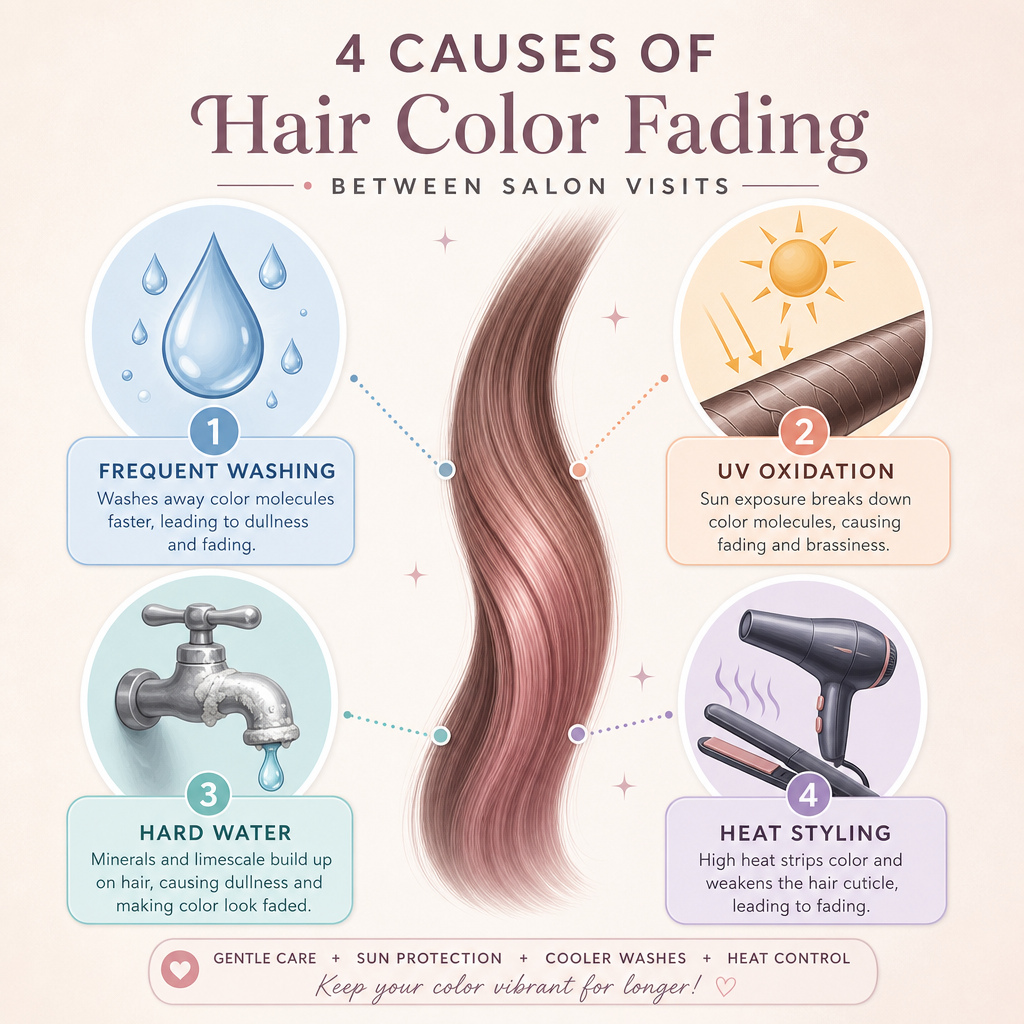
Washing. Each wash lifts the cuticle slightly and washes away some pigment with the water. The smallest pigment molecules fade the fastest, which is why the ashy tone disappears first from cool blondes, revealing the warm yellow base that the hair naturally has underneath the color. In colored browns and coppers, the richness fades in the same way, making the shade appear dull and flat.
Oxidation and Light. The pigment in the hair reacts with oxygen in the air and sunlight, gradually changing its character. This is most noticeable on red and copper tones, as they are the most sensitive to fading. After a summer spent outdoors, the difference between regrowth and lengths is significantly more pronounced than in spring.
Hard Water. Calcium and magnesium from tap water settle on the hair's surface, creating a thin film. Hair then appears dull, the color looks grayish, and light shades can take on a greenish or rusty tint. Chlorinated pool water behaves similarly.
Heat Styling. Blow dryers, straighteners, and curling irons dry out the hair and disrupt the closed cuticle. The open structure allows pigment to escape more quickly, and the hair surface reflects light less effectively, causing the color to lose its shine before it actually washes out.
Most of these factors can't be turned off. You simply wash, dry, and go outside with your hair. The good news is that this is a gradual fading, not an irreversible change, and you can manage it at home between salon visits.
Color Can Be Topped Up Regularly
This is where coloring and toning masks come in. They work like a regular hair mask – you apply them after washing, leave them on, and rinse them out – but with the added benefit of restoring color pigment to your hair. You can use them to mute unwanted yellow undertones in blonde, revive faded copper, or deepen brown that has lost its definition.
The difference is often noticeable after the first use, and the routine is simple: depending on how quickly your color fades, you usually only need to use the mask once a week or every two weeks instead of your regular conditioning treatment. It's not a substitute for the salon, but a way to keep your color in good condition between appointments without having to visit your stylist more often than you'd like.
If you're curious about what to prepare at home, check out the Hair Masks and Coloring categories – that's where you'll find coloring and toning masks, whether you're dealing with cool blonde, warm copper tones, or darker colored shades.
How a Toning Mask Differs from Hair Dye
A toning mask and hair dye might look quite similar in your hand – creamy consistency, jar or tube, applied with a brush or gloved hand. However, the difference lies in what happens to the pigment once it touches the hair. Hair dye creates the color molecule inside the hair, while a toning mask delivers it already formed.
Toning masks work with what are known as direct pigments. These are color molecules that are inherently colored and do not require a chemical reaction to show. Therefore, you don't need to buy an oxidizing developer, nothing is mixed in a ratio, and you don't have to time it to the minute. The pigment deposits on the surface of the hair and in its outer layers, where it adheres – and with each wash, some of it fades. For most shades, the tone lasts several washes; exactly how long depends on the hair's porosity, water temperature, and the shampoo you use. Porous, bleached, or heat-damaged hair absorbs the pigment more readily but also releases it faster.
Permanent hair dye works the opposite way. The developer lifts the hair cuticle, the dye penetrates inside, and there it reacts with peroxide to form larger molecules that the hair does not easily release. The result lasts until regrowth, but the impact on the hair is deeper and irreversible.
Limits of a Toning Mask
The principles of direct pigments also define the limits, which are good to know in advance – it will save you from disappointment with the result:
- Does not lighten. The pigment lays on the hair but does not remove anything from it. You won't brighten darker hair with toning; the mask can deepen, refresh, or shift the shade to a cooler or warmer tone, but it won't lift it by several levels.
- Does not change hair structure. Without a developer, there is no oxidation or significant opening of the cuticle, so the hair remains essentially as it was. For hair that has undergone several colorings or highlights, this is a crucial difference.
- Does not reliably cover gray hair. Non-pigmented hair tends to be smoother, and the pigment adheres unevenly. The mask can soften individual white hairs and even out the contrast a bit, but for a consistent amount of gray hair, an oxidative dye is needed.
- Also conditions. The pigment carrier is a regular hair mask, an emulsion with nourishing ingredients. Hair tends to be smoother and easier to comb after use, so you solve both color and care in one step.
This dual role is why toning masks make sense as an interim step between salon visits. They don't compete with the hairdresser's work or overwrite what was created in the salon – they just maintain the shade until the next coloring session. For hair that is already quite stressed, it's a significantly gentler option than home re-dyeing.
It's not a niche discipline, as we can see from the demand: hair masks are the second strongest category in hair cosmetics after shampoos, and colored and toning variants form a separate line among professional brands. The form varies depending on where the shade is intended to go – working with cool blondes, where the goal is mainly to tone down yellow undertones, is different from working with warm copper or chestnut tones, which need to be enriched. This difference is crucial in choosing the specific shade.
Wella Professionals Color Fresh for Cool Blondes
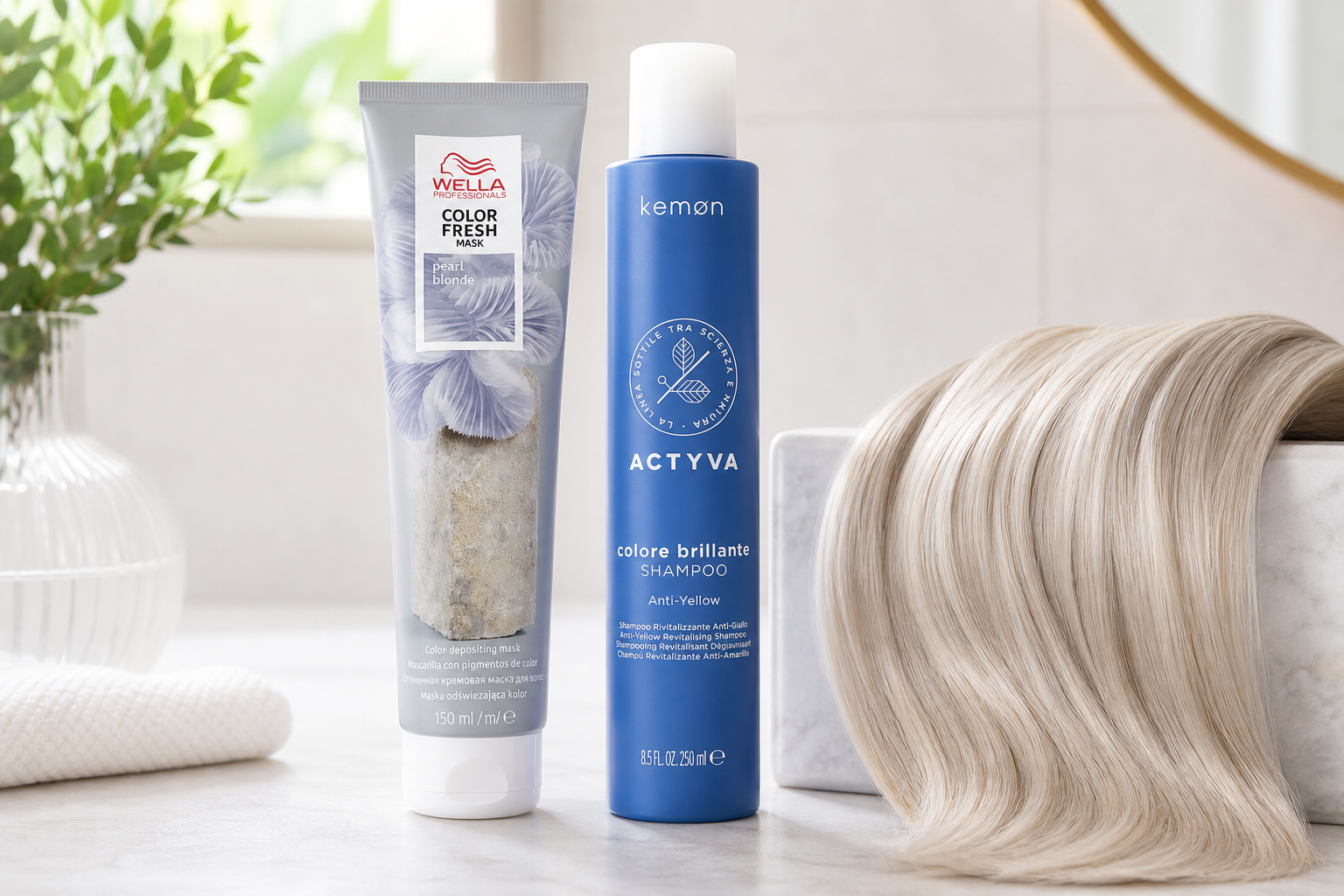
On blonde hair, the loss of a cool tone is quickly and noticeably apparent. The ash or pearly finish you leave the salon with typically lasts only a few washes. Once the cool pigments wash out, the natural warm undertone of lightened hair comes to the forefront – that familiar yellow that suddenly makes blonde hair look cheaper than it actually is. This is exactly the situation that Wella Professionals Color Fresh Mask Pearl Blonde 150 ml targets.
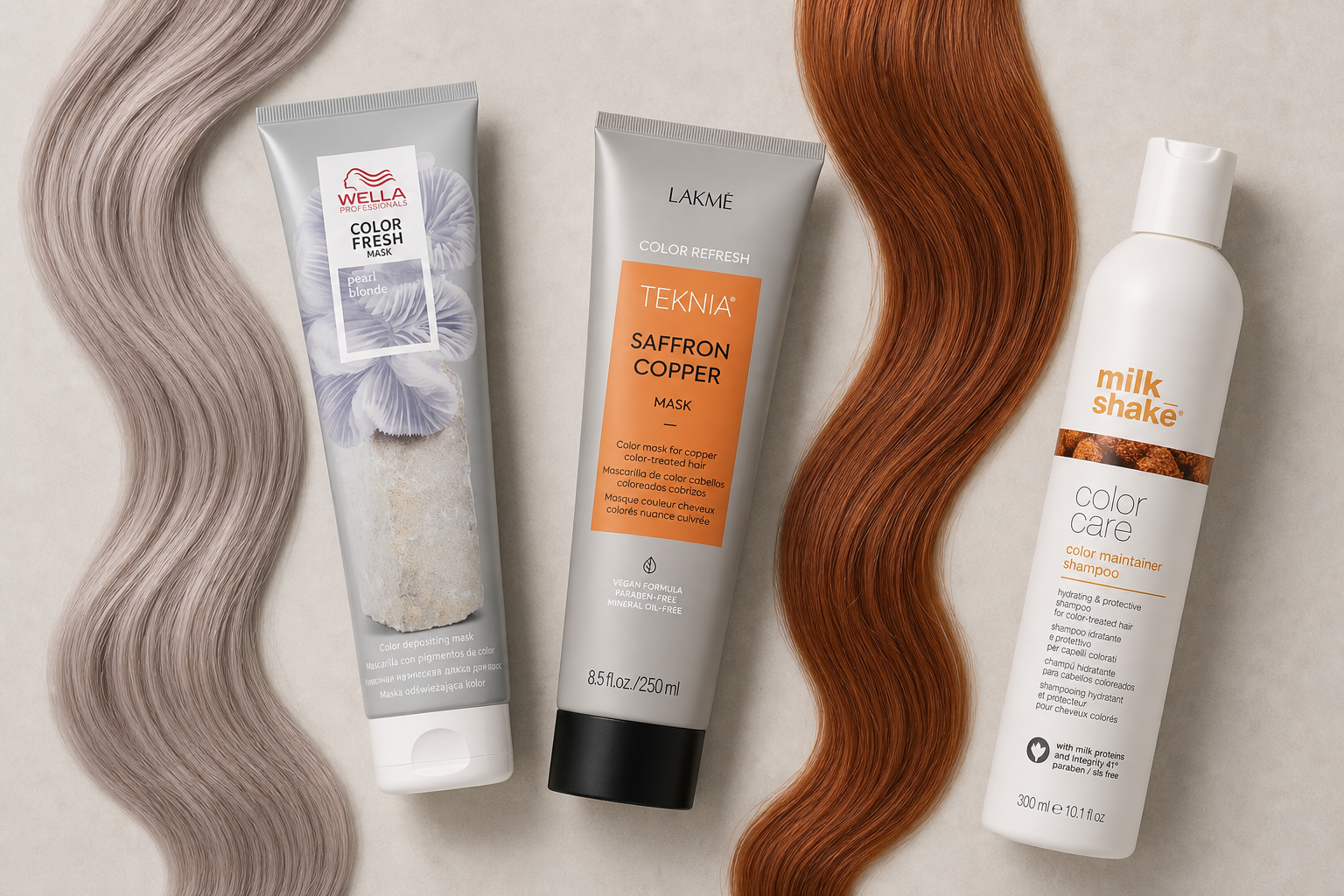
This is a pearly toning mask that restores a cool pearly hue to faded blonde hair and visually tones down yellow highlights. It works as a care and toning treatment in one step: apply it to washed hair instead of conditioner, so it doesn't add any extra steps to your home routine. The 150 ml package is enough for several applications on medium-length hair, making it ideal for maintenance between salon visits.
Who the Pearl Blonde Shade Suits
The pearly variant is cool-toned, and therefore behaves most predictably where the base is already light and more neutral:
- Light highlights and balayage – refreshes lightened strands and evens out the difference between warmer and cooler parts.
- Platinum and icy blonde – maintains a cool character between salon tonings and prevents the color from gradually slipping into straw-like tones.
- Cool ash blonde – restores the pearly hue that washes out of the hair first.
- Grown-out lightened ends – porous lengths absorb pigment most readily, so the tone evens out particularly visibly there.
How the Mask Behaves on a Warmer Base
If you have honey, golden, or darker blonde hair, expect the result to be more subdued rather than pearly. The toning mask doesn't lighten; it only works with what's already in the hair – it can tone down warmth and shift the impression slightly towards neutral, but it won't turn golden blonde into icy platinum. For a significantly warm base, it's sensible to use the mask as a correction of undertone, not as a change of shade. On significantly porous or mechanically damaged lengths, the pigment deposits more readily than on healthy parts near the scalp, resulting in a darker or cooler end.
Purple Shampoo as Maintenance Between Masks
Between mask applications, it's useful to have a shampoo in the bathroom that keeps yellowing at bay continuously. A proven choice is Kemon Actyva Colore Brillante Anti-Yellow Shampoo 250 ml – a shampoo with purple pigments designed for blonde, highlighted, and grey hair, which slows the return of warm undertones with regular washing. In practice, it's easy to use: incorporate it instead of your regular shampoo about once or twice a week and return to your usual washing routine for the rest of the week. The combination of "shampoo continuously, mask occasionally" is more sustainable than trying to get everything out of one product.
How Often to Repeat the Mask
For most blonde hair, applying once a week to once every two weeks is effective, depending on how quickly your color washes out and how often you wash your hair. Those who wash their hair every other day lose pigment faster and will need the mask more frequently; washing twice a week usually allows for a longer interval. However, purple and pearly pigments accumulate on porous hair, so applying every other day can lead to a greyish or purplish hue – which then only fades with gradual washing out. A safer approach is to start with a longer interval and shorten it only when you see the color noticeably yellowing between applications. Ends, which absorb pigment the most, can be skipped every other application, leaving the mask just on the lengths.
Lakmé Teknia Color Refresh for Warm Shades
Warm colors age differently than cool blondes. They don't turn yellow but rather go in the opposite direction: copper loses its sparkle and fades to a dull rust, chestnut shifts to a soapy gray, and brown starts to look flat as if someone dimmed the light. The reason is simple – red and copper pigments have larger molecules, making them harder to retain within the hair, and more of them wash out compared to cool tones. That's why warm shades usually need refreshing sooner than expected, and home toning makes even more sense for them.
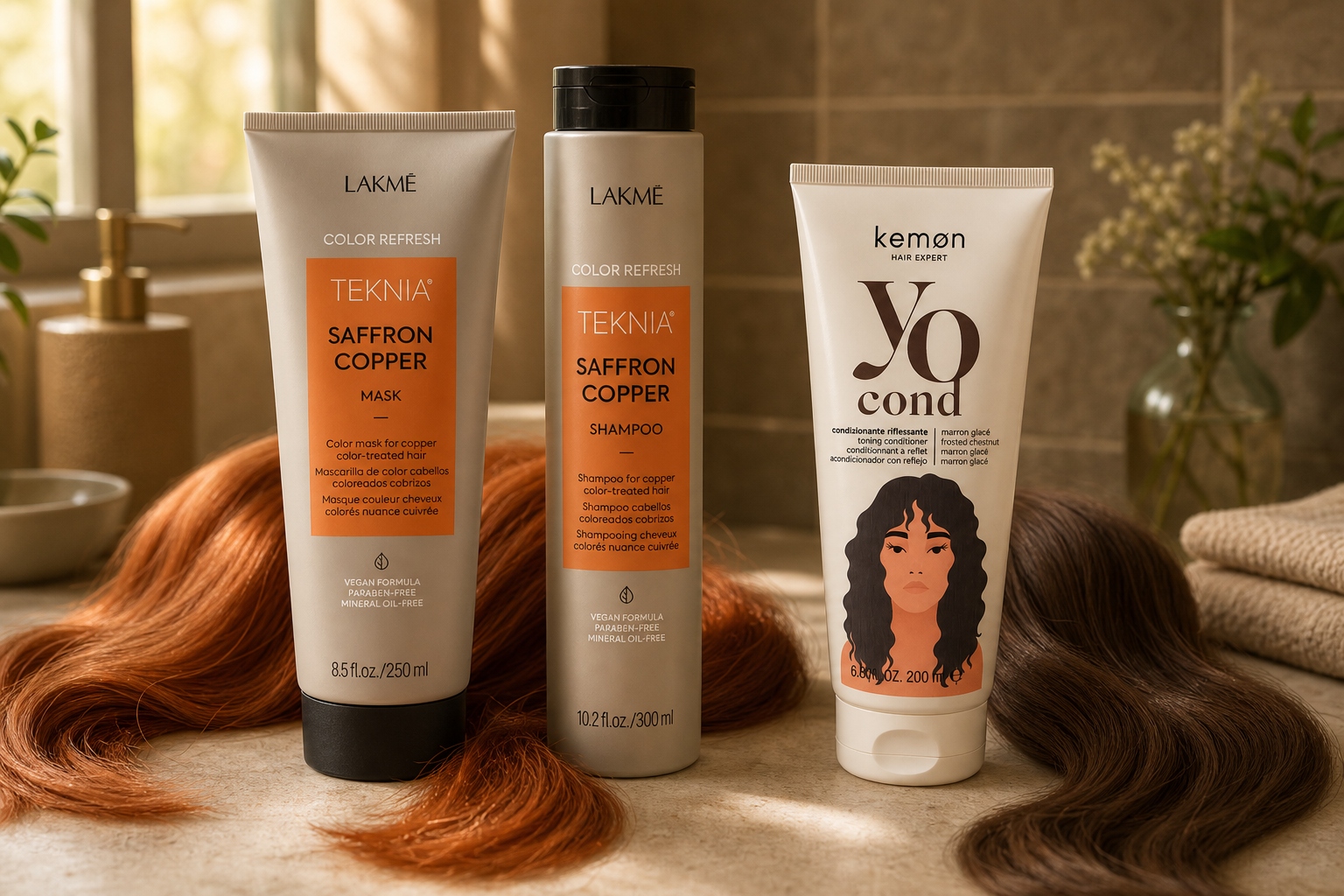
Lakmé Teknia Color Refresh Saffron Copper Mask 250 ml is the main tool in this situation. It's a coloring mask with direct pigments in a copper shade, applied to washed and towel-dried hair. The pigment deposits in the outer layers of the hair, so the color regains its richness and warm glow without needing a developer. The effect is most noticeable on copper and lighter chestnut shades; on darker brown, it works more to enhance warmth and shine rather than visibly changing the shade.
The duo is completed by Lakmé Teknia Color Refresh Saffron Copper Shampoo 300 ml, and it's important to understand the division of labor between the two products. The shampoo has a significantly lower pigment content and is in contact with the hair only briefly during washing. Its role is not to restore color but to slow its fading between mask applications. If you use it when the shade is already noticeably faded, the result will likely disappoint you. The practical division is that the mask sets the tone, and the shampoo maintains it for as long as possible.
For brown shades where saffron copper is too fiery, there is a gentler option – Kemon Yo Cond Color System Toning Cond Frosted Chestnut 200 ml. It's a toning conditioner in a cooler chestnut shade that restores depth to brown hair and mutes rusty highlights without adding copper intensity. Thanks to its lower pigment concentration, it's also appreciated by those new to toning and worried about "over-coloring" their hair.
However, there's one very practical inconvenience with rich warm pigments: they stain practically everything they touch. Before you open the mask, prepare the following.
- Gloves. Copper pigment can take several days to wash off the skin around your nails.
- A dark towel reserved just for coloring and preferably an old t-shirt – pigment won't come out of white terry cloth.
- A damp makeup pad on hand to wipe away traces from the hairline, ears, and neck before they dry.
- Quickly rinse the shower or bath immediately after rinsing your hair, while the residue is still fresh.
And one last note on application: with rich copper pigments, the line between refreshing and a noticeable change in shade is thinner than expected. On porous hair, highlighted sections, and ends, the pigment grabs faster, and the result is more intense there than in the lengths. Keep this in mind when applying and leave the lightest or most porous parts until the end.

How Long to Leave the Mask On
The duration is the main lever you have control over at home when it comes to toning masks. Direct pigments gradually settle on the hair surface, so there's a simple rule – the shorter the exposure, the subtler the refresh, the longer, the richer and more resilient the tone. However, don't make up the timing based on intuition: always stick to the range specified by the manufacturer on the packaging. Some masks work within minutes, others require a longer application, and exceeding the recommended time won't yield better results, just a less predictable shade.
The application involves several steps that are worth taking your time with:
- Apply to freshly washed hair that you've towel-dried to remove excess water. On wet hair, the pigment dilutes and the result is usually weaker, while on completely dry hair, the mask is harder to spread.
- Work with gloves and place an old towel over your shoulders. Direct pigments can stain skin and textiles.
- Divide your hair into sections and work from the lengths to the ends. Leave the roots for last, especially if they are the least porous part.
- Measure the time, don't estimate. A five-minute difference is noticeable with intense shades.
- Rinse with lukewarm water until the water runs clear. Hot water opens the hair cuticle and the pigment fades faster.
Test on a Single Strand
Before using the mask on your entire head for the first time, test it on a discreet strand – ideally at the back, under the top layer. Leave it on for the lower end of the recommended time, rinse, dry, and check the result in daylight. Only then decide if you'll extend the time for the full application. This step takes a few minutes and saves you from an unpleasant surprise that you might have to endure for weeks.
The same logic applies to individual sections. Ends tend to be porous and absorb pigment significantly faster than the healthier lengths near the head. If your hair is longer or mechanically stressed, apply the mask first to the lengths, add the ends only in the last third of the application time, and leave them for a shorter period. This prevents the ends from turning darker or cooler than the rest.
Care Between Masks
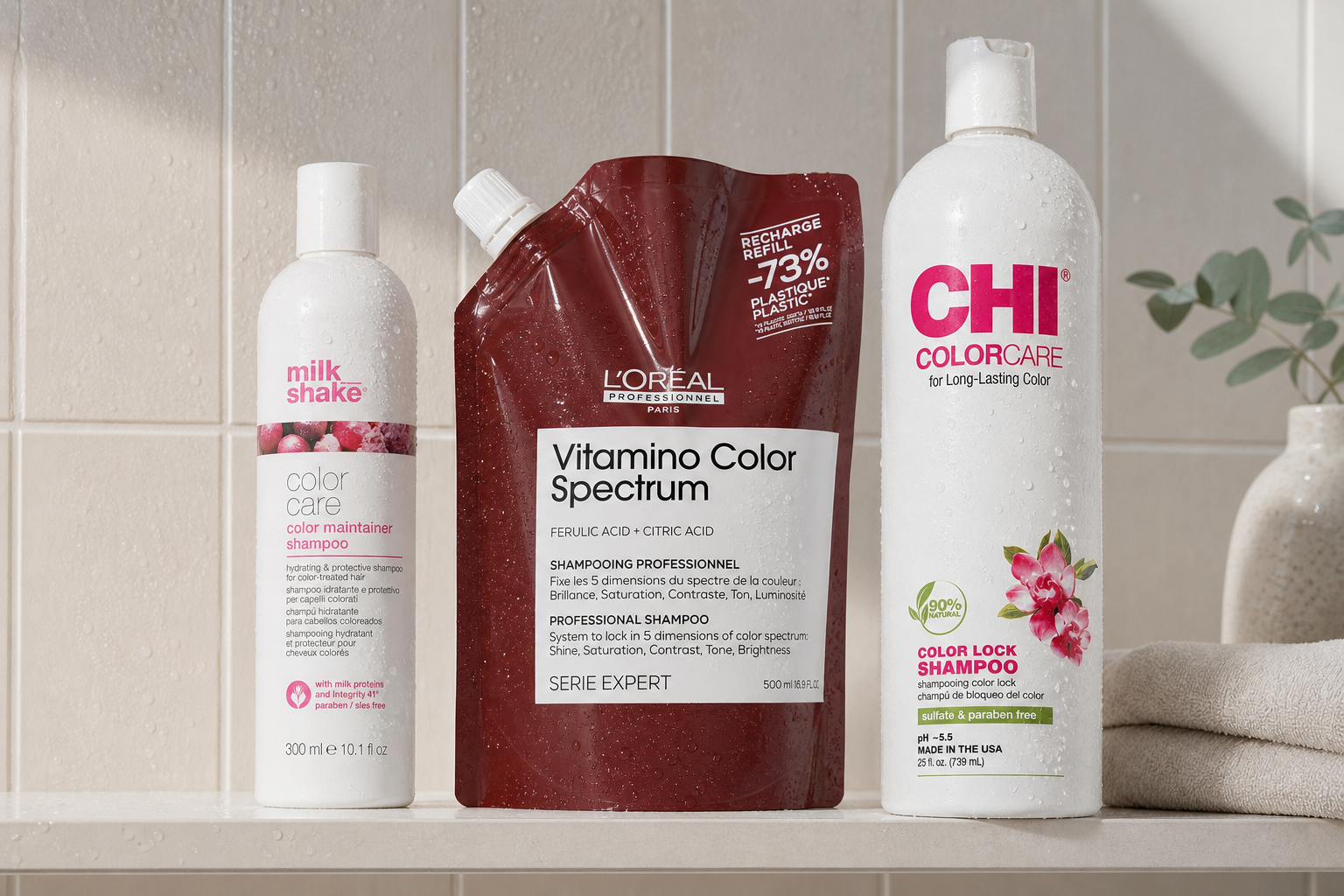
The longevity of the toning result depends on how gentle your regular routine is between applications. The foundation is a shampoo designed for colored hair – Milk_Shake Color Care Color Maintainer Shampoo 300 ml is ideal for daily washing and doesn't attempt to alter the color. If you're looking for a comprehensive home care routine, the L'Oréal Professionnel Série Expert Vitamino Color Spectrum line offers both shampoo and mask in the same range, so the steps don't compete with each other.
Small things help too: lukewarm water instead of hot, heat protection before using a straightener or curling iron, and reasonable intervals between washes. Then incorporate the toning mask according to how quickly your shade fades – for some, once every two weeks is enough, for others, once a week instead of a regular conditioner.
When choosing a specific product, focus primarily on where you want to take the shade. For cool blondes starting to show yellow undertones, Wella Professionals Color Fresh Mask Pearl Blonde 150 ml is a good choice. For warm copper and chestnut tones, opt for Lakmé Teknia Color Refresh Saffron Copper Mask 250 ml, or combine it with the matching shampoo. In both cases, start with a shorter application time – you can always extend it next time, but you can't shorten it once it's done.

Category
Recommended articles

"Give a girl the right shoes and she can conquer the world!" Marilyn Monroe