
 Riiffs Freeze in Flames: Ice and Flames Illuminate Warsaw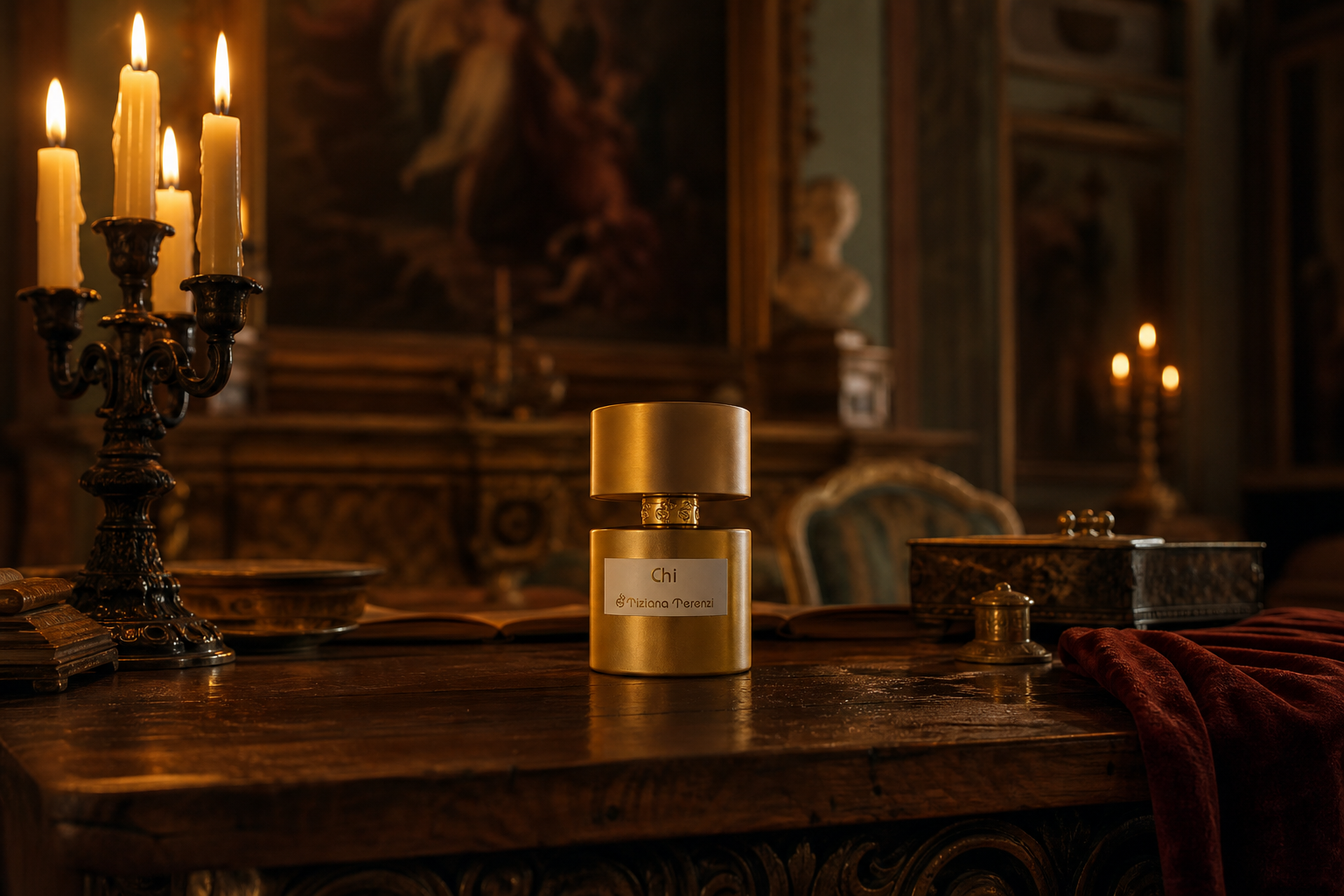
Discover the Italian niche brand Tiziana Terenzi — from a family-run workshop in Fivizzano to its most renowned perfume extracts and their olfactory profiles.
Tiziana Terenzi: What is this brand and why does it belong in niche perfumery
Whether you're just discovering niche perfumery or already have your collection, you've probably come across the name Tiziana Terenzi — in discussions about bold woody compositions, recommendations for long-lasting perfumes, or in the strikingly heavy bottles with wooden caps. This Italian brand is one that doesn't hide in the background in the niche segment, so it's worth knowing what it actually stands for.
Tiziana Terenzi is a family-run manufacturer from Tuscany. It is not a branch of a large perfume house or a licensed project of a fashion brand — production remains in the hands of the family, which under the same name produces both scented candles and other home fragrances, as well as an independent perfume line. This is quite typical for niche perfumery: smaller brands with their own production that don't have to tailor every new release according to global market research and can afford compositions that would be too distinctive in the mainstream.
This is the main difference compared to big houses. While mass-produced eau de toilette or eau de parfum must appeal to the widest possible audience, a niche brand works with smaller series and the idea that it will attract a specific type of customer. At Tiziana Terenzi, this is reflected in several specific aspects:
- High concentration of fragrance blend. A significant part of the portfolio is released as a perfume extract, the most concentrated form commonly available. This is what influences how the composition behaves on the skin and how long it lasts.
- Distinctive sillage. Many compositions have a noticeable sillage even after several hours. For some, this is the main reason to choose the brand, while for others it leads to more cautious application — one or two sprays are usually enough.
- Handcrafted assembly including the bottle. The brand emphasizes that the bottles are finished by hand. The heavy glass and wooden cap are not just packaging — in niche perfumery, the bottle is part of the product and part of the price goes into it.
- Small series. Smaller production volumes mean that the availability of individual compositions can vary over time and that the portfolio expands more through individual fragrances than entire collections.
In terms of price, Tiziana Terenzi is among the more expensive items in the niche offering. This is common in this segment — a higher proportion of fragrance oils, smaller series, and more demanding bottle craftsmanship are reflected in the price. If you're used to regular eau de parfum from the mainstream shelf, the first comparison might be a bit surprising; however, in the world of niche perfumery, this is a standard price range, which also includes other Italian and French manufacturers.
So who is this brand for? If you're looking for a perfume that not every other colleague in the office will know and you don't mind a more pronounced presence, Tiziana Terenzi is a logical stop. On the other hand, if you prefer discreet, easily wearable fragrances for every day, you'll need to choose more carefully from its portfolio — it's possible, you just need to know what to reach for.
In the following parts of the article, we'll look at how the manufacturer started and why it began with scented candles, what exactly a perfume extract means and how it relates to longevity, and finally, we'll go through the brand's most famous compositions, including their olfactory profiles. By the end, you should have enough background to make your own choice.
From Scented Candles to Perfumes: The History of the Fivizzano Manufactory
When you search for the origins of a niche perfume brand, you usually end up in Paris, Grasse, or Milan. With Tiziana Terenzi, the answer leads elsewhere — to Fivizzano, a small Tuscan town in the Lunigiana region. It's a mountainous strip on the northern edge of Tuscany, between the Apuan Alps and the Ligurian coast, where chestnut forests alternate with stone villages and ancient pilgrimage routes. This is where the Terenzi family comes from and where all their production originates.
The brand's beginnings are not found in a perfume bottle, but in wax. The Terenzis were engaged in the handmade production of scented candles long before a separate perfume collection was created. A scented candle is a unique discipline: the fragrance must develop with heat and maintain a consistent intensity throughout the space. The family thus mastered the knowledge of fragrant materials and their behavior in a different format than most readers associate with the brand today.
The step from home fragrances to skin perfumes is not straightforward, and the brand did not make it overnight. A composition intended for a diffuser or candle works with space, temperature, and a distance of several meters. In contrast, a perfume reacts to body heat and develops over time in layers — from top notes through the heart to the base. It was with the transition to the perfume line that the brand moved into the niche segment where it operates today.
This shift is driven by two siblings: Tiziana and Paolo Terenzi. The brand bears the sister's name, while Paolo is often credited as the author of most compositions. The sibling leadership has a practical impact on the portfolio's character — decisions about which fragrance will be created and in what form it will reach the customer remain within the family and do not go through the approval of a large corporate structure.
What a Family Manufactory Means in Practice
The word manufactory is used loosely in marketing texts, so it deserves clarification. At Tiziana Terenzi, it manifests in several specific ways:
- Small batches. Production does not run in volumes known from global perfume brands. Smaller batches mean a slower pace but also tighter control over each one.
- Hand assembly. A significant part of the finishing work — filling, sealing, and packaging — is done by hand, not by a fully automated line.
- The bottle as part of the product. The glass, weight, and proportions of the bottle are not secondary for this brand. The packaging is designed as an object that remains in a visible place, not as a disposable content carrier.
- Emphasis on the cap. The cap is often the most recognizable detail of the brand — it is frequently oversized, decorated, and finished separately.
- Candles remain in the portfolio. The brand did not abandon home fragrances when perfumes arrived. Both lines continue to operate alongside each other and originate from the same foundation.
For you as a buyer, this means one practical thing: you are paying for the execution, not just the content of the bottle. If you are interested purely in the olfactory experience and the packaging doesn't matter to you, the price level may seem high. Conversely, if you consider the bottle as an object you keep for years, the price-to-value ratio takes on a different meaning.
When it comes to historical data about the brand, it's worth being cautious. There are multiple versions surrounding the founding dates and the length of the family tradition, and not all have documented sources. The basic outline remains certain: Tuscan roots, beginnings with scented candles, and family leadership that decides on both lines.
Perfume Extract and What It Means for Fragrance Longevity
When browsing labels from niche brands, you might come across the term perfume extract alongside Eau de Parfum and Eau de Toilette. With Tiziana Terenzi, you'll encounter it quite often, and it's worth knowing what it means. It's not a mark of quality, but rather the concentration of the fragrance mixture dissolved in an alcohol base. This concentration affects how intensely the fragrance feels on the skin and how long it lasts.
How Different Concentrations Differ
Whether you're choosing your first niche perfume or just want to understand what's on your shelf, understanding concentrations can save you from disappointment:
- Eau de Toilette — the lightest of the common variants, usually containing about five to fifteen percent fragrance mixture. It's airier and easier to wear in warm weather.
- Eau de Parfum — the most common compromise, typically ranging from ten to twenty percent. It lasts noticeably longer and suits most occasions.
- Perfume Extract — the most concentrated form, usually containing twenty to thirty percent, or even more in some compositions. The fragrance is denser, more pronounced in its base notes, and lasts the longest on the skin among the three mentioned variants.
The indicated ranges should be taken as guidelines. There is no binding standard that prescribes limits for manufacturers, so two Eau de Parfums from different brands can vary more than you might expect. In smaller workshops, the formula is often guided more by the final impression than by a table — which is why extracts are more commonly used in niche perfumery than in the mainstream.
Longevity and Sillage Are Not the Same
Two terms often appear in fragrance descriptions that people easily confuse. Longevity refers to how long you can smell the fragrance on your own skin. Sillage, a term also used in perfumery, describes how far the scent is noticeable to others. Higher concentrations typically enhance longevity but do not automatically mean a stronger sillage — some extracts, in fact, stay closer to the skin and feel more intimate than the airier Eau de Toilette.
No one can honestly promise you a specific number of hours. Factors like skin dryness or oiliness, air temperature, season, and application site all play a role. The ingredients themselves also matter: citrus and light aromatic notes evaporate quickly, while resins, woods, musk, or vanilla last significantly longer.
Note Pyramid: Why Fragrances Change Throughout the Day
Composition descriptions are often divided into three layers, and this structure helps you understand them in advance. Top notes are what you smell immediately after spraying; they are the most volatile and usually consist of citrus, spices, or fresh fruity accords. Heart notes develop after several minutes and carry the character of the entire fragrance — typically flowers, teas, or earthier ingredients. Base notes, or the foundation, arrive last and linger the longest: woods, amber, musk, resins, or vanilla. In perfume extracts, this structure is more noticeable because the richer base has more to draw from.
Dosage: Less Is Usually More with Extracts
It's not wise to apply the same habits from Eau de Toilette to more concentrated variants. With perfume extract, it's sensible to start with one or two sprays on pulse points — the inner wrist, behind the ears, or on the chest — and only add more based on the result. Do not rub the sprayed fragrance, as friction unnecessarily disrupts the lighter top notes. And before evaluating the composition, give it at least half an hour; the full pyramid doesn't reveal itself in the top notes alone.
The Most Renowned Compositions of the Brand and Their Olfactory Profile
The Tiziana Terenzi portfolio is extensive, and few can navigate it by names alone—mythological and stellar names don't reveal the character of the scent by themselves. The following overview will introduce you to the most talked-about compositions, indicating which olfactory family they belong to and the type of notes that play a major role in them. Specific notes are mentioned only where they are documented in the product description; for others, we remain at the family characteristic level, as individual editions are adjusted over time.
- Kirké — the most frequently mentioned composition of the brand and a typical representative of the gourmand family with a pronounced fruity undertone. It opens with juicy sweet fruits—peach, passion fruit, and black currant—in the top notes, has a creamy heart, and the base notes build on musk, vanilla, and a woody trail. If you're curious why Tiziana Terenzi is referred to as a "sweet" brand, it usually starts here.
- Laudano Nero — the olfactory counterpart to Kirké and a representative of the oriental family with a smoky character. It works with incense, resins, and labdanum, which transition into leathery and tobacco nuances in the base notes. It suits cool evenings and more formal occasions better than summer afternoons.
- Gumin — a dense gourmand-oriental composition where sweet balsamic notes and a vanilla-woody base do the main work. It belongs to the richer scents of the portfolio, so a really small amount is enough.
- Cassiopea — a lighter piece of the collection with a floral core and a fruity opening. It's one of the options chosen by people looking for something more wearable from the brand for daytime, without compromising on the typically niche signature.
- Draco — a woody composition with a fresh fruity start, which gradually settles into a warm, resinous base. It is often described as a more universal choice for those who find the brand's gourmand line too sweet.
- Lillipur — a fresh citrus-aromatic profile, a completely different world from the sweet extracts above. It shows that the brand doesn't rely solely on dense oriental tones; it leans more towards classic Mediterranean freshness.
Stellar Collections as a Key to Orientation
By far the most characteristic feature of the brand are the thematic collections named after stars, comets, and other celestial objects. This is where names like Andromeda, Cassiopea, Draco, Halley, or Orion come from—the collection was created as a tribute to the night sky. Practically, this means one useful shortcut for you: if you come across a name that sounds like a constellation or a comet, it is most likely a highly concentrated perfume extract from this stellar line.
The second group consists of compositions referring to the Italian landscape, the tradition of the manufactory, and mythology. These names are not astronomical and are often associated with a specific place, ingredient, or story. The difference between the lines is not in quality, but in theme and sometimes in concentration—therefore, it is worth checking the type of product in the description for a specific fragrance.
One more note on reading the olfactory profile of this brand. Due to the high concentration, the top notes play out relatively quickly, and what remains on the skin after several tens of minutes plays the decisive role. So, if you are comparing two compositions according to the pyramid, focus mainly on the heart and base notes. Additionally, the families often overlap in niche perfumery, so consider the boundaries between gourmand, woody, oriental, and floral lines as a guideline.
How to Choose Your Scent: Notes Leading the Niche Segment
Whether you're looking for an everyday fragrance or something more striking for special occasions, narrowing down your choices can be quite straightforward. You just need to know which notes usually suit you and in what situation you want to wear them. Niche perfumery uses more unusual ingredients than the typical shelf, but you can still navigate by a few recurring families.
Notes That Consistently Hold Their Position in Niche Perfumery
When you look at compositions that have sustained interest in the niche segment, you'll find the same group of ingredients. These aren't just a seasonal trend but materials that perfumers have been building on for decades.
- Musk — a soft, powdery, and slightly animalic note. It lingers on the skin for a long time and acts more like a second skin rather than a pronounced trail. Ideal for you if you want an intimate and subtle fragrance.
- Vanilla — a sweet, warm base that belongs to the gourmand family. It works well in cooler months and blends with coffee and spicy tones.
- Amber — a warm, balsamic, and slightly honeyed note that adds depth to the composition. Perfect if purely fresh scents seem too fleeting to you.
- Sandalwood — a creamy woody material with a milky undertone. It's calm and elegant, making it suitable even in a work environment.
- Patchouli — an earthy, slightly bitter, and dark note. It tends to be prominent, so it's more suited for the evening and for those who want their fragrance to make a statement.
- Tonka Bean — an almond-caramel tone similar to vanilla but drier and less sugary. A good compromise if you like gourmand scents only in lower concentrations.
Alongside these, bergamot often appears in the top notes, jasmine in the heart of the composition, and cedar or vetiver in the base.
Occasion Often Matters More Than the Season
Dividing perfumes into summer and winter categories is useful but somewhat simplistic. It's more practical to ask where you'll be wearing the fragrance. For the office and everyday wear, compositions that stay close to the skin — musky, woody, or lightly citrusy — are suitable. For the evening, dining out, or social events, you can opt for richer oriental and gourmand compositions with amber, vanilla, and patchouli, which don't seem overwhelming in larger spaces.
The season mainly plays a role due to temperature. In warmth, fragrance evaporates from the skin faster and feels more intense, so strong sweet compositions may be heavier than expected. In the cold, it's the opposite — warm and balsamic tones develop more slowly and linger longer. It's worth adjusting not only your choice but also the number of sprays accordingly.
Before You Reach for the Full Bottle
For more intense compositions, especially perfume extracts, we recommend starting small. High concentration means the fragrance develops on the skin over several hours, and its final character is revealed only in the base notes. The first ten minutes after spraying tell you very little about the perfume.
- Test the fragrance on your skin, not just from a paper tester — your skin will always shift it slightly.
- Give it a whole day. Note how it smells after an hour, after four hours, and in the evening.
- Only then consider a full-size bottle. Smaller volumes and samples are designed for this purpose and will save you from unnecessarily opening a large bottle.
If you want to continue exploring niche perfumery, you'll find niche perfumes as a separate category on Brasty, not just as a filter. Alongside Tiziana Terenzi, you can compare brands with similar focuses — like Mancera or Montale, which work with woody, musky, and gourmand motifs in their own way. Comparing several compositions side by side is usually a good way to find out where your fragrance belongs.
Category
Recommended articles
Riiffs Freeze in Flames: Ice and Flames Illuminate Warsaw "Give a girl the right shoes and she can conquer the world!" Marilyn Monroe