
 Riiffs Freeze in Flames: Ice and Flames Illuminate Warsaw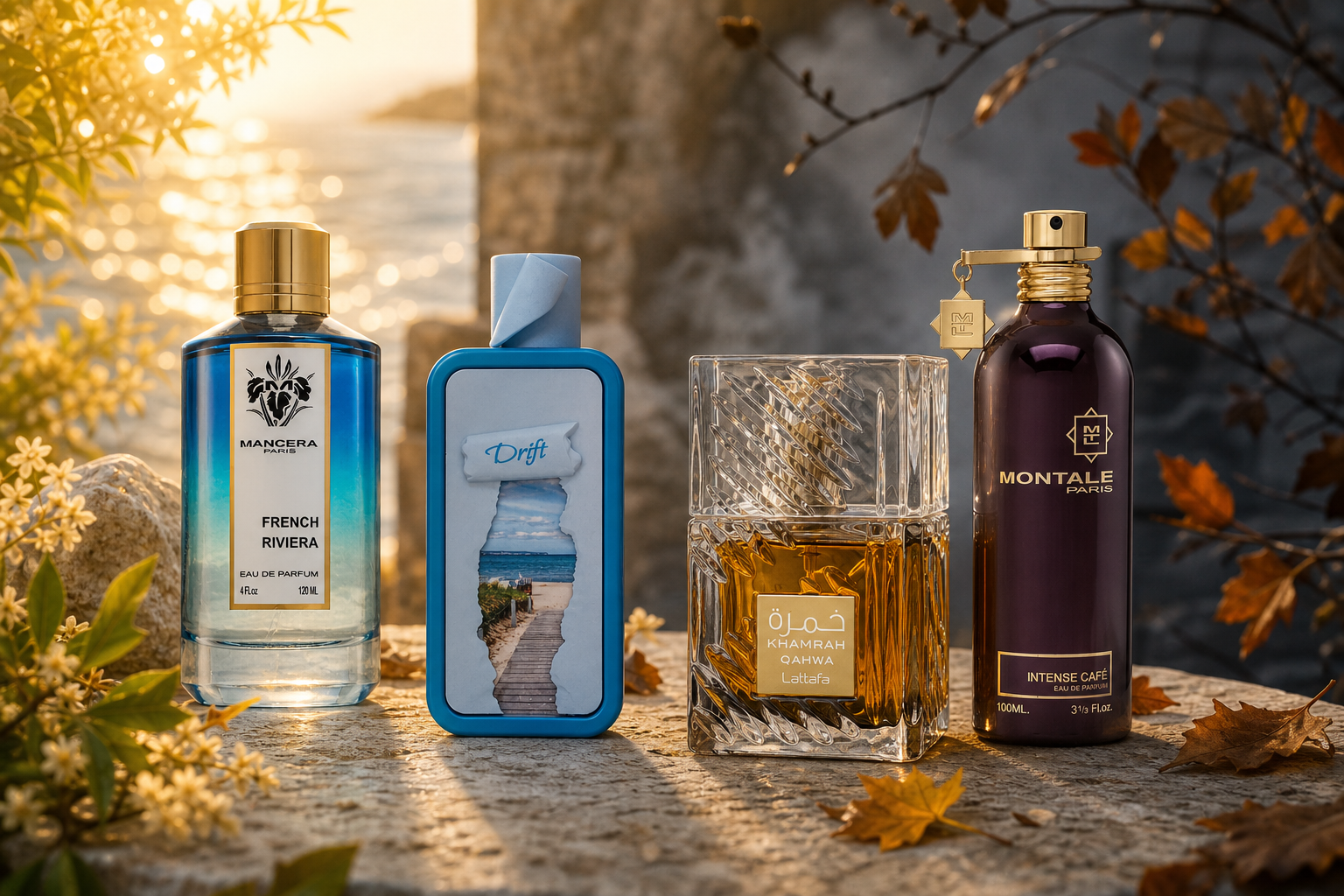
The end of summer calls for a different scent than July — we'll guide you on how to transition from summer citrus to warmer woody and gourmand notes, and choose a unisex perfume that lasts from a hot afternoon to a cool morning.
Why Summer Calls for a Different Fragrance than the Rest of the Year
The end of August holds a special place in the world of perfumery. While the days are still hot, the mornings and evenings start to cool, and this change affects how fragrances develop on the skin. A perfume that worked perfectly for you all summer may suddenly seem lacking after a few cooler days. Nothing has gone wrong — it's simply that the conditions in which the fragrance unfolds have changed.
In the heat, fresh citrus and aquatic notes evaporate quickly. This is exactly what we want from them in the summer: a light, clean trail that doesn't bother anyone on the tram and can be easily reapplied throughout the day. Once the temperatures drop by ten degrees, the same bottle seems lacking. The top notes disappear as quickly as before, but the base no longer has the warmth of the skin to lift it into the air. The result is a fragrance that vanishes by midday and feels thin.
However, this doesn't mean you should put away your summer perfumes at the start of autumn. The transitional period isn't about replacement; it's about supplementation. In practice, this means adding one warmer bottle to your summer collection — something with a richer woody or gourmand base that can withstand the morning chill, while the fresh choice remains for the warm afternoon. Two bottles will cover you throughout September without a hitch, and neither will be used outside its natural environment.
Why Choose the Unisex Category
For this period, the unisex segment is the most flexible choice for two reasons. Firstly, unisex compositions are often built on the type of ingredients that best endure the transition: cedar, sandalwood, musk, amber, tonka bean. They are not tied to a distinctly floral or overtly masculine aromatic structure, allowing them to transition more smoothly between fresh and warm characteristics. Secondly, one bottle can serve two people in a household — a compelling argument when it comes to niche perfumes.
At Brasty, unisex perfumes make up more than a quarter of our fragrance sales, with over five thousand options in our range. There's plenty to choose from, and it's not a marginal category where leftovers are placed.
Later in the article, we'll show you how to transition from a fresh summer choice to a warmer autumn one. Three perfumes will serve as guiding points that define this range well: Mancera Cedrat Boise as a citrus-woody representative of the fresh end, Lattafa Khamrah Qahwa as a gourmand coffee perfume for the first chilly days, and Montale Intense Café as its more concentrated niche counterpart. Around them, you'll find other options at various price levels — from affordable Arabic brands to niche lines.
How Temperature and Humidity Affect Perfume Behavior on Skin
When you reach for a bottle at the end of August that suited you perfectly in June, the result might surprise you. The same Eau de Parfum smells different on a hot afternoon than it does two weeks later on a cool evening — and it's not a flaw in the composition or that the scent has weakened in the meantime. The difference occurs directly on your skin: the surface temperature of your skin and the humidity of the surrounding air determine how quickly the individual components are released into the environment.
Perfume develops in several phases because its components have different volatilities. Top notes — typically citrus, bergamot, or aromatic herbs — are the lightest and evaporate first. Middle notes carry the main character of the composition, and base notes linger on the skin the longest. In warmth, this entire sequence shortens: the warmer the skin, the faster the light molecules evaporate, so the citrusy opening that lasted a noticeable half-hour in spring turns into a few minutes on a thirty-degree day. The scent spreads more intensely in the initial moments than you're used to, and then quickly settles into the base.
In the cold, the same physics work in reverse. Molecules release more slowly, the scent has lower projection, and stays closer to the skin. The composition develops more gradually, and the base emerges with delay, so you perceive the perfume more as a personal aura rather than a trail in the room. Here, you encounter the limit of purely citrus and aquatic compositions: in cold air, they lack the substance to carry the light notes, and after a brief fresh moment, they leave behind a faint veil.
Humidity also plays a role. In humid air, the scent is more noticeable because the skin is better hydrated, and light notes don't release as abruptly. In the dry and cool air of early autumn days, the trail shortens. If your perfume lasts a shorter time during this period than in summer, try applying it to well-hydrated skin.
Which Note Families Handle Both Temperature Regimes
The transitional period is specific in that one day feels like the continuation of summer and the next already belongs to autumn. Therefore, it's worth reaching for ingredients that work well in both warmth and cold:
- Woody base with cedar and sandalwood — a dry, slightly resinous trail that doesn't thicken into a heavy impression in the heat and doesn't lose its outlines in the cold.
- Musk — carries the composition close to the skin and softens transitions between phases.
- Amber — a warm, slightly balsamic base that comes to the forefront on a cool evening but doesn't feel suffocating in the heat.
- Tonka Bean — a gently almond-sweet accent that holds the composition together without pushing it into a dessert register.
Conversely, compositions built solely on citrus and aquatic accords make more sense as a complement for hot days rather than as a perfume for the entire transitional season.
Criterion for Choosing
From all this, a simple guideline emerges: look for a perfume with fresh top notes set on a denser base. On a hot afternoon, you'll notice the citrus or aromatic opening first because it evaporates quickly and manages to make a fresh impression. When it cools down, the same perfume opens more slowly, and the woody, musky, or amber part comes to the forefront, which you barely notice in summer. One bottle can thus handle two different climates.
Practically, this means reading the fragrance pyramid and looking not just at what's on top, but mainly at what holds it at the bottom. If you find bergamot or lemon in the top notes and cedar, musk, amber, or tonka bean in the base, you have a perfume with a sufficiently wide range — and we will select specific bottles based on this guideline.
Fresh Woody Unisex Perfumes That Last Even on Hot Days
The end of August and the beginning of September can be tricky: mornings feel like autumn, while afternoons resemble the peak of summer. For these days, compositions that start fresh and end on a warmer woody base are ideal — the freshness handles the heat, while the wood holds the scent together when it cools down. We've selected six unisex perfumes that embody this principle and divided them into two groups based on how prominently they stand out on the skin.
Niche Line by Mancera: Citrus Freshness on a Woody Base
If you're looking for a textbook example of a fresh opening over a denser base, start with the French niche brand Mancera. Their Eau de Parfums usually have a higher concentration, so even "fresh" compositions last longer on the skin than one might expect from classic Eau de Toilettes.
- Mancera Cedrat Boise — a citrus top note set on a woody base with cedar. For hot days, it's the most balanced choice of this trio: the freshness is noticeable but doesn't disappear within the first hour. Intensity: medium to high. Occasion: suitable for work and all-day outdoor activities.
- Mancera French Riviera — a fresher and lighter tone, closer to the summer end of the spectrum. Perfect for days when you don't want to draw attention to yourself but still want the scent to last until evening. Intensity: medium. Occasion: daily wear, office, travel.
- Mancera Instant Crush — stands out the most on the skin from this trio. An aromatic fresh opening transitions into a sweeter, warmer base, making it more of an evening choice than a perfume for hot afternoons. Intensity: high. Occasion: evening, cooler transitional days.
The order above is not a quality ranking but a simple guide based on projection: the warmer it gets, the more likely you should opt for the first two. In the heat, fewer sprays are needed than one accustomed to autumn dosing might think.
Lighter and Airier Options for All-Day Wear in Warmth
The second group is more affordable and olfactorily airier. These perfumes typically don't last as long on the skin as niche concentrations, but they are perfect for days when you want to feel the scent without carrying it like a cloak.
- Afnan 9 am Dive — a watery fresh composition, the lightest of the entire selection. Works in the morning or after a shower on the hottest days when anything denser is unnecessary. Intensity: lower to medium. Occasion: all-day wear, sports, office.
- Riiffs Seasons Drift — a woody tone with a fresh opening, the same construction as Mancera, but in a gentler and lighter rendition. A good bridge between both groups if the niche price doesn't yet suit you. Intensity: medium. Occasion: daily wear, transitioning from day to evening.
- Zimaya Sharaf Blend — the densest of this trio. For those who want something with longer-lasting power from a more affordable category and aren't afraid of a more pronounced impression. Intensity: high. Occasion: evening, longer social events, cooler days.
Whether you're drawn to the niche approach or the lighter and more affordable option, it's worth wearing the perfume first, not just smelling it on a paper strip. Mancera also offers a small volume spray — a few milliliters are enough to see how the scent behaves on your skin in warmth and in the first cooler days before deciding on a full bottle.
Warm Gourmand and Woody Fragrances for the First Chilly Days
There comes a morning when you step outside and notice for the first time that the air feels different—cooler, denser, with a humidity that lingers low to the ground. The fresh citrus notes that worked all summer fade quickly in such air, leaving only a quiet base on your skin. This is where gourmand and woody compositions come into play: warmer, richer, built on ingredients that the cold air elevates.
Lattafa Khamrah Qahwa is an Eau de Parfum with coffee and spicy notes. It opens with cardamom and cinnamon, the heart features sweet dates and a coffee accord, and the base notes rest on Tonka bean with vanilla and amber. On the skin, it feels like a spiced coffee cup next to a bowl of dried fruits—warm, gourmand, with a distinct sweetness. It's appreciated by those who love fragrances with a clear character from the first whiff and prefer wearing perfume in the evening rather than the office. If sweet gourmand compositions aren't your style and you're looking for something more dry and woody, this fragrance might feel too dessert-like—in that case, check out the woodier options further in the section.
Montale Intense Café takes coffee in a different direction. The roasted coffee accord here isn't wrapped in spices but set against a floral heart with rose, which lightens the whole composition and gives it an unexpectedly elegant twist; the base is held by vanilla and white musk. The result is sweet but not childish—more patisserie than spicy. It's perfect if you generally enjoy gourmand scents and want something noticeable even from two meters away. Those who prefer a subtle fragrance for open spaces should stick to lighter choices; this composition fully unfolds in the cold air.
Besides this duo, three more bottles are worth noting, each exploring the same warm direction in their own way:
- Lattafa Khamrah — a more classic variant of the same line. The coffee note takes a backseat, giving way to cinnamon, dates, and Tonka bean. It's a sweet, spicy, and fairly straightforward scent that you can wear even on a regular day.
- Montale Arabians Tonka — here, Tonka bean truly takes center stage. An almond-like sweetness with a slightly tobacco tone rests on a woody base with vanilla, feeling softer and rounder than coffee compositions.
- Thomas Kosmala No.4 Apres L'Amour — a niche alternative for those who want warmth without pronounced sweetness. A musky creamy, slightly powdery presence with a woody undertone that stays close to the skin, reminiscent more of clean skin after a shower than a dessert.
When you look at this quintet by character and intensity rather than by label names, they naturally divide into two groups. The more classic gourmand line is sweeter, more recognizable at first sniff, and easier to wear—you know what you're getting right away and don't have to worry about where and with whom you wear the perfume. Niche compositions are more concentrated and woodier: they develop more slowly, linger significantly longer on skin and clothing, but require a more restrained hand. Two sprays usually suffice where four might be needed for the sweeter variant. If you're just trying out warm fragrances, start with the more recognizable line; if sweet gourmand compositions are starting to bore you, move towards the woodier side.
Two Bottles for One Season and Where to Find Them
When all previous considerations are combined into one practical piece of advice, it results in something very simple: prepare two perfumes for the transitional period and choose between them based on the morning weather, not the calendar date. One fresh scent for days when the afternoon still warms up significantly, and one warm scent for mornings when there's dew on the grass and you reach for a long sleeve.
Why two and not one universal perfume? The end of the summer season is a time when the difference between morning and afternoon temperatures is noticeably greater than in July. One fragrance meant to serve both ends of the day usually ends up as a compromise — too heavy in the warmth, almost inaudible in the cold. Two bottles side by side are a simpler solution than searching for a universal one that doesn't exist.
The pairs below are assembled based on olfactory character and occasion. Choose the one that matches how strong a contrast you desire between morning and evening.
- Strong Contrast — Mancera Cedrat Boise and Montale Intense Café. The first Eau de Parfum builds citrus freshness on a woody base and is suitable for hot days and the office. The second goes in the exact opposite direction: coffee, sweet, and dense, with a long trail. There's a noticeable jump between these two bottles, which you'll appreciate if you like to change your mood with the time of day.
- Everyday, for Work and After — Afnan 9 am Dive and Lattafa Khamrah Qahwa. The aquatic fresh character of the first makes it an unobtrusive morning choice that no one in an open office will mind. The second adds spice and sweetness but maintains a moderate intensity, making it wearable beyond evening occasions. A choice for those who want one scent for the morning and another for the evening without a dramatic difference between them.
- Softer Choice Close to the Skin — Riiffs Seasons Drift and Montale Arabians Tonka. The woody base of the first remains dry and subtly sweet, which suits people who find gourmand fragrances heavy. The second is warmer, but thanks to tonka bean and a woody base, it feels more calm than explosive. Suitable if you want the scent to be noticed only by those who are really close.
Add one dosing rule to both bottles, which matters more than the choice itself during the transitional period. In warm weather, fewer sprays are enough, and you can aim them at clothing instead of skin — on warm skin, the top notes evaporate faster, and the fragrance unfolds fully, while from fabric, it releases more slowly and evenly. With delicate and light materials, test it first on a less visible spot. On a chilly morning, one spray above the usual dose won't hurt, as the lower temperature slows down the perfume's work on the skin.
If you want to create your own pair, start in the unisex perfume category — it's the most flexible part of the perfume range, and you'll find both fresh citrus and aquatic compositions as well as warm gourmand scents. Niche perfumery is listed as a separate category on Brasty, not as a filter, so finding Mancera and Montale is easy. And if you want to be sure before buying a full bottle, look for decants — some niche offerings are available in small volumes, allowing you to test the fragrance on a regular day, on your own skin, and in real weather.
Category
Recommended articles
Riiffs Freeze in Flames: Ice and Flames Illuminate Warsaw "Give a girl the right shoes and she can conquer the world!" Marilyn Monroe