
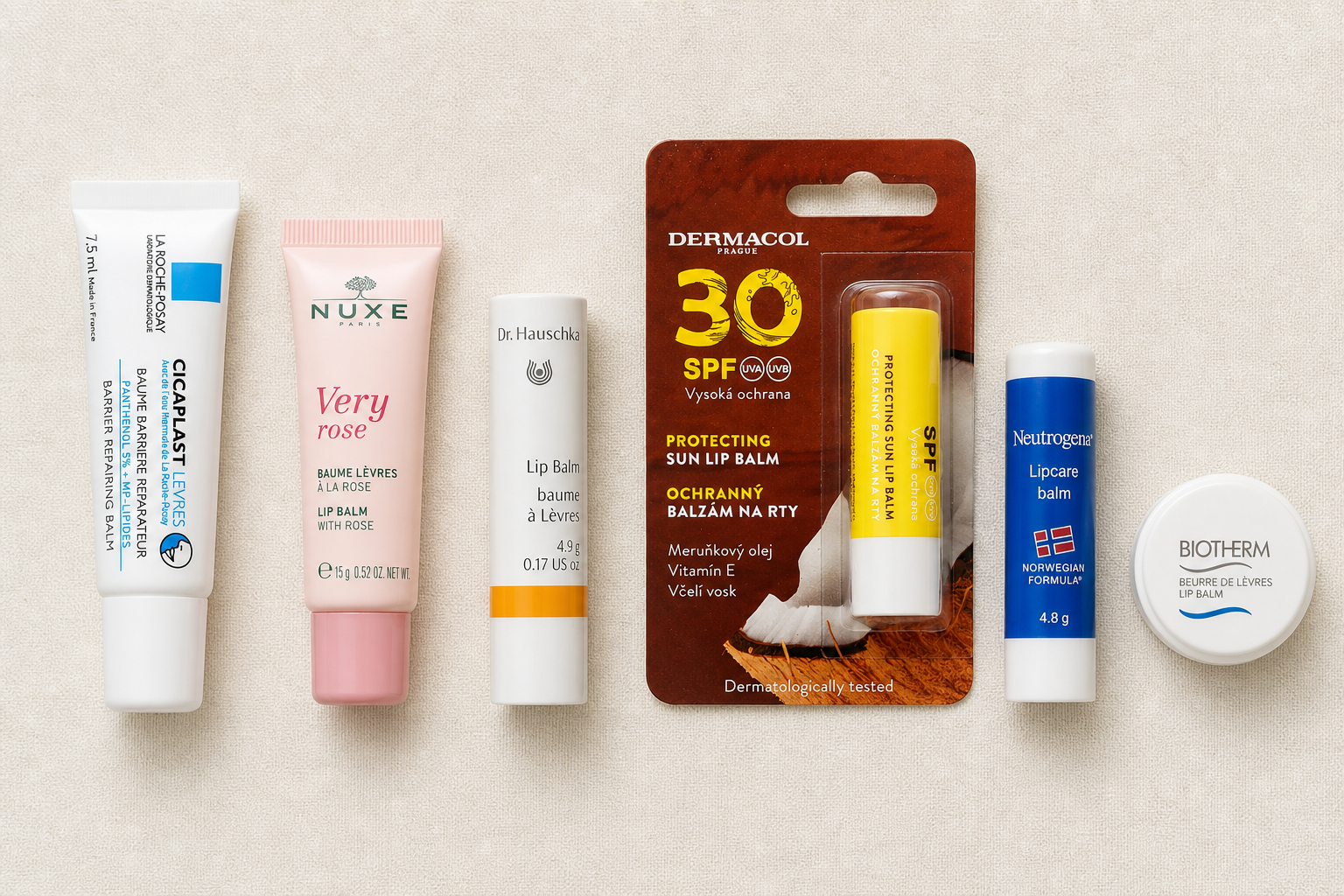

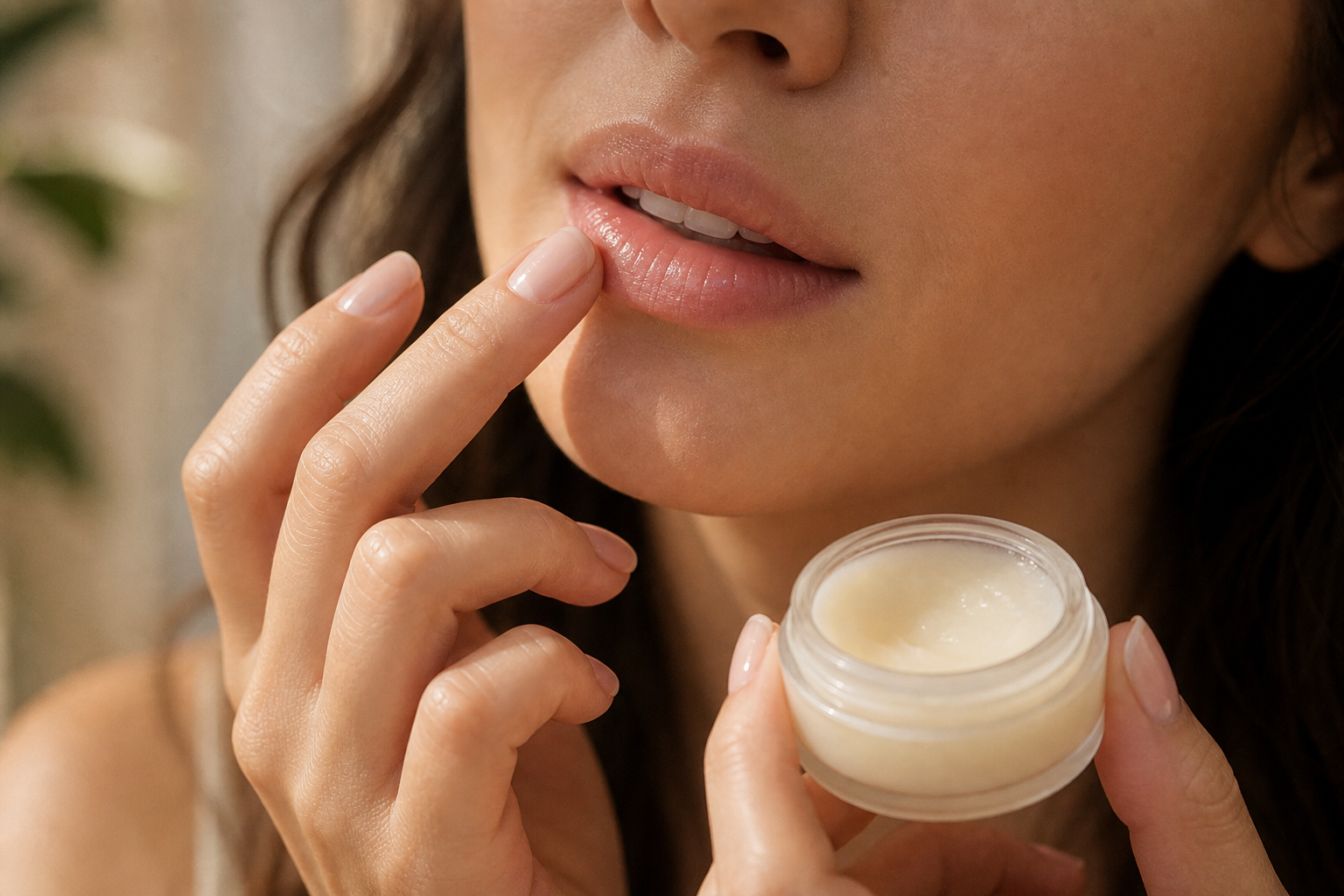
Lip balm is not just a scented fat – its ingredients determine whether it merely moisturizes your lips temporarily or truly helps them. We'll show you what is commonly hidden in balms and how to recognize from the ingredients which balm will suit your lips.
Why Lip Balm Formulas Vary So Much
Whether you're dealing with lips chapped by winter frost or long-term sensitive lips that react to everything, you've probably experienced this situation: two lip balms at a comparable price behave completely differently on your lips. One stays like a thick film that lasts through lunch, while the other absorbs quickly, leaving you feeling like you haven't applied anything at all. The difference isn't in the packaging or the price, but in the formula – specifically the ratio of waxes, fats, and the aqueous phase.
Lip balm is essentially created in two ways. It's either a waterless mixture, a solid composition of waxes and oils without a single drop of water, recognizable by the classic stick or solid mass in a jar. Or it's an emulsion, where alongside the fatty part, there's an aqueous phase supplemented with moisturizing ingredients. Both have different tasks on the lips and leave a different feeling, even though the packaging might look almost the same.
Simply put, each of the three groups of ingredients serves its own role:
- Waxes give the balm its shape and form a continuous film on the lips. The more waxes, the denser, less spreadable, and longer-lasting the layer.
- Oils and butters soften the balm, improve spreadability, and ensure a feeling of suppleness. A predominance of oils means a lighter, faster-absorbing texture.
- Water and moisturizing ingredients provide moisture directly, but they evaporate quickly from the surface on their own. They need a fatty layer above them to keep them in place.
This ratio also determines what you can realistically expect from the balm. A waxy, almost waterless balm primarily acts as a protective barrier: it's suitable for frost, wind, and nighttime when it has plenty of time to work. A light emulsion, on the other hand, provides an immediate feeling of freshness and can be reapplied frequently during the day or under lipstick. Neither option is inherently better – they differ based on the situation they are suited for.
The amount of product that actually gets on the lips also plays a role. A liquid balm in an applicator is applied in a thin, even layer, while a solid stick transfers noticeably more. The same formula can therefore seem significantly richer in a different format, without any change in the ingredient list. Likewise, thickness alone doesn't indicate how gentle the balm's composition is.
The good news is that all of this can be estimated before purchase. You just need to know how to read the ingredient list and what to look for: what usually appears first, which ingredients form the base, which are added in small amounts for specific effects, and what to watch out for if your lips react sensitively even to minor things. The following text will guide you through this – step by step and without needing to know chemistry.
Lips Require Different Care Than the Rest of the Skin
At first glance, lips may seem like an extension of the facial skin, but structurally, they are a different tissue. These differences explain why a regular facial cream doesn't last as long on the lips as you might expect, and why lip balms are formulated differently than moisturizing creams.
The first difference is thickness. The stratum corneum, the outermost layer of the skin, is significantly thinner on the lips than on the surrounding skin and contains fewer layers of cells. This is why lips appear pinkish – you can see the blood vessels through them, which are well hidden elsewhere on the face. However, the thin layer also means less mechanical resistance: lips are more prone to chafing, cracking at the corners, and are less tolerant of friction, whether from a scarf or rough matte makeup.
The second, more fundamental difference involves sebum. Lips practically lack sebaceous glands that would continuously supply oil, and they also lack sweat glands. On regular skin, these glands together form a hydrolipidic film – a thin layer of oil and water that retains moisture inside and slows evaporation from the outside. Lips cannot create such a film on their own. Water evaporates from them faster than from the surrounding skin, and once they lose it, they have no way to retain it.
External factors add to this. Dry air during the heating season, frost, wind, and sun exposure further accelerate evaporation. Breathing through the mouth during sleep or when you have a cold also plays a role. However, the most common culprit is licking: saliva may momentarily create a feeling of moisture, but it quickly evaporates and takes with it the remaining moisture the lips had. The result is a cycle where you lick your lips more often as they become drier.
From what lips lack, we can deduce what we actually expect from a balm. It's not about a single effect, but a trio of roles that a good balm fulfills simultaneously:
- Seal – replace the missing protective film with a layer that slows water evaporation and shields against wind, frost, and friction. This role is fulfilled by occlusive, or sealing, ingredients.
- Soften – smooth the disrupted surface and restore the lips' flexibility to stop peeling and tightening. This is the job of softening ingredients, technically known as emollients.
- Support Renewal – soothe irritated skin and help it naturally repair itself. This includes soothing and regeneration-supporting substances.
These three roles complement each other in practice. A balm that only seals may protect against the weather, but won't handle dry, peeling lips on its own. Conversely, a light, quickly absorbing texture may pleasantly soften, but without a sealing layer, it will disappear from the lips in no time. That's why most balms combine ingredients from all three groups and differ mainly in which role they emphasize the most.
This trio serves as a guide whenever you turn a balm over and look at the ingredient list. Instead of searching for one miraculous ingredient, ask yourself for each item which role it plays – whether it seals, softens, or aids in renewal. With this key in hand, the composition of lip balms makes much more sense.
Beeswax, Butters, and Oils as the Base of a Balm
Whether you opt for a classic stick or a thick balm in a jar, the core of the formula usually consists of three groups of ingredients: waxes, plant butters, and oils. Waxes give the product shape and create a continuous film on the lips, butters provide density and nourishment, and oils ensure spreadability and a soft feel. Their ratio determines whether the balm feels like a firm layer or an almost imperceptible veil.
It helps to think of these components in two roles. Occlusive agents lock in moisture by forming a barrier on the surface that slows water evaporation. Emollients, or softening agents, absorb into the upper layers and replenish missing lipids. A balanced balm typically combines both.
Waxes as the Backbone of the Formula
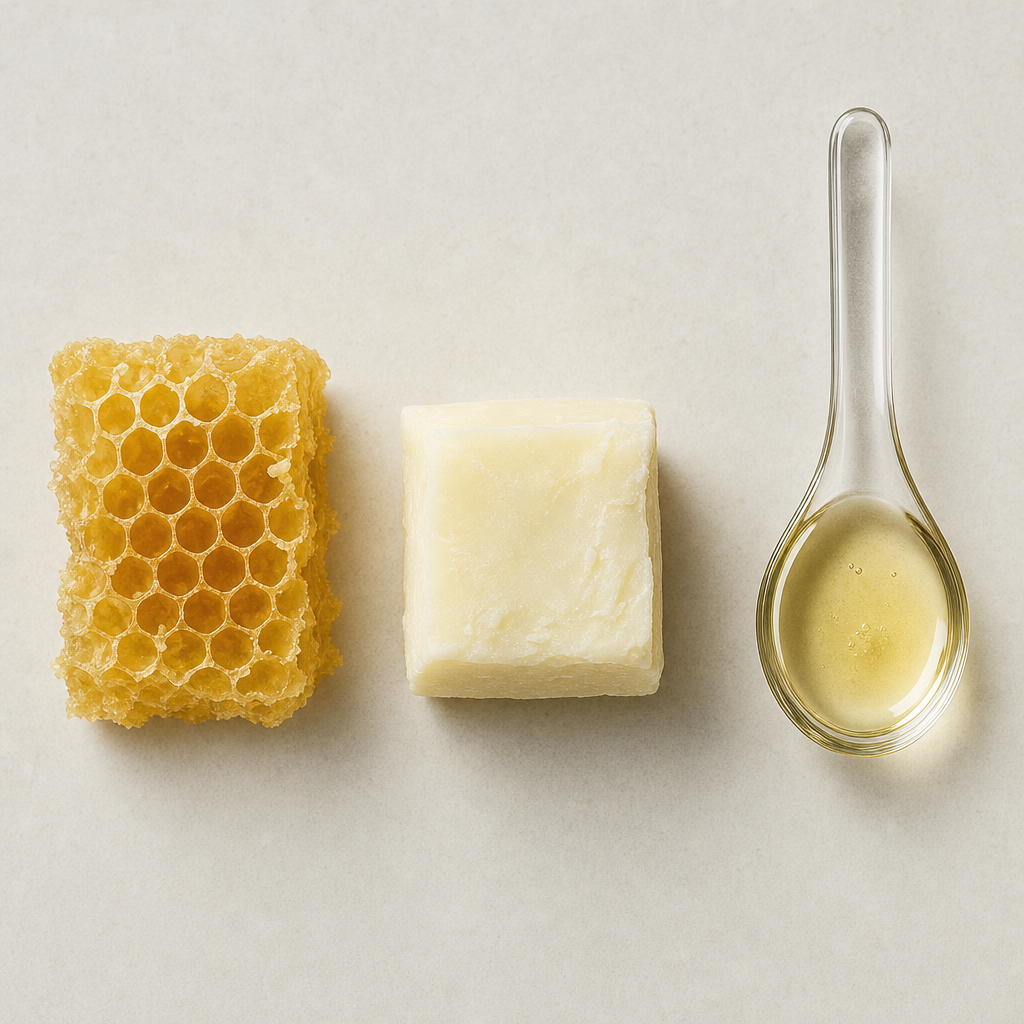
Beeswax is listed in the ingredients as Cera alba or Beeswax. It melts at a relatively high temperature, so the stick retains its shape even in a warm purse, leaving a flexible, mostly matte film on the lips. Besides its sealing function, it also contains a small amount of esters that soften the lips.
Plant waxes serve the same purpose without animal-derived ingredients. Candelilla wax (Euphorbia cerifera cera) is harder than beeswax, so a smaller amount is needed, and the result is usually shinier. Carnauba wax (Copernicia cerifera cera) has the highest melting point among commonly used waxes; in small amounts, it strengthens the stick, in larger amounts, it makes it hard and less spreadable. Vegan balms often combine both and supplement with a higher proportion of oils for a softer result.
Lanolin (also labeled as Adeps lanae) is a wax-like substance derived from sheep's wool. It performs both roles simultaneously: sealing and binding water, making it suitable for severely dry lips. However, it is not vegan and is a common contact allergen for some people, so it's worth looking for it on the label specifically.
Petroleum Jelly and Mineral Oils
Petrolatum, Paraffinum liquidum, or Cera microcristallina are derived from processed petroleum and serve a single but reliable role: sealing the surface. They are chemically stable and do not go rancid, but they do not contain fatty acids or vitamins to nourish the lips. A balm primarily based on them will prevent moisture loss but won't add anything on its own. It makes sense mainly when you need a durable film against frost and wind.
Butters Add Density, Oils Add Slip
Shea butter (Butyrospermum parkii butter) is one of the most common in this group. In addition to fatty acids, it contains an unsaponifiable fraction, which helps soothe dry skin. It gives the balm a creamy, slightly waxy consistency. Cocoa butter (Theobroma cacao seed butter) is solid at room temperature and melts with the warmth of the lips, initially firm and then silky, with a characteristic chocolate scent.
Liquid oils then determine how easily the balm spreads:
- Jojoba oil (Simmondsia chinensis seed oil) is technically not an oil but a liquid wax. Its composition is close to skin sebum, absorbs quickly, and doesn't leave a heavy film.
- Almond oil (Prunus amygdalus dulcis oil) is a classic emollient. It's light, well-tolerated, and provides suppleness to the lips without significant shine.
- Castor oil (Ricinus communis seed oil) is thick and viscous, holds pigment, and gives a pronounced shine. That's why it's found in tinted balms.
So, when wax appears at the top of the ingredient list along with butter and plant oil, you get a balanced combination of sealing and nourishment. If mineral components dominate, the balm will serve more as a protective shield against harsh conditions rather than care that adds something to the lips.
Panthenol, vitamins, and potentially irritating substances
Waxes, butters, and oils create a protective film on the lips, but they don't repair anything on their own. That's why active ingredients are added to balms to hydrate, soothe, or protect the lips from the sun. Alongside these, there are ingredients included mainly for the application feel—and these are often the source of issues for sensitive lips.
Active ingredients that benefit the lips
The following ingredients are among the most common additions to balms and make sense when combined with a good fatty base.
- Panthenol (provitamin B5) – is one of the most commonly used soothing ingredients in cosmetics. It binds moisture and is often found in products for stressed and irritated skin, making it suitable for chapped lips.
- Hyaluronic acid – binds water and acts as a moist cushion on the surface. However, it needs something to hold it on the lips, so it's combined with waxes and oils in balms. In a standalone gel product without an occlusive layer, it lasts on the lips only briefly.
- Ceramides – lipids that naturally occur in the skin barrier. They complement the fatty component in formulations and are suitable for lips suffering from repeated drying.
- Allantoin, bisabolol, or calendula extract – classic soothing ingredients also found in balms labeled as suitable for sensitive skin.
- Vitamin E (listed on packaging as tocopherol) – an antioxidant with a dual role in the formula: it acts on the skin and also protects the oils in the product from quick rancidity.
- Sun protection filters – lips have thin skin and little pigment, making them more prone to sunburn than the rest of the face. Balms labeled with SPF make sense especially in the mountains, by the water, and during long outdoor stays; protection is worn off by eating and drinking, so it needs to be reapplied.
Ingredients that may not suit sensitive lips
The second group of substances doesn't automatically harm the lips—many people tolerate them without issue. However, if your lips regularly burn, itch, or peel after using balm, the cause is likely here.
- Menthol, camphor, and peppermint oil – create a cooling tingle that many associate with effectiveness. In reality, it's an irritating stimulus; on cracked lips, the burning sensation can intensify.
- Fragrances and essential oils – listed on packaging as parfum or as individual fragrance components, such as limonene and linalool. Cinnamon and citrus oils are among the more common irritants for lips.
- Flavorings and sweeteners – vanilla or fruit flavors are pleasant but encourage licking. Saliva dries out the lips more than the balm hydrates them.
- Exfoliating acids – glycolic, lactic, or salicylic acid appear in exfoliating balms. On healthy lips, they can help remove dry skin, but on cracked lips, they unnecessarily worsen the condition.
It's also interesting why some balms create the feeling that they need to be applied repeatedly. Usually, several factors come together: an irritating ingredient slightly irritates the lip surface, the flavored texture leads to licking, and a purely occlusive balm doesn't provide any water to the lips, only prevents its evaporation. Added to this are common circumstances like mouth breathing, dry air during the heating season, or low fluid intake. If you suspect a balm doesn't suit you, try switching to a simple version without fragrance, menthol, and flavors for a few days.
How to Read Ingredients and Choose a Balm for Sensitive Lips
The list of ingredients on the packaging might look like a Latin puzzle at first glance, but it follows strict rules. Ingredients are listed in descending order by quantity, so the ones at the top form the base of the entire balm. Whether it's a stick, jar, or tube, just reading the first five items will tell you what the product is based on – whether it's waxes and butters, plant oils, or mineral hydrocarbons. The rest of the list usually consists of antioxidants, preservatives, fragrances, and colorants, which are present in fractions of a percent.
The descending order applies up to a concentration of one percent; below this threshold, manufacturers are not required to list items in order. Therefore, it's pointless to draw conclusions from the last lines. However, one exception is worth noting: fragrance allergens, which must be listed by name, typically appear at the end of the list. If you find three or four such names at once, it's a more fragranced balm, and for irritated lips, it's better to opt for a fragrance-free version.
A Quick Guide Based on Your Needs
Depending on what your lips currently lack, here's what you should look for at the beginning of the ingredient list:
- Dry Lips in Winter – an occlusive base that keeps moisture in: beeswax, candelilla or carnauba wax, shea butter. Glycerin or hyaluronic acid, which bind water, are often added.
- Lips After Sun and Summer – lighter textures with soothing ingredients, typically panthenol, bisabolol, or calendula extract. For mountain and summer stays, a balm with SPF makes sense, as the skin of the lips has minimal natural pigment protection.
- Sensitive or Atopic Skin – a short ingredient list without fragrances, colorants, and without cooling or warming additives like menthol, camphor, or cinnamon aroma. The fewer the items on the list, the easier it is to trace the cause of any reaction.
Two practical tips. Try applying a new balm for two to three days only on a small section of your lip or in the corner – reactions on sensitive skin show quickly and are easier to manage on a small area. Also, pay attention to the open jar symbol with information like 12M: balms with a high content of plant oils go rancid faster after opening than wax-based ones, even if they look the same in your handbag.
By reading three or four balms side by side, the differences will become apparent, and choosing will no longer be a lottery. In our lip care category, you'll find simple wax sticks as well as nourishing balms with plant oils, such as those from Nuxe. If you're dealing with sensitive skin across your whole face for a long time, it can be practical to stick with one dermocosmetic line you already know – with brands like Bioderma, La Roche-Posay, or Uriage, you maintain the same philosophy of a short ingredient list, just in a different format.

Category
Recommended articles

"Give a girl the right shoes and she can conquer the world!" Marilyn Monroe