




A blackhead is not dirt and won't disappear forever with a single squeeze. We explain how it forms at the pore opening and discuss ingredients like salicylic acid, niacinamide, or zinc — what to realistically expect from them and how to incorporate them into your routine.
Blackheads on Combination and Oily Skin: What Are They Really?
Whether you're dealing with a shiny T-zone that starts to gleam by midday or consistently rough skin on your nose and chin, you've probably stood in front of the mirror wondering why those dark spots keep coming back despite your diligent skincare routine. Let's clarify something important right from the start: a blackhead is not dirt and doesn't form because you don't wash enough. It's the content of a pore that has remained and darkened on the surface. That's why stronger soap or scrubbing harder with a washcloth won't help.
In professional terminology, these dark spots are called comedones, and they come in two basic forms. Knowing the difference between them is worthwhile because each responds differently to care.
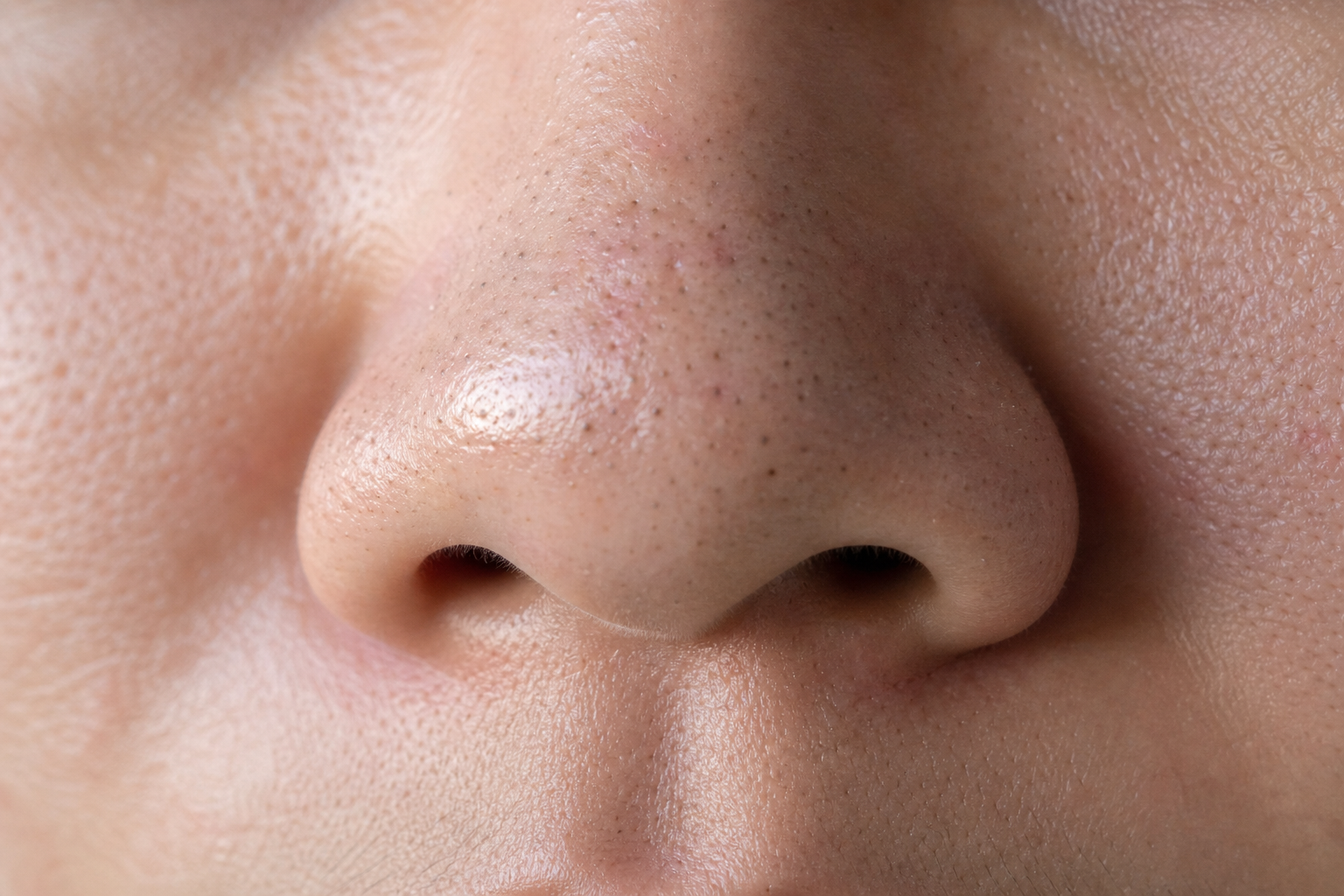
- Open comedone is the classic blackhead. The pore opening remains open, the content is exposed to air, and it darkens on the surface. You'll typically find them on the nose, around the nostrils, and on the chin.
- Closed comedone is a small whitish or flesh-colored bump beneath the skin's surface. The pore opening is closed, so the content doesn't darken. You might feel it more than see it, and it often appears on the forehead, cheeks, or along the jawline.
Besides comedones, there's a third thing that many people confuse with blackheads, leading to disappointment with home care: sebaceous filaments. These are fine, regularly spaced grayish or yellowish spots that cover the nose and sometimes the cheeks in a fairly orderly pattern. They are not clogged pores or a disorder. It's a natural structure present in every skin with more active sebaceous glands: a channel lined with sebum that carries oil to the surface. It serves a function that the skin needs.
You can reliably tell the difference by appearance and behavior. Open comedones are irregularly distributed, darker, and fewer in number. Filaments are tiny, numerous, and form an even network. Most importantly, filaments return within a few weeks after any mechanical extraction or deep cleaning because sebum continues to produce. This is not a failure of your care, but normal skin operation.
Why does this particularly affect combination and oily skin? It's determined by the amount and density of sebum and the size of the pore opening. In areas with a higher concentration of sebaceous glands, typically on the nose, forehead, and chin, sebum drainage is more challenging, the pore opening is more visible, and the accumulated content has more opportunities to remain. With combination skin, it often happens that the cheeks are fine or even dry, while the T-zone looks completely different. It's not a contradiction, just two different areas of one face needing different care.
This also leads to realistic expectations when approaching skincare. Open comedones can be significantly reduced with proper care, and their return can be slowed. However, pores won't disappear because they are an anatomical part of the skin, and sebaceous filaments cannot be permanently removed. The realistic goal is not perfectly smooth skin without a single spot, but skin that clogs less, looks more balanced, and doesn't require aggressive treatments.
In the following sections, we'll explore what actually happens in a clogged pore, why the spots return, and, most importantly, which cosmetic ingredients have a proven effect on them and what to expect from them.
How Blackheads Form at the Pore Opening and Why They Return
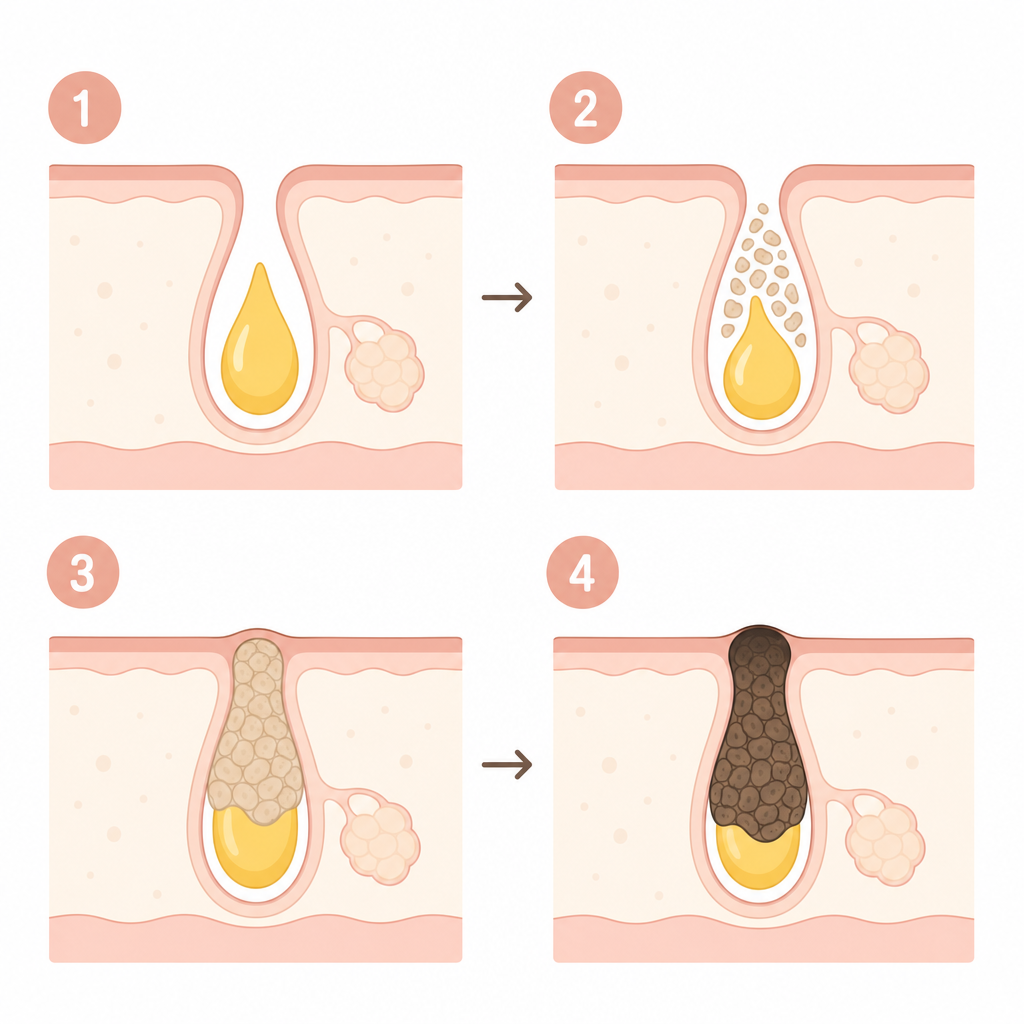
To understand why blackheads persist even with diligent care, it helps to view a pore as a tiny channel. At its base sits a sebaceous gland that continuously produces sebum, and the walls of the channel are lined with skin cells that naturally renew and shed. As long as both processes are balanced, sebum flows freely to the surface and dead cells are carried away with it. A blackhead is the result of this process getting clogged.
Four Steps Behind a Single Blackhead
- Increased Sebum Production. The sebaceous gland works more intensely than the pore can handle. This typically affects the T-zone of the face — forehead, nose, and chin — where sebaceous glands are most abundant.
- Accumulation of Dead Cells. Keratinocytes, or cells of the horny layer, fail to release at the pore opening and remain stuck in thicker sebum.
- Plug Formation. The mixture of sebum and cells forms a compact plug that fills the channel and mechanically widens its opening. At this stage, the pore appears larger but is still light in color.
- Darkening. The plug remains open to the surface, allowing contact with air. The darkening is primarily due to the oxidation of fats and melanin contained in the plug. The surface gradually turns brown to black.
This leads to a frequently overlooked conclusion: the dark color is not related to dirt. It is not external dirt that can be washed away, but a chemical change in the content already in the pore. This is why longer and more intense washing usually does not make a visible difference — you are cleaning the skin's surface while the plug sits inside the channel.
Why Blackheads Return After Removal
Extraction, cleansing strips, or masks that leave a trace of content on the skin address the symptom, not the cause. They remove the pore's content, but the sebaceous gland beneath continues to work at the same pace, and the rate of cell renewal at the channel opening also remains unchanged. Add to this that the pore opening remains widened after the plug, creating an environment that fills up again. The interval is individual, but typically counts in weeks, not months.
With mechanical extraction, there is also the risk of irritation. Pressure on surrounding tissue can cause redness, and in areas where the skin was disrupted, the condition may temporarily worsen. If you feel that blackheads return even faster after each intervention, it's not just an impression.
What Worsens the Entire Process
- Hormonal Fluctuations. Sebaceous gland activity is sensitive to hormonal changes, whether due to adolescence, cycles, or periods of increased stress. Therefore, the skin's condition can change even without any change in care.
- Comedogenic Product Textures. Some heavier creams, oils, and make-ups can contribute to pore clogging in susceptible skin. For combination and oily skin, lighter, non-greasy textures are usually more effective.
- Over-Drying the Skin with Aggressive Cleansing. Frequent degreasing with strong products disrupts the protective barrier. The skin often responds by increasing sebum production — resulting in oilier skin that is also tight and sensitive.
- Irregular Exfoliation. When dead cells are not removed at all, they accumulate. When removed too often and too harshly, the skin becomes irritated. Both lead to the same outcome, just by different means.
This mechanism explains why it's essential to adjust expectations. The goal of caring for skin with blackheads is not a one-time cleansing that leaves the skin permanently smooth, but long-term maintenance that slows the rate at which pores refill. You are working with the conditions under which a plug forms, not with individual blackheads. That's why it's worth knowing which ingredients truly impact this process — and what to realistically expect from them.
Salicylic Acid and Deep Exfoliation
When it comes to blackheads, salicylic acid is almost always mentioned. It's not just a trend — it relates to how this molecule is structured and where it can work in the skin. Let's explore why it's recommended for comedones more often than other acids, the formats you'll find it in, and what you can realistically expect from it.
Fat Solubility Makes All the Difference
Salicylic acid is a beta-hydroxy acid, and its key property is that it dissolves in fat. This is precisely why it tops the list for clogged pores. The opening of a pore isn't an empty hole — it's filled with a mix of sebum and dead skin cells. A substance that doesn't dissolve in fat will struggle to penetrate this oily barrier and will remain working on the surface.
This is what sets it apart from alpha-hydroxy acids, like glycolic or lactic acid. They are water-soluble and their domain is the skin's surface: they loosen the bonds between dead cells in the outermost layer, making the skin appear smoother and more even. This is useful, but they have less reach into the pore's contents. So, if you're mainly dealing with clogged pores and a rougher nose, beta-hydroxy acid makes more sense; if you're focused on overall texture and brightening the surface, alpha-hydroxy acids might be more suitable. It's not a competition, they're two different tools and can coexist in one routine.
Formats and Contact Time with the Skin
The same ingredient behaves differently depending on how long it stays on the skin. This is more important than it seems when choosing a product.
- Cleansing Gels and Foams — the acid stays on the skin for tens of seconds before you rinse it off. The effect is mild but well-tolerated, suitable for many skin types even with daily use. A sensible entry point for someone new to acids.
- Toners and Lotions — applied with a cotton pad or hands and not rinsed off. The contact with the skin is significantly longer, the effect more noticeable, and usually, it's enough to use them a few times a week.
- Spot Treatments and Serums — more concentrated products aimed at specific areas, typically the nose, chin, and forehead. Applied specifically, not all over the face.
- Smoothing Creams — often referred to by the English term "smoothing." They combine the acid with a moisturizing base and are suitable where you want exfoliation and care in one step, including rougher skin on the body.
Besides the format, concentration plays a role. A higher number on the label doesn't automatically mean better results — for an ingredient that works inside the pore, a lower concentration used regularly is often more sensible than a strong treatment once in a while.
What to Expect and Where the Limits Are
It's important to be realistic. Salicylic acid won't clear pores overnight, and after one use, you won't see a different complexion in the mirror. What you can expect is a gradual change: over several weeks of regular use, the texture is usually smoother, pore openings less noticeable, and sebum accumulates more slowly. It's maintenance, not a one-time fix — and once you stop the care, the skin usually returns to its original behavior over time.
The second thing to keep in mind is moderation. Exfoliation added to everything else you're doing to your skin can easily tip into over-exfoliation: the skin starts to feel tight, sting, redden, and paradoxically may become oilier because it's reacting to a disrupted skin barrier. The solution isn't to add more acid, but to reduce frequency and restore moisture to the skin. Hydration is as essential to exfoliation as the acids themselves — and don't forget sun protection during the day, as exfoliated skin tends to be more sensitive to it.
Niacinamide, Zinc, and Other Ingredients: What to Expect from Them
Exfoliation addresses pore content. However, there's another group of ingredients that don't directly affect the pore but instead modify the environment where comedones form. They work more slowly and subtly but are often better tolerated. If purely exfoliating care dries out or irritates your skin, this is where you usually look for a supplement.
Niacinamide: Barrier Support and Pore Appearance
Niacinamide, a form of vitamin B3, is one of the most commonly included ingredients in skincare for combination and oily skin. It is associated with supporting the skin barrier, meaning the skin's ability to retain moisture and better handle irritants. This is a practical advantage for skin undergoing exfoliation: a barrier under the pressure of acids usually appreciates support.
Regarding pores, niacinamide is most often described in relation to their perceived size and the overall mattification of the skin. It's important to read formulations realistically – pores won't disappear, and their anatomical size won't change. A more realistic expectation is that after a few weeks, the skin appears more balanced, less shiny, and the pore openings are less noticeable. Niacinamide is commonly found in concentrations around five percent; higher numbers don't necessarily mean better results.
Zinc: Sebum Regulation and Soothing
Zinc appears in skincare in various forms, most often as zinc salts in cleansing gels and serums for oily skin. Traditionally, it is associated with two effects: influencing sebum production and soothing irritated areas. In neither case is it a quick change – zinc gently shifts the balance.
In practice, you often find it combined with niacinamide, as both ingredients target similar skin types and don't compete with each other. If you're deciding whether to include zinc, it makes the most sense for skin that becomes shiny quickly during the day and reacts with irritation to stronger exfoliation.
Azelaic Acid and Retinoids: More Persistent Conditions
When comedones return repeatedly and milder care isn't enough, ingredients with more pronounced effects come into play. Azelaic acid is described in relation to brightening uneven skin tone and soothing red areas. Retinoids, derivatives of vitamin A, are used in cosmetics in milder forms, such as retinol or retinaldehyde, and are associated with influencing skin renewal.
For both groups, several practical notes apply:
- the onset is slow – it's worth evaluating after several months, not two weeks,
- a transitional drier period commonly appears at the start, so they are introduced gradually, initially, for example, twice a week,
- retinoids are used in evening care, and during the day, sun protection is essential,
- stronger forms are under the dermatologist's supervision, not for free choice in an e-shop.
Fewer Ingredients, but Consistently
The most common mistake is not a poor choice of ingredient but their number. When exfoliating acid, retinoid, vitamin C, and another active serum come together in one routine, the skin usually doesn't respond with better results but with irritation – and that alone can worsen the symptoms. Niacinamide and zinc are among the ingredients that combine relatively harmoniously with others.
A sensible approach looks like this: choose one main active ingredient, add one supportive one, and keep the rest of the routine simple – gentle cleansing, hydration, sun protection. Always introduce one new product at a time and give it a few weeks. A shorter routine that you can stick to every evening usually brings more than a complex regimen that you can maintain for ten days.
How to Structure Your Routine and What to Avoid
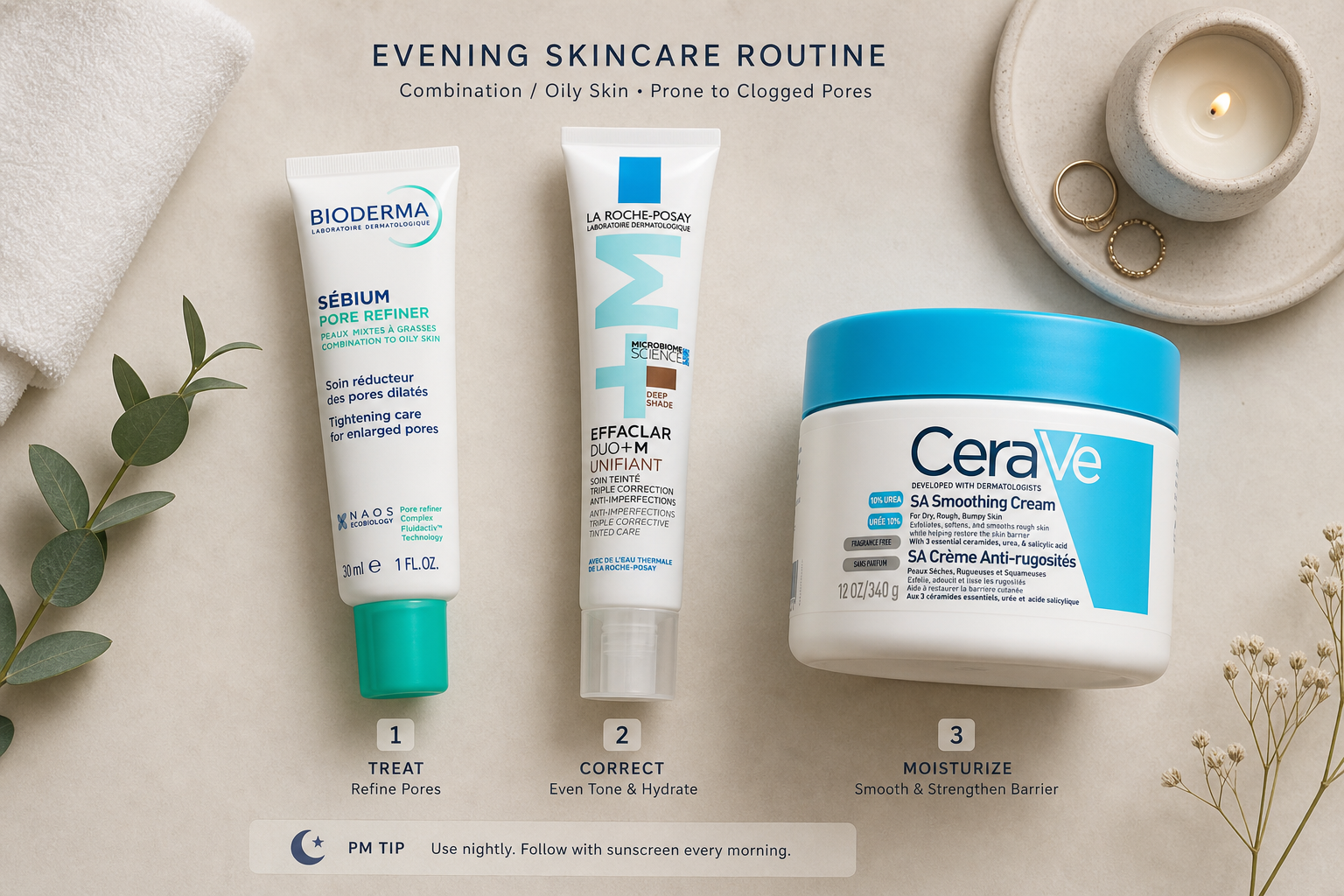
Knowing the individual ingredients is one thing, but organizing them into a routine you can stick to even on a busy Wednesday evening is another. For combination and oily skin, fewer steps done regularly work better than an extensive routine you abandon after a week. Consider the following framework as a skeleton on which you can gradually add what suits your skin.
Minimalist Framework for Combination and Oily Skin
A routine that makes sense for clogged pores can be summarized in four steps:
- Gentle cleansing morning and night. The goal is to remove oil, dirt, and makeup residue without drying the skin to the point of tightness. Gel and foaming cleansers for oily skin usually maintain this balance better than traditional soaps. Evening cleansing is more important than morning — significantly more accumulates on the skin during the day.
- Exfoliating component at a reasonable frequency. Typically, two to three evenings a week are sufficient; with good tolerance, the frequency can be gradually increased. Watch your skin's reaction, not the calendar — burning, peeling, or redness are signals to reduce, not to push through.
- Light hydration. Ideally, a gel or light emulsion cream that absorbs quickly and doesn't leave a greasy film. Hydration is not the opposite of oily skin; on the contrary — it supports the skin barrier, which is stressed during exfoliation.
- Daily sun protection. Especially important when using acids: exfoliated skin is more sensitive to sunlight, and post-inflammatory spots from squeezed areas are harder to even out in the sun. Choose light fluids or gel textures with high SPF that don't roll under makeup.
Introduce serums with additional ingredients only when the basic four steps are running without irritation. Introduce new products one at a time and give each at least four weeks — otherwise, if things worsen, you won't know what caused it.
What to Avoid
Knowing what to avoid is as useful as knowing what to do. The following practices typically worsen pore conditions:
- Mechanical squeezing. Nails or a metal loop without professional support usually lead to irritation, damage to surrounding tissue, and post-inflammatory spots that last longer than the original blemish.
- Harsh scrubs with solid particles. Sharp shell or seed fragments disrupt the skin's surface without reaching where oil actually forms. Chemical exfoliation addresses the same issue more gently.
- Pore strips as the sole solution. They remove what's on the surface but don't address the cause — and frequent use irritates. They can be an occasional supplement, but not a complete strategy.
- Completely skipping hydration. The attempt to "dry out" the skin usually leads to the opposite: an irritated barrier responds with even higher oil production.
- Combining everything at once. Several active ingredients introduced in the same week is the quickest route to irritation, after which the routine needs to be simplified anyway.
Where to Look in Brasty's Offer
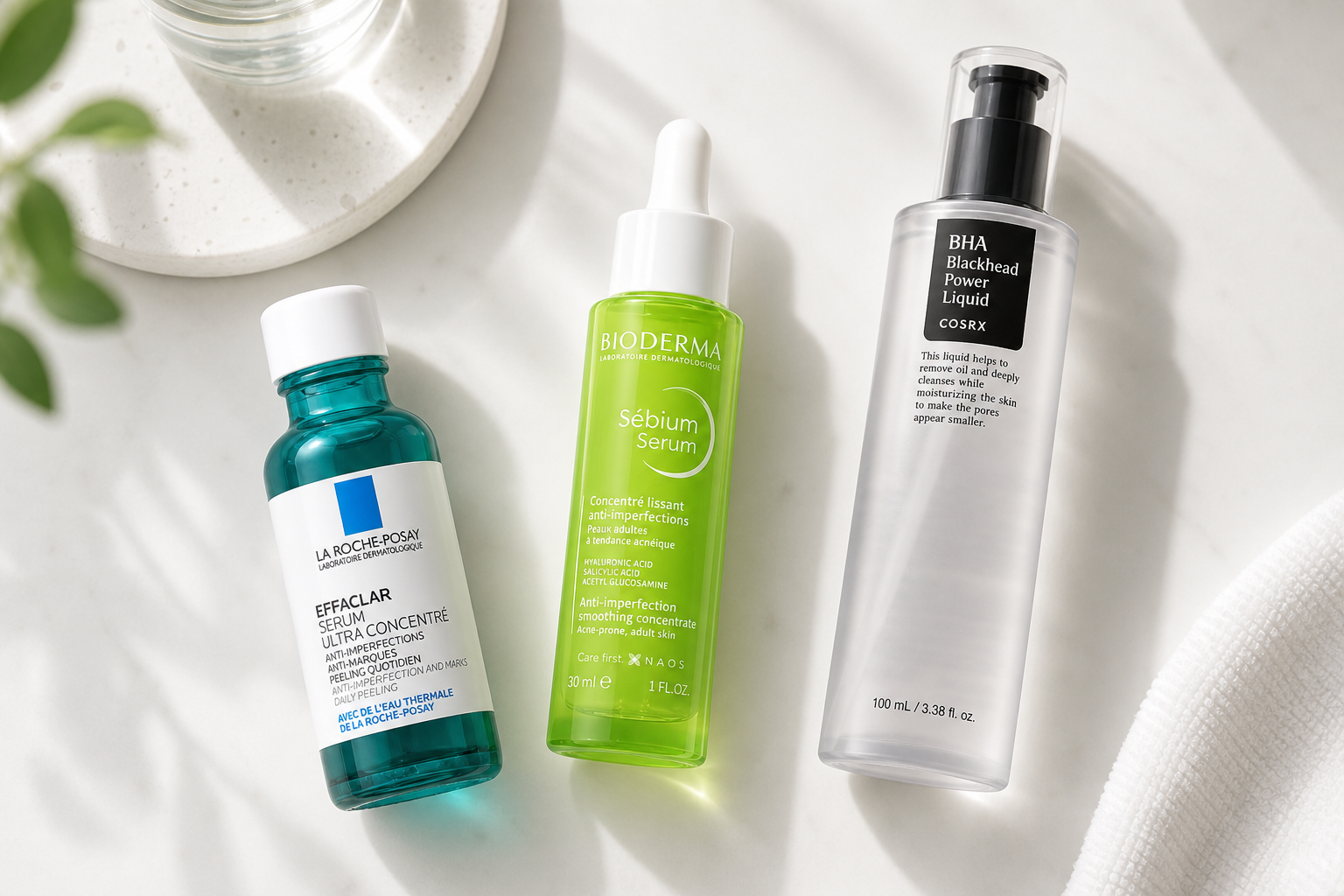
Products that fit into the described framework can be found mainly in the Skincare and Cleansing and Makeup Removal categories. If you want to start with lines that have long focused on problematic and oily skin, Bioderma Sébium, La Roche-Posay Effaclar, or CeraVe products with salicylic acid are worth checking out. Each covers both cleansing and subsequent care, allowing you to build a routine in a consistent texture logic.
If your skin condition doesn't improve after several months of consistent care or if painful inflammatory symptoms appear, it's time to consult a dermatologist. Cosmetic care can do a lot, but not everything — and knowing where its limits are is part of a good routine, just like choosing the right cleansing gel.

Category
Recommended articles

"Give a girl the right shoes and she can conquer the world!" Marilyn Monroe