



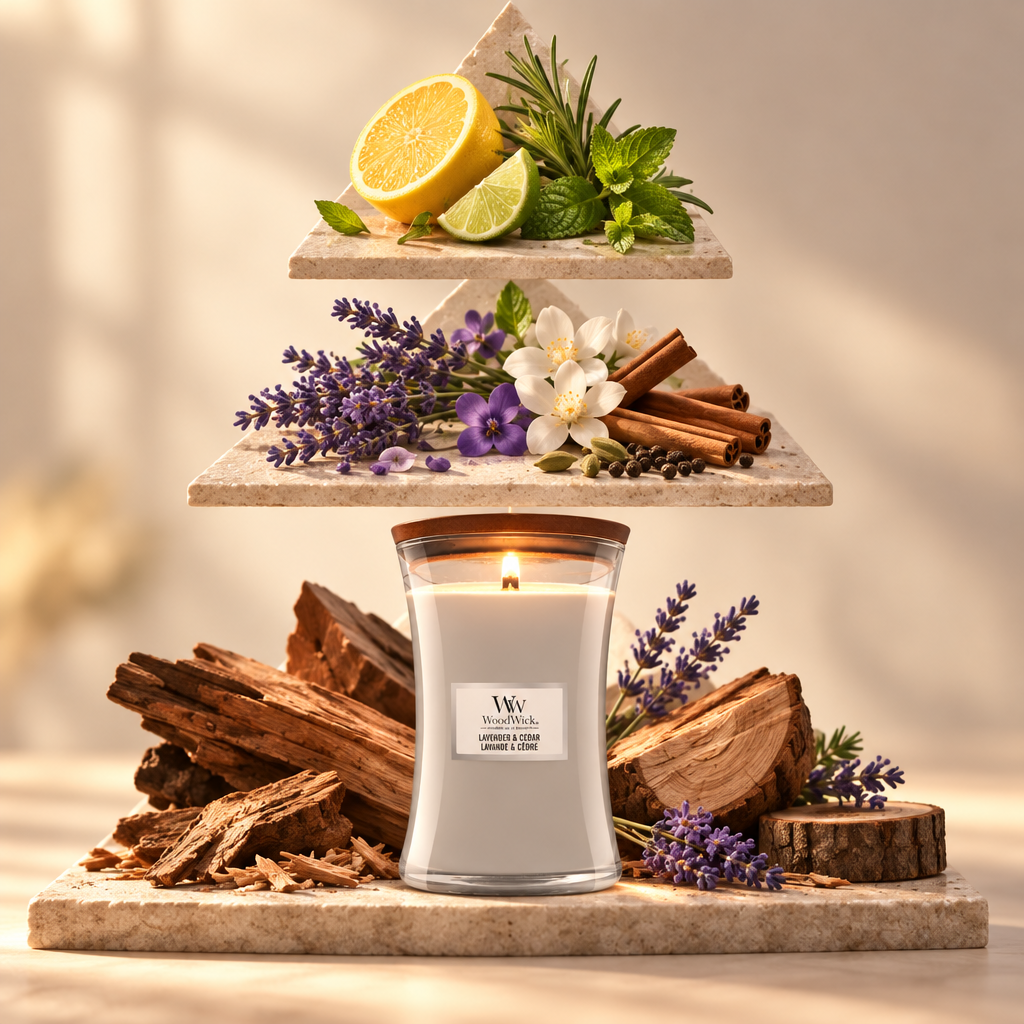



Considering a more expensive scented candle or diffuser and wondering what sets it apart from the ordinary ones? We'll explain why woody and earthy base notes are key to fuller and longer-lasting fragrances, as used by brands like Woodwick or Millefiori Milano.
What Sets Premium Home Fragrances Apart from the Ordinary
Whether you're choosing a scented candle or a diffuser for your home, sooner or later you'll notice that two fragrances with the same label description – like "vanilla" or "lavender" – can have completely different effects in a room. One might smell pleasant when lit, but after an hour, only a faint trace remains. The other develops gradually, has multiple layers, and lingers in the room long after you've extinguished the candle. This is typically where the difference between an ordinary and a premium home fragrance lies.
At first glance, it might seem that the higher price category is mainly due to the packaging, heavier glass, or a well-known brand name. These factors do play a role, but what truly determines how a fragrance performs is its composition. A quality home fragrance is crafted similarly to a perfume: it has top, middle, and base notes that blend together to create an overall impression.
More common fragrances often rely on a single prominent chord – sweet, fruity, or fresh – which is easily recognizable at first but lacks support. Premium compositions, on the other hand, pay great attention to the base. This is where woody and earthy tones come into play.
Why these specifically? Ingredients like cedar, sandalwood, patchouli, or vetiver are among the heavier components of a fragrance. They evaporate more slowly than citrus or light floral notes, so they linger longer in the space and provide a solid framework for the other notes. In practice, this means several things for you:
- Longer-lasting – the fragrance doesn't disappear with the initial notes but remains in the room for a longer time.
- Fuller impression – sweet, floral, or fruity chords gain depth and don't come across as flat or overly sweet.
- Smooth development – the composition changes gradually during burning or diffusion, without sudden "fading".
- Cozy feel – woody and earthy tones evoke a forest, a crackling fire, or an old library, adding warmth and calm to the space.
This doesn't mean that every premium home fragrance must smell like a forest. Even a fresh or floral composition can have a woody base that you might barely notice at first, but it helps the fragrance hold its shape. Try noticing how a scented candle smells after an hour of burning, or how a diffuser affects the room on the second or third day – the difference in composition structure becomes apparent then.
In the following lines, we'll explore how the fragrance pyramid is constructed, which woody and earthy ingredients are most commonly found in home fragrances, and how to choose a scent that suits your home. This will provide you with a guide to understanding what truly stands behind the higher quality of a fragrance.
Fragrance Pyramid: Why the Base is Key
Every well-thought-out home fragrance consists of several layers that are released gradually, not all at once. Perfumers use the concept of a fragrance pyramid to describe this progression over time. It helps explain why a scented candle smells different right after lighting compared to an hour later, and why a diffuser in the living room feels different on the third day than it did immediately after opening.
The Three Layers of a Fragrance
- Top Notes – the first impression. Made up of light, volatile ingredients, typically citrus, herbs, or fresh green accords. They are noticeable but short-lived.
- Middle Notes (Heart) – emerge as the top notes fade. Often floral, spicy, or fruity, they give the fragrance its character.
- Base Notes – the heaviest and most enduring components, such as woods, resins, musk, vanilla, or patchouli. They develop slowly and linger in the air the longest.
How the Pyramid Works in Candles and Diffusers
In a scented candle, heat plays a role. When a melted layer of wax forms after lighting, the lighter molecules are released first, filling the room with a fresh start. As the candle burns longer, the heart comes to the forefront, and finally, the base, which remains in the space even after the candle is extinguished.
A diffuser works without a flame – the scented liquid rises through the sticks and evaporates slowly. The top notes are most prominent in the first few days, later giving way to the middle and base components. This is why the impression from a diffuser changes over weeks, with the base ultimately defining the long-term scent.
Why the Base Has the Final Say
A citrusy start may excite you when you first smell it in the store or right after lighting, but in a room where you spend the entire evening, you'll mainly notice what lingers. The base creates the backdrop that draws attention back and determines whether the space feels warm, calm, or conversely, flat and sweet.
Premium compositions typically devote more care to the base notes. Instead of one dominant ingredient, they build the base from multiple layers, such as a combination of different woods, resins, and earthy tones. The result is fuller and transforms more smoothly during burning or evaporation, without an unpleasant "break" when the fresh start fades.
Hence the practical advice: read the fragrance description to the end. The top notes reveal how the scent begins, but only the list of base notes will indicate how your home will smell in the evening, the next day, or in three weeks.
Woody Notes: Depth, Warmth, Calm
Woody ingredients are among the most stable components of a fragrance composition. They evaporate slowly, lingering in the room long after fresher notes have dissipated. Thanks to them, home fragrances feel full and settled, as if the space has been given a solid framework.
Ingredients You’ll Encounter Most Often
- Cedar – A dry, clean, and slightly resinous note reminiscent of a sharpened pencil or a wooden chest. It adds structure to the composition without weighing it down.
- Sandalwood – Creamy, soft, and gently milky. It rounds off sharper notes and adds a velvety impression to the fragrance.
- Rosewood – A lighter woody note with a sweet, almost floral trace. It forms a natural bridge between wood and flowers.
- Teak – In home fragrances, usually processed as a smooth, airy woody chord that evokes furniture, a terrace, or freshly sanded wood.
- Oud – A dense, dark, and distinctive note with a balsamic and slightly animalistic undertone. Just a little is enough to give the fragrance character.
Why Wood Has a Calming Effect on Us
Most people associate woody notes with the warmth of home, a fireplace, a forest, or old furniture. They are dry, deep, and lack sharp edges, so they don’t invigorate like citrus but rather have a calming effect. Therefore, they are well-suited for the evening, for relaxation, or reading, and they shine most in the cooler months when we crave coziness. In summer, you can also use them, just choose lighter woods like cedar or teak, and a shorter burning time.
How a Woody Base Anchors the Heart of a Fragrance
Wood rarely plays alone. More often, it forms the base on which fresher or sweeter notes stand, giving them persistence. This is well illustrated in several Woodwick compositions:
- Woodwick Lavender & Cedar combines herbal lavender with cedar. Lavender alone might feel cool and quickly fade, but cedar warms and holds it.
- Woodwick Rosewood builds on rosewood, whose sweet trace sounds soft and warm. It’s suitable where you don’t want a strong fragrance but rather a gentle backdrop.
- Woodwick Rouge Oud uses oud as a striking base, giving the composition a darker and richer character. It’s a choice for those who love full evening scents.
The exact composition of the fragrance pyramid varies with each composition, so it’s worth reading the description of a specific candle. Generally, the more pronounced the woody base, the longer and deeper the fragrance impacts the space.
Wooden Wick as Part of the Experience
In Woodwick candles, the woody character of the fragrance is complemented by the wick itself. Instead of cotton, it’s wooden and crackles quietly as it burns, reminiscent of a fireplace. The fragrance thus combines with the sound and visual impression of the flame, naturally fitting woody compositions.

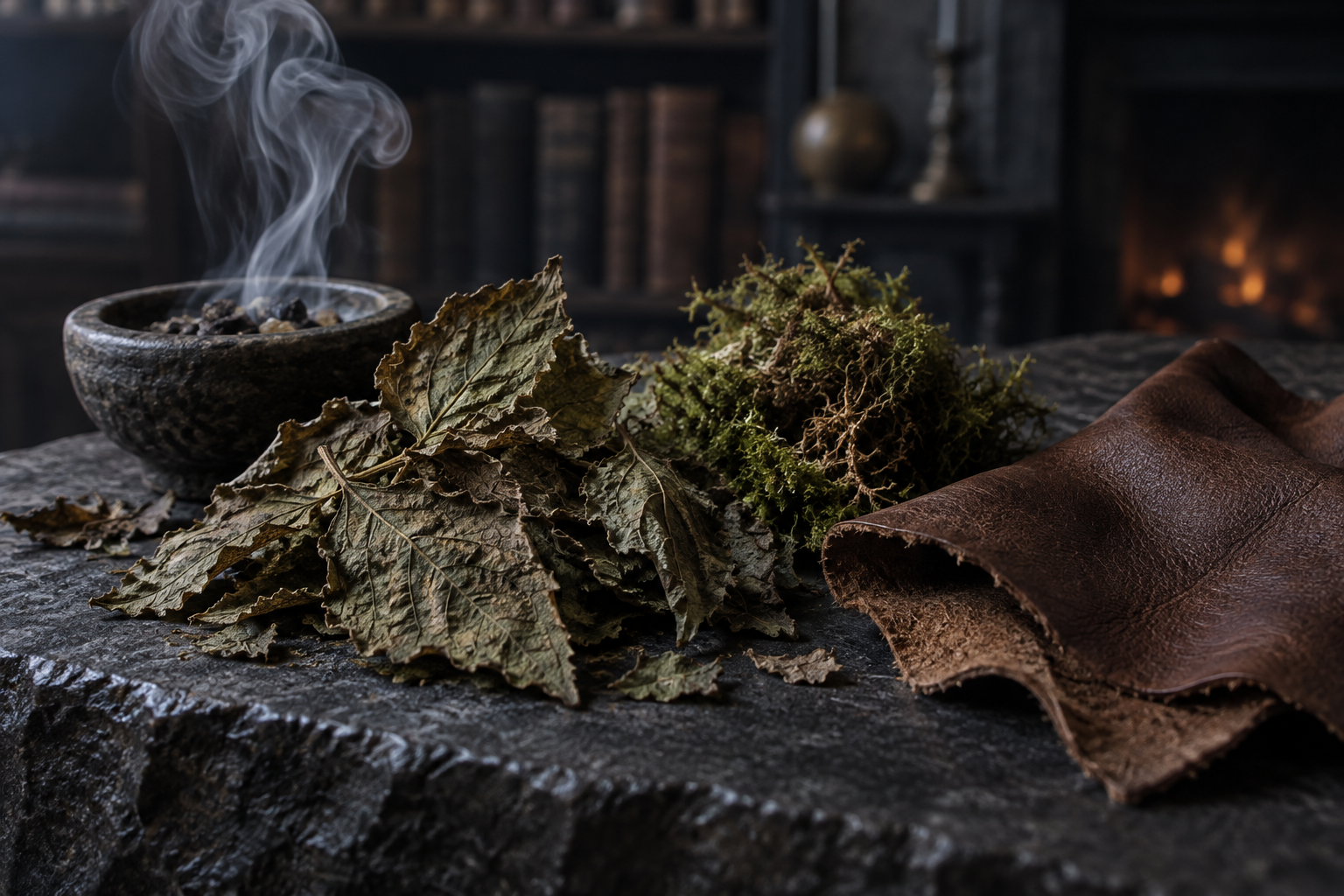
Earthy Notes: Patchouli, Moss, Leather, Smoke
While wood adds warmth to a fragrance, earthy notes give it depth. They evoke the scent of damp forest soil after rain, an old library, or a dying fire in the fireplace—sensations that feel calming and natural. In a composition, they usually don't stand out in the forefront, but without them, the whole could easily fall apart into sweet or floral notes without support.
Ingredients That Anchor the Fragrance
- Patchouli – a rich, slightly sweet, and earthy note with a moist undertone. In small amounts, it rounds out floral accords, while in larger quantities, it lends a darker, sensual character to the fragrance.
- Moss – in perfumery, it represents a fresh, slightly bitter impression of forest and shade. It is typical for the chypre family and adds elegance and a certain restraint to fragrances.
- Vetiver – the root of a tropical grass with a smoky and earthy expression. It feels clean and dry, making it suitable for compositions that need to remain airy.
- Leather – the leather accord consists of several ingredients and evokes soft leather, books, or old furniture. It brings a sense of comfort and coziness to the space.
- Smoke – subtle smoky notes reminiscent of a fireplace or incense. Just a little is enough to give the fragrance an evening and peaceful atmosphere.
Why Premium Brands Use Them So Often
Floral and gourmand fragrances are popular, but on their own, they can feel heavy or overly sweet in an enclosed space. An earthy base acts as a counterbalance: it softens the sweetness of vanilla or caramel, adds depth to flowers, and extends the "breath" of the fragrance, allowing it to unfold gradually in the space rather than exhausting itself in the first hour. The result feels more cohesive and calm—and this balance is often one of the differences between an ordinary and a more sophisticated home fragrance.
A good example is the diffuser Millefiori Milano Zona Soft Leather. The name itself suggests that the composition is based on a leather accord—soft, not animalistically sharp. Such fragrances are suitable for the living room or study, where they create an impression of a tidy and peaceful space. In Woodwick candles, earthy and smoky notes appear in scents like Fireside, which already hints at a fireplace in its name, or Antiquarium, whose name evokes the atmosphere of old books. The crackling wooden wick naturally enhances this impression with its sound.
How to Recognize an Earthy Base from the Description
In the fragrance description, look for words in the base notes like patchouli, oakmoss, vetiver, leather, tobacco, incense, amber, or smoke. Adjectives like "earthy," "smoky," "leathery," or "woody" can also be clues. If fragrances with predominantly sweet notes seem too intense to you, try choosing those that have at least one of these ingredients in the base—they usually feel more restrained and will keep you interested for longer.
How to Choose a Woody Fragrance for Your Home
Whether you want to warm up your living room during long autumn evenings or you're looking for a subtle scent to welcome guests in the hallway all year round, a woody base offers a surprisingly wide range of options. To ensure the result matches your vision, consider three things: the size of the space, the season, and the format in which you choose the home fragrance.
Room Size and Intensity
Woody and earthy tones tend to be bold and long-lasting. In a smaller bedroom or study, a gentler composition like cedar with lavender or light wood with marine notes is usually sufficient. In a large living room with high ceilings, a fuller base with oud, leather, or smoky accords stands out well. The simple rule is: the smaller and more enclosed the space, the more moderate the intensity should be.
Season
In the colder months, warm, spicy, and resinous tones such as sandalwood, amber, tobacco, or wood with a hint of vanilla feel the most natural. In spring and summer, you can maintain the woody base and just lighten it up: look for compositions where wood is accompanied by citrus, herbs, sage, or airy marine accords.
Candle or Diffuser?
- Scented Candle is ideal for evening ambiance. It releases fragrance more intensely but only while burning, and also adds light and a sense of calm.
- Diffuser is suitable for long-term and subtle scenting. It works continuously, without a flame, and you can gently regulate the fragrance with the number of sticks.
How to Recognize a Sophisticated Composition
When choosing, pay attention to the description of the notes. Quality home fragrances usually indicate what happens in the top, middle, and base layers, and the individual ingredients make sense together. If the description only mentions general "wood" without further nuances, it may be a simpler composition that quickly "blends" into one flat impression in the space.
Combining with Fresh Scents in the Home
A woody base complements fresher scents well if you place them in different zones. Warm wood can dominate the living room and bedroom, while in the bathroom or kitchen, choose cleaner, aquatic, or herbal tones. This way, the home smells varied but not chaotic – the individual scents do not overlap, and the transition between rooms is smooth.
Tips from the Brasty Catalog
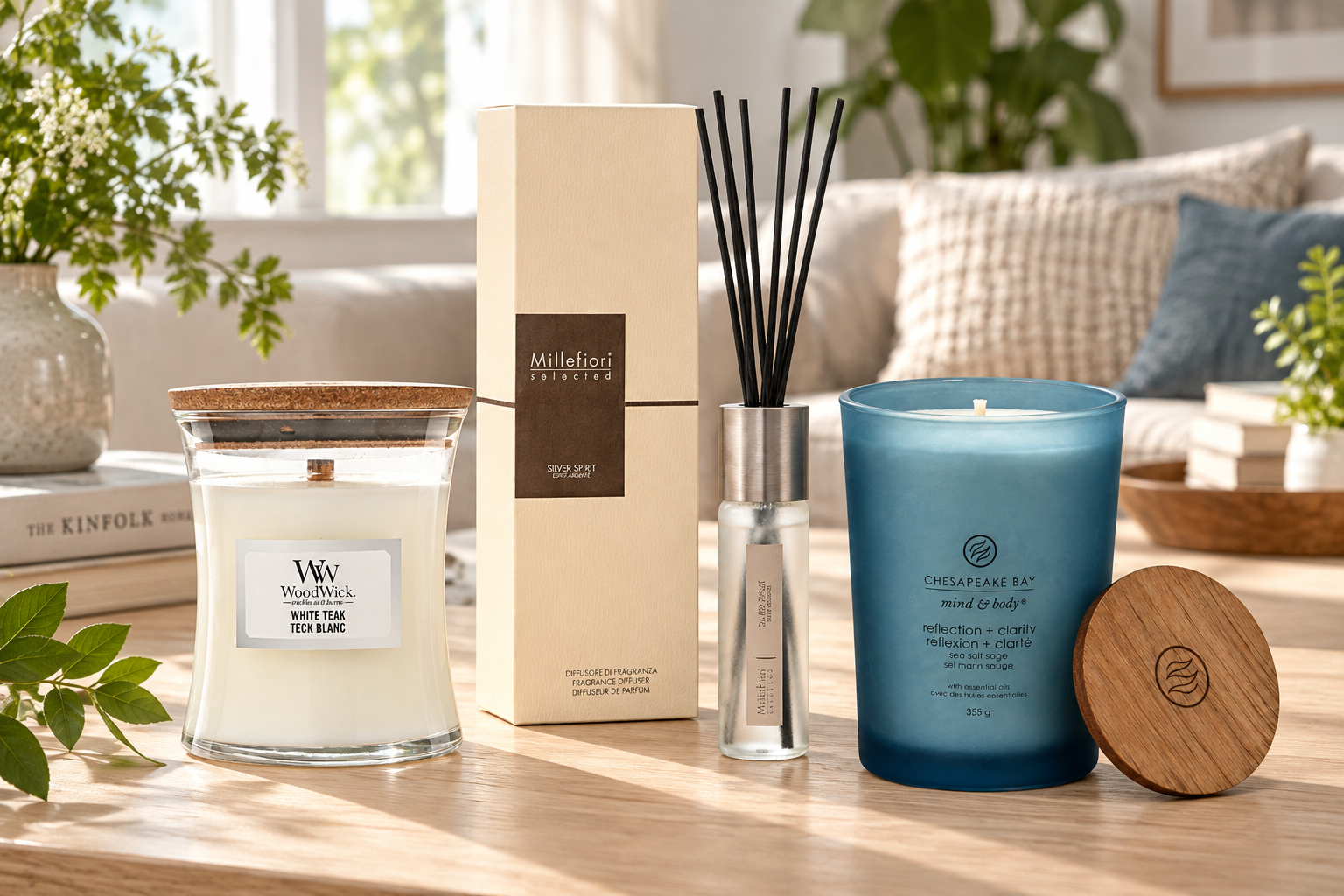
- Woodwick – scented candles with a wooden wick that gently crackles when burning. For woody evenings, options include Evening Onyx, Antiquarium, or a gift set of miniatures Fireside, White Teak, and Sand & Driftwood, allowing you to experience several woody facets at once. A fresher variant is Sagewood & Seagrass.
- Millefiori Milano – diffusers for long-term scenting. Besides the earthy Zona Soft Leather range, you can choose the fresher Cold Water or the green composition Verdant Escape for the bathroom.
- Chesapeake Bay – candles with a wellness touch, such as the Balance & Harmony range, suitable for peaceful evenings.
All the mentioned brands belong to the premium to higher price category, so it's worth choosing carefully – one well-chosen home fragrance will bring you more joy than several random ones.
Category
Recommended articles

"Give a girl the right shoes and she can conquer the world!" Marilyn Monroe
