

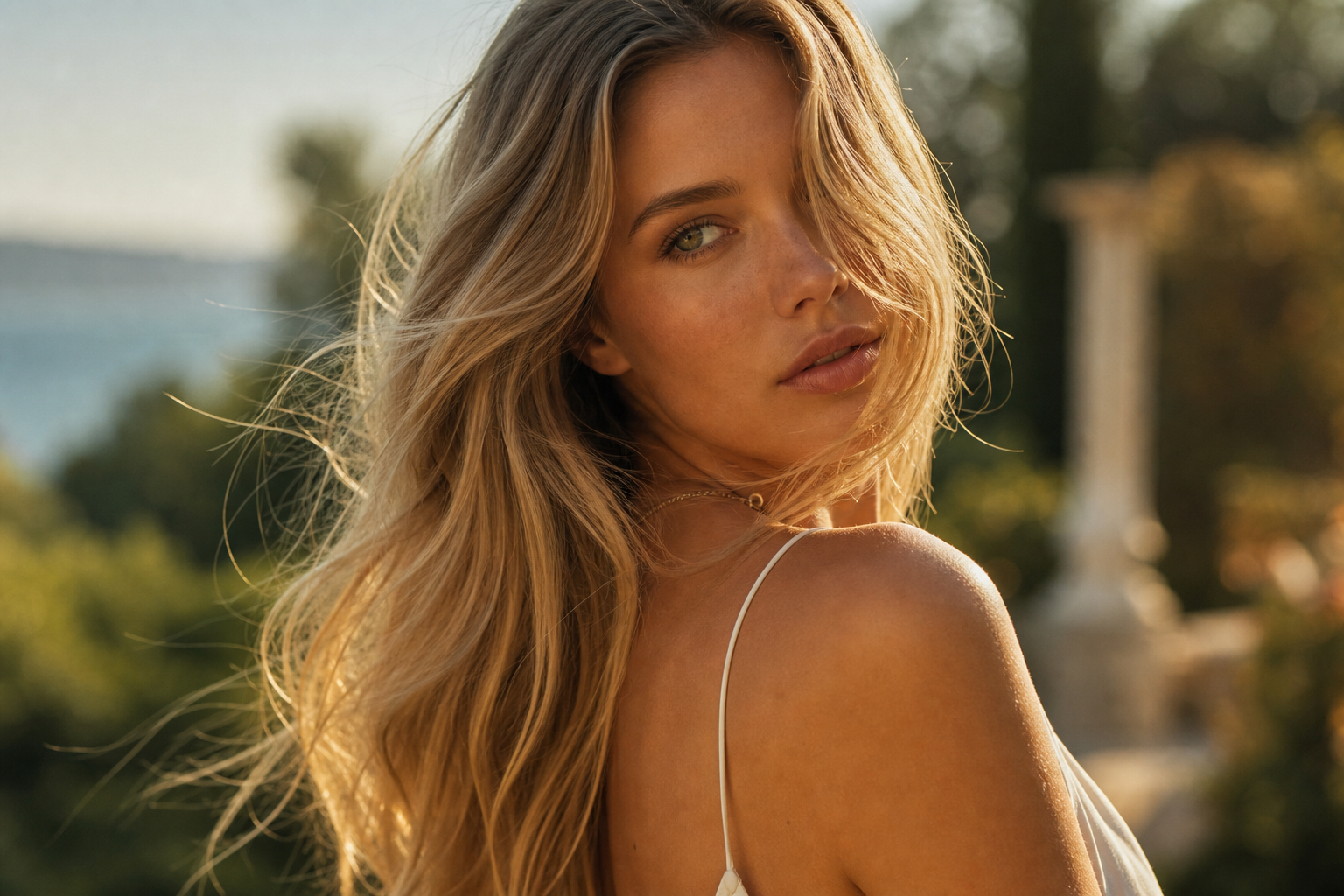
Sun, chlorine, and saltwater can cause blonde and highlighted hair to take on unwanted warm tones after summer. We'll advise you on how to restore a cool color using purple shampoos and toning masks, and how to complement your care routine to prevent hair from drying out.
Blonde After Summer: Why the Yellow Tint Appears
The end of summer brings a predictable change for blonde hair. The shade that was cool and clear in June appears warmer in September, with a straw-like tint under daylight and a loss of vibrancy. Whether you have an all-over blonde, subtle highlights, or lightened lengths, the effects of weeks in the sun, pool, and saltwater show similarly. It's not a care mistake or a sign of a bad dye job—it's a common reaction of lightened hair to summer conditions.
The Yellow Undertone Doesn't Form, It Reappears
Natural pigment in light and medium shades has a warm component. Lightening only partially removes it: the higher you go on the lightening scale, the more likely a yellow to golden base remains in the hair. A cool ash or pearl result is achieved through toning, which is a pigment that visually balances the warm component. This toning pigment mostly stays on the hair's surface and gradually washes out with each wash. Once it fades, the yellow base reappears.
Summer accelerates this process from several angles. Sunlight breaks down the toning pigment, chlorinated and saltwater wash it out faster, and frequent washing after swimming adds more cycles. Minerals from hard water also deposit in the hair, shifting the shade to a duller, warmer impression. The result is a color that left the salon in spring as cool, now appearing two shades warmer by September.
The Role of a Disrupted Cuticle
The second half of the explanation is mechanical. Lightened hair has a raised and uneven cuticle, the outer scaly layer. Such hair is porous: it absorbs pigment and water quickly but releases them just as fast. It also reflects light unevenly, so even a correctly toned shade appears dull and slightly warmer than it actually is. Summer dryness, saltwater, and hot air further accentuate this effect.
This is why simply recoloring isn't enough. If you don't seal the hair and provide moisture, the cool tone will wash out faster than you can repeat the toning. Caring for the shade and the condition of the hair go hand in hand for blondes.
Three Pillars to Return to a Cool Tone
The good news is that most of the seasonal shift can be managed at home if you assemble the right combination of products. Autumn care for blondes relies on three types of products:
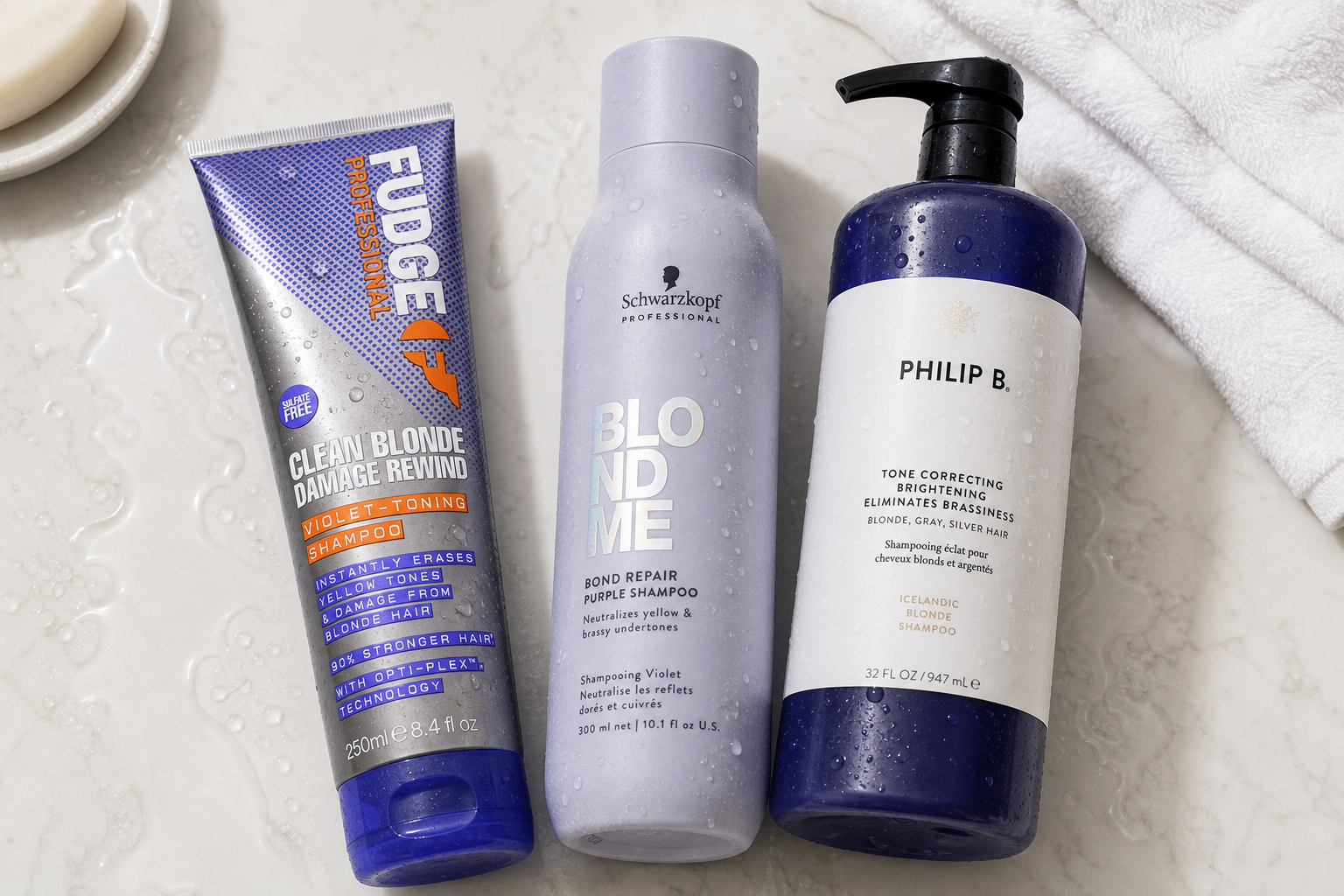
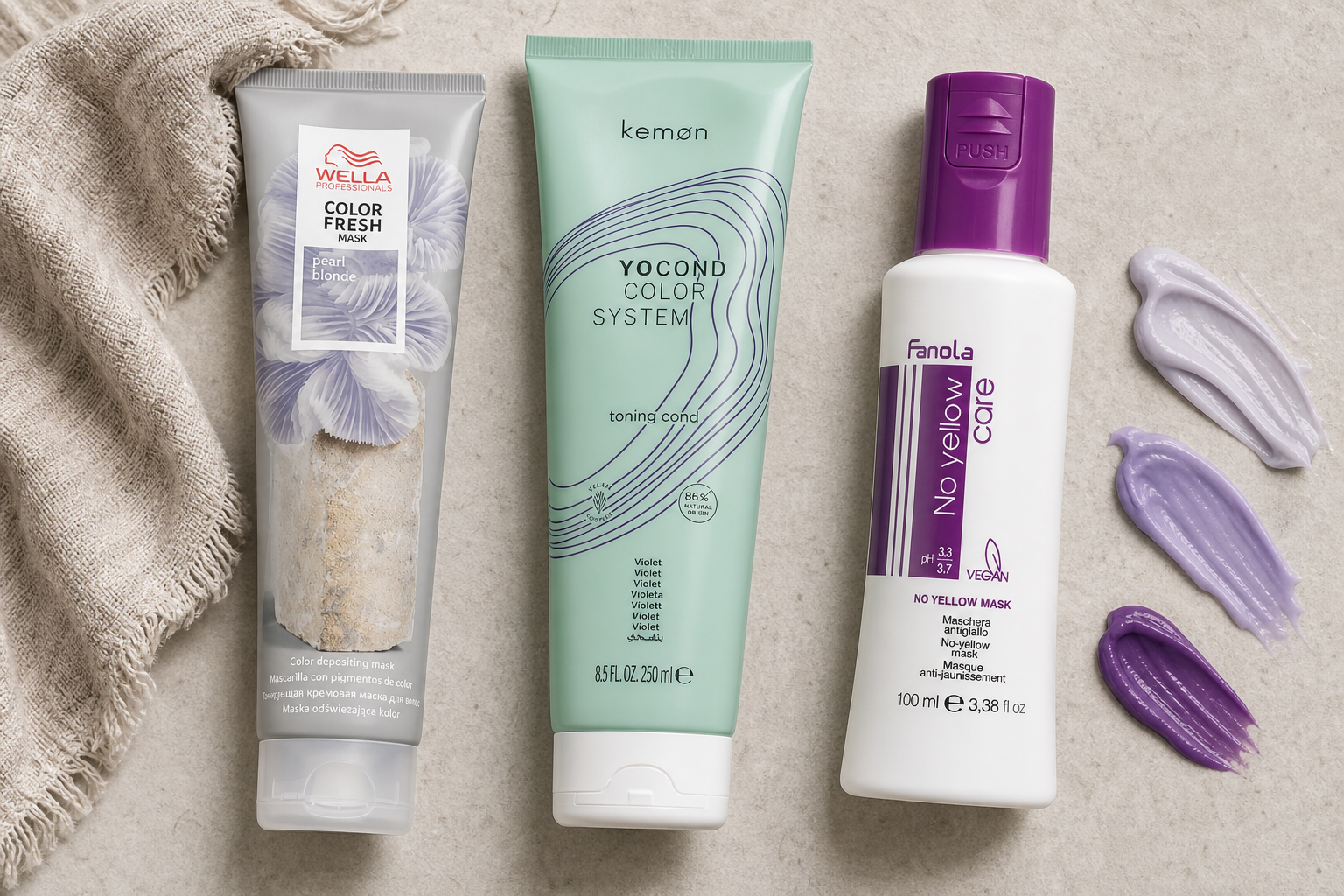
- Purple Shampoo – regular maintenance that keeps the yellow component at bay between salon visits. Brands like Fanola and Kemon have long focused on anti-yellow care.
- Toning Mask – a more intense intervention to restore a cool tone once it has faded. Typical examples are toning masks from Wella Professionals.
- Hydration and Leave-In Care – smooths the cuticle and helps the result last longer. This includes restorative masks and leave-in products, such as those from L'Oréal Professionnel.
These three steps don't replace each other but complement one another. Purple shampoo alone won't fix dry ends, and a hydrating mask won't bring back a cool shade. It's wise to choose one product from each category based on how quickly your hair yellows and how much summer has dried it out. In the following sections, we'll explore how the different types of products differ, how to dose them, and how to know when it's time to repeat toning.
How Purple Shampoos Work Against Yellowing
Purple shampoo doesn't work with bleaching chemicals, but with optics. Purple is opposite yellow on the color wheel, so when a subtle purple pigment settles on the hair surface, it optically suppresses the yellow tint, giving the shade a cooler appearance. The same principle applies to blue and green toning products, which are used on orange and reddish undertones in darker blonde or brown highlights.
It's equally important to know what purple shampoo can't do. It doesn't change the level of lightness, it doesn't recolor the hair, and it doesn't affect its internal structure – the pigment stays on the surface and gradually washes out with each shampoo. If the hair is yellow because the bleaching wasn't high enough, purple shampoo won't fix it, and the solution should be left to a hairdresser. Don't expect it to replace hydration either: it tones but doesn't nourish.
The main difference between shampoos is the intensity of pigmentation. Strongly pigmented shampoos from the No Yellow range by Fanola, which is specifically focused on neutralizing yellow tones, are among the more intense – the toning component is concentrated, so they shift the tone quickly and are suitable for significantly yellowed blonde or hair that hasn't been cared for in weeks. On the opposite end are more gently formulated options, like Kemon Actyva Colore Brillante Anti-Yellow Shampoo 250 ml. It works in smaller steps, making it more suitable for maintaining a cool tone continuously without overdoing the shade.
The duration of application mainly depends on the porosity of the hair, that is, how readily the cuticle accepts the pigment. Lightened and chemically treated hair acts like a sponge and absorbs pigment much faster than healthy hair. As a guideline, consider these three situations:
- Very light highlights, platinum blonde, or highly porous ends – start with one to two minutes and only extend the time based on the result.
- Natural or less lightened blonde in good condition – typically tolerates three to five minutes depending on the shampoo's pigmentation.
- Hair with regrowth and uneven porosity – apply shampoo first to the lengths and ends, working it into the roots only at the last moment.
When using a new shampoo for the first time, it's wise to stay at the lower end of the recommended time suggested by the manufacturer, and it's better to repeat the process than to over-tone to coolness on the first try. Strongly pigmented products also stain hands and grout in tiles, so gloves and a quick rinse of the shower aren't unnecessary precautions.
Shampoos are the broadest category in blonde care, and the selection spans all price levels. Affordable ranges are roughly up to 150 CZK and offer those strongly pigmented formulas that address acute yellowing. The mid-range, approximately up to 210 CZK, which includes the mentioned Kemon, usually adds milder toning and better conditioning components. Premium and professional ranges from brands like Wella Professionals, L'Oréal Professionnel, or Milk_Shake are above this threshold, and their added value lies mainly in gentler washing and overall color care, not in the strength of the purple pigment.
If you're choosing for the first time, it makes sense to start with a gentler variant and only opt for strong pigmentation when the yellow tint is truly pronounced. A cool tone is much easier to maintain than to rescue.
Toning Masks: Deeper Cool Tones for Longer
Purple shampoo works quickly and superficially: you leave the foam on for a few minutes and then rinse it off. A toning mask is based on the same principle of complementary colors, but the pigment is mixed into a nourishing creamy base. It is applied in a thicker layer, stays on the hair longer, and along with the tone, it also provides moisture that lightened lengths need after summer. The difference is mainly in longevity – a cool tone from a mask usually lasts several washes, while with shampoo, the warm hue returns sooner.
The second difference is in control. You dispense shampoo in your palm and spread it quickly in the shower, while the mask is applied more deliberately – only where the warm tone has actually appeared. For blonde hair, this is usually the area from mid-lengths down; the roots remain cooler on their own.
As a starting choice for post-summer blondes, we recommend Wella Professionals Color Fresh Mask Pearl Blonde 150 ml. The pearl shade works with a cool, slightly ashy pigment: it neutralizes the yellow component but doesn't overpower the shade – it's a toning layer that gradually washes out, not a permanent color. The 150 ml packaging is practical for trying out, as it is enough for several applications on medium-length hair, and you don't have to buy a large package before you know how your hair accepts the pigment. At Brasty, it's one of the seasonally most sought-after masks after the holidays.
If you're looking for a gentler option, go for the toning conditioners from the Kemon Yo Cond Color System range. They work on the same principle, just with a lighter conditioner texture, and you choose the shade based on the direction you want to shift the tone. For fine or very delicate hair, which loses volume with a heavy mask, a conditioner is a more convenient choice.
How to Apply the Mask for an Even Tone
An uneven result is not due to the product but to the technique. Follow this simple procedure:
- Put on gloves and prepare an old towel – the pigment sticks to the skin and shower surfaces and is easily washed off only immediately.
- Wash your hair, gently squeeze out the water, and towel dry. On wet hair, the pigment runs off, on completely dry hair it spreads unevenly.
- Work strand by strand from top to bottom and comb the mask through with a wide-tooth comb – combing determines the uniformity of the tone.
- Leave the ends for last. They are the most porous, absorb pigment faster, and would cool more than the rest of the lengths with the same processing time.
- Watch the time according to the manufacturer's instructions and check the result continuously on one strand.
- Want a subtler effect? Mix the toning mask with a regular moisturizing mask or conditioner in about a one-to-one ratio. The pigment will be diluted and the shade will shift more gently.
- Rinse with lukewarm water until the water runs clear.
Home Toning vs. Visiting a Hairdresser
A toning mask handles typical summer yellowing well, which is when the shade is basically fine but has just slipped into a warmer tone. This is typically the case for blonde hair after a holiday, which is a month or two away from a planned salon visit – the mask covers this interim period and the hair also gets a dose of care.
For larger interventions, it's wiser to leave it to the hairdresser. When the difference between the roots and lengths is significant, when highlights are uneven, or you want to shift the shade by several degrees, a mask won't solve it: the pigment only deposits on the hair surface, it doesn't lighten it and won't even out differences in the base. For hair that has been repeatedly bleached, it's also worth discussing its condition with a hairdresser before reaching for pigment – porous hair absorbs it unpredictably.


How Often to Tone to Prevent the Shade from Turning Purple
Toning works reliably when done regularly. If you reach for pigment every time you feel your blonde is losing its cool tone, the shade can shift to a grayish or purplish hue within a few weeks, from which it takes longer to return than you might expect. Therefore, base your care routine on consistency, not on the immediate impression you get in the mirror after your morning wash.
Basic Weekly Schedule
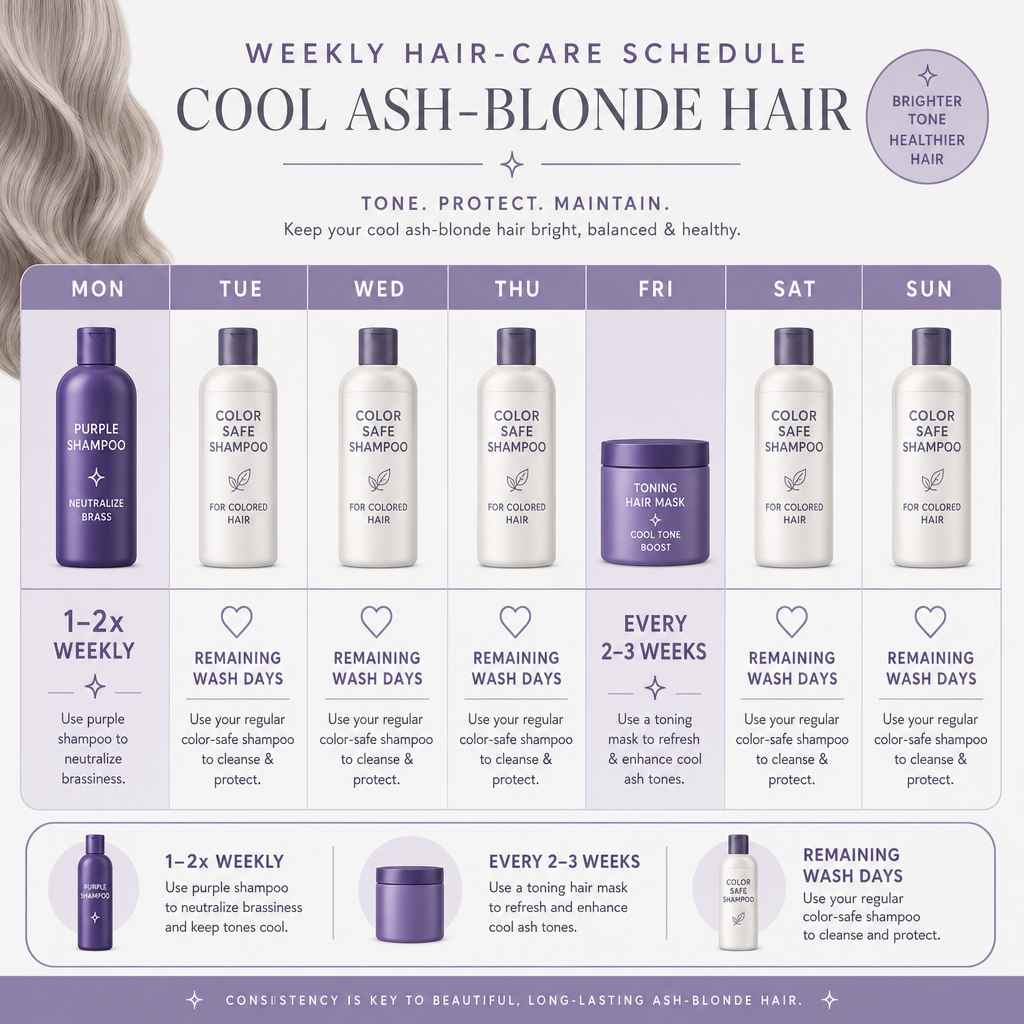
For most lightened and highlighted hair, a simple plan works best, which you can then adjust based on how quickly your shade turns warm:
- Purple shampoo once or twice a week. More is usually not necessary. If you wash your hair more often, use pigment for only one or two washes and go without it for the rest of the week.
- Toning mask based on the rate of yellowing. Generally once every two to three weeks. For heavily lightened lengths that turn warm more quickly, the interval may be shorter, while for subtle highlights on a darker base, it may be longer.
- Remaining washes without pigment. Give your hair a break between toning sessions and use a regular shampoo for colored hair. Options include Milk_Shake Color Care Color Maintainer Shampoo or the L'Oréal Professionnel Série Expert Vitamino Color Spectrum range, designed to maintain color results between salon visits.
Consider this schedule as a starting point, not a strict prescription. Blonde behaves differently right after lightening compared to three months later when the lengths are more porous and the pigment binds more readily.
How to Tell If There's Too Much Pigment
Over-toning almost never appears evenly. You'll first notice it on the most porous areas – the ends, strands around the face, and places where lightening was strongest. These areas will color sooner and more intensely than the rest of the head.
There are three typical signs: a grayish veil that makes the blonde look dull instead of bright, a visibly purplish tint in the light, and a loss of depth – hair appears flat, as if lacking the natural contrast between lighter and darker strands.
The remedy is fortunately gradual and doesn't require anything dramatic. Stop using pigment entirely and wash your hair with a regular shampoo until the shade returns. Usually, a few washes are enough. Once the blonde settles, return to toning but with a shorter application time or one less wash per week. Permanent over-toning is usually not a result of a single action, but of a consistently too frequent routine.
Factors That Accelerate Yellowing
Before you start toning more frequently, check if something other than your care routine is causing the quick return of warm tones:
- Hard water. Water with a higher mineral content deposits on the surface of lightened hair, making the shade appear duller and warmer. In areas with harder water, blonde usually requires more attentive care.
- Residual chlorine from the pool. After swimming in an outdoor or indoor pool, rinse your hair with clean water as soon as possible, ideally before it dries. This reduces the time chlorine affects the lightened lengths.
- Frequent heat styling. High-temperature straighteners and blow dryers open the cuticle, making the shade less stable. Lower temperature settings and less frequent styling help maintain a cool tone longer than any increase in toning frequency.
By addressing these three factors, you'll often find that maintaining a cool blonde requires less pigment than expected – and the risk of the shade turning purple decreases on its own.
How to Complement Your Care Routine to Keep Cool Blonde Hair from Drying Out
Toning works with the shade, not the condition of the hair. The purple pigment deposits a color filter on the surface of the strand, which visually tones down the yellow component, but it doesn't provide moisture or missing lipids to the lengths. That's why it often happens that hair has a pleasantly cool tone after toning, yet appears dull and lacks shine. Lightened hair tends to be porous after summer: the damaged cuticle reflects light unevenly, and the shade loses depth. Complementary care is not an extra, but a necessity to ensure that cool blonde looks clean and not ashy and dull.
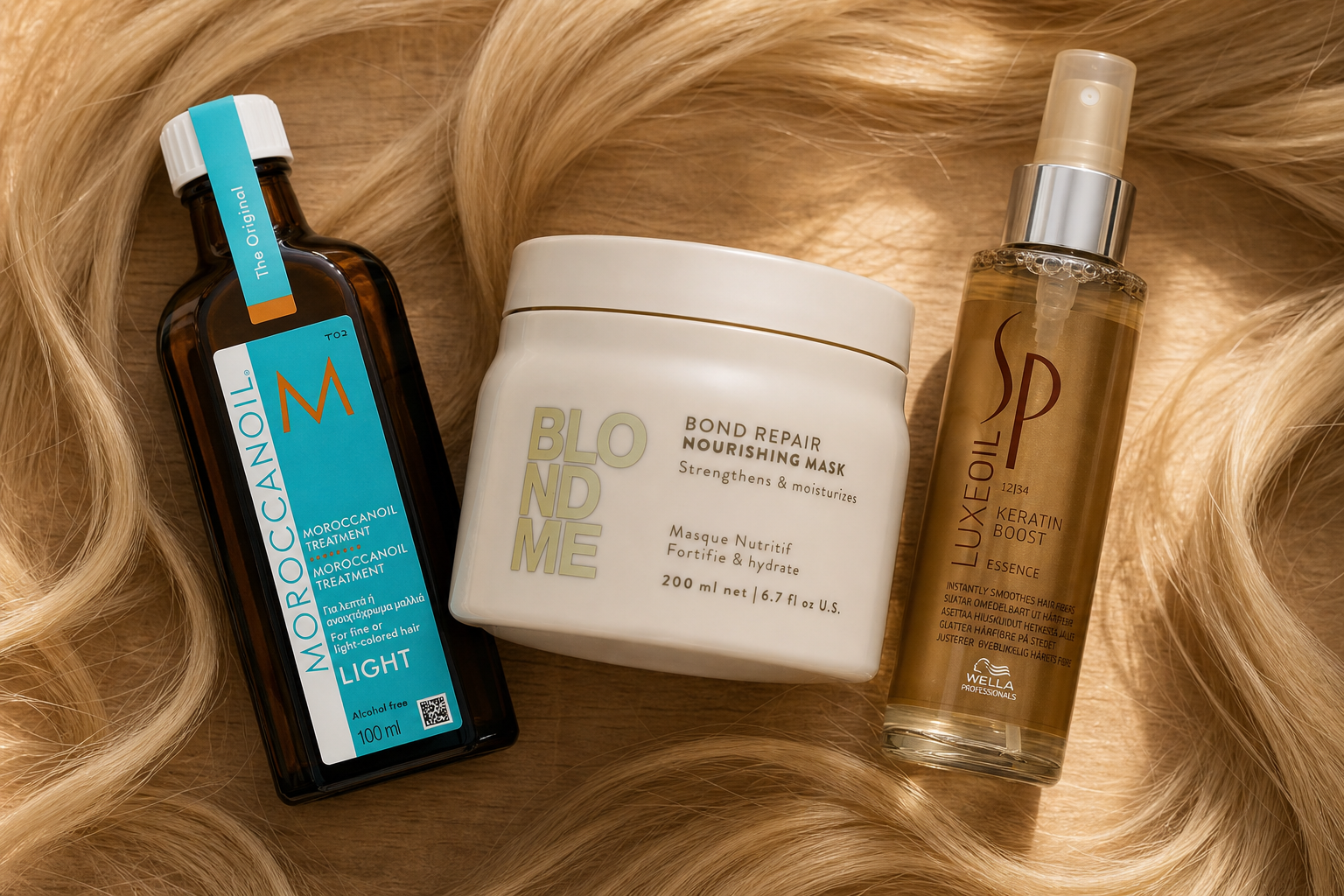
Regenerating mask is the foundation on which everything else is built. If the lengths are significantly stressed by highlights and sun, opt for the Wella Professionals SP Luxe Oil Keratin Restore Mask, which combines keratin and oil components. A gentler but still rich alternative is the L'Oréal Professionnel Série Expert Absolut Repair Mask. Leave either on for a few minutes on towel-dried hair and apply from mid-lengths down, not on the roots. A practical rhythm is simple: in the week you tone, include the regenerating mask until the next wash, so the two treatments don't overlap and the pigment has time to settle.
Oil finishing treatment addresses what the mask alone can't – shine and smoothing the surface. For blonde hair, a lighter consistency is worth it, so the lengths don't get weighed down and lose volume. Moroccanoil Treatment Light is suitable, a variant specifically for light and finer hair. Rub a pea-sized amount in your palms and run it through damp lengths before blow-drying; on dry hair, just a fraction of this amount is enough for the ends.
Leave-in treatment is a safeguard for the days between washes. Lakmé K2.0 Recover Hyaluronic Treatment Damaged Hair targets damaged and lightened hair and is suitable when lengths visibly deteriorate after summer. A more universal choice for everyday use is Revlon Professional Uniq One All In One Treatment – a multifunctional spray that manages detangling and smoothing in one step and requires no extra preparation.
Heat protection is as essential to blonde hair as a pigment shampoo. Lightened strands handle heat worse than uncolored hair, and every blow-dry without protection shifts the shade back to a warm tone. Apply Sebastian Professional Trilliant Spray to damp hair before blow-drying and keep the hair dryer's temperature more in the medium range. Gentle detangling is also crucial: a brush like the Tangle Teezer Wet Detangler goes through tangled lengths with much less pull than a classic comb, so you're not adding unnecessary mechanical stress to already stressed hair.
If you want to take away one complete set for the rest of the season, it looks like this:
- pigment shampoo – neutralizes the yellow component, once or twice a week depending on how quickly it yellows,
- toning mask – deeper and more lasting cooling of the shade, about once every two to three weeks,
- regenerating mask – restores elasticity and shine to hair, in the weeks between toning,
- leave-in treatment and oil – daily maintenance of lengths and ends,
- heat protection and detangling brush – prevention that makes the previous four steps last longer.
This combination doesn't work miracles overnight and won't replace a visit to the hairdresser if the hair is deeply damaged. However, it can keep cool blonde in a condition that looks good even three months after summer – and that's exactly what it's all about.


Category
Recommended articles

"Give a girl the right shoes and she can conquer the world!" Marilyn Monroe