


Summer leaves its mark on mature hair – dry lengths, split ends, and a more sensitive scalp. We'll show you how to create a simple weekly autumn treatment using a mask, hair oil, and serum to restore strength and shine to your hair.
Autumn Hair Revival: Why Start Now
You can notice the end of summer on your hair before you see it on the calendar. The lengths are dry and feel rougher to the touch, the ends split just a few weeks after the last trim, the color looks faded, and the scalp is more sensitive than usual. This is all due to the typical summer combination: long hours in the sun, salty water, chlorine in the pool, and more frequent washing because hair gets dirty faster in the heat.
Whether you spent the summer by the sea or just in the garden and on your bike, the result is often the same. The hair has lost some of its moisture and lipids, which help maintain a smooth surface. Dry lengths are harder to comb, break more easily, and the hairstyle looks flat, even if you're not overloading it with styling.
For mature hair, these effects are more pronounced. The strands tend to be thinner and more porous, the scalp produces less sebum, and recovery after stress takes longer than in younger years. Summer not only affects the current condition but also how the hair looks in the following months.
Autumn is a good time for such a restart. Sun exposure is weakening, hair isn't outside all day, and you have a few weeks of calm before the heating season, hats, and dry indoor air fully kick in. A home treatment doesn't rely on a one-time intervention but on regularity – and it's easier to establish this in autumn than in the midst of holiday travel.
That's why it makes sense to build care as a connected system of three steps, not as three randomly chosen products:
- Hair Mask – the main regenerative step of the treatment. It works inside the hair fiber, replenishing moisture and care where the hair is most weakened, and is applied on a regular weekly basis.
- Hair Oil – treatment for lengths and ends. It seals the hair surface, softens frizz, and helps maintain the effect of the mask between applications.
- Scalp Serum – care for the roots. It targets where the hair originates: on the irritated or dry scalp, which the mask and oil do not specifically address.
Each of these three steps addresses a different layer of the same problem, and that's why they work better together than any of them alone. A mask without subsequent length treatment loses its effect faster, oil alone doesn't replenish what's missing inside the hair, and scalp serum won't fix split ends. When you combine them, you cover the hair from roots to tips and don't have to compensate for one neglected layer with another.
The good news is that you only need three products and a few extra minutes once a week. In the Brasty catalog, these correspond to three separate categories: Hair Masks, Hair Oils, and Hair Serums. We'll go through how to choose from each based on the actual condition of your hair, how often to incorporate each step, and how to create a treatment that lasts the whole season.
What Summer Did to Mature Hair
Mature hair behaves differently than hair in your twenties, and it's worth knowing this before you reach for the first hair mask. The strands tend to be thinner, struggle to hold volume at the roots, and break more easily in areas weakened by coloring or heat. The sebaceous glands work more slowly, so natural oils don't reach the entire length, leaving the ends drier than the rest of the hair. The scalp is also more sensitive – it reacts to hard water, strong cleansing bases, and long hours without a cover. Recovery from stress simply takes longer, which is why the summer impact on mature hair is more pronounced.
Summer added several layers to this. Ultraviolet radiation weakens the outer layer of the hair, salt and chlorine draw out moisture, frequent washing after swimming removes even the little oil the lengths had, and a hot blow dryer or straightener finishes the job. You'll notice the result when the hair looks clean at the roots but tangles, dulls, and becomes harder to comb from the mid-lengths down.
Three Minutes in Front of the Mirror: Simple Home Diagnosis
Before you start shopping, find out what your hair really needs. Just a few observations on dry and freshly washed hair:
- Where the hair breaks. Take a fallen hair and slowly stretch it. If it breaks right at the tip, it's mainly mechanical damage to the lengths. If it breaks along the entire length or close to the root, the strand is generally weakened and needs gentler handling, not more aggressive care.
- How quickly the roots get oily. Observe when a greasy shine appears at the scalp on the second or third day after washing. If it doesn't appear at all and the lengths are still dry, your hair lacks hydration, not degreasing.
- How the ends behave after washing. If you let your hair dry naturally, split ends in mature hair will spread out and appear translucent. This is a sign that a weekly treatment should start with the lengths.
- How the scalp reacts. Itching, tightness, or small flakes after washing indicate that the first step should be for the scalp, not the lengths. Until it calms down, there's no point in layering rich care.
Based on the results, choose the cleansing base for the entire treatment. The shampoo determines how much work remains for the subsequent intensive care – if you dry out the lengths every time, the mask only compensates for the loss.
- Dried-out lengths without scalp issues. Opt for a hydrating base, like Wella Professionals SP Hydrate Shampoo. It's designed for dry hair, cleans gently, and leaves the lengths feeling smooth.
- Itchy scalp with dry hair. Here, Vichy Dercos Anti-Dandruff Dry Hair Dermatological Shampoo makes sense – a dermatologically focused line for dry hair with dandruff, which can be used as a transitional solution until the scalp calms down.
- Prefer luxurious care. An alternative is the energizing line Davines Natural Tech, which targets the scalp and finer hair. Expect a higher price range, but with more generous packaging.
You don't have to change your entire bathroom at once. First, switch the shampoo, observe how your hair reacts for two to three weeks, and only then layer the rest of your autumn treatment on this base. For mature hair, a slower but consistent approach pays off more than a quick change of everything.
A Mask as the Foundation of Your Weekly Routine
Whether your hair has just lost its shine after the summer or the ends are visibly split, a mask is the step in your home care routine that does the most work. Shampoo prepares your hair for care, but it's the mask that has enough time and a rich texture to stay on the strand, nourishing and softening it. For mature hair, which tends to be finer and regenerates more slowly, the difference is most noticeable when combing.
Three Types of Masks Depending on What Your Hair Needs
Masks are not interchangeable. Before reaching for the one you have in your bathroom, try to identify the main issue: weakened strands, significantly damaged lengths, or hair that is impossible to detangle after summer.
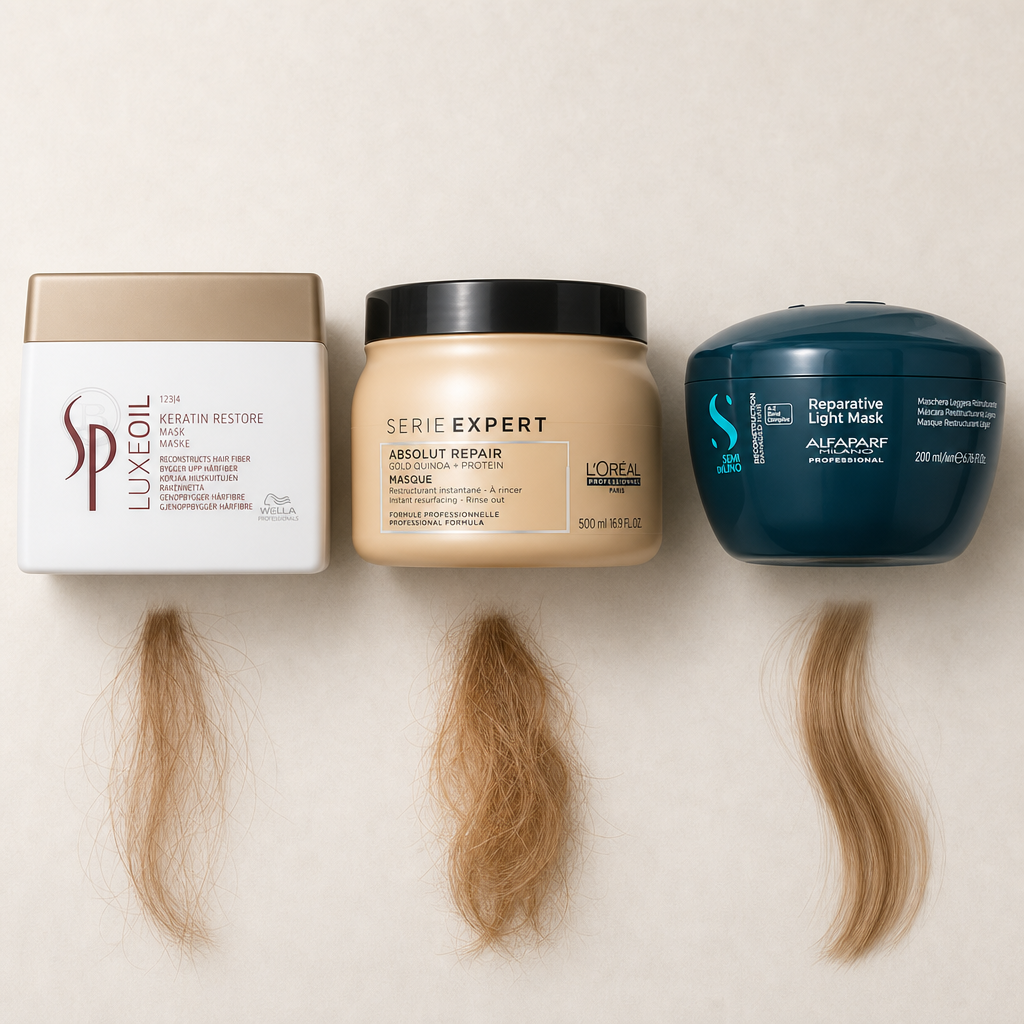
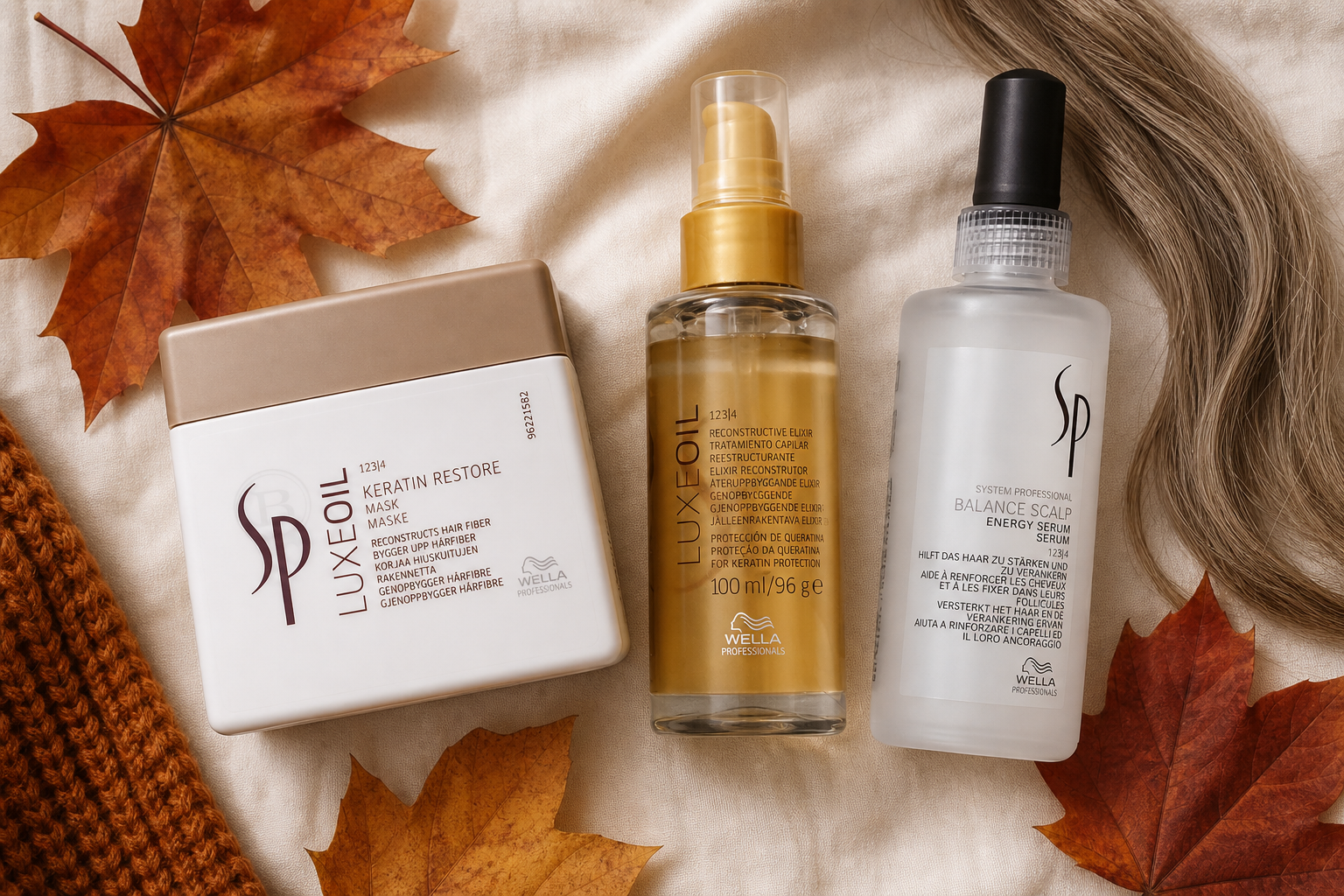
- Weakened strands without major mechanical damage – a reconstructive type is suitable here, such as Wella Professionals SP Luxe Oil Keratin Restore Mask 400 ml. It's an oil-based mask, so your hair feels nourished but not weighed down. A good choice if you're looking for maintenance rather than a rescue operation.
- Significantly damaged and dry lengths – after chlorine, sun, and several seasons of coloring, L'Oréal Professionnel Série Expert Absolut Repair Mask 500 ml makes sense. It's thicker and designed for hair that demands intensive care: the ends split, the lengths feel rough, and the comb gets stuck.
- Hair that's difficult to detangle – when the main problem is static, frizz, and tangled lengths, Alfaparf Milano Lisse Design Keratin Therapy Rehydrating Finishing Mask 500 ml targets this. It smooths the hair surface, making strands easier to separate and drying quicker.
Combining two masks at once is pointless. Choose one and give it at least a month – mature hair reacts gradually, and one use doesn't indicate the result.
How Often and How Long to Leave It On
For most mature hair, once or twice a week is sufficient. We don't recommend more often: daily intensive care can weigh hair down, causing it to become greasy at the roots and lose volume. If your hair is very dry or freshly bleached, stick to the upper limit; for slightly dry lengths, one application is enough.
The duration for professional masks is roughly five to ten minutes – you'll find the specific time on the packaging, and it's worth adhering to it. Extending the time to an hour isn't more effective, and rinsing the mask after half a minute isn't enough. If you want to enhance the result, wrap your hair in a towel; the heat helps distribute the texture.
Apply from Mid-Lengths, Not on Roots
This is the most common mistake in home care. The mask should be applied from mid-lengths to the ends – where the hair is oldest and most stressed. The roots are the youngest part of the hair and have their own supply of sebum from the scalp; the mask just sits on them, reducing volume and making hair look unwashed after two days. Treat scalp care with a separate product.
The process is simple: after washing, thoroughly squeeze your hair with a towel, as the mask dissolves and drips on wet hair. Apply it strand by strand, comb through with a wide-tooth comb, leave it on, and rinse with lukewarm water.
Larger Sizes Are Worth It for Regular Use
For a mask you use once or twice a week throughout autumn and winter, it's worth opting for a larger size. A half-liter variant is significantly cheaper per application, and you won't run out halfway through your routine. A smaller size only makes sense if you're trying the mask for the first time and aren't sure if it suits your hair.

Oil and Serum: Where Exactly Do They Belong
Oil and serum sit side by side in hair care, but each addresses different needs. Oil works on the lengths and ends, the part of the hair that is oldest, most stressed, and dries out the fastest, especially in mature hair. Serum, on the other hand, targets either the scalp or penetrates the hair fiber. When these two roles are swapped, the result is often weighed-down roots and still dry ends.
Oil Belongs on Lengths and Ends
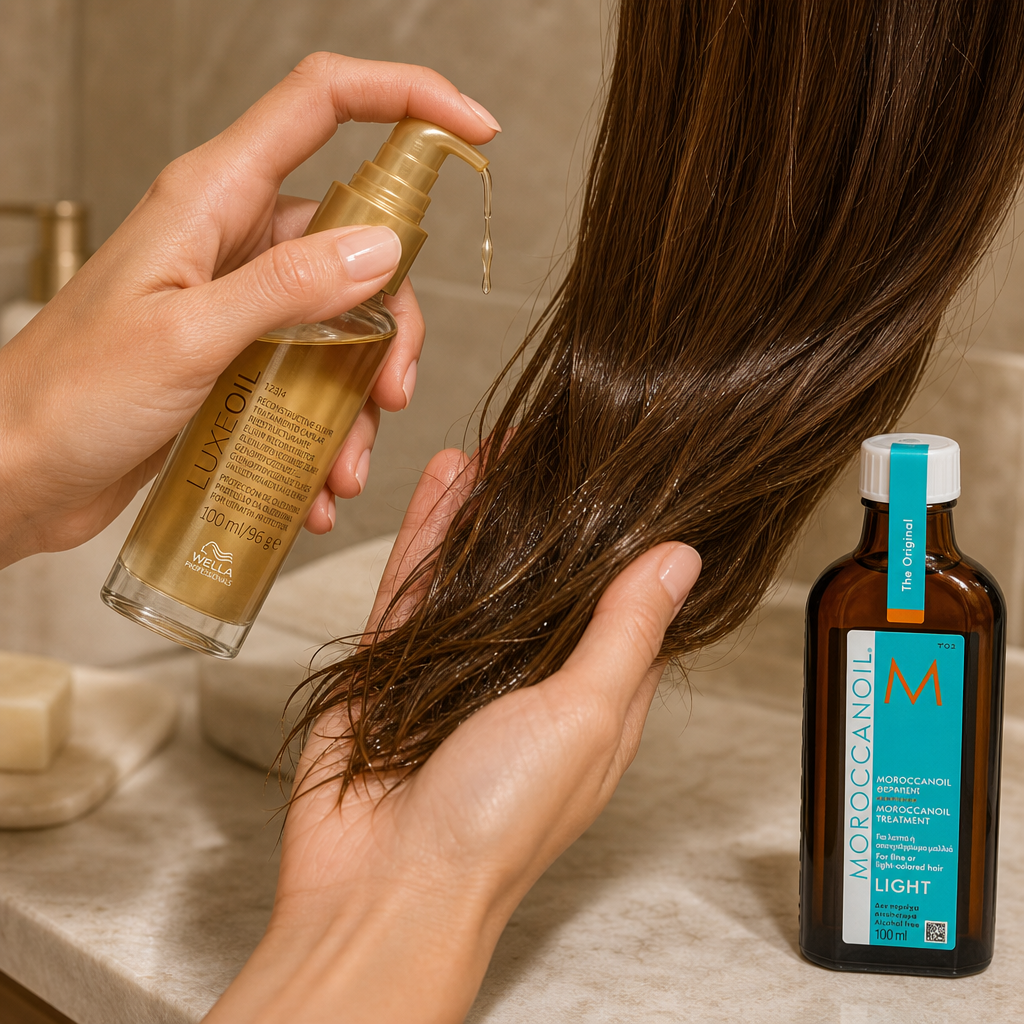
With oils, it's worth distinguishing at what stage of washing you use them. Wella Professionals SP Luxe Oil Reconstructive Elixir 100 ml is a type of oil treatment that works well as a pre-wash preparation. Apply it to dry lengths and ends, leave it on for about fifteen to twenty minutes, and only then wash your hair. Avoid the roots; the oil's job is from ear level down. This method is suitable when the ends feel rough to the touch after summer and detangling is difficult.
Moroccanoil Treatment Light 200 ml plays a different role. It's a lighter oil treatment variant designed for finer and lighter hair and is used as a finish, not as a pre-wash treatment. Rub a small amount into damp lengths before blow-drying, or apply one drop to already dried ends to smooth them and reduce static. It belongs to a higher price range, but thanks to its larger packaging and minimal dosage, it lasts a long time.
Serum for the Scalp and Fiber
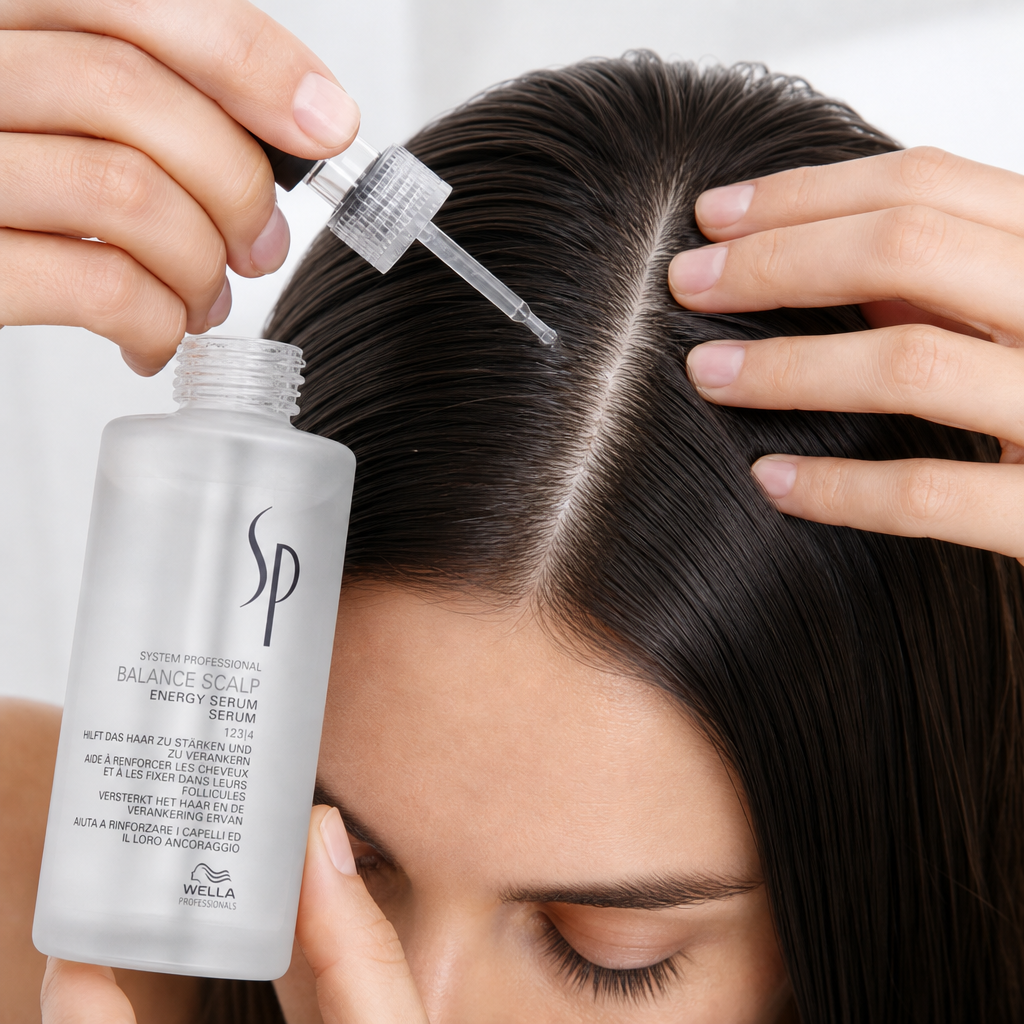
Serums are similarly clearly divided. Wella Professionals SP Balance Scalp Energy Serum 100 ml is a leave-in treatment designed specifically for the scalp, not for lengths. Apply it after washing to the partings on damp hair and gently massage it in with your fingertips. It makes sense when your scalp feels itchy or tight after summer, which is more common in mature hair than expected.
Wella Professionals SP Liquid Hair Molecular Hair Refiller 100 ml, on the other hand, works with the fiber itself. It's a concentrated treatment for strengthening damaged lengths, applied after washing to damp hair, left on briefly, and then you continue with your usual styling. For hair that is both colored and heat-stressed, it makes sense to alternate it with other steps in the treatment, not to use it with every wash.
Dosage: Less is More
The most common mistake with both formats is not a poor product choice, but using too large a dose. Stick to a more moderate hand:
- Oil as a finish: two to three drops for shoulder-length hair, four to five for thicker lengths. Rub them in your palms first and then run through your hair.
- Oil before washing: here you can afford a more generous dose since you'll wash it out anyway. Still, stay only on the lengths and ends.
- Serum on the scalp: several doses distributed into partings across the head work better than everything in one place.
- Strengthening serum: one dose after washing is plenty, excess will just unnecessarily weigh down the hair.
If you're unsure, always start with a lower dose and increase it next time if needed. Over-oiled hair can only be saved by washing again, which is exactly what you want to avoid with dried-out lengths.


Weekly Treatment Plan Step by Step
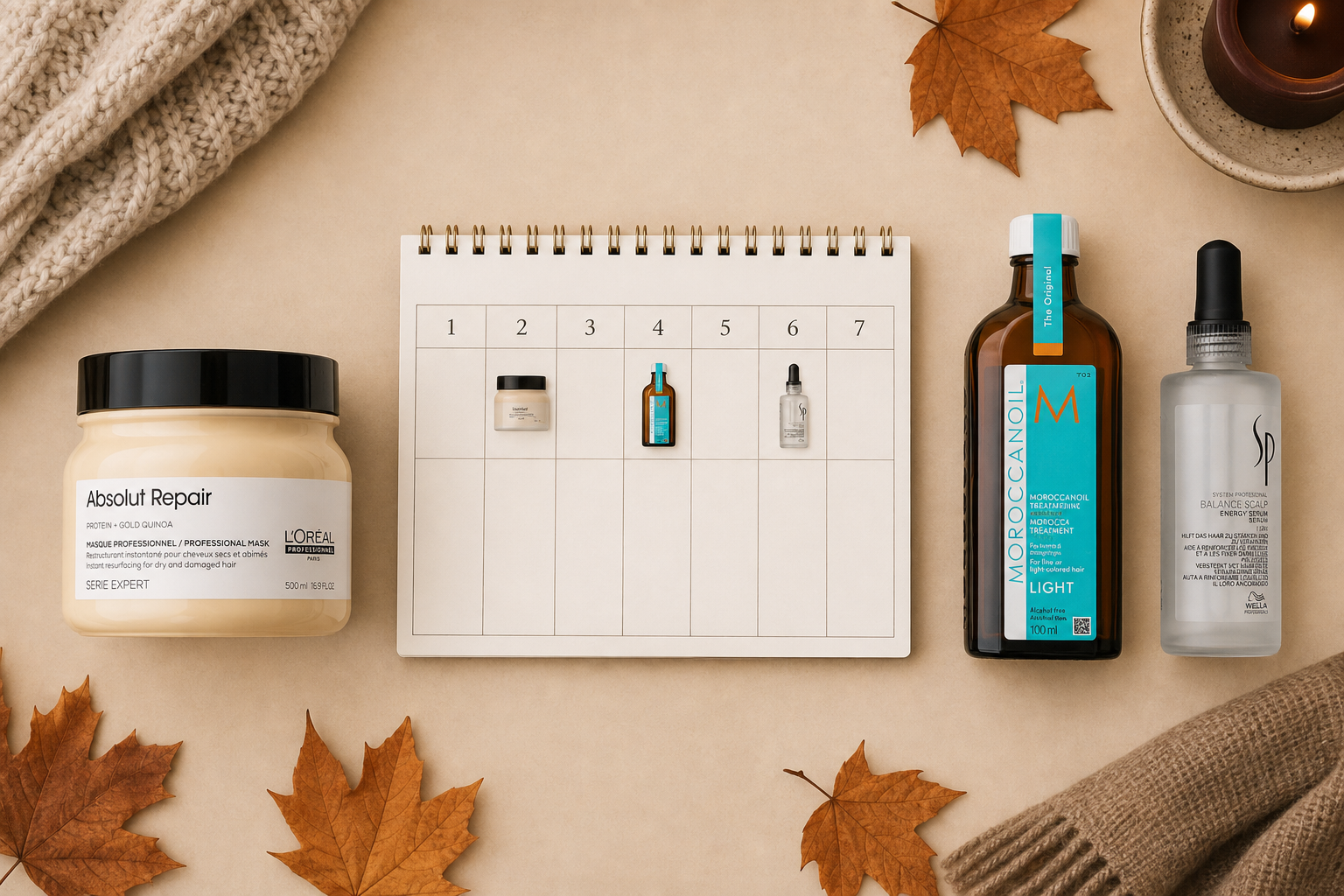
The mask, oil, and serum work best when they have a designated place in your weekly routine and do not overlap. The following schedule assumes two to three washes per week, which is a reasonable compromise for mature hair between a clean scalp and non-dry lengths. Feel free to adjust the days according to your schedule – the order of steps is what's important.
Sample Week
- Day 1 – Wash with oil pre-treatment. Massage oil into dry lengths and ends an hour before showering, avoiding the roots. Then wash with a moisturizing shampoo, ideally twice, to ensure the oil is completely rinsed out.
- Day 2 – Scalp serum. Apply serum directly to the partings on dry hair and massage in with your fingertips. Do not wash your hair; the serum works overnight.
- Day 3 – Rest day. Leave your hair alone, or use a dry shampoo and a comb with soft bristles if needed.
- Day 4 – Wash with mask. After shampooing, apply the mask to damp, towel-dried lengths. The duration depends on the type of mask you are using.
- Day 5 – Leave-in care. Apply a small amount of leave-in product to the ends, especially before blow-drying and morning styling.
- Day 6 or 7 – Optional third wash. If your roots get greasy quickly, include a light wash without a mask and just add a scalp serum.
One rule holds the entire plan together: do not combine the mask, oil, and serum on the same day. Hair cannot process everything at once, resulting in a weighed-down, limp style.
When to Evaluate Results
You may notice a difference in shine after just a few applications, but this is mainly due to the surface treatment of the hair fiber. Wait four to six weeks of regular routine before truly evaluating the treatment, and watch for three things: how much hair remains in the comb, how the ends behave the day after washing, and how the scalp responds to the serum.
Adjustments for Colored Hair
Colored hair needs the same rhythm, just with shifted emphasis. Shorten the oil pre-treatment to twenty to thirty minutes and choose a reconstructive mask rather than a deeply hydrating one. Delay the first wash after coloring by a day or two if possible, and do not include a mask; the pigment is still settling at that time.
Starter Trio in Two Price Ranges
If you want to start with minimal decision-making, build your treatment from three items – a cleansing base, mask, and oil – and add serum as a fourth step once you get into the rhythm.
- More affordable set. Wella Professionals SP Hydrate Shampoo as the cleansing base, Wella Professionals SP Luxe Oil Keratin Restore Mask as the weekly mask, and Wella Professionals SP Luxe Oil Reconstructive Elixir for the lengths. The entire range is designed to complement each other.
- More demanding option. L'Oréal Professionnel Série Expert Absolut Repair Mask for more significantly damaged lengths, Moroccanoil Treatment Light in a lighter consistency, and Wella Professionals SP Balance Scalp Energy Serum for the scalp.
Both sets are based on the same logic, differing mainly in texture and intensity. If you're unsure, start with the more affordable option.
How to Complement the Routine
When you're ready to go further, check out the Hair Treatments and Leave-In Care categories. You'll find products that fit into the plan without overloading it – for example, Lakmé K2.0 Recover Hyaluronic Treatment Damaged Hair 100 ml as a supplement to the mask or Revlon Professional Uniq One All In One Treatment 150 ml, which handles detangling and heat protection in one step. More than the number of products, consistency matters: three steps followed throughout the fall will do more for mature hair than using eight products sporadically.
Category
Recommended articles

"Give a girl the right shoes and she can conquer the world!" Marilyn Monroe