

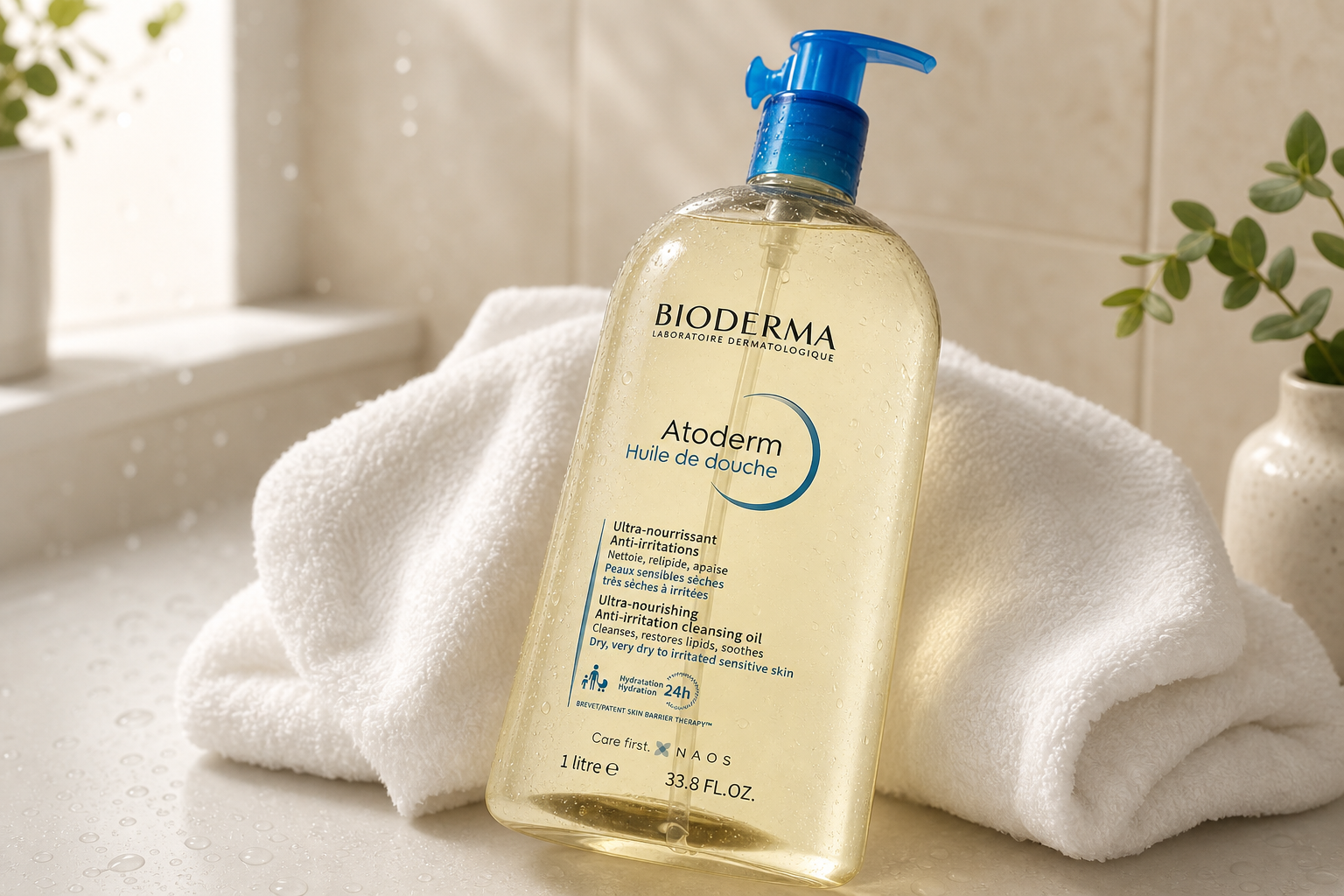
Bioderma is one of the most sought-after brands in the skincare and body care category on Brasty. Let's explore what has earned it this position and which products from the Sensibio, Sébium, Atoderm, and Hydrabio lines are most popular among customers.
Bioderma at Brasty: the brand customers choose most often
Whether you're looking for micellar water that can remove makeup from even irritated skin, shower care for dry skin all over the body, or a serum that restores lost moisture to your skin, there's a high chance that Bioderma will end up in your cart. In our skincare and body care category, it has long been one of the most sought-after brands, and interest in it doesn't wane between seasons — it's not a short-lived wave of popularity but a stable choice that customers repeatedly return to.
What's interesting is how it has built this position. It's not driven by a single hit product that carries the entire brand, nor is it narrowly focused on just one skin type. Bioderma covers several different situations simultaneously: sensitive skin that reacts to any change, oily and problematic skin with enlarged pores, extremely dry to atopic skin, and skin that simply can't retain hydration. These are four completely different needs, and each has its own line with its own logic at Bioderma.
These lines are the best way to navigate the brand. They work like a map, helping you avoid the lengthy comparison of dozens of individual products:
- Sensibio — designed for sensitive skin that easily reddens, stings, or feels tight. It focuses on gentle cleansing and soothing.
- Sébium — the answer for oily, combination, and problematic skin. It works on regulating excessive sebum production and pore cleanliness.
- Atoderm — nourishment for dry to very dry and atopic skin, especially for the whole body, not just the face.
- Hydrabio — hydration for skin that quickly loses water and appears tired or unbalanced.
The differences between them are not just cosmetic. The line for oily skin works differently than the nourishment for atopic skin, and if you mix them up, the result will likely disappoint you — not because the product is bad, but because it addresses a different issue than the one you have. That's why it's worth choosing Bioderma according to your skin type before considering the product name or package size.
In the following sections, we'll go through each of these lines in more detail: which skin type they suit, the role of different formats from cleansing to cream, and which specific products from them customers at Brasty buy most often. By the end, you should have two clear answers — which line matches your skin type and which product from it makes sense to start with, without having to try half the range first.
French Dermocosmetics: Skincare Tailored to Your Skin Type
French pharmacy dermocosmetics are based on a simple yet rigorously followed idea: there is no single cream that suits every skin type. Instead of a universal product, they offer separate lines, each targeting a specific skin condition — sensitivity, dryness, blemish-prone skin, or lack of hydration. Bioderma adheres to this approach across its entire portfolio, so you choose not by product name but by how your skin behaves.
In practice, this means you first answer the question "What does my skin need?" and only then look for a specific product. Each line has its own logic: one is designed for skin that reacts with redness to almost anything, another deals with oiliness and enlarged pores, and another targets very dry skin that needs a richer texture. This segmentation helps even if you're just learning about skincare — it narrows down the choice from thousands of products to a few that make sense for your situation.
The fact that this segmentation suits customers is evident in what interests you in facial and body cosmetics. Sensitive skin is among the most represented needs, and its demand is gradually increasing. Right behind it are dry skin and blemish-prone skin, with a growing interest in combination and oily skin as well. These are exactly the groups for which French dermocosmetics are divided into separate lines — no one has to settle for a compromise.
Formats You'll Encounter with Bioderma
The second dimension of choice is format. The same need can be addressed with several textures, and not all will suit you equally. It's worth knowing what each label means:
- Micellar Water — a cleansing solution applied with a cotton pad that doesn't require rinsing. Micelles in it bind impurities and makeup residues, so cleansing occurs without mechanical rubbing. Suitable for both morning and evening, most customers associate it with French dermocosmetics.
- Cleansing Gel or Foam — used with water and rinsed off. Chosen by those who like the feeling of "truly clean" skin, and it's often prepared for skin prone to excessive oiliness.
- Toner — follows cleansing. It replenishes hydration and prepares the skin for serum or cream, which you apply immediately after.
- Serum or Concentrate — a light texture with a higher concentration of active ingredients, applied under a cream. Used in smaller amounts and drop by drop.
- Compensating Care — a moisturizing cream designed for skin that is both oily and dry. "Compensating" means it provides moisture without burdening the oily surface with more oil.
- Shower Gel and Shower Oil — two different philosophies of body washing. Gel is lighter and refreshing, oil leaves a more oily film and is intended for very dry skin that doesn't respond well to traditional washing.
- Body Cream and Balm — thicker textures for larger areas of skin. Balm is usually richer than cream and is typically applied after showering.
The last thing worth noting with French dermocosmetics is the volumes. Bioderma works with two extremes at the same time. On one hand, there are small packages, not meant for months of supply, but for trying out the product and seeing how your skin responds — with serums and compensating creams, this is a common way to start. On the other hand, there are large liter variants of shower gels and oils or half-liter body creams, which make sense when you know what you're using and are managing a daily routine for the whole family. For some formats, there are also refill options, so you keep the original pump or dispenser and just refill the content.
This combination — clear segmentation by skin condition, understandable formats, and the ability to move from small to large packaging — is why French dermocosmetics are easy to recommend. You don't need to understand the composition, just understand your skin, and the logic of the line does the rest for you.
Sensibio and Sébium: Cleansing for Sensitive and Oily Skin
Whether your skin reacts to new cosmetics with redness or becomes shiny throughout the day, cleansing is the foundation of your skincare routine. That's why Bioderma offers not just one universal micellar water for everyone, but several lines tailored to different skin types. Two of the most sought-after are Sensibio for sensitive skin and Sébium for oily and combination skin.
Sensibio: Calm for Sensitive Skin
Sensibio is designed for skin that is easily irritated — it feels tight after makeup removal, turns red with new cosmetics, and reacts even to hard tap water. The core product is micellar water, a format that Bioderma helped popularize: micelles capture makeup and impurities, which you can wipe away with a cotton pad without rinsing or scrubbing the skin.
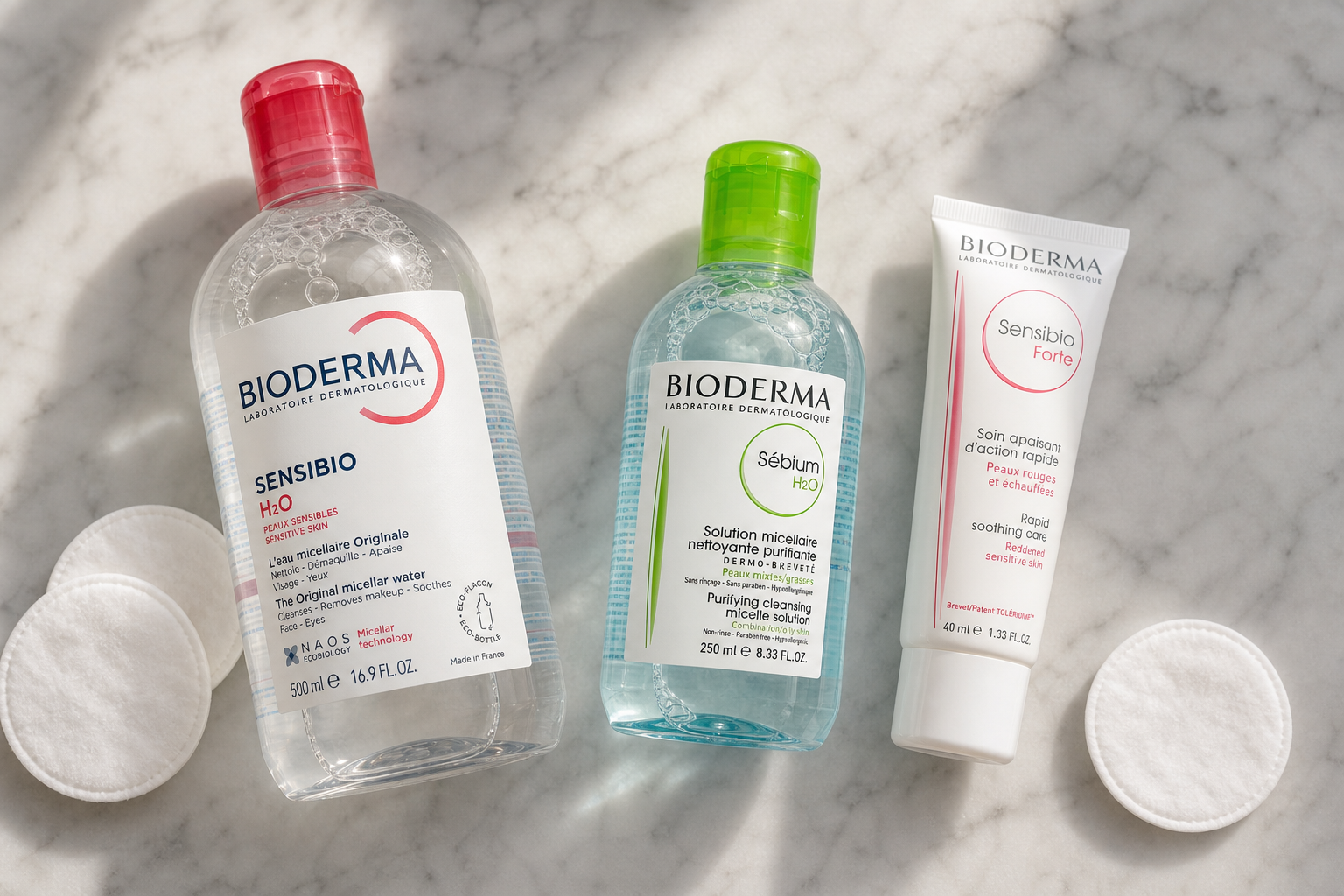
- Bioderma Sensibio H2O Make-up Removing Micelle Solution 500 ml — the most frequently chosen cleansing product from our range; for many customers, it serves as the sole makeup remover for both face and eye area. The half-liter bottle lasts a long time, even with twice-daily makeup removal. Ideal when regular cleansing gels make your skin feel tight or when you seek a makeup removal method that doesn't require rinsing with water.
- Bioderma Sensibio Forte Rapid Soothing Care 40 ml — a soothing treatment for skin prone to redness and tightness. It's lighter than a traditional cream and is used during times when the skin is more unsettled than usual — after winter or a sunny holiday. Ideal when your skin reacts with redness and you want to calm it before trying other products.
For sensitive skin, starting with gentle makeup removal is worthwhile — harsh cleansing irritates the skin more often than creams themselves.
Sébium: Cleanliness Without Dryness
Sébium targets the opposite type of issues. If you're dealing with shine on your forehead and nose, enlarged pores, or skin that becomes oily in the afternoon, you need more thorough cleansing — but not one that dries out the skin. This is the most common mistake with oily skin: after aggressive degreasing, sebum production increases even more. Sébium therefore combines two steps, cleansing and light hydration.
- Bioderma Sébium H2O Purifying Cleansing Micelle Solution 500 ml — micellar water in the same format as Sensibio, but formulated for combination and oily skin. It removes makeup and excess oil without leaving the skin dry. Ideal when your skin is shiny, but you're accustomed to micellar water and don't want to switch.
- Bioderma Sébium Purifying Cleansing Foaming Gel 400 ml — a foaming gel for those who prefer traditional face washing with water. A new addition to the line, praised as an evening step after a day of makeup or after sports. There's also a Sébium Purifying Cleansing Foaming Gel Refill 400 ml available, so you can continue using the original dispenser. Ideal when micellar water alone isn't enough for makeup removal and you want to thoroughly cleanse your skin at the end of the day.
- Bioderma Sébium Hydra Ultra-moisturising Compensating Care 40 ml — a moisturizing treatment that replenishes moisture lost during thorough cleansing. The texture is light, so it won't weigh down skin that already has enough oil. Ideal when you feel tightness after cleansing, but don't want to use a heavy cream on oily skin.
The difference between the two lines is in their goals, not quality: Sensibio addresses reactivity and irritation, while Sébium tackles excess sebum and shine. If your skin is shiny in the T-zone yet easily reddens, it makes sense to combine gentle makeup removal from Sensibio with light hydration from Sébium and observe how your skin reacts.


Atoderm and Hydrabio: Nourishment for Dry Skin and Hydration for the Face
Dry skin and dehydrated skin may look similar in the mirror, but they require two different things. Dry skin lacks the fats that hold the protective barrier together, so it benefits most from nourishment in the form of oils, creams, and balms. Dehydrated skin, on the other hand, lacks water and appreciates lighter, watery hydration. Bioderma offers two separate lines for this: Atoderm for the body and very dry skin, and Hydrabio for the face, which tightens and appears dull throughout the day.
Atoderm: From Shower Oil to Nourishing Cream
The central item of the entire line is Bioderma Atoderm Huile de Douche 1000 ml — a shower oil that transforms into a gentle, low-foaming emulsion in water. This is its main advantage: it cleanses the skin without stripping it to the point where it feels tight and itchy after showering. The one-liter pump lasts a long time even with daily family showers, and there's also the Atoderm Huile de Douche Refill 1000 ml available as a refill, so you don't have to throw away the original dispenser after use. If you haven't started with Bioderma's shower care yet, this is the variant worth beginning with, especially for skin that reacts to hard water.
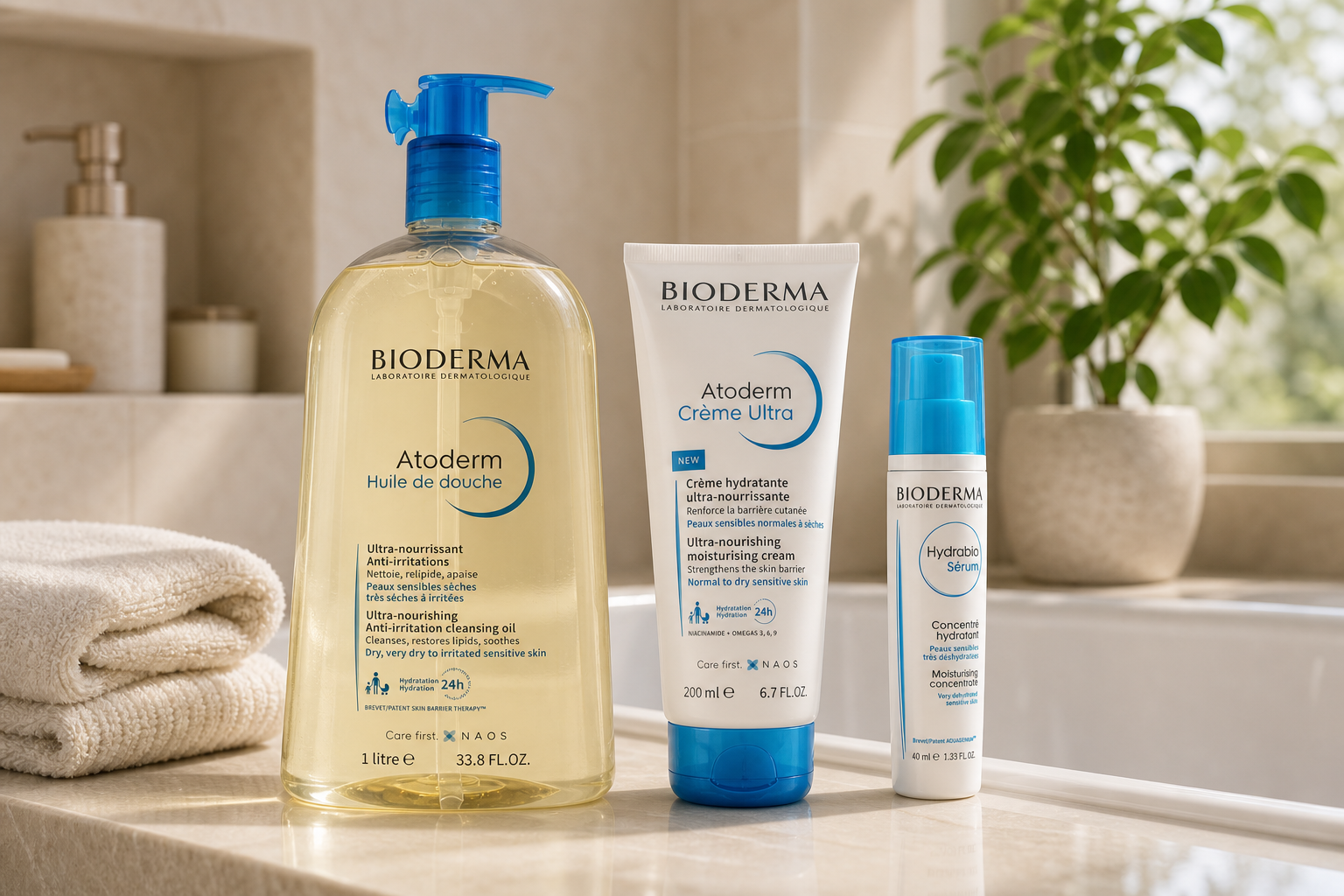
Besides the oil, you'll also find a classic gel version and two differently rich body nourishments. The difference between them mainly lies in how dry your skin is:
- Atoderm Huile de Douche 1000 ml — shower oil for very dry to atopic skin. Suitable when your skin feels uncomfortably tight after using regular shower gel or when dryness returns even after applying body lotion.
- Atoderm Gel Douche Gentle Shower Gel 1000 ml — gentle shower gel for dry and sensitive skin. Ideal when you want the classic feeling of washing and a lighter formulation, but without harsh surfactants.
- Atoderm Créme Ultra-Nourishing 500 ml — nourishing body cream for daily use after showering, also available in a more economical twin pack Atoderm Ultra-Nourishing Moisturising Cream 2 x 500 ml.
- Atoderm Intensive Baume 500 ml — thicker balm for times when the skin is most stressed: in winter, after swimming in chlorinated water, or on elbows, knees, and hands where dryness lingers the longest.
Practically, it works as a duo: cleansing that doesn't dry out the skin and nourishment that replenishes fats. The cream suffices in most cases, while the balm is for times or areas where the cream is not enough.
Hydrabio: Hydration for Tightening Skin
Hydrabio targets the face and a different issue than Atoderm. Dehydrated skin can even be oily or combination — it just lacks water, so it tightens in the afternoon, makeup sits unevenly, and it lacks freshness. The line, therefore, uses lighter textures that absorb quickly.
Hydrabio Tonique Moisturising Toning Lotion 250 ml is a tonic used after makeup removal as a second step. It unifies the skin after cleansing and prepares it for what's next. Hydrabio Serum Moisturising Concentrate 40 ml is a more concentrated care applied under your regular cream. The serum is worth adding when the cream alone is no longer sufficient — typically in overheated interiors, after prolonged sun exposure, or when the skin immediately signals tightness after washing. Conversely, if your cream works and the skin doesn't tighten throughout the day, you don't need to add the serum; it's an enhancement, not a mandatory step.


How to Choose from Bioderma: Recommendations Based on Your Skin Type
Whether you're dealing with skin that reacts to every little change or body skin that tightens and itches in winter, the entire selection can be simplified to one question: what does your skin need most? Bioderma's portfolio is divided precisely according to this principle, so all you need to do is find your range and stick with it. The following overview will guide you to the specific product to start with.
- Sensitive and easily reactive skin. Opt for Bioderma Sensibio H2O Make-up Removing Micelle Solution 500 ml — a micellar water that removes makeup without the need for rinsing. If your skin occasionally flares up with redness or a feeling of tightness, Bioderma Sensibio Forte Rapid Soothing Care 40 ml is a soothing extra step.
- Oily and problematic skin. For makeup removal and cleansing, use Bioderma Sébium H2O Purifying Cleansing Micelle Solution 500 ml, and if you prefer washing with water, choose Bioderma Sébium Purifying Cleansing Foaming Gel 400 ml instead. Daily hydration is covered by Bioderma Sébium Hydra Ultra-moisturising Compensating Care 40 ml, which doesn't leave a greasy film.
- Dry body skin. The foundation is shower care that doesn't dry out the skin: Bioderma Atoderm Gel Douche Gentle Shower Gel 1000 ml for a classic gel, or Bioderma Atoderm Huile de Douche 1000 ml if your skin appreciates a more pronounced oil component. After showering, follow up with Bioderma Atoderm Créme Ultra-Nourishing 500 ml; for the driest areas like elbows and shins, the richer Bioderma Atoderm Intensive Baume 500 ml is suitable.
- Dehydrated skin. Reach for Bioderma Hydrabio Serum Moisturising Concentrate 40 ml and apply it under your usual cream. If you like to incorporate toning, complement it with Bioderma Hydrabio Tonique Moisturising Toning Lotion 250 ml.
Large Sizes and Refills
If the whole household shares the care or you know you'll stick with your product, it's worth opting for a larger variant. Liter-sized Atoderm bottles in both gel and shower oil versions, half-liter creams, or 500 ml micellar waters last much longer than small travel sizes and save you from repeated purchases. Additionally, for the shower oil, there's Bioderma Atoderm Huile de Douche Refill 1000 ml, a refill for the original pump — a practical solution that reduces packaging waste in the bathroom. In the Sébium range, you'll also find a refill for the cleansing gel.
Three Steps Are Enough
A routine with Bioderma doesn't have to be complicated. In most cases, you can manage with three steps that logically follow one another:
- Cleansing — micellar water or cleansing gel according to skin type, morning and evening.
- Hydration — serum or lighter cream that adds moisture where it's lacking.
- Nourishment — richer cream or balm for the body and drier areas, ideally shortly after showering.
Mixing different ranges is fine — there's nothing wrong with washing your body with Atoderm and cleansing your face with Sensibio. If you're unsure, start with one product, give your skin a few weeks, and only then add another step. You can find the complete range on the Bioderma brand page at Brasty and a broader comparison with other dermocosmetic ranges in the facial and body care category.
Category
Recommended articles

"Give a girl the right shoes and she can conquer the world!" Marilyn Monroe