
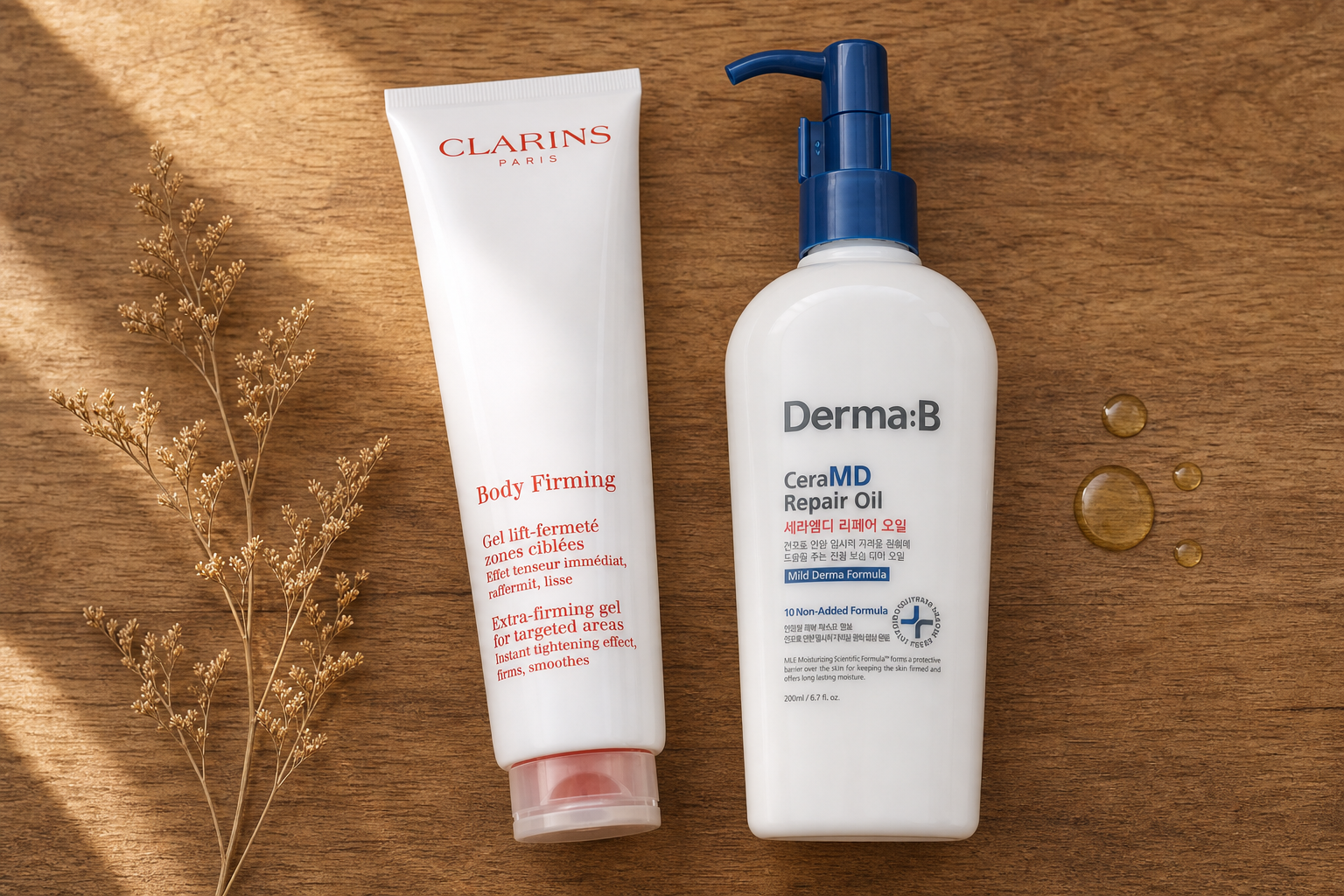

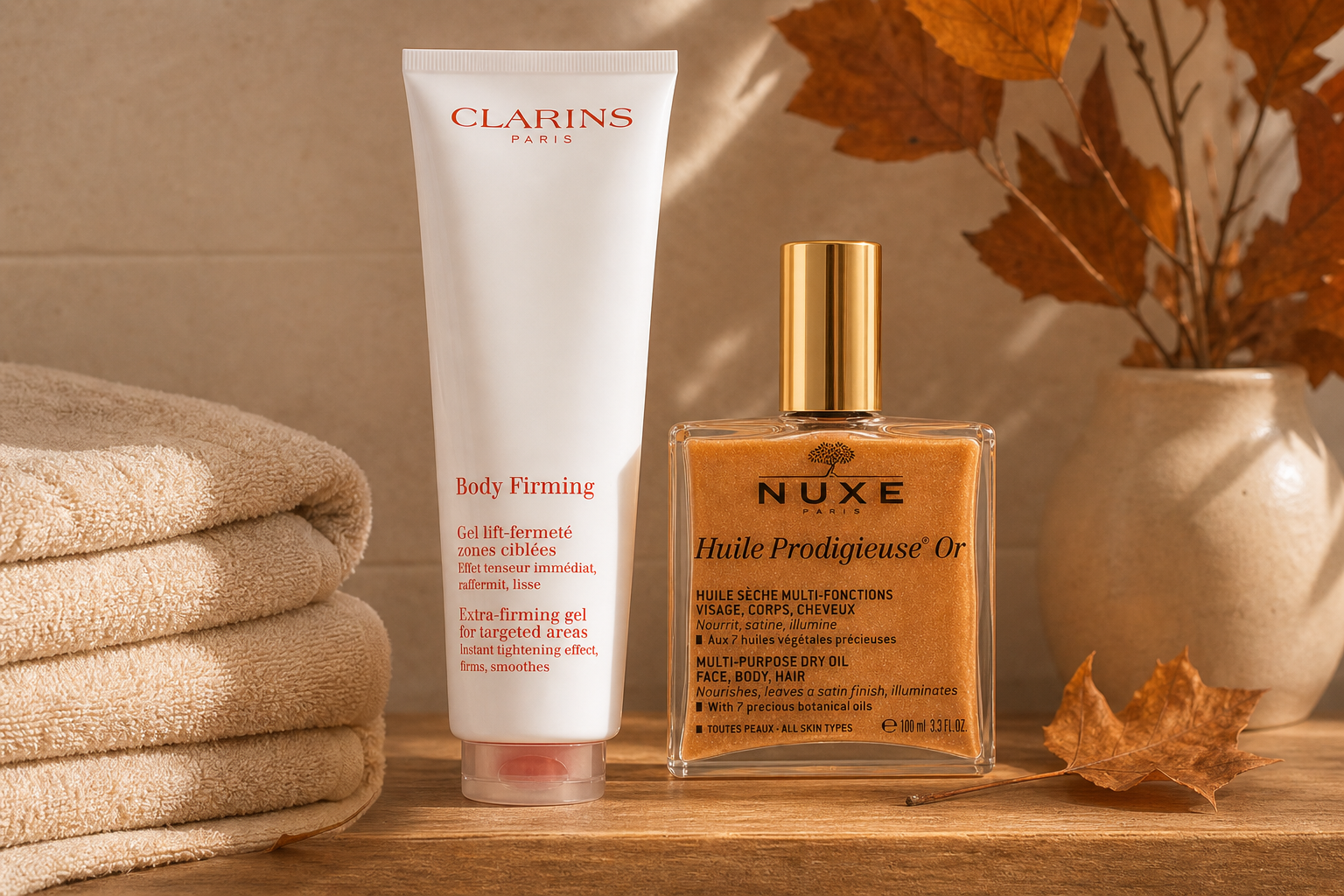
Are you torn between a firming and a moisturizing body cream and don't want to buy both? We'll guide you on how to identify a multifunctional formula, how to read plant-based ingredients, and how to choose the right texture based on your skin type and the season.
Firming or Hydration? Why You Don't Need to Buy Two Creams
You're standing by the body care aisle with two tubes in hand. One is boldly labeled "firming," the other "intensely hydrating." Both seem to address exactly what you're interested in, yet neither explains why you wouldn't need the other. Most of us, in such a moment, grab what's closest or, to be safe, buy both products and alternate them at home based on our mood.
The good news is that this decision doesn't have to be a dilemma. Firmness and hydration aren't two competing goals you have to choose between. They are two sides of the same care and, in practice, depend on each other more than the labels might suggest.
Skin lacking water appears less elastic, loses smoothness, and feels rougher to the touch. This holds true regardless of how many firming agents a product contains—on dry skin, their effect simply won't manifest as it could. Conversely, well-hydrated skin looks plumper and firmer almost immediately after application. The difference between the two claims is mainly in timing: hydration provides visible comfort within minutes, while firming ingredients work gradually and reward consistency.
Mid-September is a good time for this consideration. Temperatures drop, showers get longer and warmer, the heating season will soon start, bringing dry indoor air. The light summer lotion that sufficed all summer suddenly lasts only a few hours. At the same time, skin gets covered by longer sleeves and pants—what's not seen easily slips out of routine. That's why it makes sense to adjust your body care now, not in January when dry skin becomes uncomfortably noticeable.
This text is written as a decision-making guide, not a list of products. Instead of relying on packaging slogans, learn to read three things that determine the outcome much more reliably:
- Ingredients – the order of ingredients on the label reveals whether it's a watery product with a light surface effect or a nourishing care that leaves something on the skin.
- Texture – lotion, balm, and rich cream differ not only in feel but also in how long comfort lasts and how the product behaves under clothing.
- Your own needs – different care is needed for thighs and buttocks, elbows and knees, arms. One product for the whole body is a convenient compromise, not a necessity.
Let's also clarify right from the start what a body cream can't do. Cosmetics work on the skin's surface: they can smooth, soften, and visually unify it, and alleviate the feeling of tightness after a shower. However, they can't replace exercise, sleep, or genetics, nor can they change body shape. If you're expecting this from a firming cream, you'll be disappointed. If you're expecting softer, smoother, and better-looking skin that doesn't feel dry to the touch, that's a realistic goal and a well-chosen product can achieve it.
In the following sections, we'll explore what exactly lies behind the words on the label, which plant ingredients are worth noting, and how to tailor your care routine based on texture and personal habits to last you through the entire autumn. For most people, one well-chosen cream is truly enough—not two.
Two Different Claims on the Label: Firmness vs. Hydration
On the front of the packaging, you often find two words that sound almost interchangeable but describe different types of skin care. Firming claims focus on how the skin looks and feels to the touch – whether it appears elastic, smooth, and taut. Hydrating claims relate to the water content in the upper layers of the skin: how much is there and how long it stays. Skin lacking water loses elasticity and looks tired; conversely, well-hydrated skin appears firmer on its own.
Firming body care thus works only with the surface and how it appears. It improves appearance, smooths the texture, and enhances the feeling of elasticity. It doesn't replace exercise, weight changes, or procedures, and it can't remove what has developed deeper under the skin. Accepting this boundary from the start will help you choose much better – because you'll stop looking for a miracle and start looking for a formula that suits your skin.
Three Mechanisms Found in Body Creams
No matter what the label says, inside the jar, there are essentially three groups of ingredients at work, and a good cream combines them.
- Humectants attract and bind water to the skin. These include glycerin, hyaluronic acid, panthenol, or urea. They have a catch: in a dry environment, like an overheated apartment, they need a source of water to draw from, otherwise, the effect is short-lived.
- Emollients smooth the skin. Plant oils, butters, and ester components fill in the gaps between dead cells on the surface, making the skin feel softer and smoother to the touch. Emollients are responsible for most of what we call the "feeling of firmer skin" immediately after application.
- Occlusive agents keep water inside. Waxes, denser butter components, or squalane create a thin film on the surface that slows evaporation. Without them, the hydration from the previous two groups would gradually dissipate – which is exactly why a light gel after a shower lasts shorter than a balm.
It's worth viewing this trio as a team. A cream composed only of humectants is pleasantly light but may not suffice during the heating season; a cream full of occlusive agents will seal the skin without providing what it needs.
The Body is Not a Bigger Face
The skin on the body has a different structure and different needs than facial skin. On most areas, it is thicker, making it harder for active ingredients to penetrate, and it is less oily – typically on the shins, forearms, or back. At the same time, it is exposed to things the face is not: friction from clothing, longer showers in warm water, dry air all winter. Thinner and more sensitive areas like the décolleté, inner arms, or around the knees require a gentler approach.
This leads to a practical conclusion: facial cream is not suitable for spreading over the entire body. It is formulated for a smaller area and a different type of absorption. The reverse is also true – a thick body balm would unnecessarily burden the face.
What to Expect from a Firming Cream and What Not To
Cosmetics work with the comfort, elasticity, and appearance of the skin. This is a realistic and quite broad scope: the skin can feel smoother to the touch, less tight after a shower, and overall more balanced in appearance. However, no cream can guarantee a specific result in a set time or replace medical care.
A realistic timeframe is several weeks of regular use, not a few days. The immediate effect after application is mainly due to the emollients and water in the product – a pleasant start, but not a measure of long-term effectiveness. Therefore, evaluate the cream after using a whole container and mainly based on whether you want to use it every day.
Plant Ingredients That Address Firmness, Hydration, and Tone Unification
The list of ingredients on the back of the tube might seem like a foreign language, but knowing a few groups of plant-based materials can simplify your navigation through body care. Creams that firm and hydrate almost always rely on a trio of butters, plant oils, and extracts. Each group has a different role in the formula, and depending on where it appears on the list, you can tell if it's a main ingredient or a supplement.
Butters and Oils as the Foundation of Comfort
Shea butter is one of the most common bases for richer body creams. It melts with body temperature on the skin, creating a layer that slows down water evaporation, so expect to find it in products aimed at elbows, knees, and shins. Cocoa butter is slightly firmer and is responsible for the velvety feel you notice after application. Both butters primarily work with comfort and surface elasticity, making the skin a more grateful base for the rest of the formulation.
Plant oils tackle the same task more lightly. Almond oil is versatile and spreads well, so you'll also find it in lotions that need to dry quickly. Jojoba oil closely resembles skin sebum, making it non-greasy and suitable even if you can't stand heavy textures. Macadamia oil is the most nourishing of the three and is suitable for very dry skin. If any of these oils appear in the top half of the list, expect a noticeable film and longer drying time.
Extracts Associated with Firming Care
The second group is why manufacturers label products as "firming." These are extracts present in smaller quantities that complement the work of the oily base:
- Caffeine – a classic in body cosmetics, typically found in products for thighs and buttocks. It's often associated with temporary improvement in skin appearance, especially when combined with massage during application.
- Horsetail – a traditional herbal ingredient used as a plant extract containing silicon. You'll find it mainly in body care products targeting surface smoothness.
- Seaweed – a broad group of extracts that bring minerals to the formula and help retain moisture.
- Centella Asiatica – a widely used soothing extract. It pairs well with a buttery base if your skin reacts with redness to dryness or friction from clothing.
The Order of Ingredients Reveals More Than the Front of the Package
The ingredient list is presented in descending order by quantity, down to the one percent threshold; below that, the order can be arbitrary. What appears in the top five defines the product's character. Water, glycerin, and some butters or oils at the beginning indicate that the cream will truly hydrate and nourish. Conversely, if shea butter appears after fragrances and preservatives, it's more of a symbolic amount. For extracts like caffeine or centella, a position towards the end is common and not problematic in itself, it just indicates they play a supplementary role.
Optical Tone Unification on the Body
Tone unification works differently on the body than the name might suggest. It's not about lightening or bleaching effects, but about optics. Well-hydrated skin reflects light more evenly, making dry flakes, clothing marks, and slightly red areas less noticeable. A short massage during application also helps spread the product into an even layer.
Some body lotions also contain fine pearlescent pigments or a light tint. They immediately mask differences in shade, but the effect lasts only until the next shower – consider them a cosmetic accessory, not care. For a more lasting impression of an even tone, rely more on a combination of buttery or oily bases with the extracts mentioned above.
Light Lotion, Balm, or Rich Cream? Texture According to the Season
Two body creams might have very similar ingredient lists on their labels, yet they are used completely differently. The difference lies in the base in which the active ingredients are mixed – that is, the ratio of water, oils, and emulsifiers. Texture determines how long the product takes to absorb, whether it sticks to your shirt, and if you'll reach for it again in three weeks.
The three formats you'll most commonly encounter on the market differ mainly in their fat content and absorption speed:
- Body Lotion – the lightest option with a high water content. It absorbs in a flash, leaves no film, and you can dress almost immediately. It's ideal for mornings when you're in a hurry, warmer months, and skin that isn't particularly dry. The trade-off for comfort is shorter longevity: in dry environments, lotion usually needs to be applied twice a day.
- Balm – the middle ground. It contains more emollients, remains noticeable on the skin a bit longer, but can still be applied before dressing. It's the format worth transitioning to as the first step when a light lotion is no longer enough, and a rich cream still seems unnecessarily heavy.
- Rich Cream or Body Butter – the highest content of oils and butters, slower absorption, and the longest-lasting comfort. It creates a gentle layer on the skin that slows down water evaporation. Suitable for evening use, after bathing, and on areas that are most stressed.
Firming care is available in all three textures. A richer base does not automatically mean a higher concentration of active ingredients – it just means a different carrier. If you apply firming cream with a short massage, you might even prefer a lighter texture: it glides better and allows you to maintain the massage longer.
What Changes Between Summer and Heating Season
In mid-September, your skin may not look dramatically different, but the conditions are already changing. As soon as the heating is turned on, indoor humidity drops, and water evaporates from the skin faster than in summer. The lotion you were happy with in August suddenly seems to disappear before you can make it from the bathroom to the kitchen.
You'll know it's time to switch to a richer texture by several signals:
- a feeling of tightness within minutes of showering,
- skin absorbs lotion immediately and is rough to the touch again by evening,
- fine flakes on shins, elbows, or forearms,
- itching under a sweater that wasn't there before.
The transition doesn't have to be abrupt. Often, it's enough to keep the light lotion for hands, neck, and décolleté and switch the rest of the body to balm; the rich cream then remains reserved for the coldest weeks.
Guidelines According to Skin Type
- Normal to Slightly Dry Skin – lotion for most of the year, balm during the heating season.
- Dry Skin – balm year-round and rich cream at least for evening application in winter.
- Sensitive Skin – prioritize simple formulations and fragrance-free options over richness. A rich texture won't solve anything on irritated skin if the product's scent itself is irritating.
- Atopic Skin – look for emollients specifically designed for this skin type and apply them to still damp skin right after a shower. For more significant issues, it's worth discussing care selection with a dermatologist; cosmetics do not replace medical care.
Combining two textures at once makes sense more often than it seems. The body isn't the same everywhere: the back and chest tend to be oilier, while shins, elbows, knees, and heels are among the driest areas. Feel free to use a lighter lotion on large areas that are covered by clothing all day, and a rich cream only on specific spots where the skin repeatedly dries out.
How to Create Your Autumn Body Care Routine
Theory about ingredients and textures is useful, but in the bathroom, something else matters: whether your routine fits into your morning rush. A good autumn routine is not usually rich in steps. It's enough to answer a few questions in advance, choose one product based on them, and then actually use it.
Four Questions to Guide Your Choice
- How does your skin behave without care? If it starts to feel tight within an hour after showering, you need a more nourishing formula. If it's more balanced and only slightly dry in places, you can get by with a lighter lotion and save a richer cream for knees, elbows, and feet.
- Which part of the year are you choosing care for? A cream bought in mid-September will mainly serve during the heating season when dry indoor air draws moisture from the skin faster than the outdoor chill. Opt for a richer variant and let the light summer lotion finish on your hands.
- How do you feel about fragrance? Sensitive and very dry skin tends to be more susceptible to scented ingredients. If you've ever experienced burning or redness after using a body lotion, look for fragrance-free options or lines with simple compositions and subtle scents of plant oils.
- How much time do you want to dedicate to it? Be honest with yourself. You can manage a two-minute lotion application after a shower all autumn; a three-phase process with serum, oil, and balm will likely be abandoned after two weeks. A smaller, sustainable step beats a complex routine you abandon after a month.
Why Apply Firming Cream on Damp Skin
The most common mistake costs nothing and can be fixed immediately: don't dry off completely after a shower. Just lightly pat your skin with a towel and apply the cream while it's still noticeably damp. Humectants then have moisture to bind to, and emollients with occlusive ingredients help keep it inside. On completely dry skin, the same cream is harder to spread, takes longer to absorb, and you'll use more unnecessarily.
Water temperature also helps. A long hot shower disrupts the skin barrier faster than any cream can restore it, so lukewarm water does more for skin firmness than doubling your care dose.
Consistency Matters More Than Quantity
For firming care, a thin layer applied daily does more than a heavy application once a week. Active ingredients need repeated contact with the skin, not a one-time supply. Moreover, a layer that doesn't absorb will imprint on clothing, and you'll subconsciously associate care with an unpleasant feeling—and stop doing it.
When to Evaluate Results
You'll notice a difference in hydration first: the skin usually stops feeling tight after a few days of regular use. Firmness and elasticity are a longer journey. Realistically, expect six to eight weeks before you can assess whether there's a change in feel and appearance, and even then, it will be a gradual shift, not an overnight transformation.
Where to Look in the Offer
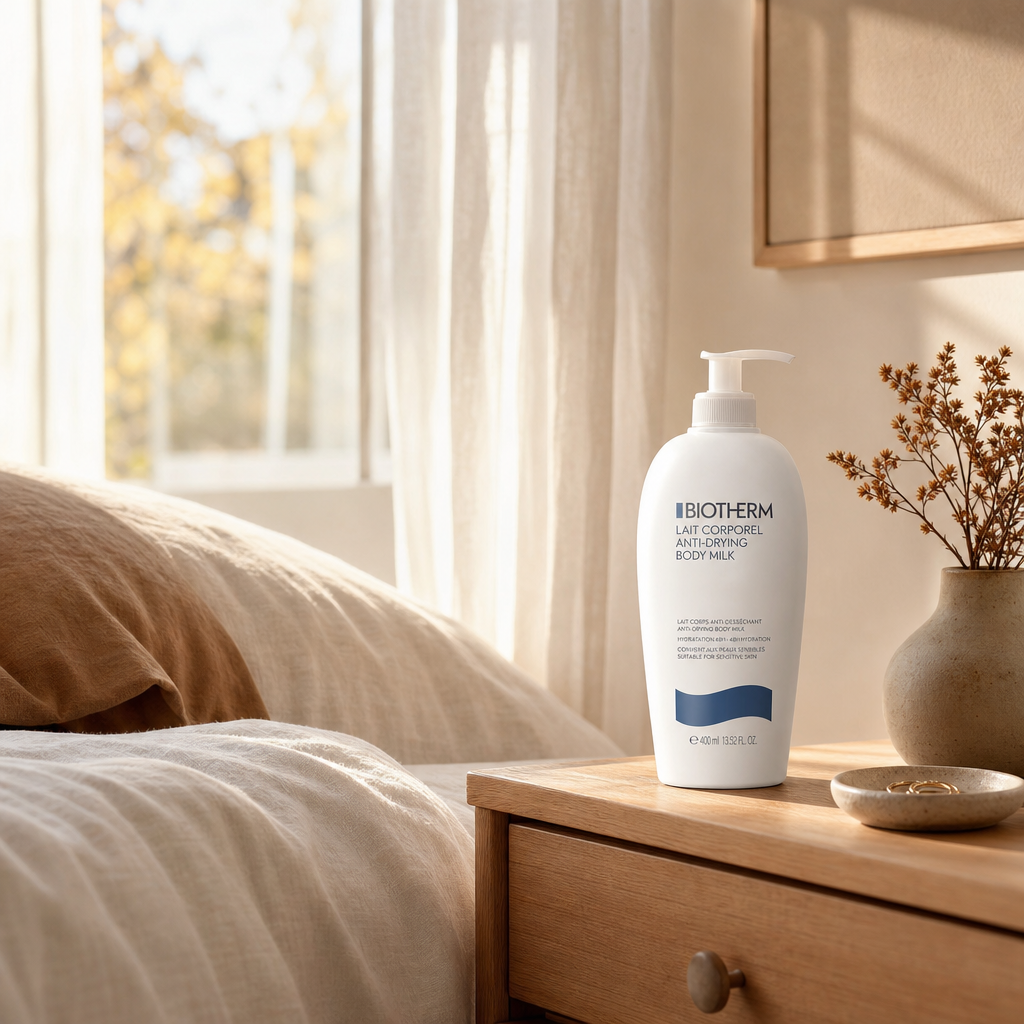
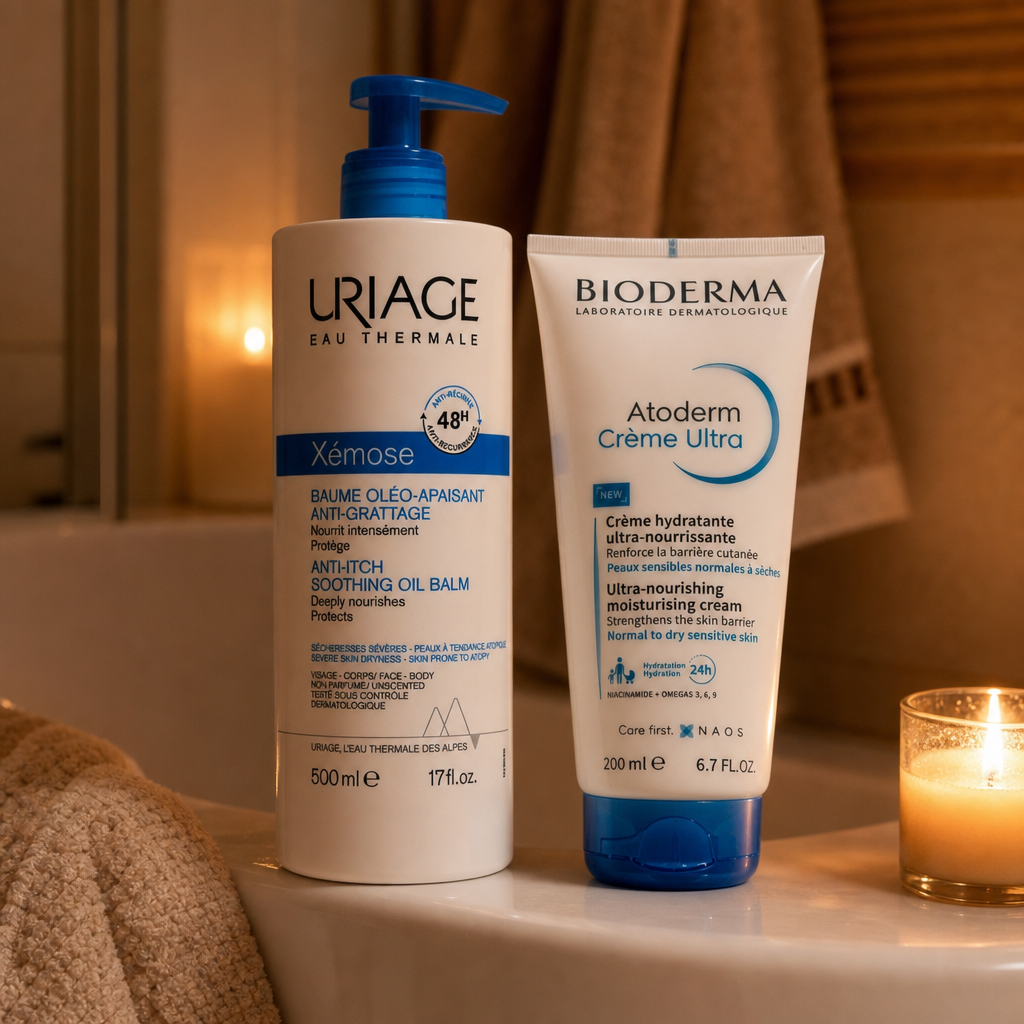
Whether you're addressing dryness or elasticity, navigate the body care category based on what you expect from the product. Dermocosmetic brands like Vichy, Bioderma, or Uriage are reliable for sensitive and very dry skin—you'll find low-fragrance options, simple compositions, and larger sizes that last for daily care of the whole body. If you're more drawn to plant-based options, check out lines from Nuxe or Dr. Hauschka, where oils and butters take center stage.
Wherever you choose, stick to one rule: it's better to have a cream that's open and within reach, used every day, than a perfectly chosen one that remains unopened in the bathroom cabinet.

Category
Recommended articles

"Give a girl the right shoes and she can conquer the world!" Marilyn Monroe
