

 Riiffs Freeze in Flames: Ice and Flames Illuminate Warsaw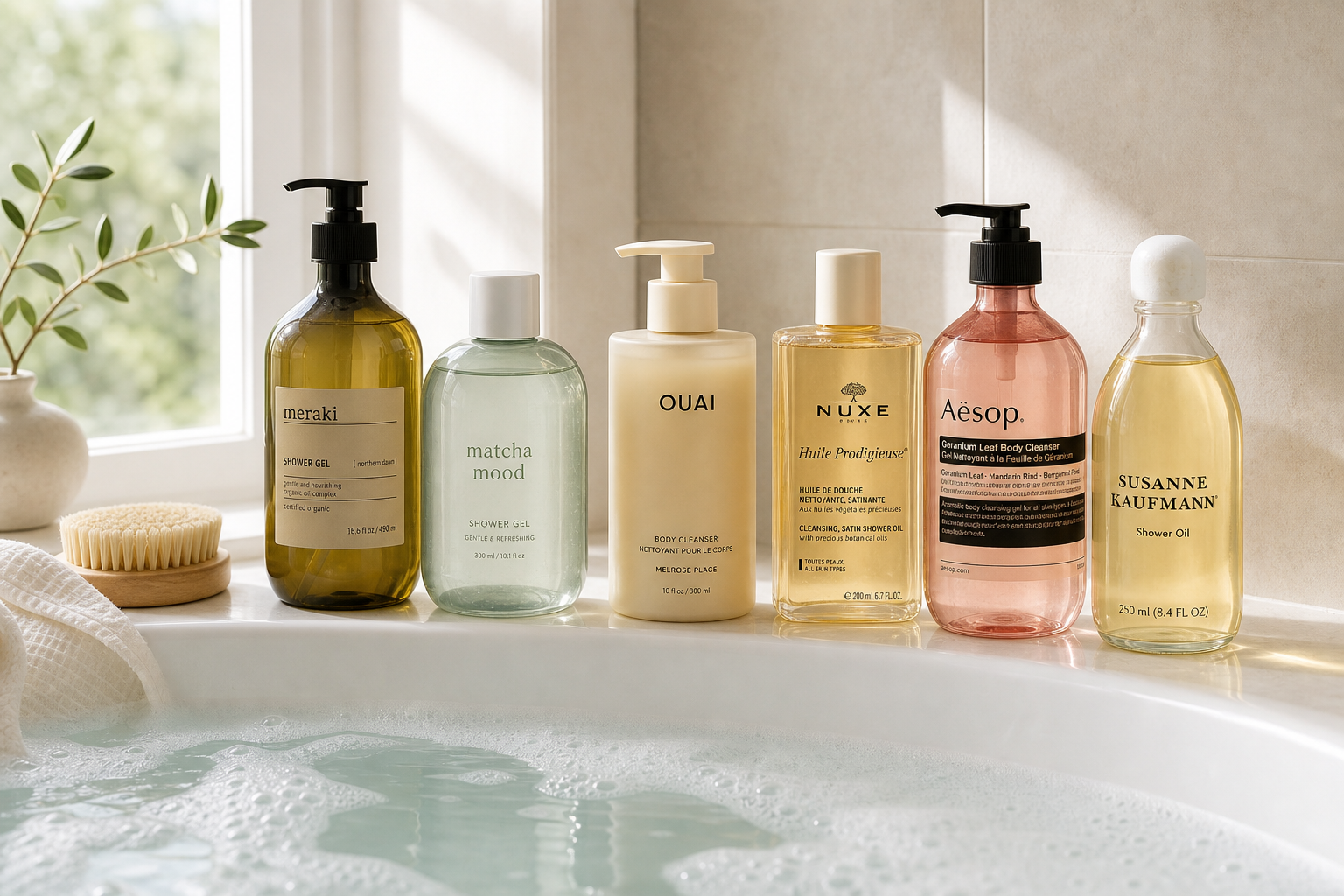
A practical guide for anyone who has been choosing shower gels based on scent or price. We'll go through skin types from normal to atopic and show you which composition properties to consider to ensure your skin feels comfortable after a shower.
Why the Ingredients in Your Shower Gel Matter More Than the Scent
Shower gel is one of the most frequently used cosmetics. While you might apply face cream once or twice a day to a limited area, a cleansing product covers your entire body within minutes — and this happens every day, all year round. Even if you rinse it off immediately, its composition has a measurable impact on your skin due to this regularity. Yet, when standing in front of the shelf, we often decide based on two things: how the product smells and how much it costs.
Whether your skin usually doesn't bother you after a shower or regularly reacts with tightness and itching, it's worth knowing what actually happens during washing. The scent is a feature you perceive for a few minutes. The way the gel is formulated becomes apparent only later.
The Feeling of Tight Skin Isn't a Sign of Cleanliness
You probably know the feeling: you step out of the shower, your skin feels "squeaky" clean and a bit tight, as if it were a size smaller. In reality, this is a signal that the product has removed not only impurities but also some of the oils your skin needs to retain moisture. Tightness that subsides within half an hour may mean nothing. However, if it persists, along with flakiness or itching, it's feedback worth taking seriously.
Importantly, this phenomenon isn't related to the intensity of the scent. A strongly scented gel can be gentle on the skin, while a subtle product without a strong fragrance can be drying. How you feel after rinsing off is primarily determined by the cleansing agents and the overall formulation, not the fragrance. Fragrance is responsible for something else — it is often a trigger for irritation in sensitive and reactive skin.
Skin Barrier and Slightly Acidic pH
Most of these reactions are due to the skin barrier — the outermost layer of the skin, which you can imagine as a wall of cells joined by a lipid mortar. This layer has two tasks: to keep water in and to keep out what doesn't belong. When it's intact, the skin is supple, smooth, and calm. When it's compromised, water evaporates more quickly, and irritants penetrate deeper than they should.
The second term you'll encounter in relation to washing is pH. The surface of healthy skin is slightly acidic, usually ranging from about 4.5 to 5.5. This environment is called the acid mantle and helps natural microflora thrive on the skin. In contrast, traditional soap is alkaline, temporarily raising the skin's pH after washing. Healthy skin returns to normal within a few hours, but for dry, sensitive, or frequently washed skin, the return is prolonged, and the barrier doesn't have time to recover.
This is why you'll find labels like soap-free or skin pH neutral on shower gels. These aren't marketing embellishments but information on how the product behaves towards the barrier.
What You'll Take Away from This Article
The goal of the following chapters isn't to convince you that your current shower gel is bad. It's more about ensuring that next time you don't just grab a bottle based on the label image or the price per liter. We'll go through together:
- how to recognize the skin on your body — and why it might differ from the skin on your face,
- what to look for in the ingredients and what to avoid for reactive skin,
- how different cleansing formats vary and which suits whom,
- what showering habits influence the outcome as much as the product itself.
Choosing cleansing cosmetics isn't rocket science. You just need to know which three or four details to look at — and listen to what your skin tells you about half an hour after a shower.
How to Identify Your Body Skin Type
Most of us can describe how our facial skin behaves. However, body skin is a different landscape. It has fewer sebaceous glands, a larger surface area, and significantly different conditions across various parts: the back and chest tend to be oilier, while the shins and forearms are among the driest areas on the body. It's easy to have oily facial skin and yet distinctly dry skin on your legs. Before choosing a specific shower gel, it's worth doing a simple inventory.
The Thirty-Minute Post-Shower Test
An effective way to get clarity is to let your skin speak for itself for a while. Shower with lukewarm water using your usual product, gently pat yourself dry with a towel, and then refrain from applying any body lotion or oil for about thirty minutes. After half an hour, examine your forearms, shins, abdomen, back, and chest, and pay attention to two things: whether you feel any tightness and whether your skin feels smooth, rough, or slightly oily to the touch. The test is more conclusive if you repeat it two to three days in a row.
What Each Result Means
- Normal Skin — after half an hour, you don't feel any tightness or oily film, and your skin is smooth and without redness. It can tolerate most gentle cleansing products.
- Dry Skin — feels tight, rough to the touch, with fine flakes appearing, typically on the shins, forearms, and sides. The feeling of tightness comes shortly after drying and persists without body care.
- Sensitive Skin — reacts with redness, stinging, or itching, often after using heavily fragranced products or after a long hot shower. Sensitivity can combine with both dry and normal skin.
- Combination Skin — the back, chest, and shoulders are shiny, while the limbs feel tight. This is the most common combination people discover during the test.
- Oily Skin — an oily film returns within the first hour after showering, usually in the back, chest, and shoulder area. It's more often described by people who sweat a lot or exercise regularly.
- Problematic Skin Prone to Acne on the Back and Chest — in addition to shine, you'll find clogged pores and small pimples that worsen after sweating under a backpack, sports jersey, or tight clothing.
Special attention should be given to skin prone to atopy. It is characterized by recurring itching, dry and rough patches in the bends of the elbows and knees, and the condition worsens in waves. This is not about choosing based on labels but a topic for a dermatologist — a well-chosen cleansing product can be a useful part of daily care, but it doesn't replace professional consultation.
Why Your Skin Type Changes Throughout the Year
Your skin type is not a permanent label. Several common circumstances can shift it, and it's worth knowing them before blaming the last product you bought:
- Heating Season — heated interiors with low humidity dry out the skin even for those who consider themselves a normal type in the summer.
- Hard Water — higher calcium and magnesium content leaves a film on the skin and intensifies the feeling of tightness after showering.
- Chlorinated Pool — regular swimming dries out the skin and increases the tendency to redness in sensitive types.
- Frequent Exercising — it comes with more frequent showering, which in itself means a greater burden on the skin barrier than one shower a day.
The practical conclusion is simple: do the test twice a year, ideally at the start of the heating season and again in spring. This way, you'll know which skin you're dealing with — and everything else follows from that.
What to Look for on the Label: Surfactants, pH, and Moisturizing Ingredients
The ingredient list might initially seem like an unreadable column of Latin names. However, you only need to understand three things: the type of cleansing base the product uses, its pH level, and whether the formula includes anything that restores moisture to the skin. One rule of thumb also helps: ingredients are listed in descending order by quantity. Water is usually first, followed by the cleansing base, and the first five to six items make up the majority of the formula.
Soap or Syndet: The Difference Lies in the Cleansing Base
Traditional soap is made by saponifying fats and has a distinctly alkaline pH, usually around nine. It cleans effectively but also removes a significant amount of skin oils along with impurities, leaving a fine layer of calcium salts in hard water. This is why skin often feels tight after using soap.
Syndet cleansing bases, on the other hand, are combinations of mild surfactants that can be adjusted to a skin-friendly pH. On the packaging, they are marked as soap-free or syndet, and in the ingredients, you can spot them by names like cocamidopropyl betaine, coco-glucoside, decyl glucoside, or sodium cocoyl isethionate. Sulfate surfactants, most commonly sodium laureth sulfate, are not problematic on their own. However, if your skin reacts with itching, try a gel where sulfate is not among the first ingredients.
pH: The Quickest Guide on the Packaging
Healthy skin has a slightly acidic surface environment, roughly ranging from 4.5 to 5.5. A product with a higher pH temporarily shifts it, but for normal skin, it returns within a few hours. For dry, sensitive, and atopic skin, the return is slower, so it's worth sticking to values close to physiological levels. Manufacturers indicate this directly on the packaging as pH 5 or physiological pH, and you can spot it at a glance.
Ingredients Worth Looking For
Shower gel rinses off, so it doesn't stay on the skin for long. However, caring ingredients can still alleviate the feeling of tightness:
- Glycerin binds water and helps keep the skin supple. The closer it is to the top of the list, the better.
- Panthenol, also known as provitamin B5, is praised for its soothing effect on skin prone to irritation.
- Niacinamide is a form of vitamin B3, more commonly found in cleansing creams than in regular gels.
- Plant oils and butters, such as sunflower, almond, or shea butter, enhance washing comfort for dry skin.
- Ceramides are lipids naturally present in the skin barrier, hence they appear in formulas for dry and sensitive skin.
What to Avoid for Reactive Skin
These aren't banned substances, just ingredients that more frequently trigger unpleasant reactions in reactive skin:
- High fragrance content. The terms parfum or fragrance usually appear towards the end of the list, but in strongly scented gels, the presence is higher. Fragrance components listed at the end of the label, like limonene or linalool, are also indicators.
- Colorants. Recognizable by a code starting with CI and a number. They don't affect the washing result.
- Alcohol in the top lines of the ingredients. The presence of alcohol or alcohol denat among the first items indicates a higher concentration; for dry skin, opt for a different formula.
- Strong cooling additives. Menthol, camphor, or a higher proportion of essential oils provide a refreshing sensation but can exacerbate burning on irritated skin.
A note on formulations on the front of the packaging. The term fragrance-free means the manufacturer has not intentionally added a scent, though the product may still have a slight natural odor from the raw materials. And hypoallergenic is not a term with a fixed definition; it is a declaration by the manufacturer of a lower risk of reaction. Consider both terms as initial filters, not guarantees.
Shower Gel, Oil, or Foam — Which is Best for Your Skin Type?
Body cleansing products come in several formats today. They differ not only in consistency in the bottle but also in how they interact with water and what they leave on your skin. The difference between a gel and a shower oil is not just a cosmetic detail — it's a different way of washing. Let's go through four common formats and then match them to skin types.
Four Formats and How They Behave
- Classic Shower Gel — Transparent to pearlescent texture that quickly foams in water and rinses off just as fast. After drying, it leaves a feeling of clean, rather matte skin. A universal format, but the cleansing base can vary greatly from one product to another.
- Shower Oil — Has an oily consistency in the bottle, turning into a gentle milk upon contact with water. It foams significantly less and leaves a thin moisturizing film on the skin, so the shower doesn't end with a feeling of tightness. It requires longer rinsing, and in the first few days, you might feel like it "didn't clean enough" — this is expected behavior for this format, not a flaw.
- Cleansing Cream and Creamy Gel — Thicker, milky texture somewhere between a gel and an oil. It foams mildly and usually contains a higher proportion of moisturizing ingredients. A practical compromise if you find oil too greasy but regular gel too drying.
- Shower Foam — Comes out pre-foamed from the dispenser, easy to dose and spreads quickly, which you'll appreciate when in a morning rush. However, the airy texture can tempt you to use more than necessary.
The key is that the format itself doesn't decide. Even among gels, you'll find very gentle soap-free formulations, and among oils, some that are unnecessarily heavily fragranced. The format narrows down your choices, but the final decision lies with the composition.
Which Format for Which Skin Type?
- Normal Skin — Suitable if you don't feel tight or itchy after a shower. It can handle almost anything gentle; a classic gel with balanced pH is sufficient, and in winter, you can add a creamy variant.
- Dry Skin — Suitable if you experience tightness, flakiness on the shins, or tension after drying. Opt for a shower oil or a rich cleansing cream and look for glycerin, plant oils, or ceramides in the ingredients.
- Skin Prone to Atopy — Suitable if dryness returns despite hydration and is accompanied by itching. Oils and cleansing creams designed for atopic skin are usually soap-free and minimally fragranced. Here, it's wise to consult a dermatologist rather than relying solely on product choice.
- Sensitive and Reactive Skin — Suitable if your skin reacts with redness or burning to new products. Choose based on a short ingredient list, absence of dyes, and low fragrance content; the format can be gel or cream, but a gentle cleansing base is more important.
- Combination Skin on the Body — Suitable if you have oilier back and chest but dry calves. Use one gentle gel for the whole body and balance the difference with subsequent care.
- Oily and Problematic Skin — Suitable if impurities appear on the back and décolleté. Lighter cleansing gels with balanced pH make more sense than rich oils, which are harder to rinse off from the back.
Volume, Refills, and Dosing
You will use up body cleansing products faster than facial cream, so it's worth opting for larger packaging of a trusted product — liter formats with a pump are more cost-effective per milliliter. Many large packages also offer refill options, saving you packaging and part of the cost. Conversely, if you're trying a product for the first time, it makes sense to start with a smaller package: if the format doesn't suit you, you won't be left with a liter of unused gel at home. And one rule applies across formats — a hazelnut-sized amount is usually enough for the whole body.
A Shower Routine That Lasts — and Where to Shop
Whether you've opted for a shower oil, a cleansing cream, or a light cleansing gel, having the product in your bathroom is only half the battle. How your skin feels after a shower is also influenced by how you shower: the water temperature, duration, drying method, and what you do in the first few minutes after stepping out. These habits cost you nothing extra and often make more of a difference to your skin's feel than changing the product itself.
Four Habits Worth Adjusting
- Lukewarm water instead of hot. A hot shower may feel pleasant, but it removes skin oils faster than lukewarm water. If your skin feels tight after a shower, try lowering the temperature before changing your gel.
- Shorter time under the water. A few minutes are enough for regular hygiene. Long, hot showers are a nice ritual, but for dry and sensitive skin, it's better occasionally than daily.
- Pat drying. Press the towel gently against your skin instead of rubbing.
- Body lotion or balm on damp skin. Applying within a few minutes after drying, while the skin is still slightly damp, makes it easier to spread a thin layer. For dry skin, this step is often more crucial than the choice of cleansing product.
Evaluate New Care Over Weeks, Not Just One Wash
The first impression after one use mainly tells you about the scent and texture. The important part, whether your skin stops feeling tight or if post-shower itching decreases, becomes apparent only after several weeks of regular use. Give the new product at least a month and don't change the rest of your routine during this time, so you know what to attribute any improvement to. The exception is burning or significant redness, in which case it's wise to stop using the product immediately and consult a dermatologist if problems persist.
Also, keep in mind that your skin's needs change throughout the year. During the heating season, when indoor air is drier and showers tend to be warmer, a richer format is beneficial: shower oil or cleansing cream paired with a thicker body balm. In summer, a lighter gel often suffices, especially if you shower more frequently after sports. It's not wrong to have two products in the bathroom and switch them according to the season.
Where to Look in the Catalogue Based on Skin Type
In the body care category at Brasty, dermocosmetic brands form the core of the offering, with lines specifically divided according to skin needs. Here's a quick guide:
- Dry and atopic skin — look for lines designed for very dry skin prone to atopy. Brands like Bioderma, Uriage, and La Roche-Posay have dedicated product lines for this group, usually shower oils and cleansing creams, often in large volumes and with refill options.
- Sensitive and reactive skin — minimally fragranced cleansing products without soap are suitable. Compare ingredients and choose the one with a shorter list.
- Normal skin — a gentle gel with balanced pH will suffice.
- Oily and problematic skin — lighter cleansing gels that don't leave a greasy film are ideal. Lines focused on skin prone to imperfections can be found among dermocosmetic brands as well as those dedicated to skin barrier care, like CeraVe.
The final recommendation is the simplest: don't buy the entire routine at once. Choose one bottle of cleansing product that matches your skin type, use it for several weeks, and only then add a body lotion or balm based on the results. Once you know the format and composition suit you, it makes sense to switch to a larger volume or refill — it's cheaper per milliliter. A calm, step-by-step approach will ultimately cost you less than a shelf full of unused bottles.
Category
Recommended articles
Riiffs Freeze in Flames: Ice and Flames Illuminate Warsaw "Give a girl the right shoes and she can conquer the world!" Marilyn Monroe