



 Riiffs Freeze in Flames: Ice and Flames Illuminate Warsaw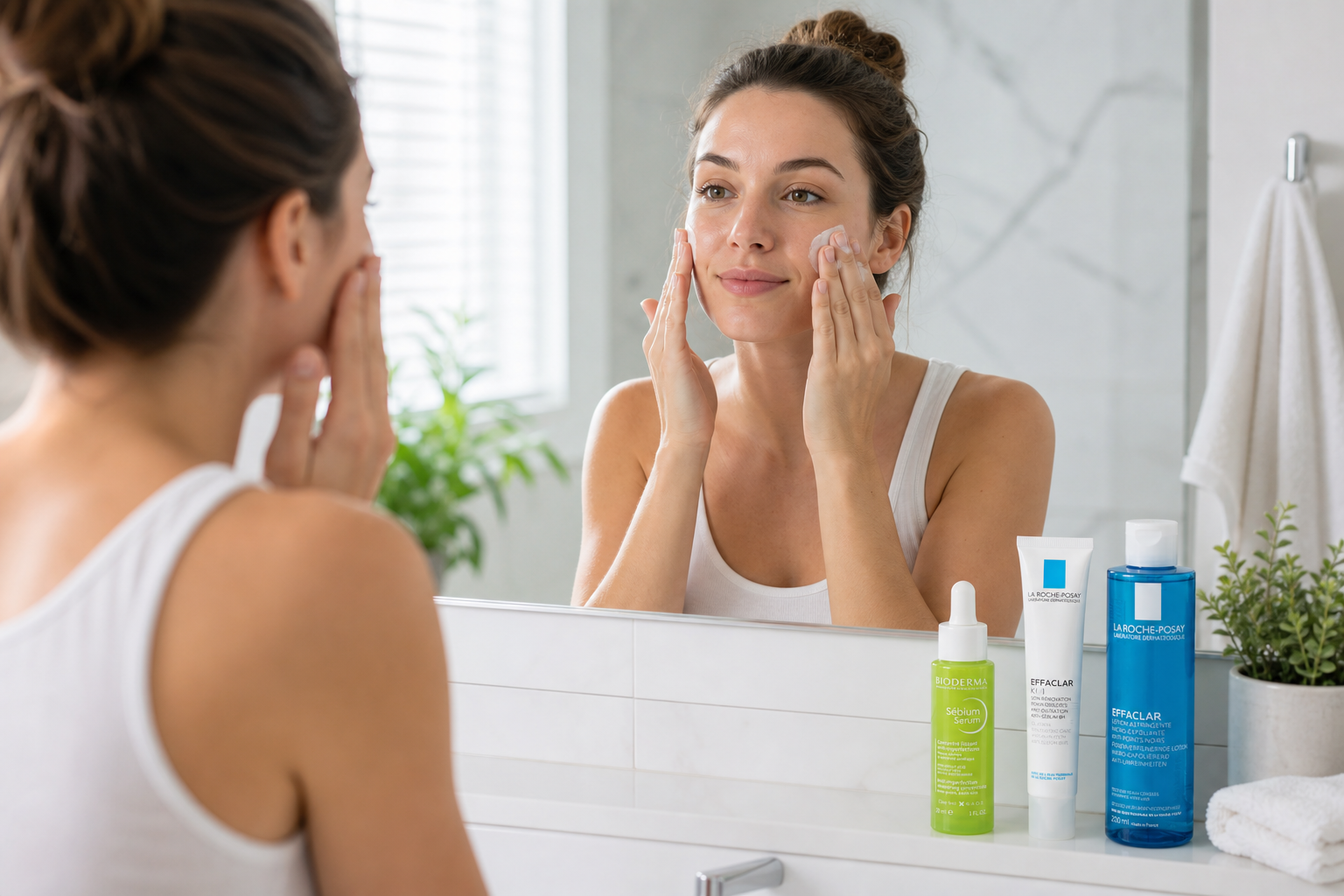
Are you following conflicting advice about oily skin? We'll explain why most myths stem from confusing sebum with hydration and show you a gentle routine that won't irritate your skin.
Why Advice on Oily Skin Often Conflicts
Whether you've been dealing with oily skin since adolescence or the shine on your forehead and around your nose has only recently started bothering you, you've likely encountered the same issue: there's a lot of advice, and it often contradicts itself. One source insists that you must thoroughly degrease your skin to prevent clogged pores. Another warns that degreasing is precisely why your skin looks shinier by lunchtime than it did in the morning. Both speak convincingly and both refer to experience.
In practice, you'll most often come across several contradictory pairs of statements:
- "Clean as thoroughly as possible, the grease must go" versus "Frequent and aggressive cleaning only irritates the skin".
- "Oily skin doesn't need cream, it has enough oil" versus "Without hydration, oil production will actually increase".
- "Alcohol-based toner will reliably control shine" versus "Alcohol dries out the skin and worsens the condition".
- "Oily skin needs to be degreased with powder" versus "Layering decorative cosmetics only masks the problem".
Most of these disputes have one common denominator — confusing two different things. Sebum is the oil that the skin produces itself. Hydration refers to the water content in the skin. These are two independent properties that can occur in any combination on the same skin. Thus, the skin can be oily on the surface and simultaneously dehydrated — and this is often why the advice "mainly degrease" helps one person and leads another to irritation. When both terms are merged into a single word "greasiness," an apparently insoluble contradiction arises, even though each side is talking about something different.
It also plays a role that oily skin is not a single uniform condition. Some people deal with shine all over their face, some only in the so-called T-zone, while others experience increased oiliness seasonally or during hormonal changes. Advice that works well for very oily skin in the summer months may be unnecessarily harsh for combination skin in winter. Without this distinction, recommendations stand side by side that seem to contradict each other, but in reality, both are valid — each for a different situation.
In the following sections, we'll take a step-by-step approach. First, we'll explain how sebum is produced, what it does for the skin, and what to understand by the term skin barrier, as everything else is based on this. Then we'll take the two most common notions — that oily skin must be perfectly dried out and that it doesn't need hydration — and go through what holds up and what doesn't. Finally, we'll put together a simple daily sequence that you can adapt according to how your skin reacts.
One more note at the beginning. This text is a guide to regular home care, not a treatment manual. Oily skin itself is not a disease, and for a large number of people, the condition becomes clearer simply by simplifying their routine and stopping alternating between drying out the skin and inundating it with new products. However, if you're dealing with more severe acne, painful or inflamed symptoms, a sudden change you don't understand, or if your current care repeatedly doesn't help, the next step is to see a dermatologist. No article — not even this one — can replace a specialist who actually sees your skin and can assess its specific condition.
How Sebum is Produced and the Role of the Skin Barrier
Before we dive into individual myths, it's worth clarifying some terms. Sebum is an oily substance produced by the skin itself. It is formed in sebaceous glands—small structures located in the skin, mostly connected to hair follicles. These glands continuously produce sebum and push it to the surface, where it spreads and, together with sweat and shed cells, forms a thin film.
Sebaceous glands are not evenly distributed across the body. Most are found on the forehead, nose, and chin, commonly referred to as the T-zone, as well as on the scalp, chest, and upper back. There are significantly fewer on the cheeks and around the eyes—hence the shine typically appears in the middle of the face, even if the rest of the skin looks more matte. The activity of these glands is influenced by genetic predispositions, hormonal settings and changes throughout life, age, and environmental temperature and humidity.
Sebum itself is not the enemy. It mainly consists of triglycerides, fatty acids, squalene, and wax esters, and it serves several functions on the skin's surface: it softens the skin, helps retain water in the upper layers, and contributes to the slightly acidic environment of the skin's surface. Skin from which sebum is completely removed does not usually appear healthier—in fact, it tends to be more sensitive and easily irritated.
Fat and Water Are Not the Same
This is the core misunderstanding from which most contradictory advice arises. In everyday conversation, "oily skin" and "hydrated skin" are used as if they were two aspects of the same indicator—the more sebum, the more moisture. In reality, they are two separate characteristics:
- Amount of Sebum indicates how much oil the skin produces. It manifests as shine, more visible pores, and makeup that doesn't last as long on the skin.
- Hydration indicates how much water the upper layers of the skin retain. It shows in elasticity, smoothness to the touch, and how the skin behaves with facial expressions.
These two values can combine in any ratio. There is skin that is oily yet well-hydrated, dry skin with low water content, and skin that is shiny and simultaneously lacking moisture. The last mentioned combination is often overlooked—and it is precisely this situation that gives rise to conflicting advice.
The Skin Barrier as a Wall of Bricks and Mortar
The term skin barrier refers to the outermost part of the skin, the layer you touch when you run your hand over your face. It is often described as a wall: flattened dead cells act as bricks, and between them is a fatty "mortar" mainly composed of ceramides, cholesterol, and free fatty acids. This layer has a dual role—keeping out what doesn't belong and slowing down the loss of water, known as transepidermal water loss.
When the "mortar" is disrupted, the skin usually lets you know: with a feeling of tightness, redness, slight peeling, or suddenly reacting to products it previously tolerated without issue. This is precisely why the word gentleness is often repeated in the care of oily skin—not because of the sebum itself, but because of the wall that allows sebum to reach the surface.
Finally, a distinction. Oily skin is just one of the types commonly addressed in skincare—alongside normal, dry, and combination skin, with sensitivity potentially accompanying any of them. In combination skin, sebum concentrates only in certain areas, typically the T-zone, while the cheeks remain normal to dry. Different areas of the same face can behave differently, and a uniform approach for the entire surface may not be suitable.
Myth One: Oily Skin Needs to be Completely Dried Out
Among all the beliefs about oily skin, this one is the most persistent: if your skin is shiny, you need to strip it so thoroughly that it squeaks after washing. At first glance, the logic seems bulletproof — the problem is oil, so let's remove as much as possible. However, in practice, most people find that their skin doesn't tolerate such treatment well and the result is different from what they expected.
Strongly degreasing soaps, toners with high alcohol content, and scrubs with coarse particles have one thing in common: besides removing oil, they also strip away what keeps the skin calm. Immediately after washing, you feel clean, but within minutes, tightness sets in, and throughout the day, the skin often appears even oilier than before — the shine returns sooner and more unevenly. This is also due to the fact that irritated skin tends to be redder and uneven, causing light to reflect differently.
You'll know you've gone too far with cleansing if you notice several signs:
- a feeling of tightness or "pulling" right after washing that doesn't go away on its own,
- small flakes or dry patches around the nose and chin,
- redness and sensitivity to products that didn't bother you before,
- brief stinging after applying serum or cream,
- shine that returns significantly faster than usual.
The key difference is between gentle cleansing and stripping "to the squeak". Cleansing gels and foaming gels designed for oily and combination skin use milder surfactants: they remove excess oil from the surface but don't aim to dry out the skin completely. The feeling after rinsing is more "clean and supple" than "clean and tight" — and this is the guide you can verify on yourself better than any label description. Lukewarm water instead of hot and gentle drying by patting with a towel, not rubbing, also helps.
Similarly, mechanical scrubs with large hard particles are not the ideal choice for skin prone to oiliness. They do remove excess flakes, but they can also cause minor irritations. Gentler exfoliation once or twice a week usually benefits the skin more than daily scrubbing; for more significant issues, it's worth discussing the approach with a dermatologist.
A reasonable limit for most people is cleansing twice a day — morning and evening. The morning step removes oil that has accumulated overnight, while the evening removes makeup and impurities from the entire day. Anything beyond this usually doesn't yield better results, just more opportunities to upset the skin. If you feel uncomfortably oily during the day, consider gentler solutions instead of more washing: blotting papers, rinsing with clean water, or a quick swipe with micellar water.
What to take away practically? Dried-out skin is not the same as oil-free skin. When you strip your skin of moisture, the oil doesn't disappear — irritation and discomfort just add to the oily shine. The goal is not to dry out the skin but to rid it of excess oil so it remains calm. That's why it's not worth cutting out care that restores moisture to oily skin.
Myth Two: Oily Skin Doesn't Need Hydration
The second half of this mythical pair sounds quite reasonable at first: if your skin is already shiny, why add more cream? The problem is that this reasoning again conflates two different things — the amount of oil on the surface and the amount of water in the skin. Oil is fat, hydration is about moisture, and one does not replace the other. Therefore, skin can be both oily and dehydrated at the same time, and this condition can be more uncomfortable than oiliness alone.
Dehydrated oily skin is identified more by a combination of signals than by a single symptom. If any of the following points sound familiar, hydration is probably lacking:
- Your skin is shiny, but you also feel tightness or tension — typically shortly after washing.
- Makeup is harder to spread, settles into fine lines, or breaks down into uneven patches throughout the day.
- After removing makeup and cleansing, your skin stings for a while or reacts more sensitively than before.
- A matte finish lasts only briefly, and shine returns much faster than usual.
Skipping hydration usually doesn't simplify the situation: irritated skin enhances the perception of oiliness. A more practical approach is to keep hydration but change its form — that is, the texture.
Texture Matters More Than the Presence of Cream
For oily and combination skin, lighter forms of care are usually chosen, which provide moisture without a film on the surface. In practice, these are most often gel and gel-cream textures, fluids, light emulsions and serums, or water-based hydrating concentrates. Dense balms and rich night creams with high oil content are not bad in themselves, they are just designed for a different situation — for very dry skin or for the body.
For combination skin, a denser texture is not taboo. Many people use it specifically on dry areas and choose a lighter gel for the forehead and nose; combining two textures on one face is a legitimate approach, not a compromise.
How to Recognize if a Product is Targeted at Oily Skin
The simplest guide is often the product description itself. Manufacturers of this type of care usually state directly "for oily and combination skin", or the term non-comedogenic, meaning the product is not formulated to clog pores. Another clue is the ingredients that repeatedly appear in this category — glycerin, hyaluronic acid, or panthenol are moisture-binding substances and can be found in textures that feel practically non-greasy to the touch. You'll also encounter niacinamide or salicylic acid; however, their suitability depends on the condition of your skin, so it's worth considering them with a dermatologist if you have significant issues.
A warning sign is not the oil itself, but a high alcohol content in products meant to stay on the skin. It temporarily creates a pleasant matte effect, but in the long run, it works against hydration.
"Sunscreen Will Definitely Make Me Greasy" — Another Half-Truth
The hydration myth is often accompanied by another: that sun protection can't be worn with oily skin because every SPF product acts like a greasy layer. This claim is more in line with experiences with products intended for beach tanning. Modern skincare also works with very light forms — fluids, gel creams, milks, and spray variants with a more matte finish. There are even tinted fluids that can replace lighter makeup.
If you started and stopped with sun protection after one thick cream, it's worth trying a different texture, not dismissing the entire category. Greasiness doesn't work as a sunshade.
A Gentle Routine for Oily Skin Step by Step
Whether you've been over-cleansing or skipping hydration, the practical conclusion is quite conciliatory: oily skin usually doesn't need more products, just a clearer order and a calmer pace. The following sequence is intentionally short — it fits into a few minutes both morning and evening, allowing your skin space to balance itself.
Morning Routine
- Gentle Cleansing. Use a cleansing gel or foam designed for oily and combination skin, lukewarm water, and spend a few dozen seconds on the task. The goal is to remove the oil accumulated overnight, not to achieve a squeaky clean feeling.
- Toner or Micellar Water — only if they suit you. This step is optional. If you include it, choose products with a low alcohol content; they are meant to complete cleansing and prepare the skin, not to further strip it.
- Hydration with a Light Texture. Apply a gel, fluid, or serum concentrate to slightly damp skin. A thin layer is enough — with light textures, you'll know within a few minutes if they've absorbed or are sitting on the surface.
- Sun Protection. During the day, apply it as the last step of your skincare routine, just before makeup. Light fluids and milks with SPF are usually more acceptable for oily skin than heavy creams, and nowadays you can choose based on the finish as well.
Evening Routine
In the evening, the order doesn't change much, just add makeup and sunscreen residue removal. If you haven't used any during the day, one cleansing is sufficient.
- Makeup removal, possibly double cleansing — that is, a makeup remover or micellar water followed by your usual cleansing gel.
- The same gentle cleansing as in the morning; repeating it more than twice a day is usually unnecessary.
- Hydration, using the same product as in the morning, or a slightly richer texture if your skin feels tight in the evening.
- Targeted care only on specific areas where it's truly needed — not the entire face "just in case." For combination skin, this typically means the nose, forehead, and chin, leaving the rest of the face alone.
Exfoliation and masks don't belong in the daily routine. Use them at most a few times a week and preferably in a gentler form rather than a coarse scrub — repeated mechanical irritation rarely pays off for oily skin.
Evaluate Changes Over Weeks, Not Days
The best service you can do for yourself is to stop rewriting your routine every Sunday. Skin responds to changes in care gradually, so a meaningful assessment is more likely after four to six weeks than after three days. This relates to the second rule: introduce one new product at a time. If you change five and your skin reacts, you won't know which one caused it.
The exception is obvious irritation — burning, rash, peeling. In such cases, stop using the new product and return to what your skin tolerated. And as we mentioned at the beginning: if it's a long-term or more significant issue, it should be assessed by a dermatologist, not an article on the internet.
When assembling your routine with specific products, our skincare and body care categories can serve as a starting point. For cleansing and hydrating oily skin, you'll often encounter lines like Bioderma Sébium, La Roche-Posay Effaclar, CeraVe, or Uriage, and for sun protection, light fluids and milks with SPF. Please take this as guidance to narrow down your choices — not as a guarantee of results. How your skin reacts is always individual, and sometimes it's worth trying two options before finding the one that suits you best.
Category
Recommended articles
Riiffs Freeze in Flames: Ice and Flames Illuminate Warsaw "Give a girl the right shoes and she can conquer the world!" Marilyn Monroe