

Sun, sea, and wind have left their mark on your hair – dryness, split ends, and a lackluster shine. We'll guide you on how to create an autumn renewal routine using masks, serums, and oils from professional brands, and how often to incorporate it.
What Summer Has Done to Your Hair
Holidays by the sea, afternoons at the pool, long days outdoors – most of us enjoy summer to the fullest, but our hair takes away more than it seems at first glance. Whether your hair is fine or thick, natural or colored, by the start of autumn, it often shows similar signs. The good news is that most of these can be alleviated with targeted care, restoring elasticity and shine to your hair.
In summer, hair is usually affected by not just one factor, but several at once:
- Sun – UV radiation disrupts the cuticle, the protective outer layer of the hair, and gradually weakens its internal structure. For colored hair, it also accelerates color fading.
- Saltwater – as salt dries, it removes moisture from the hair and roughens its surface.
- Chlorinated pool water – strips hair of natural lipids that protect it, and can affect the tone of light or colored shades.
- Wind, heat, and more frequent washing – hair becomes more tangled, breaks more easily when combing, and the scalp tends to be more sensitive.
How can you tell if summer has taken a toll on your hair? The symptoms are often visible and tangible. Hair is dry and coarse, ends are split and broken, the surface has lost its shine and appears dull. Combing is difficult, hair is frizzier and harder to style. For colored hair, the shade often appears faded and lacks depth, and blonde hair may develop an unwanted yellowish tint.
Why isn't regular washing enough? Shampoo is primarily meant to clean the hair and scalp, while conditioner smooths the hair surface and makes combing easier. This is a good foundation for daily maintenance, but hair stressed throughout the summer lacks deeper nourishment. This is provided by products with a higher concentration of nurturing ingredients that work on the hair for a longer time or remain on it – masks, serums, oils, and hair treatments. Equally important is consistency: a one-time application refreshes the hair briefly, but a more significant transformation usually comes from care spread over several weeks.
In the following lines, we'll advise you on how to recognize what your hair currently needs and introduce masks, serums, and oils from established professional brands like Wella Professionals, Schwarzkopf Professional, or L'Oréal Professionnel. Finally, we'll put together an autumn treatment step by step, which you can tailor to dry, brittle, and colored hair.
Hydration or Repair? How to Tell What Your Hair Needs
Before reaching for the first bottle, it's worth finding out what type of damage summer has left on your hair. Two of the most common situations look similar at first glance – hair is dull, difficult to comb, and doesn't hold its shape. However, the care they need is different. While some hair primarily needs moisture, others require strengthening of the hair fiber itself.
Dehydrated hair feels dry, rough, and straw-like to the touch. It frizzes easily, becomes statically charged, and looks tired after washing. Yet, it is relatively strong – it doesn't break when combing, and the ends are not significantly split. With regular moisturizing care, this condition usually improves fairly quickly.
Hair weakened in structure, on the other hand, breaks, has split ends, and leaves short fragments on the brush after combing. It tends to be porous, quickly absorbs water and products, and loses them just as fast. Typically, this includes lightened, frequently dyed, or heat-styled hair, which summer has further burdened.
For guidance, you can try a simple elasticity test. Take a fallen hair, moisten it, and gently stretch it between your fingers. If it stretches and returns, the structure is fine, and the hair lacks hydration. If it breaks almost immediately or remains stretched, the fiber needs repair. The test is only indicative, and many hairs show both after summer – in such cases, start with a repair line and gradually add hydration.
The foundation of every autumn treatment is shampoo and conditioner. Masks, serums, and oils make the most sense when you wash your hair with products that meet their needs – otherwise, you're working against yourself.
For dehydrated hair, moisturizing lines are suitable:
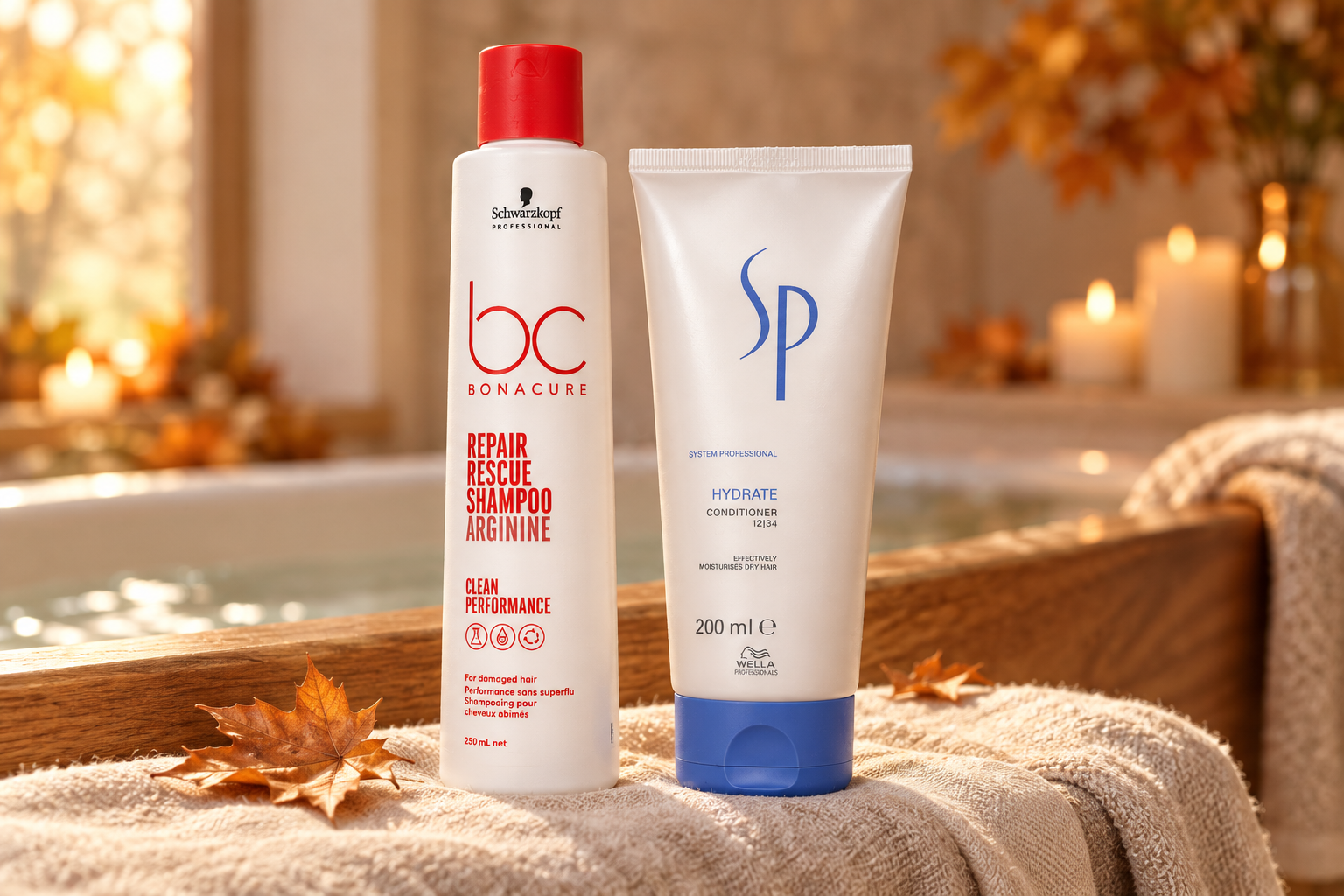
- Wella Professionals SP Hydrate Shampoo – a shampoo from the professional SP line focused on moisturizing dry hair, also available in large salon packaging.
- Kevin Murphy Hydrate-Me.Wash – a moisturizing shampoo for dry and coarse hair from a higher price range, also suitable for colored hair.
For brittle and weakened hair, regenerative lines are more suitable:
- Wella Professionals Fusion Intense Repair Shampoo – a line designed for significantly damaged hair, focusing on strengthening the fiber and resistance to breakage.
- Schwarzkopf Professional BC Bonacure Repair Rescue – a regenerative line for damaged hair; the shampoo is also available in a liter bottle, enough for the entire treatment.
For each shampoo, choose a conditioner from the same line or one with the same focus. The conditioner completes the washing process, makes combing easier, and reduces the risk of hair breaking when combing wet.
Colored hair deserves special attention. Sun and pool water accelerate color fading, and blonde shades may develop an unwanted yellow tint. Color protection lines are formulated to clean hair gently and wash out the color as little as possible. A popular choice is L'Oréal Professionnel Série Expert Vitamino Color – both the Resveratrol shampoo and the conditioner of the same name are available in practical large bottles. If colored hair is also significantly brittle, you can alternate between a regenerative shampoo and a color-protecting shampoo.
Intensive Masks for Deep Regeneration
If there's one cornerstone of autumn hair care, it's the mask. Unlike conditioner, which mainly smooths the hair and makes it easier to detangle, a mask contains a higher concentration of nourishing ingredients and is left on the hair for a longer time. Therefore, it's worth choosing one based on whether your hair needs more moisture or strength after the summer.
Nourishing masks are designed for dry, coarse, and dull hair that easily frizzes. They provide moisture and nourishing oils, soften the hair, and restore its elasticity. Reconstructive masks with keratin target weakened hair – brittle, with split ends, lightened, or frequently dyed. They help strengthen the damaged hair structure, making it stronger and less prone to breaking. Many hair types need both after the summer; in such cases, alternating between both types of masks is effective.
Here are a few tips from our selection that cover both approaches:
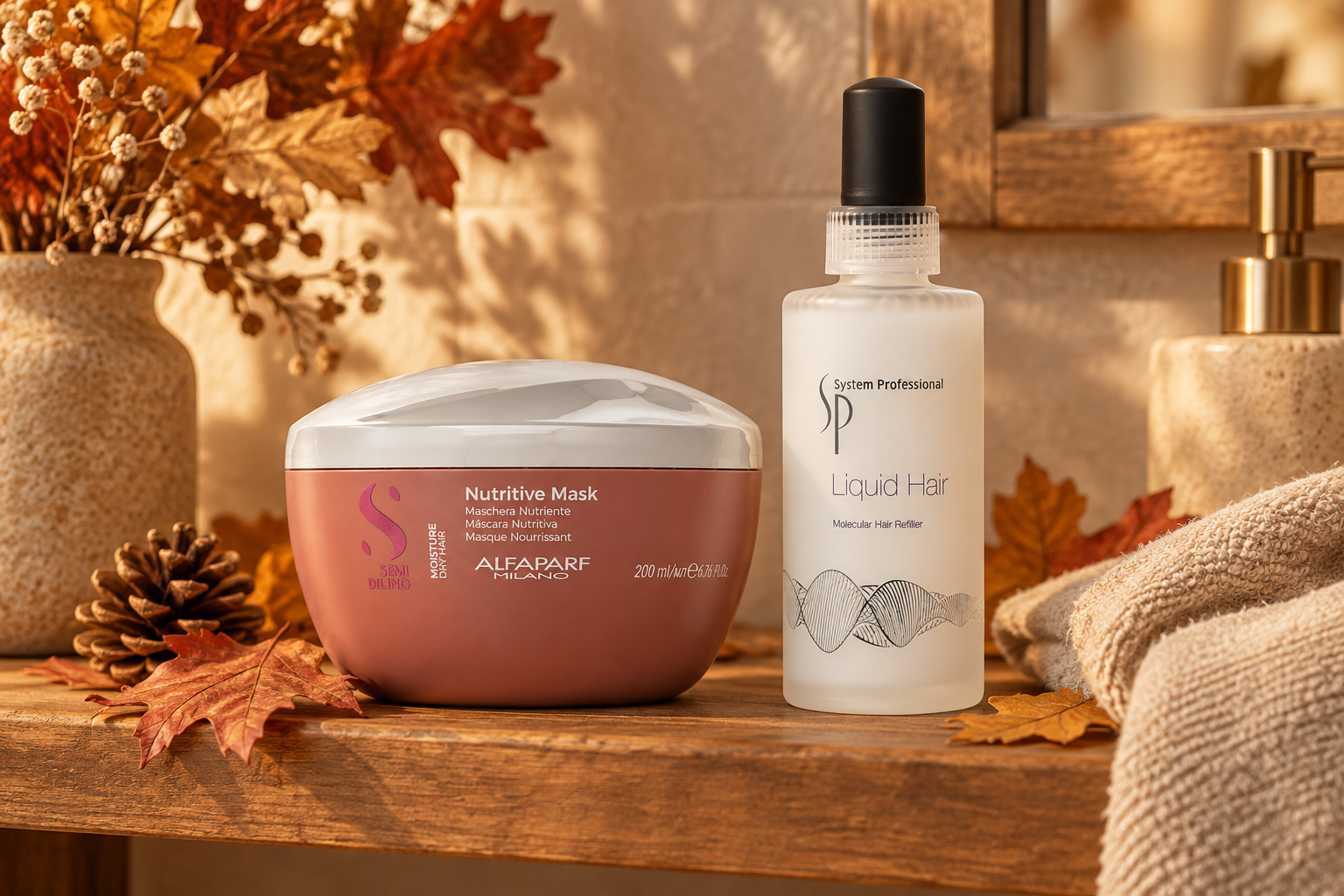
- Alfaparf Milano Semi Di Lino Moisture Nutritive Mask – a nourishing mask for dry hair that primarily needs moisture, softness, and shine. It belongs to the more premium lines and is suitable for regular care.
- Wella Professionals SP Luxe Oil Keratin Restore Mask – a reconstructive mask that combines keratin with oil care. It's suitable for hair weakened by sun, chlorinated water, or dyeing.
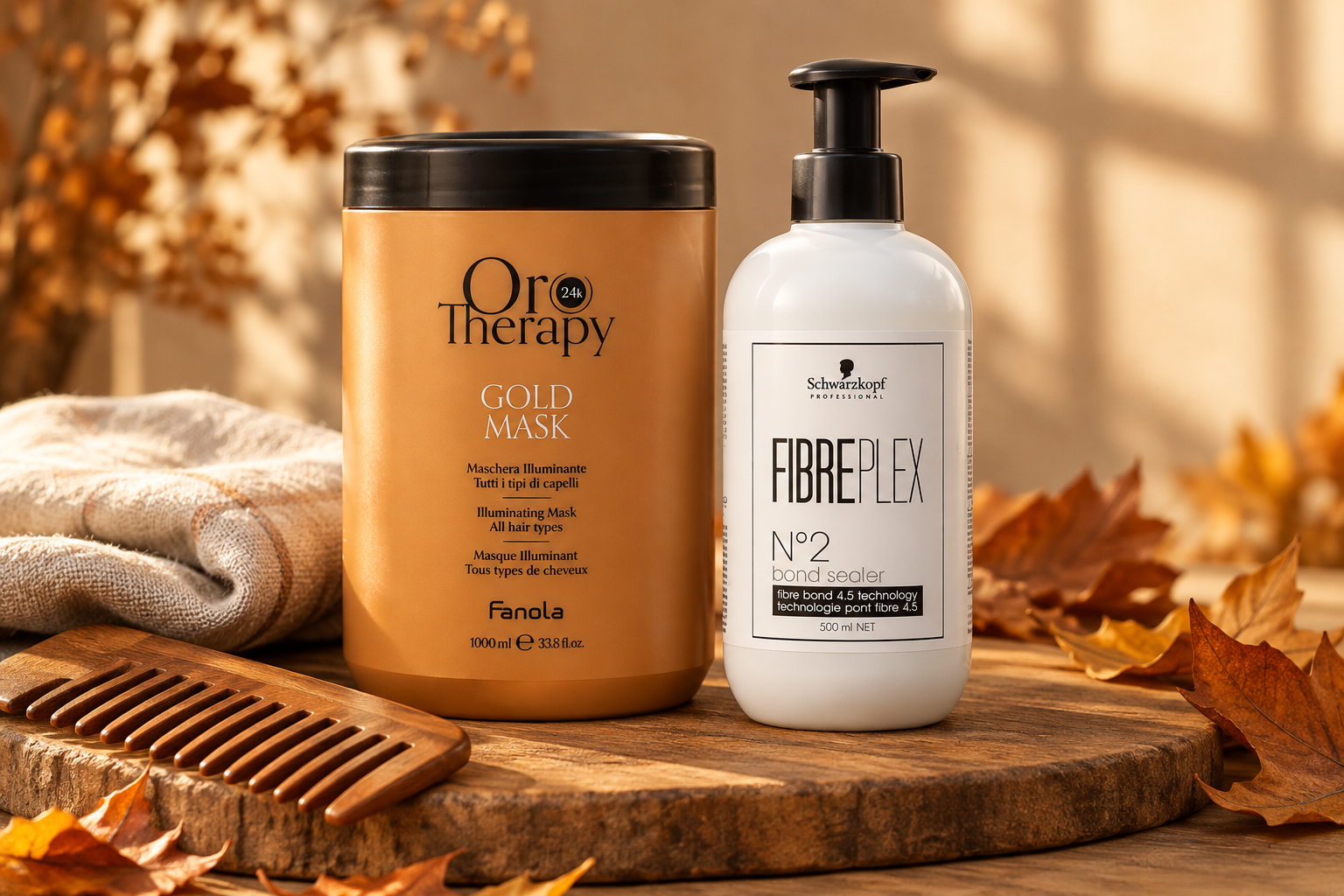
- Fanola Oro Therapy 24k Gold Mask – a mask for tired and dull hair, focused on shine and softness. The large one-liter package lasts a long time, making it a more affordable option for those who use masks frequently.
- Wella Professionals Nutricurls Waves & Curls Mask – a nourishing mask for wavy and curly hair, which tends to be naturally drier. It helps tame frizz and support the regular shape of waves and curls.
For significantly damaged hair – typically lightened or repeatedly dyed, which has lost strength after the summer – it's worth reaching for the hair treatment Schwarzkopf Professional Fibreplex N°2 Bond Sealer. It comes from the professional Fibreplex system focused on protecting the internal bonds of the hair and can be used at home instead of a mask or alternated with a reconstructive mask.
The price range of masks varies from more affordable large packages, like the one-liter Fanola mask, through the mid-range Wella Professionals line, to premium masks like Alfaparf Milano.
How to Apply a Mask Correctly
- Wash your hair with shampoo and gently squeeze out the water with a towel. Applying a mask to dripping hair dilutes it unnecessarily and makes it harder to distribute.
- Apply an appropriate amount from the lengths to the ends, where damage is usually greatest. Avoid the roots and scalp to prevent hair from losing volume quickly.
- Distribute the mask with your fingers or a wide-toothed comb to ensure every strand is covered.
- Leave it on according to the instructions on the packaging – for most masks, this is 5 to 10 minutes. For more intensive care, you can wrap your hair in a warm towel or wear a shower cap.
- Rinse thoroughly with lukewarm water; you can finish with a cooler stream to smooth the hair surface.
If your hair feels stiff or coarse after using a reconstructive mask, it may mean there are too many proteins. In such cases, opt for a nourishing mask more often and use keratin treatments more sparingly.


Serums and Oils – Leave-in Care for Shine and Strong Ends
A mask does the heavy lifting once or twice a week, but your hair needs protection on the days in between washes. This is where leave-in care comes in. Applied to damp or dry lengths, it stays on the hair, gradually restoring the smooth surface and shine that summer took away. Whether you're dealing with brittle lengths or just dull and split ends, it's worth distinguishing between two groups of products: serums and oils.
Serums usually have a lighter, liquid or creamy texture and are mainly aimed at hair whose structure is weakened after summer.
- Wella Professionals SP Liquid Hair Molecular Hair Refiller – a liquid serum designed for damaged and porous hair. It's suitable for lengths that feel dry and "rough" to the touch and where you want to add a sense of strength without weighing the hair down.
- Lakmé K2.0 Recover Hyaluronic Treatment – leave-in care for damaged hair with hyaluronic acid. It's ideal for hair that has lost its elasticity after summer and primarily needs hydration.
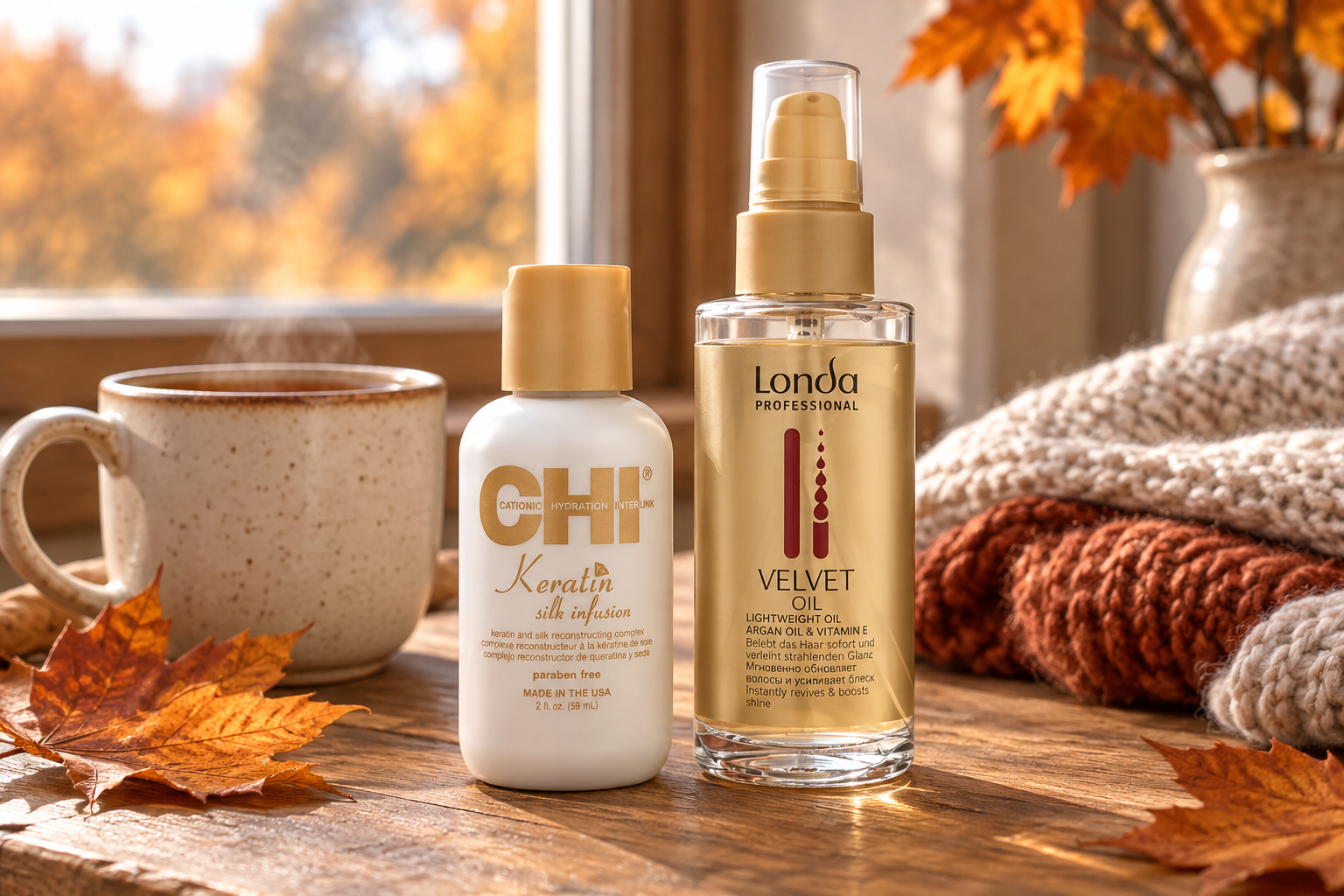
- CHI Keratin Silk Infusion – a smoothing treatment that, as the name suggests, is based on keratin and silk. You'll appreciate it if your hair is frizzy, sticking out, and you want to restore a smooth surface before styling.
Oils work mainly on the hair's surface: they smooth it, soften the ends, and add shine. They are most appreciated by dry, thick, or wavy hair.
- Wella Professionals SP Luxe Oil Reconstructive Elixir – a nourishing elixir for regular use that softens the hair and adds shine. A practical choice if you're looking for an oil for your daily routine.
- Londa Professional Velvet Oil – a more affordable oil treatment focused on softness and shine. It serves well for quick smoothing of ends during the day.
- K18 Molecular Repair Hair Oil – a more luxurious option from this trio. In addition to shine and protection against frizz, it also targets the repair of damaged hair according to the manufacturer. It is sold in a smaller package because very little is needed for each use.
Serums and oils do not exclude each other. For significantly damaged hair, you can apply serum to damp lengths and finish with a drop of oil just on the ends after drying.
Dosage According to Hair Density
- Fine and thin hair: start with one pump of serum or one to two drops of oil. Apply only from mid-lengths to ends, never to the roots – otherwise, the hair will quickly become limp and appear greasy.
- Medium-density hair: usually, two pumps of serum or two to three drops of oil distributed into lengths and ends are sufficient.
- Thick, wavy, and curly hair: can handle a larger amount. Apply the product strand by strand to reach the lower layers.
Always rub the product between your palms first and then work it into your hair – it will distribute more evenly and won't create greasy spots. If you're unsure, start with a smaller amount and add more if needed. Excess oil will only be removed with the next wash.


Autumn Hair Care Routine: Step-by-Step Guide
Each product works best when they complement each other and are used consistently. Consider your autumn hair care routine as a regimen lasting four to six weeks – long enough to notice a change in your hair's length and condition.
- Shampoo and Conditioner – use with every wash. Choose a shampoo based on whether your hair needs more hydration or repair, and the conditioner will smooth the hair surface and make detangling easier.
- Mask – once or twice a week, on days when you use it instead of conditioner.
- Bond Technology Treatment – depending on the level of damage. For hair that has been lightened or repeatedly colored, use it once a week; for milder damage, once every two weeks. Always follow the manufacturer's instructions.
- Serum or Oil – apply after every wash to towel-dried hair, using a small amount on the lengths and ends.
The following three combinations are either based on a single product line or on products that complement each other well in their focus.
Routine for Dry Hair
The focus is on hydration and nourishment. A bond technology treatment is usually not needed unless the hair is also brittle.
- wash: Wella Professionals SP Hydrate Shampoo, or Kevin Murphy Hydrate-Me.Wash,
- mask once or twice a week: Alfaparf Milano Semi Di Lino Moisture Nutritive Mask,
- after washing: Wella Professionals SP Luxe Oil Reconstructive Elixir for lengths and ends.
Routine for Brittle and Weakened Hair
This routine focuses on repair, which is why it includes a bond technology treatment.
- wash: Wella Professionals Fusion Intense Repair Shampoo,
- conditioner: Alterna Caviar Restructuring Bond Repair Conditioner,
- treatment based on damage level: Schwarzkopf Professional Fibreplex N°2 Bond Sealer,
- mask once or twice a week: Wella Professionals SP Luxe Oil Keratin Restore Mask,
- after washing: Wella Professionals SP Liquid Hair Molecular Hair Refiller serum, or K18 Molecular Repair Hair Oil for split ends.
Routine for Color-Treated Hair with Faded Shine
Color-treated hair benefits from a product line focused on color, complemented by a leave-in product for a smoother surface.
- wash: L'Oréal Professionnel Série Expert Vitamino Color Resveratrol Shampoo,
- conditioner: L'Oréal Professionnel Série Expert Vitamino Color Resveratrol Conditioner,
- mask once or twice a week: L'Oréal Professionnel Série Expert Vitamino Color Spectrum Professional Mask,
- after washing: CHI Keratin Silk Infusion for lengths.
If color-treated hair is also brittle, you can add a bond technology treatment from the weakened hair routine once every two weeks.
Gentle Detangling
All three routines include gentle handling of wet hair, which is more elastic and prone to breakage. A helpful tool is the Tangle Teezer Wet Detangler brush, whose flexible bristles glide through tangles without unnecessary pulling. Start at the ends and work your way up to the roots.
When to Repeat the Routine
After four to six weeks, you can return to regular care – shampoo and conditioner with every wash, a mask once a week, and serum or oil as needed. It's worth repeating the routine when the original symptoms return, such as coarse lengths, a dull surface, or split ends. Another suitable time is after lightening or coloring, and also at the end of winter when hair is stressed by dry air from heating and friction from hats and scarves.
If you want to tailor the routine to your hair, you'll find a wider selection in the Brasty e-shop in the Hair Masks, Hair Serums, and Hair Oils categories, where you can compare products based on hair type and care focus.
Category
Recommended articles

"Give a girl the right shoes and she can conquer the world!" Marilyn Monroe