

A short haircut often looks different after a day under a hat than it did in the morning – hair becomes static, sticks out, and loses its shape. We'll advise you on which shampoos, conditioners, and leave-in treatments won't weigh down short hair in winter, and how to quickly restore its shape.
Why Short Hair Gets Static Under a Hat
You leave the house in the morning with a neat hairstyle, but by the afternoon in the office or evening at home, you take off your hat and see a completely different look in the mirror. Hair sticks out to the sides, bangs cling to your forehead, the crown is flattened, and shorter strands reach out to your sweater and hands. Anyone with a short haircut knows this situation well: with longer hair, winter static is lost in the length, but with short hair, it's immediately noticeable.
This isn't a coincidence or "unruly hair." There are several understandable reasons for static that all come together in winter.
- Dry air from heating. In heated rooms, the humidity drops, and hair gradually loses moisture. Drier hair is less able to dissipate electrical charge, so it stays on the hair longer. Outside it's cold, inside it's warm and dry – hair alternates between two environments all day, both of which dry it out.
- Friction against wool or synthetics. Every time you put on, adjust, or take off a hat, your hair rubs against the material. Wool and synthetic fibers easily transfer charge to the hair. Individual hairs then become similarly charged and repel each other – which is why they stand out or cling to your face.
- Dried-out scalp. Alternating cold and warmth, hot showers, and sweating under a hat can stress the scalp. It may feel tight, itchy, or slightly flaky, and the hair growing from it tends to be drier and less manageable.
For long hair, winter care often focuses on nourishing the lengths and ends – rich masks, oils, and thick creams. For short haircuts, the same approach would likely do more harm than good. Short hair is light, its shape is mainly given by volume at the roots and texture, and once you weigh it down, it becomes limp, gets greasy faster, and loses its shape. This applies to a delicate women's pixie cut as well as a thicker men's cut with shorter sides.
The goal is therefore hydration without heaviness: providing moisture to the hair and scalp to reduce static, while maintaining lightness and movement. In practice, this means choosing lighter textures, using smaller amounts, and applying products specifically where the hair needs them – not all over "just in case."
A simple four-step routine works well, which you can put together with Brasty hair cosmetics for both women and men:
- Shampoo – gentle, hydrating wash that cleanses without drying out the scalp.
- Conditioner – a light layer that smooths the hair surface and makes detangling easier without weighing down the cut.
- Leave-in care – a spray, fluid, or drop of light oil that protects hair from static throughout the day.
- Styling – a small amount of paste or cream to quickly restore shape after removing a hat.
Whether you wear a short women's cut or a classic men's style, in the following sections of the article you'll find specific tips for each step – how to choose products, how much to use, and how to manage even on days when you wear a hat from morning till night.
Moisturizing Wash: Shampoos That Won't Dry Out Your Scalp
Caring for short hair in winter starts in the shower. The dry air from heating, the frost outside, and wearing a hat all day can dry out not only the hair strands but also the scalp – which can then react with tightness, itching, or small flakes. During the heating season, your shampoo shouldn't strip your hair squeaky clean, but rather wash gently and leave enough moisture for both your hair and scalp.
For normal hair that gets dried out in winter, moisturizing shampoos from professional lines are suitable. You can try these two, for example:
- Wella Professionals SP Hydrate Shampoo – a gentle moisturizing shampoo for normal to dry hair, suitable for frequent washing. The liter-sized bottle is especially appreciated in households where multiple people use it.
- Kevin Murphy Hydrate-Me.Wash – a shampoo from a more luxurious line designed for dry hair that needs moisture replenishment. Ideal when you want the washing itself to feel like a pampering step.
With short hair, less is more. For a short cut, usually, a hazelnut-sized amount is enough, and for clipper cuts, even less. First, lather the shampoo in your hands with a little water and massage it mainly into the scalp – the ends will be cleaned by the foam that runs down them during rinsing. Excess shampoo doesn't clean better, it just unnecessarily dries the hair and is harder to rinse out. Rinse with lukewarm water, as hot water dries out the scalp even more in winter.
If your scalp feels tight or flakes appear, it's worth reaching for a shampoo that focuses directly on it:
- Wella Professionals SP Balance Scalp Shampoo – a shampoo for sensitive scalps that cleans gently without unnecessary irritation. It's suitable when your scalp reacts with discomfort after a day under a hat and in an overheated room.
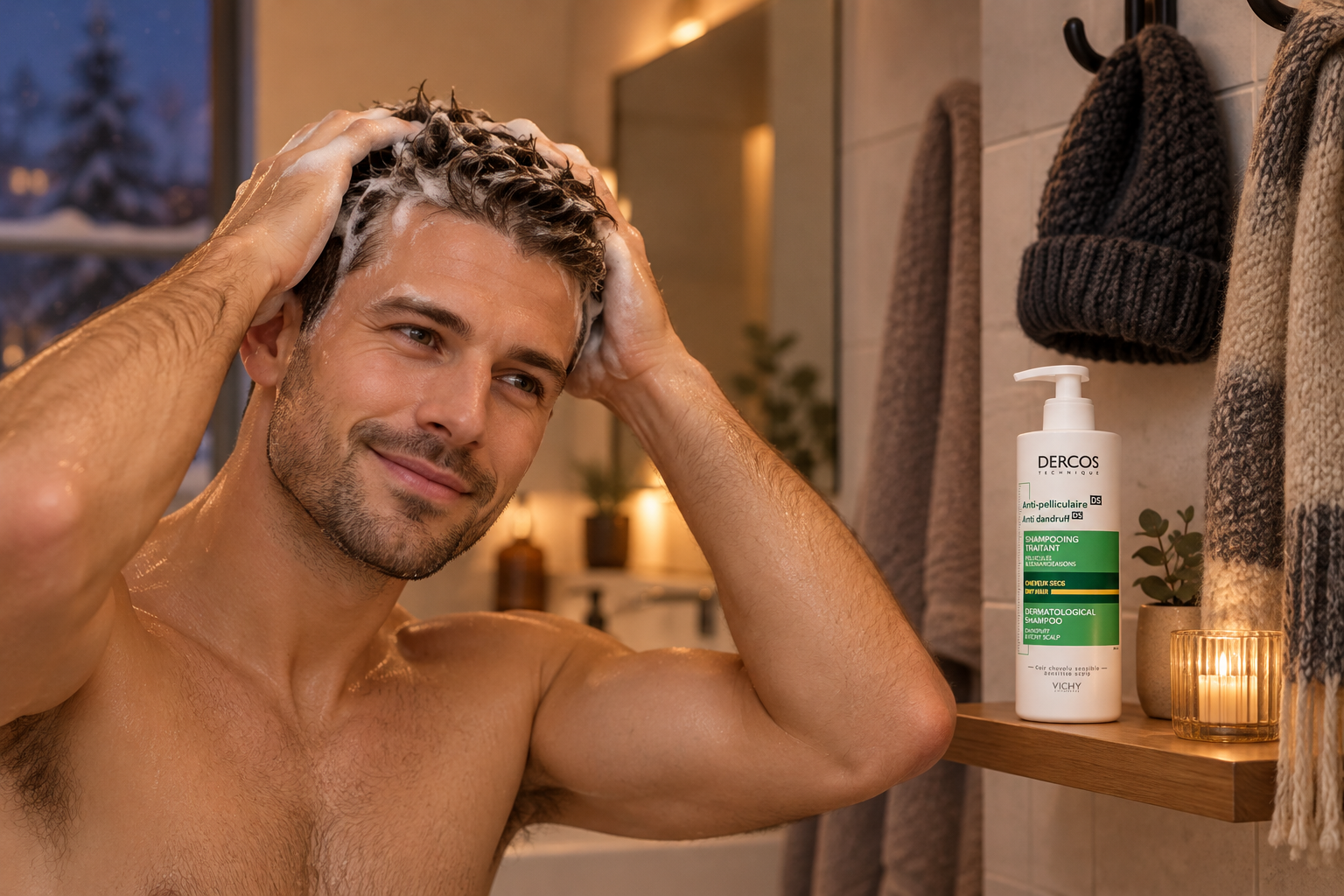
- Vichy Dercos Anti-Dandruff Dry Hair Dermatological Shampoo – a dermatological anti-dandruff shampoo designed for dry hair. It's a good choice if dryness is accompanied by dandruff.
You can alternate scalp shampoos with a moisturizing shampoo, for example, dedicating one wash out of three to the scalp and the rest to regular hydration. If problems persist or worsen, it's advisable to consult a dermatologist.
And how often should you wash short hair in winter? There is no universal rule, but most short cuts benefit from washing every other day to every third day. Under a hat, the scalp sweats more and hair flattens faster, so those with short hair tend to wash it daily. If needed, choose the gentlest shampoo possible, use a smaller amount, and opt for one lather instead of two. Conversely, with too infrequent washing, sebum and styling residue build up on the scalp, making hair look limp and the scalp may itch. Double lathering is mainly useful on days when you've used more styling products in your hair.


Lightweight Conditioners That Won't Weigh Down Short Haircuts
Conditioner is often the first step skipped when it comes to short hair. However, in winter, it plays a crucial role: after washing, the hair surface can become rough, and without something to smooth it, the hair rubs more against hats and becomes more static. Conditioner softens the hair surface, so your hair is less likely to stick up after removing your hat.
For short haircuts, less is more. A rich, nourishing conditioner that benefits long hair can flatten a pixie or short men's cut in no time. That's why it's worth choosing lightweight, fast-acting products.
A great example is Lakmé Lak-2 Instant Hair Conditioner. This is a lightweight conditioner designed for immediate detangling, which doesn't need to be left on for long – just spread it, leave it on the hair for a moment, and rinse. How to apply it without losing volume?
- Smaller amount than you expect – for short haircuts, usually a hazelnut-sized amount is enough. For very short hair, start with an even smaller amount and add more only if necessary.
- On lengths, not roots – apply the conditioner to the mid-lengths and ends, avoiding the scalp. This keeps the roots light and helps maintain volume.
- First spread in your palms – rub the product between your palms and run your fingers through your hair. This ensures even distribution without excess.
- Thorough rinsing – leftover conditioner is a common reason why short hair appears limp or greasy. Rinse with lukewarm water until you no longer feel the product on your hair.
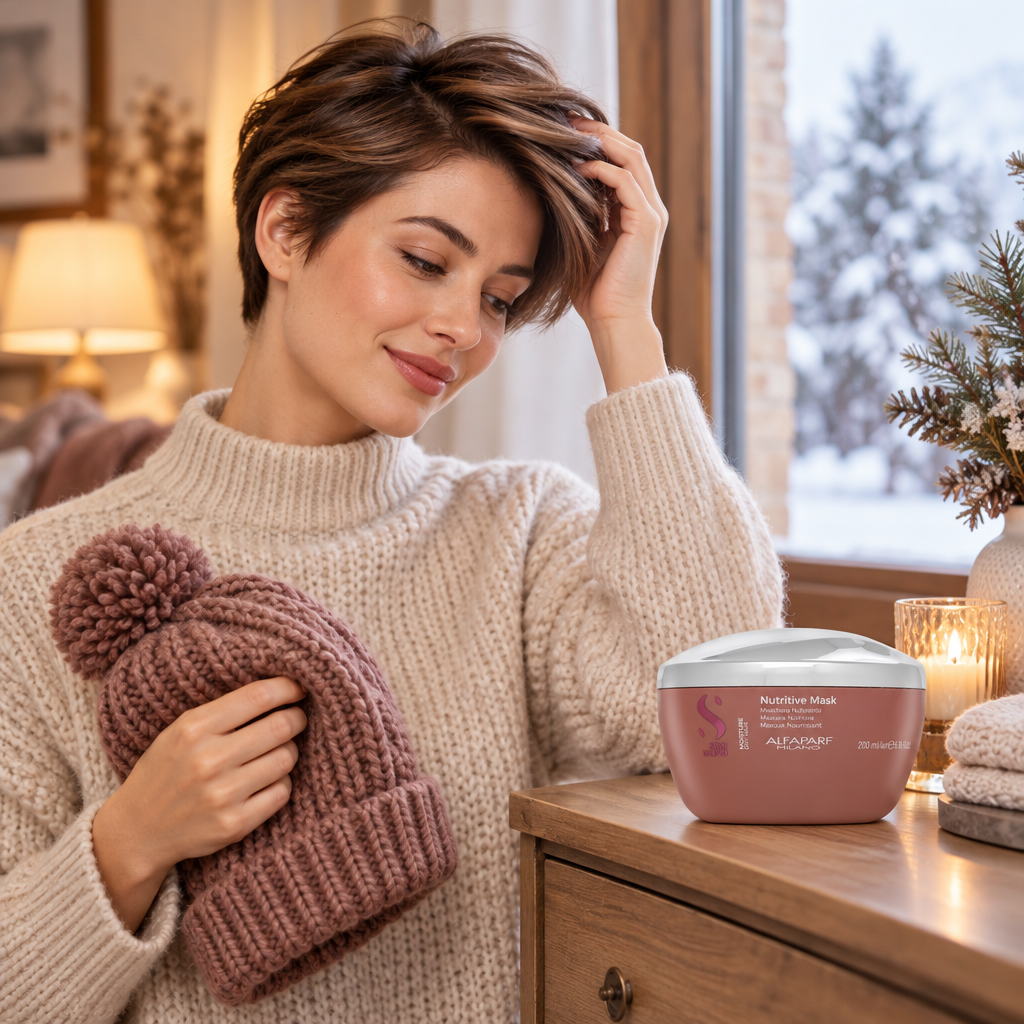
Include a hydrating mask as an occasional treatment, not as a step in every wash. For example, Alfaparf Milano Semi Di Lino Moisture Nutritive Mask is richer than a regular conditioner, so use it on short hair about once a week, in a thin layer and only on the lengths. It's especially appreciated by thicker, dry, or colored hair, which loses moisture the most in the winter combination of frost and heated interiors. On days when you use the mask, skip the conditioner – layering both products unnecessarily weighs down short haircuts.
The needs of short haircuts also vary depending on hair type:
- Fine women's pixie cuts – fine hair is easily weighed down. Use the smallest possible amount of lightweight conditioner, apply it only to longer strands and ends, and use the mask sparingly, perhaps once every two weeks. If your pixie relies on volume at the crown, don't apply conditioner there at all.
- Thicker men's cuts – stronger and thicker hair can handle a bit more care. Conditioner helps mainly to tame strands that stick out after wearing a hat and to soften the coarser hair texture. You can spread it along the entire length, but still avoid the scalp. A regular mask is especially appreciated by men with colored hair or thick hair that feels dry and rough to the touch.
Whether you have a fine pixie or a thick men's cut, the guideline is simple: conditioner with every wash, mask only occasionally, and both in smaller amounts than you might expect. This way, your hair will remain soft and manageable while maintaining its shape and volume.
Leave-in Care to Combat Static Throughout the Day
Shampoo and conditioner prepare your hair for winter in the bathroom, but the real test comes outside – in the cold, under a hat, and in overheated offices. This is where leave-in care comes into play. It stays on your hair all day, smoothing the surface and helping to keep stray strands in check, even when your hat rubs against them. For short hairstyles, a simple rule applies: less is more. Just a bit too much product can turn a voluminous style into a sticky mess.
For short hair, products with a light texture that absorb quickly are ideal:
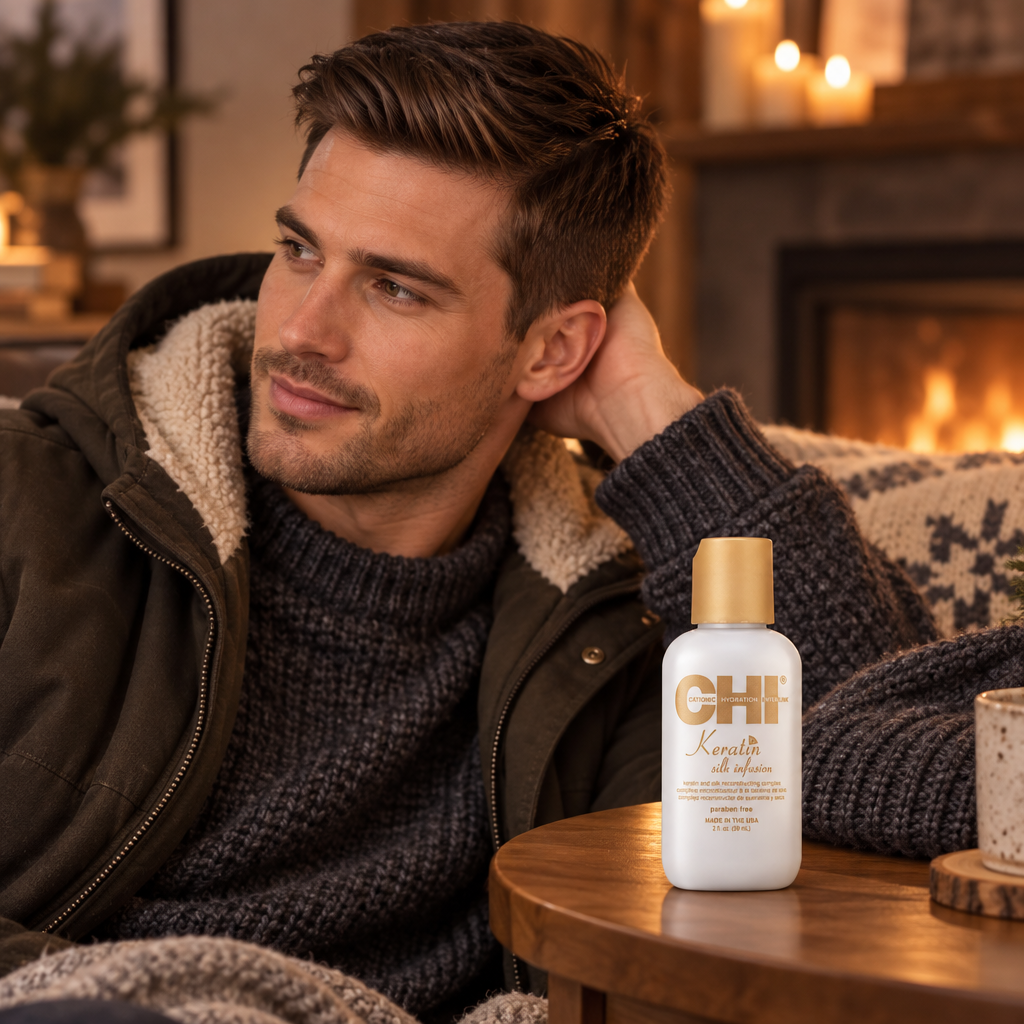
- CHI Keratin Silk Infusion – a liquid leave-in treatment that relies on keratin and silk components, as the name suggests. It's suitable for normal to fine hair when you're looking for smoothness without added weight.
- Lakmé K2.0 Recover Hyaluronic Treatment – a leave-in treatment with hyaluronic acid designed for damaged hair. Ideal if your ends are stressed from coloring or bleaching and feel dry and rough in winter.
- Goldwell StyleSign Smooth Weightless Shine-Oil – a lightweight oil for shine and smoothness. For short styles, just a drop is enough; rub it between your palms and lightly glide over the surface of your hair.
There's no need to layer all three products. Most short styles will do with just one; if your hair is very dry, you can supplement the leave-in care with a drop of oil just on the ends.
How to Apply Care Without a Greasy Effect
- If you wash your hair in the morning, apply the product to slightly damp, towel-dried hair – it spreads better and helps you gauge the right amount.
- Start with a really small amount – a few drops for liquid and creamy textures, one to two for oil. You can always add more, but you can only remove it by washing again.
- First, rub the product between your palms, then work it into the lengths and ends. Avoid the roots and scalp – that's where greasiness shows first, and your style will lose volume.
- For very short styles with no lengths, just glide your palms over the surface of the hair and the strands that tend to stick out most – above the ears and at the nape.
A Brush That Cares for Your Hair
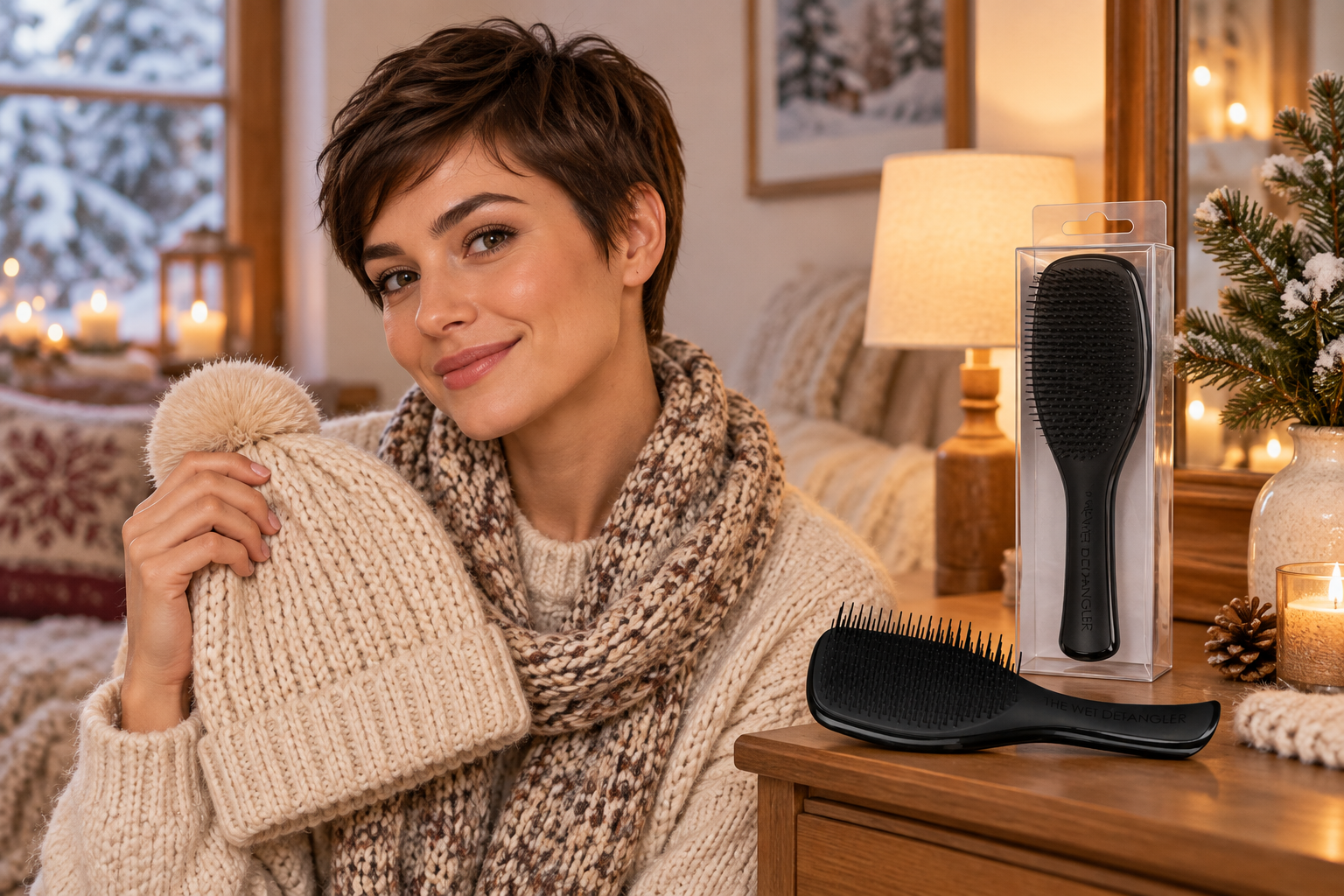
The more you rub your hair against something, the more it charges – that's why it matters what you use to detangle it. Tangle Teezer brushes have flexible teeth of varying lengths that gently untangle hair without unnecessary pulling. The Wet Detangler model is designed for use on wet hair, so you can use it right after applying leave-in care to distribute the product evenly. Brush with short, light strokes and less frequently – for short styles, usually just styling in the morning is enough, and then leave it be.
Morning Tip: Preemptive Care
Apply leave-in care at least ten to fifteen minutes before heading out. This allows the product to absorb, your hair to dry, and to go under a hat dry and smooth. If you put on a hat immediately over freshly treated, still damp hair, the fabric might wipe off some of the care, and your style could become sticky or limp. A proven routine looks like this: wash, towel dry, apply leave-in care, comb through with a brush, let dry, and only then style and put on a hat. If your hair gets greasy quickly, try applying care only every other day or just on the ends.


How to Restore Your Haircut's Shape After Removing a Hat
You take off your hat in the office, at a café, or before an evening meeting, and suddenly your short haircut is flattened against your head, limp at the crown, and sticking out at the ends. Fortunately, short hair has one advantage – fixing it takes just a few minutes and doesn't require a hairdryer. All you need is a small amount of styling product, your fingers, and a bit of water.
Here's a method you can manage even in front of a mirror at the office:
- Loosen the roots. Run your fingers through your hair against the direction it was lying under the hat and gently massage your scalp. If your hair still clings to your head, a dry shampoo sprayed at the roots can help.
- Moisten only what's necessary. Use damp hands to smooth over areas where the hair is sticking out or bending in an unwanted direction. Don't soak your hair – without a hairdryer, it would take a long time to dry, and in the cold, it would be uncomfortable.
- Add shape. Rub a pea-sized amount of product in your hands until it warms up, then work it from the ends towards the roots. Less is more – you can always add more if needed.
For volume at the roots and a quick refresh, Sebastian Professional Drynamic dry shampoo is ideal. Spray it from a sufficient distance directly at the roots, let it sit for a moment, then massage it in with your fingers. It refreshes hair that has been under a hat all day and gives it support to lift the cut away from the head again. For dark hair, massage it in thoroughly to avoid leaving a light residue.
For texture and strand definition, a light styling product is enough. Wella Professionals EIMI Texture Pearl Styler is a gel product that highlights individual strands – perfect for a pixie or short bob where you want visible structure. Schwarzkopf Professional Osis+ Thrill has a flexible fibrous consistency and in small amounts helps the ends hold their direction. It's suitable for styles meant to look slightly tousled yet groomed.
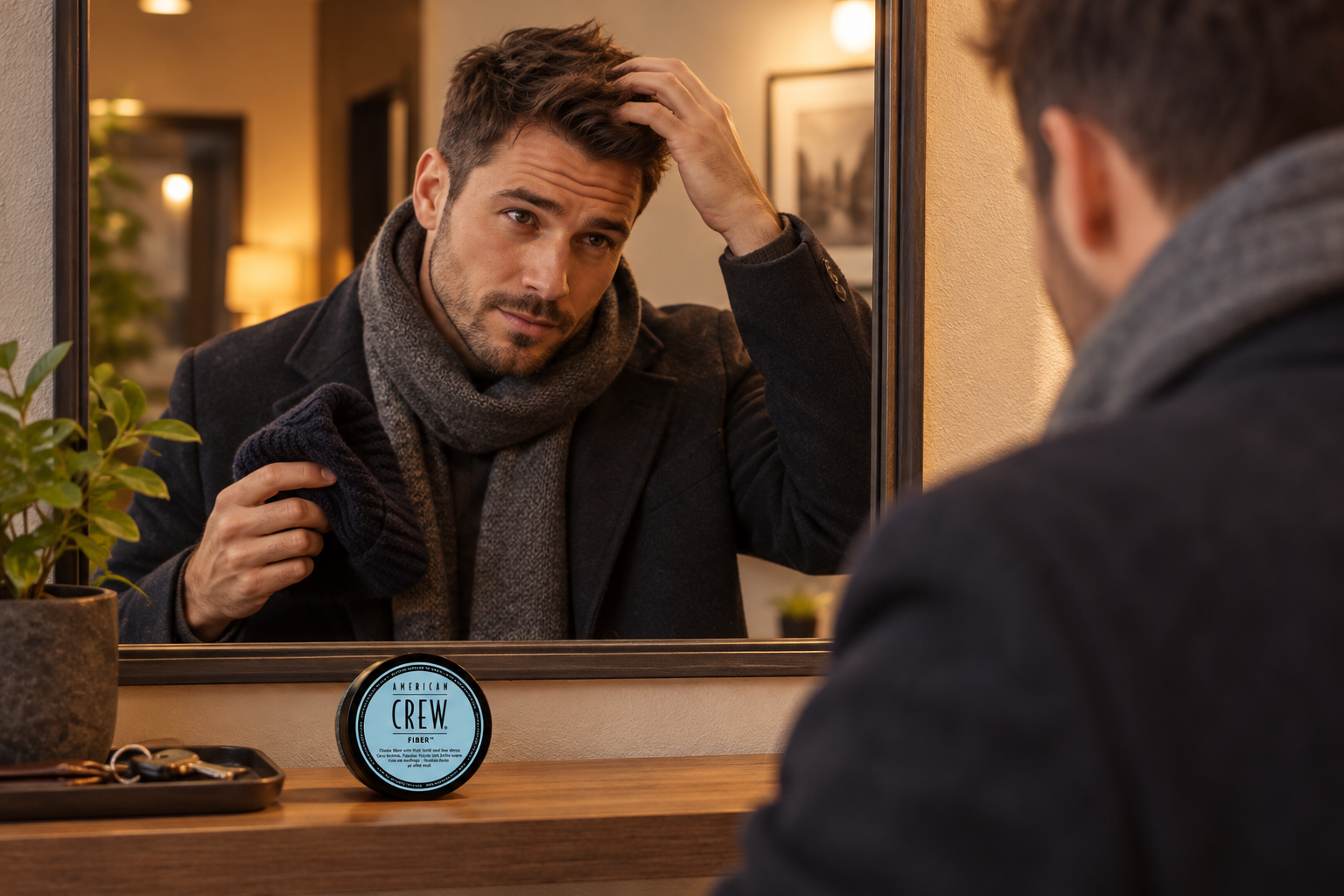
Men's short haircuts have their own logic in winter. If you wear a casual style with a matte finish, try American Crew Fiber – a small amount rubbed in your hands is enough to lift hair after wearing a hat. For a smoother, classic look with a part or slicked-back hair, Reuzel Green Pomade is suitable. The same rule applies as with women's styles: start with a very small amount and only add more if necessary. A small trick when dressing – wearing your hat a bit looser, not all the way to the forehead, will crease the front section less, which is the hardest to fix.
If you want your winter care to be coordinated from washing to styling, here are two sets from Brasty's range.
Winter Set for Women
- Shampoo: Wella Professionals SP Hydrate Shampoo
- Conditioner: Lakmé Lak-2 Instant Hair Conditioner
- Leave-in Care: CHI Keratin Silk Infusion
- Styling: Sebastian Professional Drynamic and Wella Professionals EIMI Texture Pearl Styler
Winter Set for Men
- Washing: American Crew 3-in-1 Tea Tree (shampoo, conditioner, and shower gel in one)
- Leave-in Care: Goldwell StyleSign Smooth Weightless Shine-Oil, just a drop on the ends
- Styling: American Crew Fiber for a matte look, or Reuzel Green Pomade for a sleek style
With this kit, you can restore your haircut's shape in just a few minutes anywhere, and short hair will stay styled even on days when you barely take off your hat.


Category
Recommended articles

"Give a girl the right shoes and she can conquer the world!" Marilyn Monroe