

Do you exercise and shower multiple times a day? We'll advise you on how to choose gentle shower gels and follow-up care so that hot water and frequent washing don't dry out your skin.
Why Your Skin Dries Out Faster After a Workout
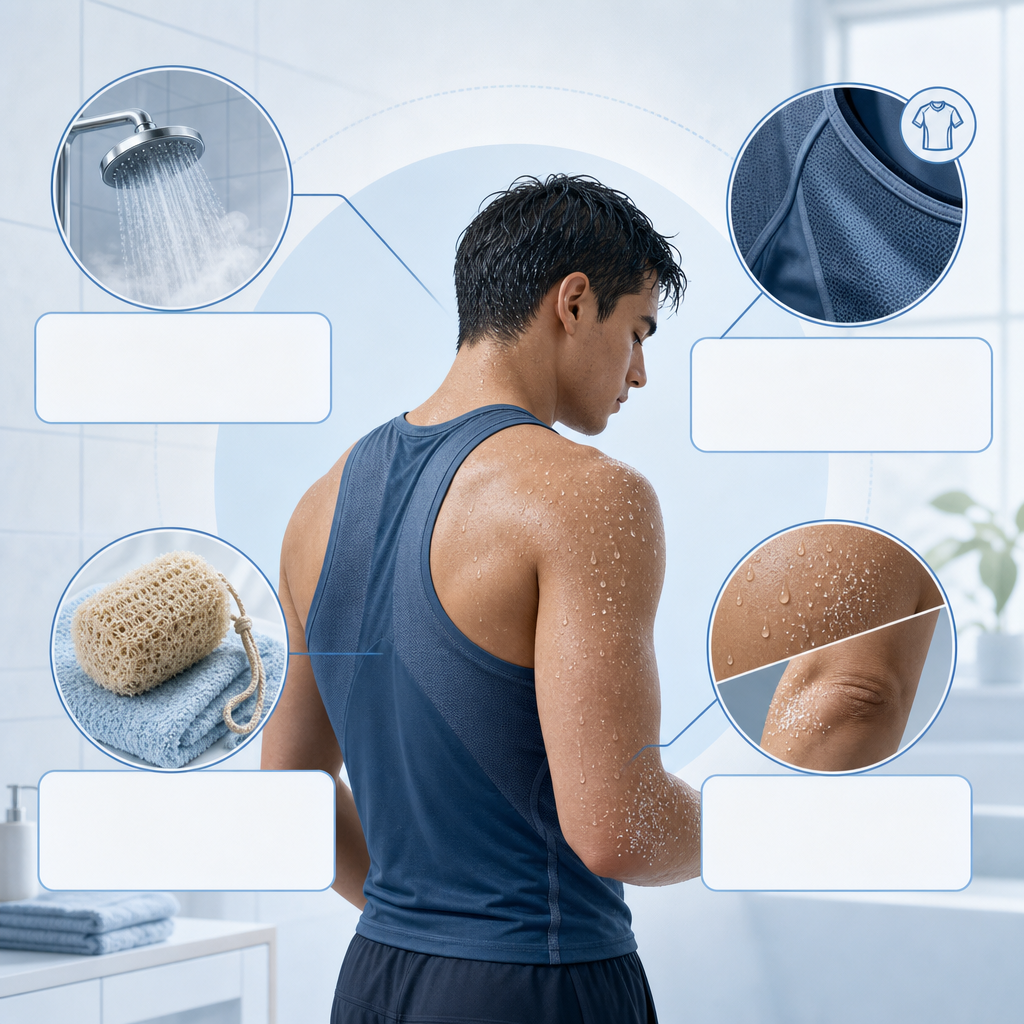
Morning shower, post-workout rinse, evening refresh – for an active person, it's common to shower three times a day, and in summer, even four. Whether you hit the gym three times a week, go for a run, or spend hours in the pool, sooner or later you'll feel it: the skin on your shoulders and calves feels uncomfortably tight after drying off, fine flakes appear on your shins, and your back itches after your evening shower. It's rarely because you shower "too often." More often, it's about what and how you wash with – and what follows your shower.
The surface of your skin is protected by a thin film composed of sebum, sweat, and lipids from the upper layers of the skin. It works like a seal: it helps keep water in and handles everyday external stress. However, this film is largely fatty in nature, so any cleansing product designed to remove oil will reliably disrupt it. With one wash a day, your skin has enough time to replenish it within a few hours. With three showers a day, there's simply not enough time for this regeneration, and you'll start to notice the difference after a few weeks of training season.
The second factor is water temperature. A hot shower after a strenuous workout is pleasant, relaxes muscles, and enticingly washes away fatigue – but it also dissolves sebum much more effectively than lukewarm water. Add ten minutes under the stream, scrubbing with a rough washcloth, and vigorous towel drying, and your skin gets three different signals to defend itself during a single shower. A lukewarm and shorter shower cleans just as well, just without the drying side effects.
The feeling of tight skin is usually not caused by sweat itself. Sweat is mostly water with salts and trace amounts of other substances; the typical body odor arises from how bacteria on the skin's surface interact with it. But when sweat dries and salt remains on the skin, combined with the friction of clothing and a sports bra, irritation occurs, which each subsequent wash highlights. Chlorinated pool water or sea salt on vacation act similarly – they aren't a problem by themselves but add extra stress to showers that already happen several times a day.
Ultimately, the combination of these factors most often contributes to dry skin after a workout:
- high frequency of showers without time to restore the protective film,
- hot water and long time spent in the shower,
- strongly foaming cleansing products with a high content of degreasing surfactants,
- mechanical irritation from a washcloth, rough towel, and tight sportswear,
- residual salt from sweat, chlorine from the pool, or salty water,
- lack of subsequent care to replenish what the shower washed away.
The good news is that none of these points mean you should shower less. Rinsing off after a workout is actually desirable because leftover sweat on the skin doesn't help anyone. The solution lies elsewhere: in choosing a gentler cleansing gel that cleanses the skin without stripping it of all its oils, and in what you do immediately after showering. Both fall under the category of Body Care, an area where it makes sense to choose based on ingredients and skin type, not foam intensity or fragrance strength.
That's why it's worth knowing how gentle cleansing gels differ from regular ones, which products make sense for daily sports, and how to create a routine from washing and subsequent care that takes just a few minutes a day. Consider this a practical guide to selection – not a reason to fear sweat or your own shower.
What Sets a Gentle Cleansing Gel Apart from a Regular Shower Gel
At first glance, all shower gels seem similar: a colorful liquid in a bottle that foams up in the shower. However, the difference between a regular drugstore gel and a gentle cleansing formula from a dermocosmetic brand lies not in the amount of foam, but in the composition of the cleansing base. This is what determines whether your skin will remain supple after a shower or start feeling tight and uncomfortable within minutes.
How Frequent Washing Affects the Skin Barrier
The skin's surface is held together by a thin layer of sebum and intercellular lipids, which include ceramides, fatty acids, and cholesterol. Cleansing products use surfactants, substances that bind to dirt and sweat and rinse away with water. The catch is that surfactants don't discriminate: along with sweat and dirt, they also wash away some of the skin's lipids. With one shower a day, the skin can replenish itself, but a second shower after a workout might be too much.
The second factor is pH. Healthy skin has a slightly acidic surface, with a pH around five. Traditional soaps and some highly foaming gels are alkaline, which temporarily raises the skin's pH after washing. Until the pH returns to normal, the skin becomes more sensitive and less tolerant to towel friction and sportswear. A typical sign is tightness and itching shortly after drying off.
Gentle Cleansing Formula vs. Classic Foaming Gel
Gentle cleansing gels from dermocosmetic brands take a different approach. Instead of using highly foaming surfactants, they rely on milder cleansing bases, labeled as soap-free or syndet, and supplement them with ingredients that replace lipids lost during washing. There's noticeably less foam, which can be surprising for those used to rich lather. However, this doesn't affect the cleaning efficacy: even a barely foaming cleansing base can remove sweat and everyday dirt.
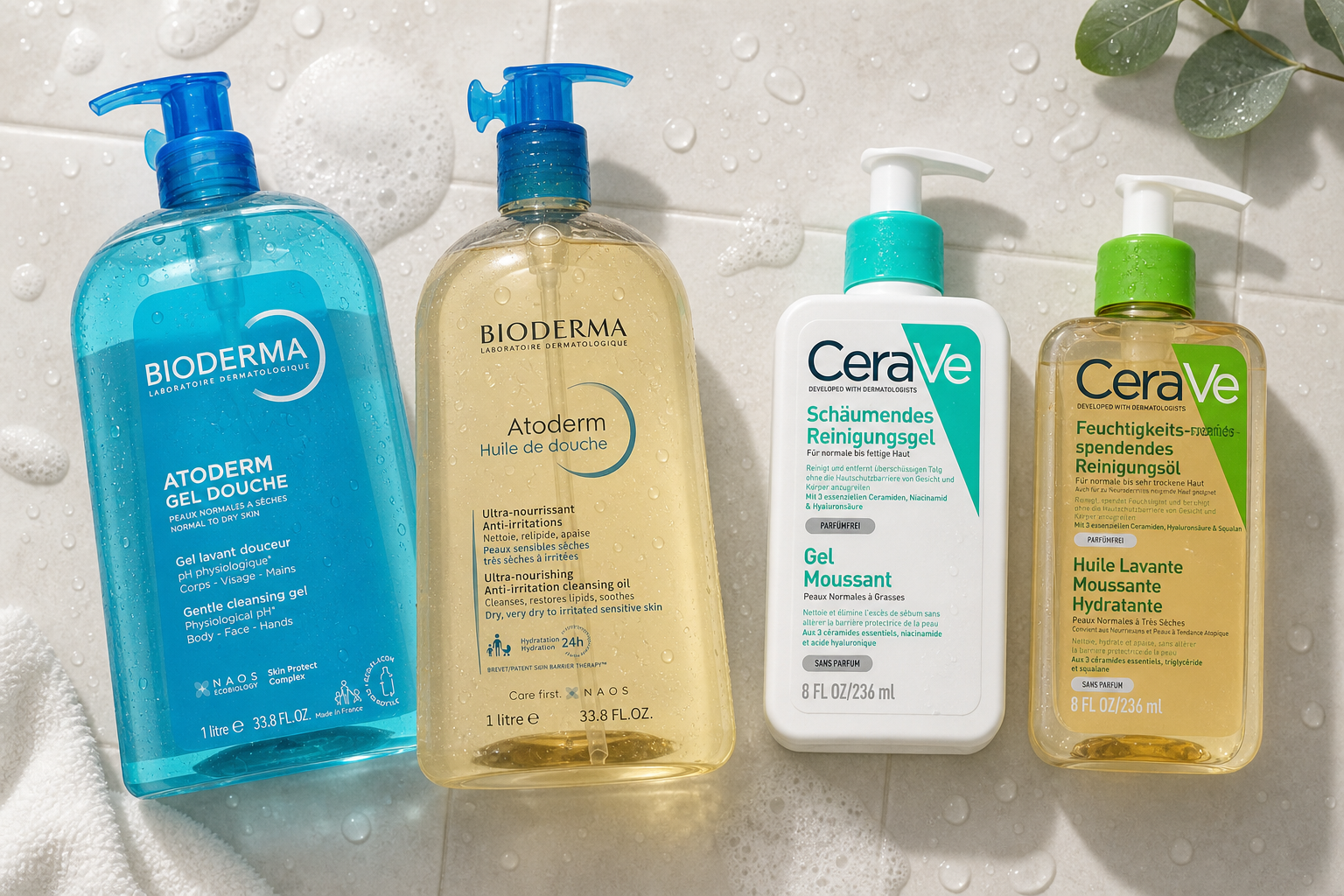
A separate category is the shower oil format. On wet skin, it transforms into a gentle milky emulsion, cleansing the body while leaving a thin oily film on the surface. In our range, this format is represented by products like Bioderma Atoderm Huile de Douche. If a classic gel dries you out after a workout, it's worth trying the oil variant.
What to Look for on the Label
- Gentle Cleansing Base – a soap-free or syndet label indicates the use of milder surfactants.
- pH around five – a value close to the skin's natural pH is often stated on dermocosmetic packaging.
- Lipids and Emollients – plant oils and butter components help mitigate the degreasing effect of washing.
- Glycerin – a humectant that helps retain water in the upper layers of the skin.
- Ceramides – as part of the skin's own lipids, they are found in formulations for dry and sensitive skin.
- Moderate Fragrance – less fragrance is usually a better choice for sensitive skin and daily showering.
What to Avoid After a Workout
After exercise, the skin has endured sweat, friction, and often shaving, so it doesn't appreciate anything too harsh. Save exfoliating gels with abrasive particles for occasional use, not for daily post-gym showers. Strongly cooling menthol gels may offer a pleasant feeling of freshness, but can sting on chafed or freshly shaved areas. Be cautious with traditional soap bars and antibacterial cleansers – both can over-dry the skin more than necessary with two showers a day.
You can easily assess your own gel: shower as usual, dry off, and wait five minutes before applying anything. If your skin remains calm, your gel is suitable for a sporty lifestyle. If you experience tightness, dry patches, or itching, the issue lies not with your skin, but with the cleansing base.
Bioderma Atoderm and CeraVe: Gels for Frequent Showering
Whether you shower once a day or hit the shower again after every workout, the composition of the cleansing product and its volume are key. We've arranged the following options based on how dry your skin is and how much you're willing to spend on a single bottle. Each option includes a brief context and situations where it makes sense.
Bioderma Atoderm Gel Douche Gentle Shower Gel 1000 ml (around 245 CZK) is a universal starting point. This is a cleansing gel from a line designed for dry and sensitive skin, which can be used on both the body and hands without any special technique – apply, rinse, done.
- Ideal if you're looking for one product for the whole household and don't want to deal with two bottles in the bathroom.
- Suitable if you shower often, but your skin isn't itchy yet – it just feels tight after showering.
- In terms of cost per milliliter, this liter-sized bottle is cheaper than other options in this selection.
Bioderma Atoderm Huile de Douche 1000 ml (around 322 CZK) is a richer choice. Instead of a gel, it's a shower oil that transforms into a gentle milk upon contact with water, leaving a noticeable film on the skin. This is the difference you'll feel immediately after towel-drying if your skin is significantly dry.
- Perfect if the gel isn't enough after a workout and your skin remains tight even after moisturizing.
- Great for winter months when frequent showering is combined with dry air from heating.
- A refill is available in a liter volume at a lower price (around 286 CZK), so you save money and packaging with regular use.
The brand CeraVe offers two cleansing options in liter bottles, differing mainly in whether they foam. CeraVe Hydrating Cleanser 1000 ml (around 456 CZK) is a non-foaming creamy product for dry skin; CeraVe Foaming Cleanser 1000 ml (around 469 CZK) foams and is designed for normal to oilier skin, perfect for when you want to feel truly clean after sports but don't want a regular shower gel with harsh surfactants.
- Ideal if you're addressing both face and body with one product – the brand states both options are suitable for both.
- Great if you have a tendency for imperfections on your back or chest and prefer a foaming texture over oil.
- Expect a higher initial cost; however, a liter will last significantly longer than a small bottle with twice-daily showers.
If your skin is atopic and you repeatedly deal with itching, the Uriage Xémose line is worth considering, developed specifically for this condition. The catalog includes the Uriage Xémose Anti-Itch Soothing Oil Balm 500 ml (around 370 CZK). For atopic skin, it's wise to consult with a dermatologist – cosmetics can soothe and moisturize, but they don't replace treatment.
One last note on volumes: liter bottles may seem expensive at first glance, but for someone who showers twice a day, the difference evens out over a few weeks. A smaller bottle of 200 to 400 ml is more suitable for travel and gym bags – consider it a supplement to the large bottle at home, not your main supply.


Post-Shower Care: Balms, Creams, Antiperspirants
Whether you're returning from a run or the gym, shower gel alone won't fix dry skin. What determines how your skin will look in the evening is mainly what you do in the first few minutes after drying off. Water evaporates quickly from the surface, taking with it some of the moisture your skin needs to replenish after a warm shower. The ideal time to apply body care is within about three minutes of drying off, while your skin is still slightly damp.
The way you dry off can also help. Instead of vigorously rubbing with a towel, gently pat your skin and leave a thin damp layer – this is the perfect base for spreading balm easily. After an intense workout, it's also beneficial to let your body cool down; on hot skin, thicker creams can melt and are harder to spread evenly.
Balm or Cream? Depends on How Dry Your Skin Is
The choice of texture depends on how dry your skin is and the area you are treating. For the entire body after daily showers, generous packaging is suitable, so you don't have to skimp on every drop.
- La Roche-Posay Lipikar Baume AP+ M 400 ml – a body balm for dry skin prone to tightness and itching. It covers large areas and doesn't leave a sticky film after absorption, so you can put on a t-shirt right away.
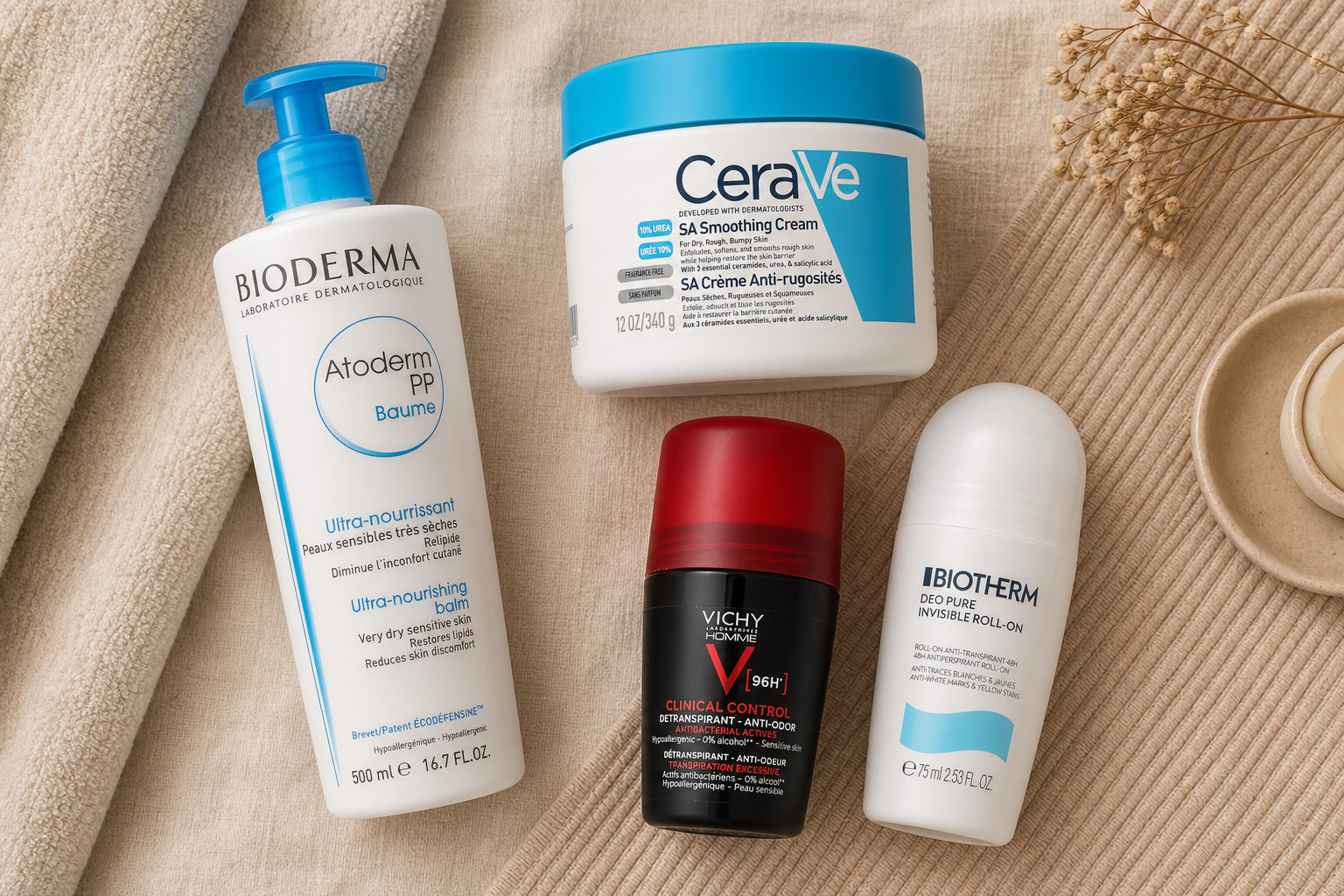
- Bioderma Atoderm PP Baume 500 ml – an ultra-nourishing balm for very dry and sensitive skin. A good choice if you shower twice a day and your skin reacts with tightness.
- CeraVe SA Smoothing Cream 340 g – a cream designed for rough, bumpy skin on arms and thighs, which hydration alone can't handle. Apply it long-term and regularly, not just before an event.
No matter which one you choose, consistency is key. One generous layer once a week does less than a thin layer after every shower.
Deodorant or Antiperspirant?
These two terms are often confused, yet each addresses a different issue. Deodorant deals with odor – it reduces bacteria that break down sweat and masks the result with fragrance. Antiperspirant goes a step further and reduces the amount of sweat itself. If you mainly dislike a wet shirt after a workout, you need an antiperspirant; if it's just about the smell, a deodorant will suffice.
The method of application matters more than expected. Antiperspirant should be applied to clean and dry skin, ideally in the evening before bed – the body is at rest, not sweating, and the product has better conditions to work. You can then shower normally in the morning. Avoid using it immediately after shaving or depilation, as irritated skin often reacts with burning.
- Vichy Homme Detranspirant 96H 2 x 50 ml – a twin pack of roll-on antiperspirant with long-lasting protection, aimed at more intense sweating.
- Vichy Clinical Control Detranspirant 96H 2 x 50 ml – an option for situations where a regular antiperspirant after a workout isn't enough and you need stronger protection.
- Biotherm Deo Pure Invisible 48h Antiperspirant Roll-on 75 ml – an invisible roll-on for everyday use, mindful of white marks on dark clothing.
Body balm and antiperspirant aren't mutually exclusive, they just address different needs: the first replenishes moisture over a large area, the second keeps underarms in check. Feel free to use them right after each other, just allow the balm to absorb before reaching for the roll-on.


Build Your Shower Routine According to Your Skin Type
There's one last step: combine your cleanser, follow-up care, and antiperspirant into a routine you'll actually use. We've prepared three options based on how your skin feels in the first few minutes after drying. Choose the one that matches your feeling; if you're torn between two, start with the gentler option.
Normal Skin Without Tightness
You shower after workouts, even twice a day, and your skin handles it without feeling tight after drying. The goal of this routine is to maintain the current condition even during the heating season when dry air adds to frequent washing.
- Cleansing: CeraVe Hydrating Cleanser 1000 ml – doesn't foam, cleans without a squeaky feeling, and the liter bottle lasts even with daily showers.
- Care: CeraVe Moisturising Lotion 976 ml – a lighter lotion that you apply to damp skin and can put on a shirt shortly after.
- Antiperspirant: Vichy 48H Anti-Transpirant No White Marks & Yellow Stains Roll-On 2 x 50 ml – a roll-on antiperspirant for a regular day at the office and an afternoon workout.
Dry Skin That Feels Tight After Showering
After drying, you feel tightness on your shins, thighs, or arms, and body lotion absorbs quickly. Here, it's worth switching from gel to an oil-based cleanser and opting for a richer consistency in follow-up care.
- Cleansing: Bioderma Atoderm Huile de Douche 1000 ml – a shower oil that turns into a gentle emulsion in water and doesn't leave skin dry after rinsing.
- Care: Bioderma Atoderm PP Baume Ultra-Nourishing Balm 500 ml – a rich balm for areas that react first after a shower.
- Antiperspirant: Biotherm Deo Pure Invisible 48h Antiperspirant Roll-on 75 ml – a subtle choice if traditional sprays tend to dry out your underarms.
Sensitive Skin Prone to Atopy
Your skin reacts to fragrance, your back or bends itch after sports, and dry patches keep returning to the same areas. This routine relies on simple formulations to ensure no irritating film is left after showering.
- Cleansing: Bioderma Atoderm Gel Douche Gentle Shower Gel 1000 ml – a gentle cleansing gel that can handle showering twice a day after workouts.
- Care: La Roche-Posay Lipikar Baume AP+ M Lipid Replenishing Body Balm 400 ml – a balm for larger dry areas, with a pump for quick application over the whole body.
- Antiperspirant: Vichy 48H Deodorant Anti-Transpirant Sensitive Roll-on 2 x 50 ml – a variant for underarms that don't tolerate alcohol sprays well.
If itching after sports is your main issue, you can swap the balm in this routine for Uriage Xémose Anti-Itch Soothing Oil Balm 500 ml. However, cosmetics address comfort, not diagnosis – if problems persist or worsen, it's time to see a dermatologist.
Two Rules That Apply to All Three Routines
Regardless of which trio you choose, the outcome hinges on two habits that cost nothing:
- Lukewarm Water Instead of Hot. A hot shower after exertion may relieve muscles, but it dissolves the protective film faster than any gel. Lukewarm water maintains the effect of a gentle cleanser.
- Care on Still Damp Skin. Apply balm or lotion within about three minutes after towel drying, while the skin is still damp. On completely dry skin, the same product absorbs less effectively and you'll use more of it.
When you're replenishing your routine, you'll find cleansers, balms, and antiperspirants together in the Body Care category. It's worth exploring the ranges from Bioderma, CeraVe, and La Roche-Posay – all three offer gentle cleansing cosmetics for frequent showering and have complementary body care to follow the gels.
Category
Recommended articles

"Give a girl the right shoes and she can conquer the world!" Marilyn Monroe