


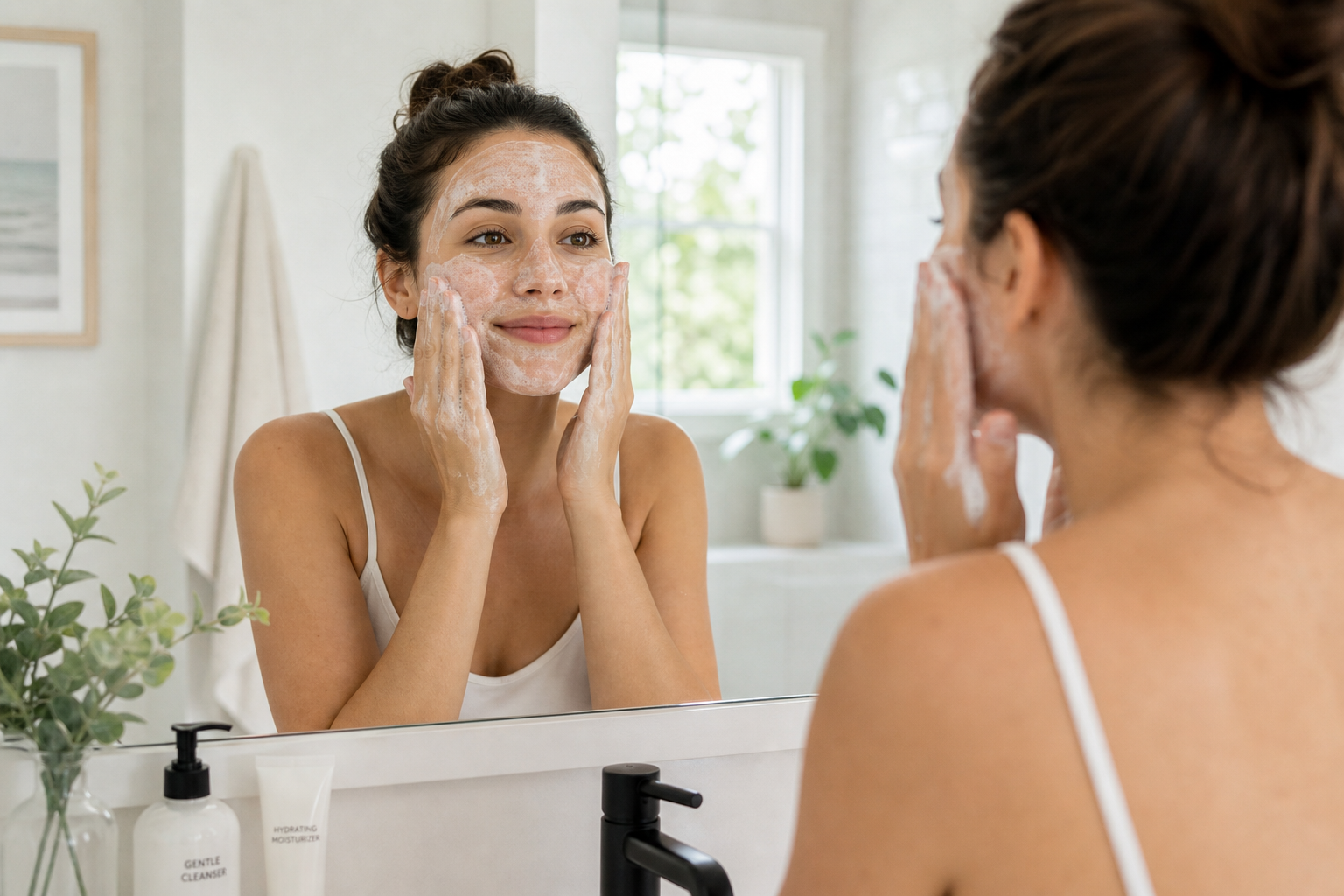
Foaming gel, creamy emulsion, or micellar water? We'll guide you on how to choose the right type of cleanser that truly suits your skin—whether it's dry, sensitive, combination, or oily.
The Importance of Cleansing in Your Skincare Routine
You know the feeling: you wash your face, dry it with a towel, and soon after, your skin feels tight and uncomfortable on your forehead and cheeks. Or conversely, your skin feels matte and fresh right after washing, but by the time you head to work, your nose and forehead are shiny again. In both cases, the culprit is often a cleanser that doesn't suit your skin, even if the product itself isn't necessarily bad.
In skincare, cleansing is often seen as a necessary formality before moving on to the more exciting steps – serums, moisturizers, or sunscreens. However, it actually sets the foundation for everything that follows. If the cleanser is too stripping for your skin, it can leave it feeling tight, and the rest of your skincare routine ends up addressing the aftermath rather than the intended benefits. On the other hand, if the cleansing isn't thorough enough to remove makeup residues, sunscreen, and daily impurities, a film remains on the surface, making it harder for subsequent products to absorb.
Choosing the right cleanser also affects how your skin behaves throughout the day. Dry and sensitive skin often reacts to harsh washing with tightness, redness, or increased sensitivity to subsequent products. Combination and oily skin, after thorough cleansing, can become shiny more quickly than before. There's no need to panic or create a complex ten-step routine – in most cases, simply swapping out one product for one that better suits your skin's actual needs is enough.
In this article, we'll guide you through the decision-making process step by step. Here's what you'll learn:
- how to determine whether your skin is dry, sensitive, combination, or oily based on its behavior throughout the day;
- the differences between a foaming gel, creamy emulsion, and micellar water, and which format is suitable for whom;
- how to choose when your skin behaves differently on your forehead and nose than on your cheeks;
- what the labels on packaging really mean, so you can make quicker decisions.
Keep in mind that one correct answer may not apply all year round. Skin that benefits from a refreshing foaming gel in the summer might feel dry with the same product in winter – add in dry indoor heating and cold outdoor air. Whether you wear makeup also plays a role: for long-lasting makeup or high SPF sunscreen, one pass with gel usually isn't enough, and a two-step cleansing process is recommended. Consider choosing a cleanser as a setting you'll revisit from time to time, rather than a one-time decision for the years ahead.
Gel, Foam, Emulsion, Micellar Water – What's the Difference?
Cleansers differ not just in consistency. Each format tackles impurities in its own way: some rely on surfactants, others on oil phases, and some on tiny particles that encapsulate and remove dirt. Knowing what happens on your skin during cleansing helps you choose the right product for what you need to remove.
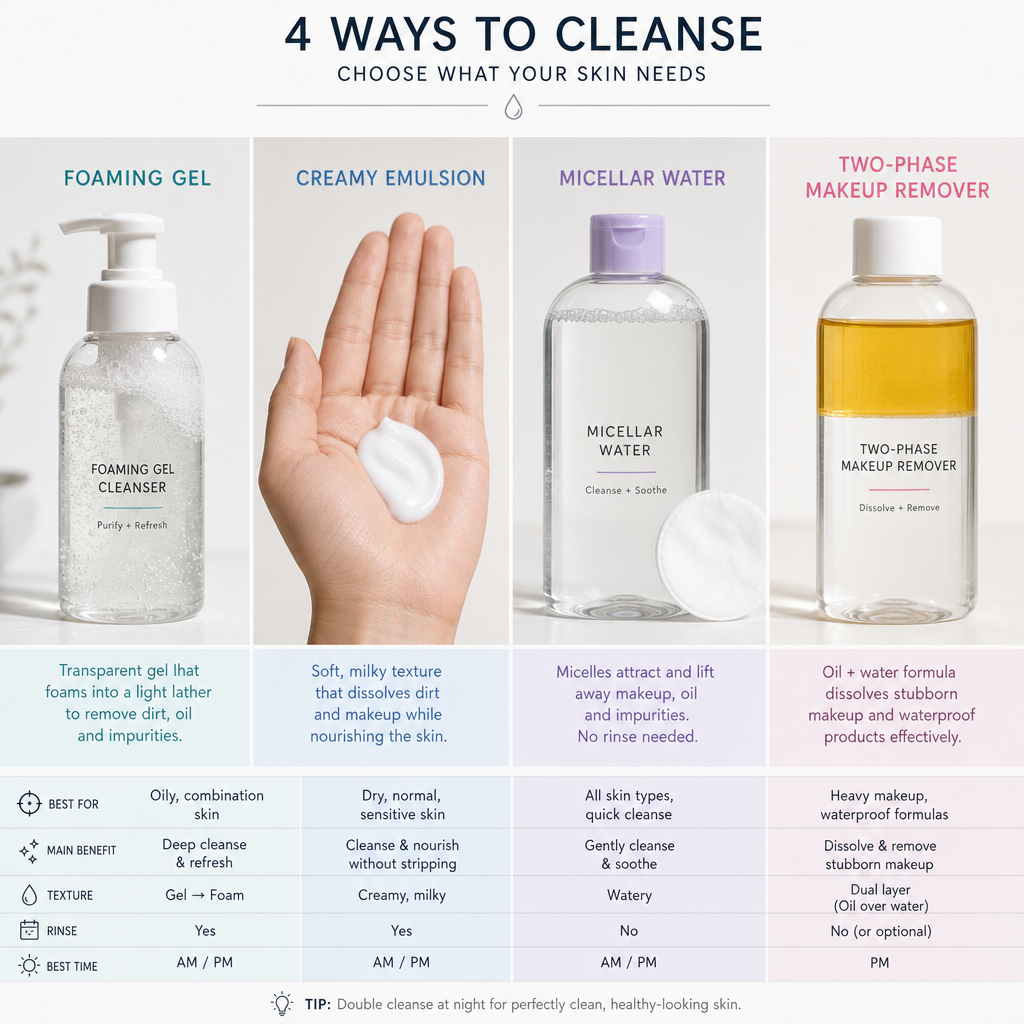
Foaming Gel is a clear or slightly cloudy substance that turns into foam upon contact with water. This is due to surfactants – molecules with one end that binds to water and the other to oil. The surfactant attaches to skin oil and greasy impurities, encapsulates them, and water rinses them away. This is why you feel clean and slightly tight after rinsing: the gel thoroughly removes oil. This thoroughness is both its strength and weakness. A gently formulated gel removes excess oil, but a strong foaming agent can strip more than necessary.
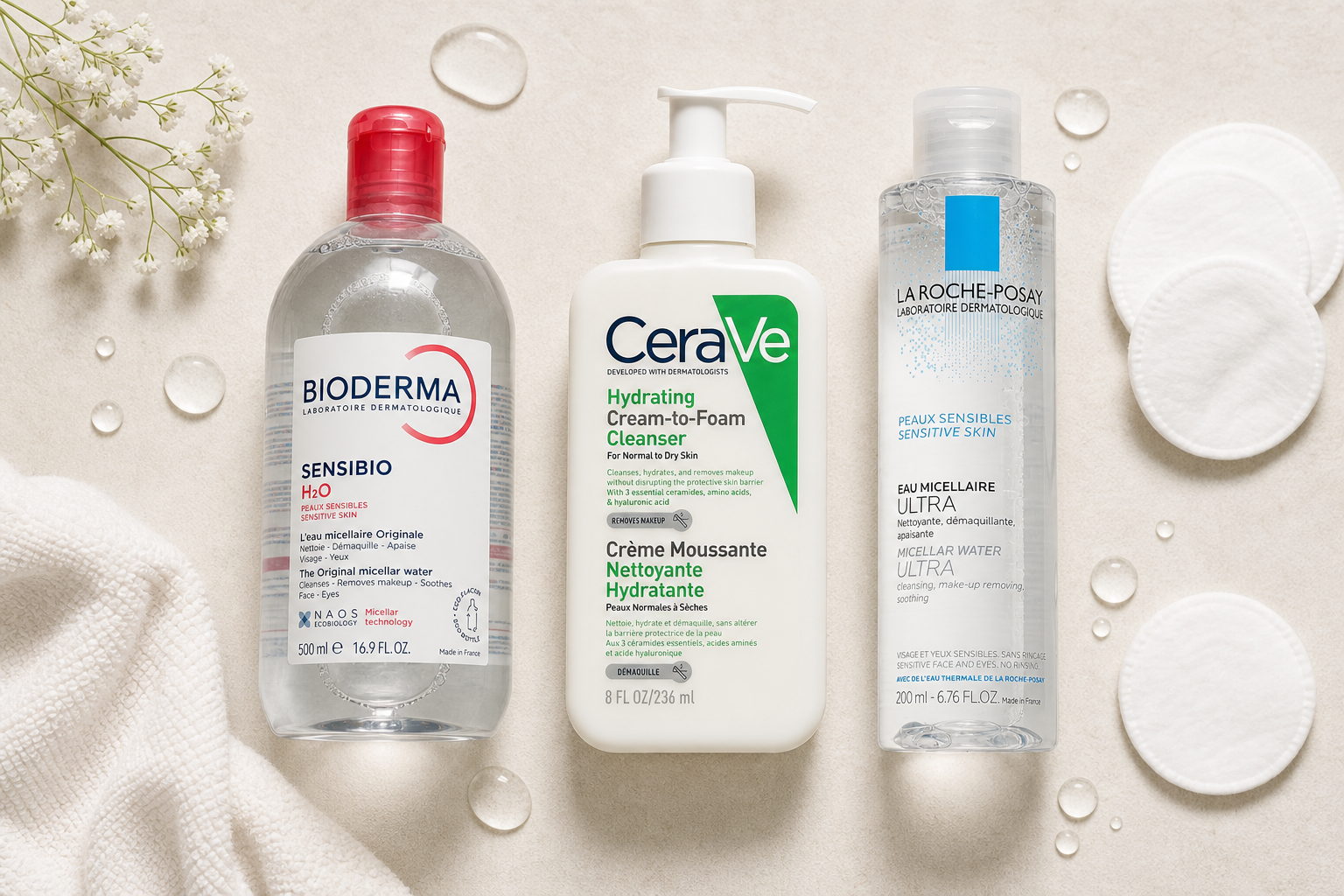
Cream Emulsion, also known as cleansing milk, works the opposite way. It is based on a mixture of water and oil phases, so it dissolves and softens impurities rather than stripping them with surfactants. It produces little to no foam, and after rinsing, the skin feels more supple than squeaky clean. The lipid layer on the skin's surface remains less disturbed, which is why emulsion is used where a foaming gel would be too harsh. In our catalog, this type is represented by CeraVe Hydrating Cleanser.
Micellar Water looks like regular water but contains a small amount of surfactants at a concentration where the molecules form spherical structures called micelles. The ends that bind to oil are hidden inside, while the water-binding ends face outward, making the micelle act like a microscopic trap for oil and pigment from makeup. You apply the product to a cotton pad, hold it on the skin for a moment, and the impurity goes away with it. Manufacturers often state that rinsing is not necessary, but a thin film of surfactants remains on the skin. After removing heavier makeup, it's worth rinsing your face with lukewarm water. From our catalog, Bioderma Sensibio H2O is an example.
Two-Phase Makeup Remover is a special case: in the bottle, the oil and water layers separate, so you need to shake the product before use. The oil component handles waterproof mascara and long-lasting lipstick, while the water phase washes away the rest. It's not used for the entire face but specifically for eyes and lips – followed by regular cleansing with gel or emulsion.
Hybrid Formats try to combine both logics. Most commonly, it's a cream that changes texture on damp skin and starts to foam slightly; in our catalog, CeraVe Hydrating Cream-to-Foam Cleanser works this way. It applies comfortably like a cream but rinses off like a foam.
When you compare the basic formats side by side, a simple map emerges:
- Foaming Gel – surfactants, thorough oil removal, rinse with water, most noticeable feeling of cleanliness.
- Cream Emulsion – oil phase, gentle cleansing, minimal foam, leaves skin supple.
- Micellar Water – micelles on a cotton pad, quick makeup removal without running water, supplement with rinsing for heavier makeup.
- Two-Phase Makeup Remover – separate oil and water layers, targeted cleaning of waterproof makeup.
- Hybrid Cream-to-Foam – comfort of creamy texture with easy rinsing.
None of these formats is inherently better than the others. It depends on how much oil your skin produces during the day, whether you wear makeup, and how you react to the feeling of tightness after washing.
Dry and Sensitive Skin – Why Cream Emulsions Are Often Ideal
Dry and sensitive skin is more easily identified by how it feels after washing rather than how it looks in the morning mirror. Typical signs include tightness that occurs within minutes of rinsing, fine flakes around the nose and eyebrows, and sometimes redness that takes a while to fade. Sensitivity adds another layer: burning after applying serum, reactions to weather changes, or discomfort from a product that others find harmless. Both conditions often coexist on the same face and both start with the same step – cleansing.
The reason is quite straightforward. The skin barrier is held together by a layer of lipids, with ceramides playing a significant role. Highly foaming products with a high surfactant content not only remove impurities and makeup residues but also some of these lipids. Skin that has enough of them replenishes them throughout the day. Dry and sensitive skin replenishes them more slowly, so each subsequent wash builds on an already weakened foundation. This leads to the familiar cycle: the more thoroughly the skin is stripped of oils, the worse it tolerates even the usual care that once worked.
That's why for these skin types, a format that cleanses without significant foam often makes more sense. A cream emulsion binds impurities and rinses them away with water, but leaves much of the skin's oily layer intact. Similarly, a cleansing oil emulsifies upon contact with water; it's especially suitable for evening use when sunscreen or makeup needs to be removed. Micellar water formulated for sensitive skin is a gentler choice for mornings or days when the skin can't tolerate anything else.
When reading ingredient lists, it's worth looking for a few specific components:
- Ceramides – replenish what cleansing often removes and help maintain a cohesive barrier.
- Niacinamide – generally well-tolerated by sensitive skin and found in products aimed at calming.
- Panthenol – a classic for irritated skin; in cleansing products, it reduces the feeling of tightness after rinsing.
- Thermal Water – forms a gentle base for many dermocosmetic emulsions for sensitive skin.
- Glycerin – a simple and reliable moisturizing ingredient found even in affordable emulsions.
Two things, on the other hand, are worth avoiding. The first is fragrance: for sensitive skin, it's a common trigger for irritation, which is why many products for this skin type are fragrance-free. The second is harsh sulfate surfactants, recognizable by their rich foam and the pronounced "squeaky clean" feeling after rinsing. This sensation is often interpreted as proof that the product worked – in reality, it more likely signals that the skin has been stripped of more than it needed.
However, the outcome isn't determined by the product alone. A few principles surrounding its use make a visible difference within just a few weeks:
- Wash with lukewarm water. Hot water dissolves skin lipids more quickly and worsens tightness after washing, regardless of how gentle the product is.
- Pat dry with a towel, don't rub. Mechanical irritation adds up with chemical irritation on sensitive skin.
- Consider cleansing only once a day, in the evening. If the skin isn't oily by afternoon, a morning rinse with lukewarm water is often sufficient.
- Apply serum or cream to slightly damp skin, ideally within a minute of drying.
Changing your cleansing product isn't an immediate fix – give the new format two to three weeks before deciding if it suits you. The first moment after rinsing is a good guide: if the skin doesn't feel tight and doesn't need cream as a rescue, the cleansing is set up well. If redness, burning, or flakes persist even after changing the product, it's time to consult a dermatologist.

Combination and Oily Skin – A Foaming Gel That Doesn't Dry Out
When your skin gets shiny during the day, pores on your nose and chin become more noticeable, and by afternoon there's an oily film on your forehead, most people reach for a product that promises thorough degreasing. But this is where the decision is made whether your skin will calm down in a few weeks or become more unbalanced. A lightweight foaming gel is often a good choice for combination and oily skin, but only if it cleanses without leaving your skin feeling squeaky dry.
Why Stronger Cleansing Doesn't Solve Oiliness
The feeling of squeaky clean skin after washing isn't a sign of a job well done. It usually means that some of the oils and lipids, which protect the skin from water loss, have been removed from the surface. The skin responds to such an intervention by increasing oil production – and the shine returns sooner than before. This creates a cycle where aggressive washing alternates with faster oiliness. So if your skin starts getting oily by noon, even after a thorough morning wash, the solution isn't to go harsher, but to be gentler.
Truly Oily Skin or Dehydrated Skin?
Shine alone doesn't necessarily mean you have oily skin. Many people who have been using strong degreasing products for years actually have dehydrated skin – skin that lacks water and compensates with increased shine in the T-zone. You can distinguish between the two with a few clues:
- Truly oily skin shines evenly, often shortly after waking up, has more noticeable pores even on the cheeks, and doesn't feel tight after washing.
- Dehydrated skin shines unevenly, mainly on the forehead and nose, feels tight after washing, is rougher to the touch, and makeup doesn't adhere well.
A simple test can help: wash your face and leave it without any product for twenty minutes. If it feels tight at first and then starts to shine, your skin is compensating for what you've washed away. In that case, you need a milder gel and light hydration, not stronger degreasing.
When Salicylic Acid or Zinc Makes Sense
Cleansers with salicylic acid or zinc have their place in caring for oily skin, but they're not for everyone. Salicylic acid is fat-soluble, so it can penetrate pores; it's mainly suitable if you repeatedly experience clogged pores and minor imperfections in the T-zone. In a cleansing gel, it stays on the skin only briefly, so it's wise to start using it two to three times a week and monitor the reaction. Products with zinc are used more for a matte finish during the day.
However, if your skin only slightly shines and doesn't have significant imperfections, a gentle fragrance-free foaming gel and a light hydrating gel cream will do more than a combination of several active products at once.
Combination Skin and Two Products Instead of One Compromise
With combination skin, it's often difficult to find a single product that suits both the oily T-zone and drier cheeks. The solution is often straightforward – use two and alternate them depending on the situation:
- According to the season: in summer, when the skin is oilier, use a foaming gel; in winter, when heating dries the air, use a gentler cream variant and the foaming gel only in the evening.
- According to facial zones: use a foaming gel on the forehead, nose, and chin, and just briefly rinse or treat the cheeks with a milder product.
- According to the time of day: in the evening, use a more thorough cleanser to remove makeup and impurities from the whole day; in the morning, just a quick refresh.
Whether you end up with one gel or a pair of products, give the change time. Skin takes about four to six weeks to adjust to a new routine, and you can't judge by the first few days. A good guideline is a single question: does your skin feel pleasantly clean or tight after washing? Tightness is a signal that the gel is too strong for you – even if your skin is currently shiny.
Non-comedogenic, soap-free, pH – what the labels really mean
The front of the package is a marketing space, the back is where the interesting details are. Most claims you encounter on cleansing gels and foams have a looser meaning than they seem – and some say nothing about the cleaning power. Let's go through the most common ones, so you can choose based on ingredients and format, not the label on the front.
Non-comedogenic means the product has been tested to ensure it doesn't promote the formation of comedones, or clogged pores. However, there is no standardized methodology that manufacturers use consistently, so results are not comparable across brands. For rinse-off products, this claim carries less weight than for creams that stay on the skin all day – you rinse off a gel or foam in half a minute. If your skin repeatedly reacts to something, the ingredient list will tell you more than a single word on the label.
Soap-free refers to the type of cleansing agents used, not the gentleness. Traditional soap has an alkaline pH and can be too harsh for sensitive skin when used for daily face washing; products labeled as soap-free use different surfactants and maintain a lower pH. However, this doesn't automatically mean the gel cleans gently – even a soap-free formula can be too strong for dry skin. You can more reliably judge the cleaning strength by the feel after rinsing: if your skin feels tight and "squeaky," the product is too strong for you.
pH close to the skin's natural pH refers to the fact that healthy skin is slightly acidic – typically in the range of about 4.5 to 5.5. A cleansing product within this range is usually more comfortable for the skin than a highly alkaline one, as it leaves the skin in its usual environment. However, you may not always find a specific pH number on the package; if it's missing, it's not a warning sign.
For sensitive skin is a description formulated by the manufacturer itself – it doesn't say anything about testing. Dermatologically tested, on the other hand, means that tolerance has been verified through testing under the supervision of a dermatologist; this is information about the verification method, not about how the product will work on your skin. And hypoallergenic indicates that the formula has been designed to contain as few known allergens as possible – it doesn't rule out individual reactions. Therefore, it's wise to start with a smaller package of a new product and monitor how your skin responds in the first few days.
Before you add a product to your cart, go through a quick checklist. It takes half a minute and can save you from opening an unnecessary bottle:
- Skin type – dry and sensitive, combination, oily, or uneven skin. This determines everything else.
- Format – gel, foam, creamy emulsion, or micellar water depending on how you wash and what you need to remove.
- Volume – larger packages are cheaper per use, but only make sense for a product you know suits you.
- Cost per use – instead of the price on the package, calculate how much one wash costs; foams with dispensers often have lower consumption than expected.
- Ingredients – for problematic skin, look for specific ingredients you have good experience with, rather than general claims from the label.
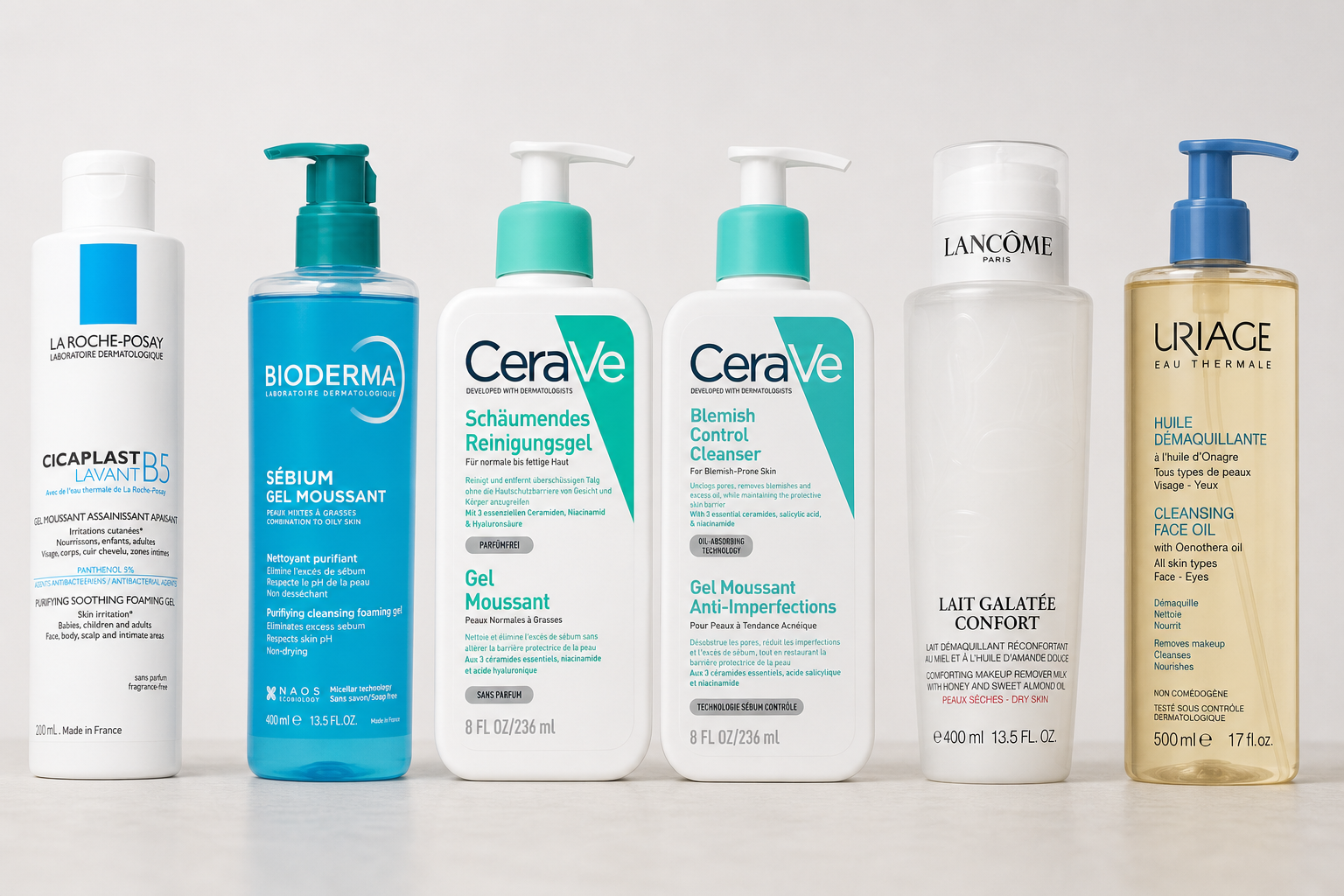
You can find the entire range in the Cleansing and Makeup Removal category. If you want to start with tried-and-true choices that are among our bestsellers: Bioderma Sensibio H2O is a micellar water for sensitive skin, Bioderma Sébium Purifying Cleansing Foaming Gel is a foaming gel for shiny skin, CeraVe Hydrating Cleanser cleans without foam and is suitable for dry skin, and CeraVe SA Smoothing Cleanser contains salicylic acid, targeting uneven skin. Whichever you choose, give it two to three weeks – only then will you know if it suits your skin.

Category
Recommended articles

"Give a girl the right shoes and she can conquer the world!" Marilyn Monroe